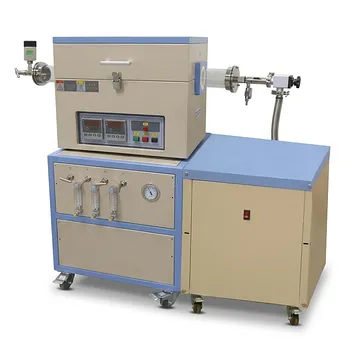
How does a mixed gas supply system facilitate the preparation of sub-stoichiometric vanadium oxide bronze materials?
Updated 3 months ago
The fundamental role of a mixed gas supply system is the precise manipulation of the chemical environment to trigger controlled reduction. By transitioning from an inert to a reducing atmosphere—specifically using a diluted hydrogen flow (H2/N2) at high temperatures—the system allows researchers to halt the reduction of vanadium dioxide at specific, sub-stoichiometric stages.
Core Takeaway: A mixed gas supply system enables the synthesis of sub-stoichiometric vanadium oxide bronzes by providing a finely tuned reducing environment that triggers multi-valence transitions without over-reducing the material to a fully metallic or lower-oxide state.
Precision Control via Atmosphere Switching
Achieving Real-Time Chemical Modulation
The mixed gas system is designed for the precise switching of the reaction atmosphere during the synthesis process. This allows for the initial formation of a precursor, such as VO2, followed by an immediate shift to a specialized environment that alters the material's chemical state.
The Role of Diluted Hydrogen
By introducing a specific 1:10 ratio of H2 to N2, the system creates a mild reducing environment. This dilution is critical because pure hydrogen would likely reduce the vanadium too aggressively, preventing the formation of the desired sub-stoichiometric bronze phase.
Thermal Activation at 550°C
The system maintains a steady temperature of 550°C while the mixed gas flows over the sample. This thermal energy, combined with the diluted hydrogen, provides the necessary kinetic conditions for oxygen atoms to leave the lattice, creating the "oxygen vacancies" characteristic of sub-stoichiometric materials.
Navigating Multi-Valence Transitions
Managing Vanadium's Oxidation States
Vanadium is known for its ability to exist in multiple oxidation states (V5+, V4+, V3+). The mixed gas supply system facilitates the exploration of multi-valence transitions, allowing for a hybrid material where multiple states coexist.
Engineering the Amorphous Bronze Phase
The controlled reduction process leads to the formation of sub-stoichiometric amorphous vanadium oxide bronze. This hybrid material displays unique physical properties, such as a distinctive metallic luster, which are not present in fully stoichiometric vanadium oxides.
Maintaining Structural Integrity
Because the system allows for such fine control, the reduction is stopped before the crystalline structure collapses entirely or transforms into a different phase. This results in the specific hybrid amorphous nature required for advanced material applications.
Understanding the Trade-offs and Challenges
The Risk of Over-Reduction
The primary challenge in using a mixed gas system is the narrow window of success. If the H2 concentration is too high or the exposure time is too long, the material can easily bypass the sub-stoichiometric bronze phase and reduce further into vanadium trioxide (V2O3) or metallic vanadium.
Dependency on Flow Stability
The accuracy of the 1:10 H2/N2 ratio is paramount. Any fluctuation in the gas flow rates can lead to inhomogeneous reduction, resulting in a sample that has varying chemical properties across its surface.
Temperature Sensitivity
Small deviations from the 550°C setpoint can significantly impact the reaction rate. Lower temperatures may fail to initiate the reduction, while higher temperatures may accelerate it beyond the point of control, ruining the amorphous characteristic of the bronze.
How to Apply This to Your Synthesis Goals
To successfully utilize a mixed gas system for vanadium oxide bronze preparation, focus on the following parameters:
- If your primary focus is phase purity: Ensure your gas mixing manifold is calibrated to maintain the 1:10 H2/N2 ratio with less than 1% variance.
- If your primary focus is achieving a specific metallic luster: Monitor the reaction time closely at 550°C, as the visual change in the material often signals the optimal sub-stoichiometric point.
- If your primary focus is material stability: Use the system to quickly purge the reducing gas with pure N2 once the desired state is reached to "freeze" the chemical transition.
Precise atmospheric control is the only reliable way to navigate the complex valence landscape of vanadium and secure the desired sub-stoichiometric properties.
Summary Table:
| Key Parameter | Specification | Functional Impact |
|---|---|---|
| Gas Composition | 1:10 H2/N2 Ratio | Prevents over-reduction to lower oxides or metal. |
| Process Sync | Atmosphere Switching | Enables seamless transition from inert to reducing state. |
| Thermal Setting | 550°C High-Temp | Facilitates oxygen vacancy creation and lattice change. |
| Final State | Hybrid Amorphous | Achieves specific multi-valence vanadium oxidation states. |
Optimize Your Atmosphere Control with THERMUNITS
Precision is the difference between a successful synthesis and a failed experiment. THERMUNITS is a premier manufacturer of high-temperature laboratory equipment, providing the specialized thermal solutions required for advanced material science and industrial R&D.
Whether you are working on multi-valence transitions or complex phase engineering, our comprehensive range—including Atmosphere Furnaces, Tube Furnaces, CVD/PECVD systems, and Vacuum Induction Melting (VIM) furnaces—offers the stability and gas-mixing accuracy your research demands.
Contact our technical team today to discuss how our custom furnace solutions can enhance your laboratory’s heat treatment capabilities!
References
- Inga Dönges, Jörg J. Schneider. Selective Synthesis of 3D Aligned VO<sub>2</sub> and V<sub>2</sub>O<sub>5</sub> Carbon Nanotube Hybrid Materials by Chemical Vapor Deposition. DOI: 10.1002/chem.202402024
Mentioned Products
- Dual Tube 100mm 80mm CVD Sliding Furnace with 4 Channel Gas Mixing and Vacuum System
- Three Zone Quartz Tube Furnace with 3 Channel Gas Mixer Vacuum Pump and Anti Corrosive Vacuum Gauge
- Versatile Chemical Vapor Deposition Tube Furnace System for Advanced Material Research and Industrial Coating Processes
- Chemical Vapor Deposition CVD System Slide PECVD Tube Furnace with Liquid Gasifier PECVD Machine
- Inclined Rotary Plasma Enhanced Chemical Vapor Deposition PECVD System for Thin Film Deposition and Nanomaterial Synthesis
People Also Ask
- How does the Sweet Spot region within a chemical vapor deposition reactor influence the morphology control of VOx particles?
- What is the purpose of placing quartz crystals at the inlet and outlet of a CVD reaction tube? Optimize MoS2 Synthesis
- Why is a double-zone tube furnace required for CVD of WS2? Master Thermal Precision for High-Quality 2D Materials
- What are the temperature control requirements for a tube furnace used in pyrolysis and CVD? Master Thermal Precision
- What is the primary function of a dual-zone tube furnace in CVD MoS2 synthesis? Achieve Precise Thermal Control

Tech Team · ThermUnits
Last updated on Jun 03, 2026
Related Products
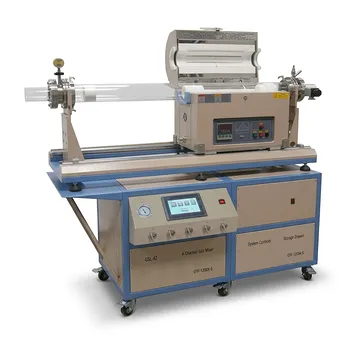
Dual Tube 100mm 80mm CVD Sliding Furnace with 4 Channel Gas Mixing and Vacuum System
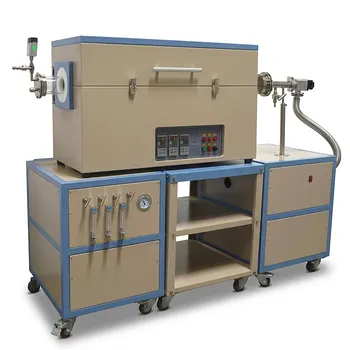
Three Zone Quartz Tube Furnace with 3 Channel Gas Mixer Vacuum Pump and Anti Corrosive Vacuum Gauge
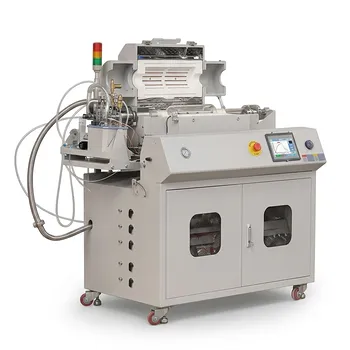
Versatile Chemical Vapor Deposition Tube Furnace System for Advanced Material Research and Industrial Coating Processes
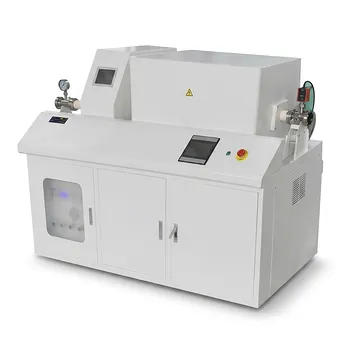
Chemical Vapor Deposition CVD System Slide PECVD Tube Furnace with Liquid Gasifier PECVD Machine
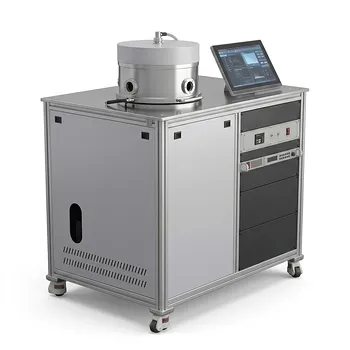
Inclined Rotary Plasma Enhanced Chemical Vapor Deposition PECVD System for Thin Film Deposition and Nanomaterial Synthesis
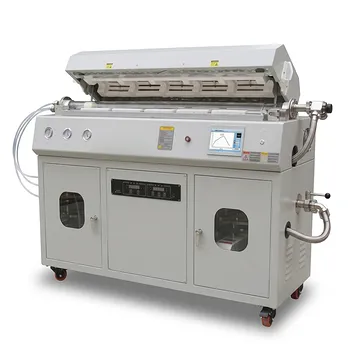
Multi Heating Zones CVD Tube Furnace System for Precision Chemical Vapor Deposition and Advanced Material Synthesis
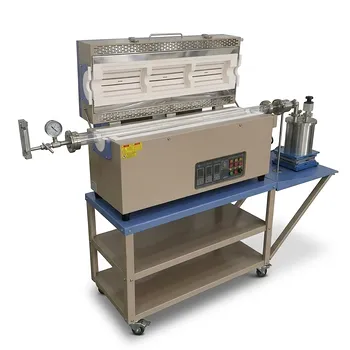
5 Inch Two Zone Rotary Tube Furnace 1100C for Powder CVD and Material Synthesis

5 Inch Three Zone Rotary Tube Furnace with Integrated Gas Delivery System and 1200C Capability for Advanced Material CVD Processing
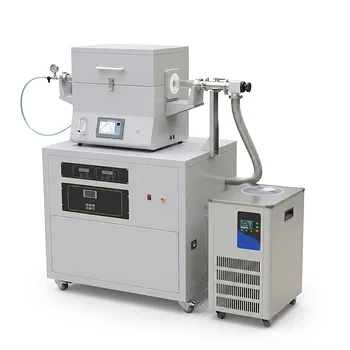
Split Chamber CVD Tube Furnace with Vacuum Station Chemical Vapor Deposition System Machine