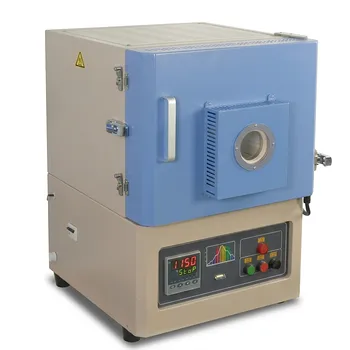
How does a precision aging furnace achieve 900 HV in Fe-Co-Mo steel? Master Nanoscale Phase Control.
Updated 3 months ago
A precision aging furnace is the critical catalyst for achieving 900 HV in Fe-Co-Mo alloys. It provides a stabilized 600°C thermal environment that facilitates the dispersed precipitation of nanoscale $\mu$ phases within the alloy matrix. By maintaining extreme temperature uniformity, the furnace ensures these intermetallic particles are consistently sized and evenly distributed, maximizing the precipitation-strengthening effect required to reach high hardness levels.
Core Takeaway: The furnace serves as a controlled energy source that triggers the growth of nanoscale reinforcements. Its precision directly dictates the size and distribution of these phases, which are the primary drivers for reaching a 900 HV hardness threshold.
The Role of Temperature in Phase Transformation
Driving the Precipitation of $\mu$ Phases
At a sustained temperature of 600°C, the Fe-Co-Mo matrix becomes a reactive environment where the supersaturated solid solution begins to decompose. This thermal energy drives the birth of nanoscale $\mu$ phases, which are the fundamental hardening agents in this specific carbon-free steel.
Thermal Sensitivity of Intermetallic Growth
The precipitation process is highly sensitive to both temperature and duration. A precision furnace prevents the temperature fluctuations that would otherwise lead to erratic particle growth, ensuring the intermetallic compounds remain at the nanoscale level rather than coarsening into larger, less effective structures.
Energy Stability for Atomic Rearrangement
Achieving 900 HV requires a specific volume fraction of these precipitates. The aging furnace provides the stable thermal field necessary for molybdenum and cobalt atoms to rearrange themselves into the reinforcing $\mu$ phase clusters throughout the entire volume of the sample.
Precision and Uniformity as Hardness Drivers
Maintaining Microstructural Consistency
Superior temperature uniformity is the hallmark of a precision aging furnace. This uniformity ensures that the sample does not experience "hot spots" or "cool zones," which would cause the $\mu$ phases to be larger in some areas and smaller in others, leading to inconsistent hardness.
The Mechanism of Dislocation Pinning
The resulting finely dispersed nanoscale phases act as physical barriers to dislocation movement within the crystalline lattice. When these particles are evenly distributed, they effectively "pin" the lattice, making the material significantly more resistant to plastic deformation and raising the Vickers hardness.
Eliminating Residual Stresses
Beyond precipitation, the controlled cooling and heating cycles of a precision furnace help in stabilizing the matrix. This process ensures that the gain in hardness is not undermined by internal quenching stresses, resulting in a chemically and mechanically stable finished product.
Understanding the Trade-offs
The Risk of Over-Aging
While heat is necessary for hardening, excessive time or temperature (over-aging) can cause the nanoscale $\mu$ phases to coalesce. This results in a "coarsening" effect where fewer, larger particles offer less resistance to dislocation movement, causing the hardness to drop below the 900 HV target.
Balancing Hardness and Toughness
Increasing hardness to 900 HV through dense precipitation typically reduces the material's ductility. If the aging process is not perfectly controlled, the steel may become excessively brittle, making it prone to cracking under operational stress despite its high hardness.
Matrix Softening vs. Precipitation Strengthening
As the furnace provides energy, the underlying matrix naturally begins to soften due to recovery processes. The precision of the furnace is vital to ensure that the precipitation-strengthening effect happens rapidly and strongly enough to more than compensate for this natural softening of the base metal.
How to Apply This to Your Project
To achieve the best results with Fe-Co-Mo carbon-free high-speed steel, align your furnace parameters with your specific performance requirements:
- If your primary focus is Maximum Hardness (900 HV+): Prioritize a furnace with a temperature deviation of less than ±2°C at the 600°C setpoint to ensure the highest possible density of $\mu$ phase precipitates.
- If your primary focus is Tool Longevity and Toughness: Opt for a slightly shorter aging duration or a marginally lower temperature to prevent particle coarsening and maintain a degree of matrix ductility.
- If your primary focus is Batch Consistency: Utilize a furnace with advanced forced-air circulation to ensure every part in a large load reaches the precipitation temperature simultaneously.
The precise management of the thermal field is the only way to transform a relatively soft Fe-Co-Mo alloy into a high-performance material capable of sustaining a 900 HV hardness.
Summary Table:
| Key Factor | Role in Hardening | Impact on Material |
|---|---|---|
| Temperature (600°C) | Triggers $\mu$ phase precipitation | Fundamental hardening mechanism |
| Thermal Precision (±2°C) | Prevents particle coarsening | Ensures 900 HV hardness target |
| Field Uniformity | Eliminates hot/cool spots | Consistent microstructural properties |
| Dislocation Pinning | Barriers to lattice movement | High resistance to plastic deformation |
| Aging Duration | Controls phase volume fraction | Balances hardness and toughness |
Unlock Precision Hardening with THERMUNITS
Achieving a consistent 900 HV hardness in advanced alloys like Fe-Co-Mo requires the extreme thermal accuracy that only THERMUNITS can provide. As a leading manufacturer of high-temperature laboratory equipment for material science and industrial R&D, we specialize in solutions that demand absolute precision.
Our comprehensive range of thermal processing equipment includes:
- Muffle, Vacuum, and Atmosphere Furnaces for controlled environments.
- Tube, Rotary, and Hot Press Furnaces for specialized material synthesis.
- CVD/PECVD Systems and Vacuum Induction Melting (VIM) for advanced thin films and metallurgy.
- Dental Furnaces and Electric Rotary Kilns for industrial-scale processing.
Whether you are focusing on precipitation strengthening or complex heat treatments, THERMUNITS delivers the uniformity and stability your research requires. Contact our technical team today to find your solution and see how our expertise can drive your next breakthrough.
References
- Shiteng Lu, Lei Lü. Precipitation and Age-Hardening in Fe-25Co-15Mo Carbon-Free High-Speed Steel via Hot Isostatic Pressing. DOI: 10.3390/met14121400
Mentioned Products
- 1700C Compact Hybrid Furnace with Dual Layer Box Sintering and Controlled Atmosphere Alumina Tubes
- Large Bench Top 1700C High Temperature Muffle Furnace with 19L Chamber for Advanced Material Sintering and Annealing
- High Temperature 1700C Vertical Tube Furnace for Powder Spherification and Material Sintering
- 1800C Bench Top Muffle Furnace 18 Liters with Kanthal Super 1900 Heating Elements for High Purity Ceramic Sintering and Material Research
- 1650C High Temperature Atmosphere Controlled Box Furnace with 65L Chamber for Advanced Material Sintering and Industrial Heat Treatment
People Also Ask
- Why use a tube furnace for carbon nanofibers? Achieve high purity and electrical conductivity through inert processing.
- What are the advantages of using an atmosphere-controlled high-temperature sintering furnace? Precise Oxygen Control
- What is the function of a controlled atmosphere tube furnace in LiGa alloying? Achieving High-Purity Thermal Synthesis
- Why is the sintering process for MS-SOECs typically conducted in a vacuum or atmosphere furnace? Protect Your Materials.
- How does a high-temperature sintering furnace environment enhance NdFeB magnets? Achieve 98%+ density with precision.

Tech Team · ThermUnits
Last updated on Jun 02, 2026
Related Products
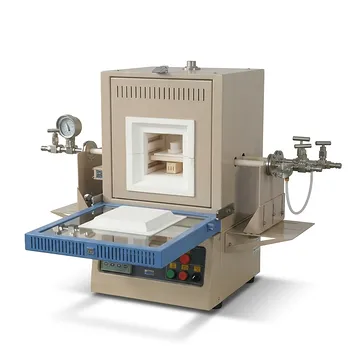
1700C Compact Hybrid Furnace with Dual Layer Box Sintering and Controlled Atmosphere Alumina Tubes
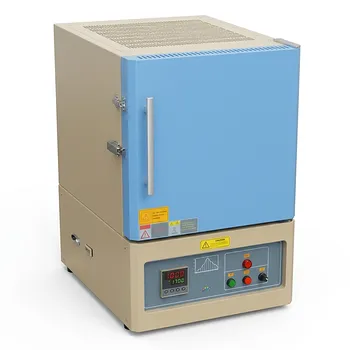
Large Bench Top 1700C High Temperature Muffle Furnace with 19L Chamber for Advanced Material Sintering and Annealing

High Temperature 1700C Vertical Tube Furnace for Powder Spherification and Material Sintering
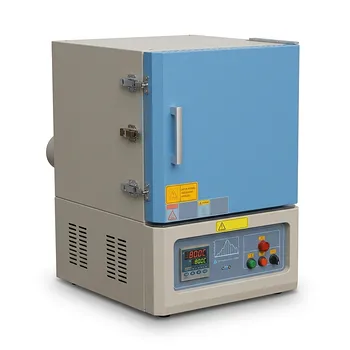
1800C Bench Top Muffle Furnace 18 Liters with Kanthal Super 1900 Heating Elements for High Purity Ceramic Sintering and Material Research
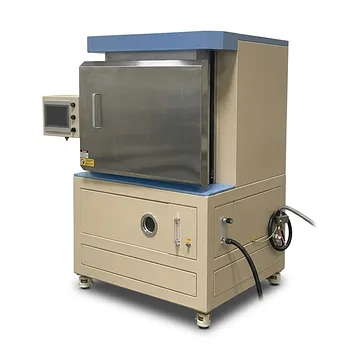
1650C High Temperature Atmosphere Controlled Box Furnace with 65L Chamber for Advanced Material Sintering and Industrial Heat Treatment
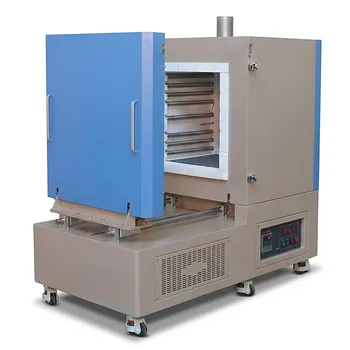
1200C Five Side Heating Muffle Furnace with Sliding Door 125L Volume High Temperature Heat Treatment System for Large Scale Sintering and Annealing
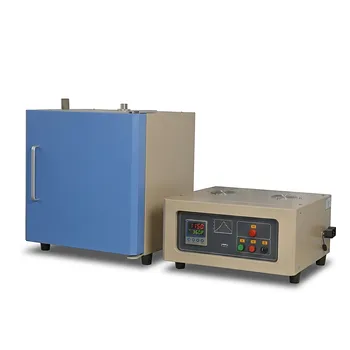
High Temperature Muffle Furnace with Alloy Chamber for Debinding and Sintering Applications

1200°C 5 Inch Vertical Quartz Tube Furnace with Stainless Steel Vacuum Flanges
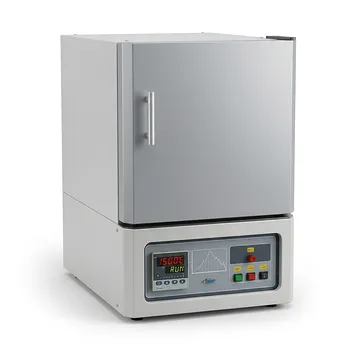
High Temperature 1500C Benchtop Muffle Furnace 3.6L Alumina Fiber Chamber Programmable Controller Sintering Annealing Carbonization Thermal Processing System
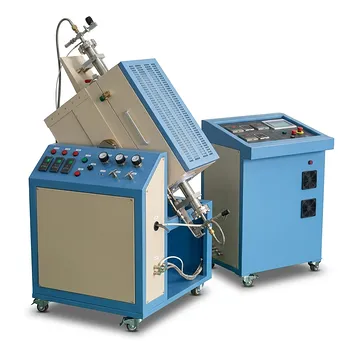
1100C High Pressure Rocking Tube Furnace with 2 Inch Super Alloy Processing Tube for Material Synthesis
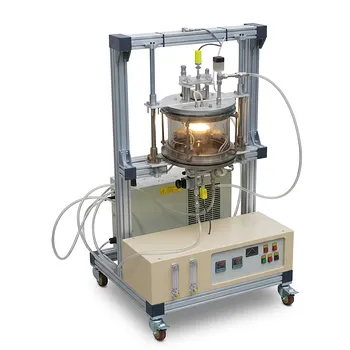
Two Zones CSS Furnace for Rapid Thermal Processing Thin Film Coating 3 Inch Diameter 650C
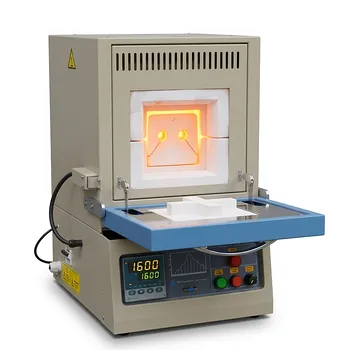
High Temperature Compact Muffle Furnace 1700 C with 30 Segment Programmable Controller and 1.7L Cubic Chamber
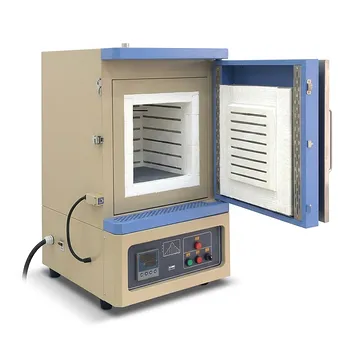
Five Side Heating Muffle Furnace High Purity Alumina Fiber 27L Chamber 1200C High Temperature Thermal Processing System for Sintering Annealing and Materials Research
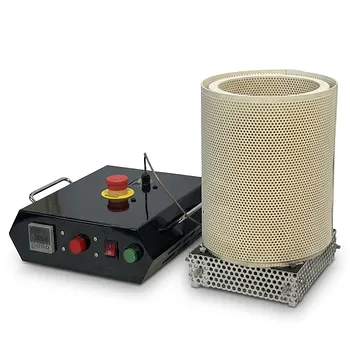
1250 C Compact Vertical Box Furnace for Glovebox Material Research Air Sensitive Samples

High Temperature 1700C Benchtop Tube Furnace with 5 Inch Heating Zone High Purity Alumina Tube and Vacuum Sealing Flanges
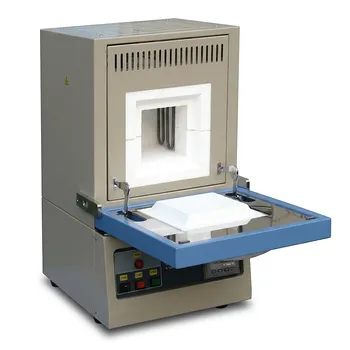
High Temperature 1800C Compact Muffle Furnace with Kanthal Super 1900 Heating Elements and 1.7L Alumina Chamber
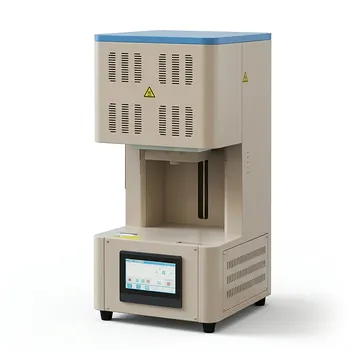
Automated 1700C High Temperature Bottom Loading Box Furnace with PC Software Control and Robotic Integration Capability
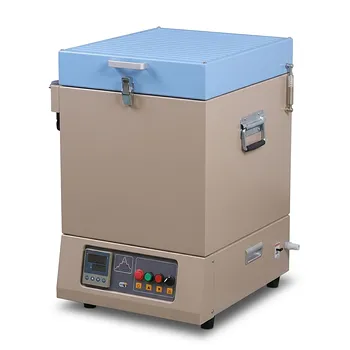
High Temperature Vertical Crucible Furnace with 22L Heating Chamber and 1200C Maximum Temperature
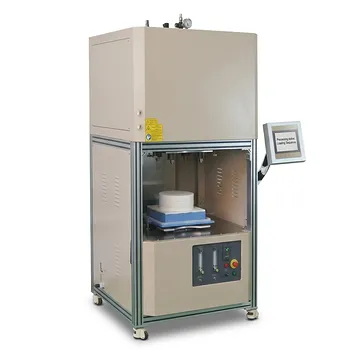
High Temperature Vertical Atmosphere Controlled Furnace with Automatic Bottom Loading and 1700°C Capacity for Advanced Material Research