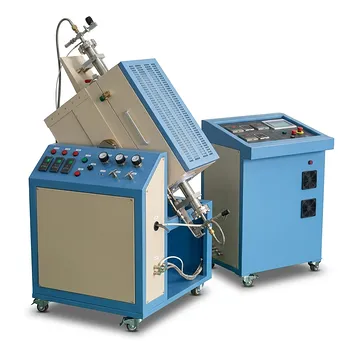
How does a tube furnace facilitate CrMnFeCoCu alloy conversion? Master High-Entropy Oxide Synthesis with THERMUNITS.
Updated 3 months ago
High-temperature tube furnaces act as the primary reactor for entropy-driven chemical transformations. By providing a stable 1000 °C thermal environment and a pure oxygen atmosphere, the furnace enables CrMnFeCoCu precursor powders to undergo deep oxidation. This process facilitates the transition of metal atoms into an oxide state, driving multi-principal cations to occupy specific lattice sites within a spinel structure to create a high-entropy material.
The high-temperature tube furnace provides the precise thermodynamic and kinetic conditions necessary to overcome atomic diffusion barriers. This allows a multi-element metallic precursor to reorganize into a single-phase oxide characterized by high configurational entropy and structural stability.
Facilitating Deep Oxidation Through Thermal Energy
Precision Temperature Control at 1000 °C
The furnace provides a constant, high-temperature environment that is essential for overcoming the activation energy required for oxidation. At temperatures like 1000 °C, the thermal energy is sufficient to break metallic bonds in the CrMnFeCoCu precursor. This enables the metal atoms to react fully with the surrounding atmosphere.
Enhanced Atomic Diffusion
High temperatures significantly increase the diffusion capability of atoms within the material. This mobility is critical for eliminating compositional segregation and ensuring that the five transition metal elements (Cr, Mn, Fe, Co, Cu) distribute themselves uniformly. Without this enhanced diffusion, the resulting oxide would likely remain a mixture of separate phases rather than a singular high-entropy structure.
Multi-Stage Heating Curves
Advanced tube furnaces allow for precise programmable heating rates, such as 5 °C/min. This control prevents thermal shock and allows for multi-stage insulation processes. These stages ensure that the precursor achieves equilibrium at various temperature intervals, leading to a more stable final crystal structure.
The Role of Atmospheric Control
Pure Oxygen Environments for Spinel Formation
The conversion into high-entropy oxides requires a pure oxygen atmosphere to drive the metallic atoms into an oxide state. The tube furnace’s design allows for the displacement of ambient air with high-purity oxygen. This high oxygen partial pressure is the chemical driver that forces the transition from a zero-valent metallic state to a cationic state.
Superior Sealing and Gas Integrity
The excellent sealing properties of a tube furnace ensure that the reaction occurs under a strictly controlled environment. This prevents the ingress of nitrogen or moisture, which could lead to unwanted side reactions or impurities. Maintaining this purity is vital for achieving the "clean" phase transitions necessary for high-entropy alloying.
Simulation of Oxidation Kinetics
The furnace allows researchers to maintain isothermal exposure for extended periods, sometimes reaching 168 hours or more. This long-duration thermal treatment is necessary to capture the oxidation kinetic behavior of the alloy. It ensures that the oxide film evolves into a stable, protective layer across the entire sample.
Driving Structural Transformation
Cation Occupation in Spinel Lattices
The primary function of the furnace in this context is to drive multi-principal cations into specific lattice sites. In a CrMnFeCoCu system, the thermal energy facilitates the movement of these ions into a spinel structure. This specific arrangement is what defines the material as a high-entropy oxide.
Maximizing Configurational Entropy
By providing sufficient energy for the cations to occupy sites randomly but within a structured lattice, the furnace helps maximize configurational entropy. This entropy is the stabilizing force that prevents the complex mixture of five metals from separating into simpler, individual oxides.
Elimination of Internal Stresses
Post-processing within the tube furnace, such as homogenization treatment, helps eliminate residual internal stresses. This step optimizes the morphology of the material and ensures that the precipitated phases are distributed evenly. The result is a high-entropy oxide with enhanced mechanical and chemical stability.
Understanding the Trade-offs
Heating Limits and Material Compatibility
While tube furnaces provide excellent control, they are limited by the maximum operating temperature of the heating elements and the tube material (often alumina or quartz). Attempting to process alloys at temperatures near 1550 °C requires specialized, expensive heating elements like molybdenum disilicide.
Atmosphere Dynamics
Achieving a perfectly uniform atmosphere throughout the entire length of the tube can be challenging if the gas flow is not correctly calibrated. Gas flow rates must be balanced; too low a flow may not provide enough oxygen for deep oxidation, while too high a flow can cause temperature gradients across the sample.
Scaling Constraints
Tube furnaces are typically designed for small-batch research and development rather than mass production. The volume of the "hot zone" is limited, meaning that scaling the synthesis of CrMnFeCoCu oxides from grams to kilograms requires significant equipment shifts or parallel processing.
How to Apply This to Your Project
Recommendations for Synthesis
- If your primary focus is phase purity: Utilize a slow heating rate (5 °C/min) and an extended isothermal hold at 1000 °C to ensure all cations reach their equilibrium lattice positions.
- If your primary focus is kinetic studies: Perform multiple runs at varying temperatures between 800 °C and 1200 °C to accurately map the oxide film evolution patterns.
- If your primary focus is preventing agglomeration: Ensure the precursor is properly dispersed and consider using a multi-stage insulation process to control the particle growth during oxidation.
The high-temperature tube furnace remains the gold standard for high-entropy oxide synthesis because it offers the unparalleled atmospheric purity and thermal precision required to command atomic-level transformations.
Summary Table:
| Feature | Role in HEO Synthesis | Benefit to Material |
|---|---|---|
| 1000°C Stability | Overcomes activation energy | Complete precursor oxidation |
| Pure O2 Control | Chemical driver for oxidation | Single-phase spinel formation |
| Programmable Rates | Manages diffusion kinetics | Prevents phase segregation |
| Superior Sealing | Ensures atmospheric purity | Maximizes configurational entropy |
Advance Your Material Science Research with THERMUNITS
As a premier manufacturer of high-temperature laboratory equipment, THERMUNITS provides the thermal precision required for groundbreaking industrial R&D and material science applications. Whether you are synthesizing high-entropy oxides or conducting complex alloy phase transitions, our expert-engineered solutions—including Tube, Muffle, Vacuum, and Rotary Furnaces, as well as CVD/PECVD and Vacuum Induction Melting (VIM) systems—ensure unparalleled results.
Why Partner with THERMUNITS?
- Precision Control: Advanced multi-stage programmable heating for superior structural stability.
- Unmatched Purity: High-integrity sealing for reliable pure oxygen or inert environment processing.
- Industry Expertise: Specialized thermal tools for everything from dental furnaces to industrial electric rotary kilns.
Contact our thermal experts today to find the ideal high-temperature solution for your CrMnFeCoCu alloy research and beyond!
References
- Lenka Oroszová, Karel Saksl. Utilizing High-Capacity Spinel-Structured High-Entropy Oxide (CrMnFeCoCu)3O4 as a Graphite Alternative in Lithium-Ion Batteries. DOI: 10.3390/cryst14030218
Mentioned Products
- High Temperature Tube Furnace 1500C with Sliding Flanges and 50mm OD for Rapid Thermal Processing Fast Heating and Cooling
- High Temperature 1700C Tube Furnace with High Vacuum Turbomolecular Pump System and Multi Channel Mass Flow Controller Gas Mixer
- 1750°C High Temperature Benchtop Vacuum Atmosphere Tube Furnace with Kanthal Super 1800 Heating Elements and 60mm Alumina Processing Tube
- High Temperature 1700C Benchtop Tube Furnace with 5 Inch Heating Zone High Purity Alumina Tube and Vacuum Sealing Flanges
- High Temperature Split Tube Furnace 1500C for Material Research Vacuum and Atmosphere Thermal Processing
People Also Ask
- How are high-temperature tube furnaces utilized to repair etching damage? Precision Lattice Restoration Solutions
- What core conditions does a high-temperature tube furnace provide for rGO aerogels? Mastering Precision Synthesis.
- What role does a high-temperature tube furnace play in CVD synthesis of silicon nanowires? Master VLS Growth Precision.
- How does precision tube furnace control influence CoFe nanoparticle formation? Master Your Bimetallic Synthesis.
- What role does a high-temperature tube furnace play in the sulfidation heat treatment of CoS@C/MXene nanocomposites? Guide

Tech Team · ThermUnits
Last updated on Jun 03, 2026
Related Products

High Temperature Tube Furnace 1500C with Sliding Flanges and 50mm OD for Rapid Thermal Processing Fast Heating and Cooling

High Temperature 1700C Tube Furnace with High Vacuum Turbomolecular Pump System and Multi Channel Mass Flow Controller Gas Mixer

1750°C High Temperature Benchtop Vacuum Atmosphere Tube Furnace with Kanthal Super 1800 Heating Elements and 60mm Alumina Processing Tube

High Temperature 1700C Benchtop Tube Furnace with 5 Inch Heating Zone High Purity Alumina Tube and Vacuum Sealing Flanges
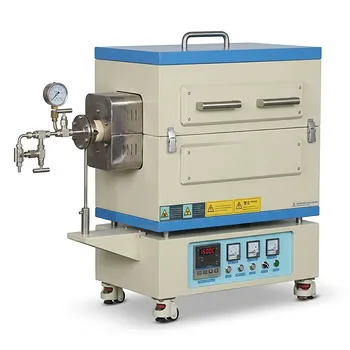
High Temperature Split Tube Furnace 1500C for Material Research Vacuum and Atmosphere Thermal Processing
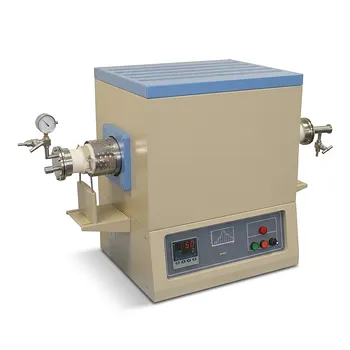
1700C High Temperature Alumina Tube Furnace with 18 Inch Heated Zone and Vacuum Sealing Flanges

1800C High Temperature Compact Vacuum Tube Furnace with 60mm OD Alumina Tube and Kanthal MoSi2 Heating Elements

Compact High Temperature 1600C Tube Furnace with 50mm Alumina Tube and Vacuum Flanges for Material Sintering
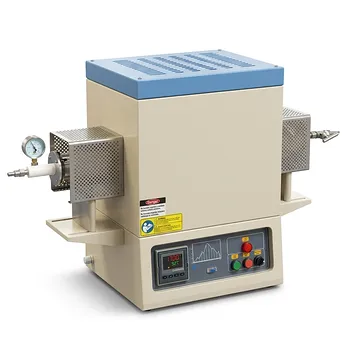
High Temperature Three Zone Tube Furnace 1700C with Alumina Tube and Water Cooled Flanges
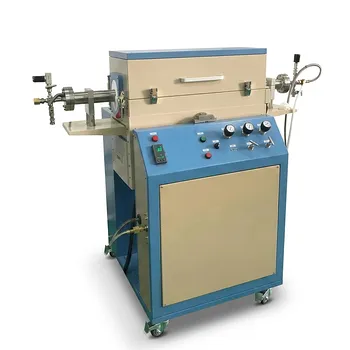
High Temperature Rocking Tube Furnace 1700°C Alumina Processing Tube with Precision Oscillation for Material Synthesis
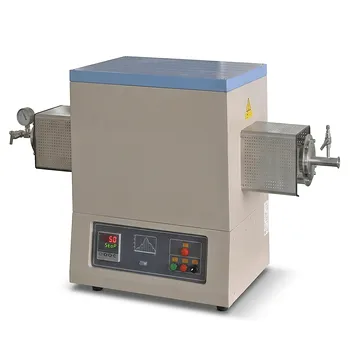
High Temperature 1700C Tube Furnace with 4 Inch OD Alumina Tube and Vacuum Sealing Flanges

High Temperature 1700C Vertical Tube Furnace for Powder Spherification and Material Sintering
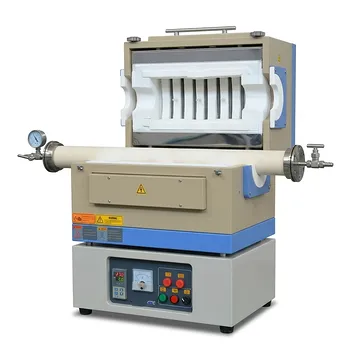
High Temperature 1600C Split Tube Furnace Vacuum Flanges Valves Optional 60mm 80mm Alumina Tube

High Temperature Automated 5 Inch Tube Furnace for Autonomous Material Research and Advanced Laboratory R&D

High Temperature 1700C Six Zone Split Tube Furnace with Alumina Tube and Water Cooled Flanges
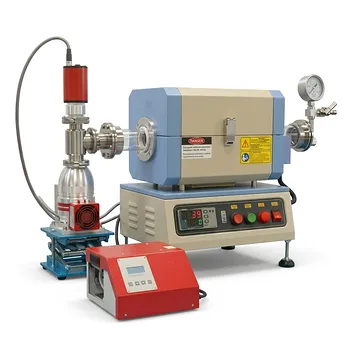
High Vacuum Compact Tube Furnace 1200C with Integrated Turbo Pump System and 8 Inch Heating Zone
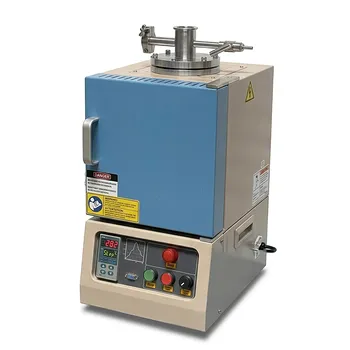
High Temperature Hybrid Muffle and Tube Furnace with Vacuum Capability and PID Control
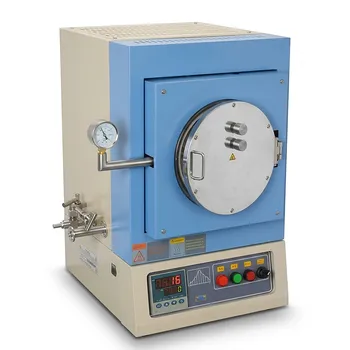
1100°C High Temperature Quartz Chamber Furnace 8 Inch OD with 7.6 Liter Capacity and Vacuum Atmosphere Capability

1100C Tube Furnace with Vacuum Flange and Programmable Temperature Controller for Material Science and Industrial Heat Treatment