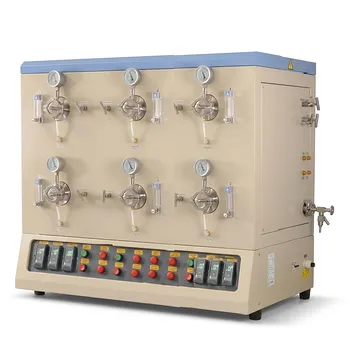
How does a programmable horizontal tube furnace contribute to the annealing of Cr-Al-C MAX phases? Enhance Phase Purity
Updated 3 months ago
A programmable horizontal tube furnace is the engine for atomic rearrangement. It transforms amorphous precursors into crystalline Chromium Aluminum Carbon (Cr-Al-C) MAX phases by providing a stable nitrogen environment and precise heating ramps that drive solid-state diffusion.
The furnace serves as a controlled reactor that manages the delicate transition from precursor materials to layered crystalline structures. By strictly regulating temperature and atmosphere, it ensures phase purity and prevents the oxidation of sensitive metallic components.
Precision Thermal Profiling for Structural Integrity
Managed Decomposition of Organic Components
The programmable nature of the furnace allows for a strictly controlled heating rate, often set at 2°C per minute. This slow ramp is vital for the steady decomposition of organic binders or precursors used in the initial stages of synthesis.
Driving Atomic Diffusion and Rearrangement
At a consistent dwell temperature—typically 900°C for 5 hours—the furnace provides the kinetic energy necessary for atoms to migrate. This sustained thermal energy facilitates the solid-state diffusion required to transform amorphous material into the highly ordered, layered structure characteristic of Cr-Al-C MAX phases.
Establishing the Characteristic Layered Structure
The uniform thermal field within the horizontal tube ensures that the entire sample undergoes the same crystallization process. This uniformity is critical for obtaining high-quality MAX phase crystals, where atomic layers must be perfectly interleaved without structural defects.
Atmospheric Management and Oxidation Prevention
The Role of a Sealed Chemical Environment
The horizontal tube furnace features a sealed structure that allows for the total displacement of oxygen. By maintaining a continuous, stable flow of nitrogen or argon, the furnace prevents the oxidation of chromium and aluminum raw materials at high temperatures.
Reducing the Reaction Energy Barrier
When used in conjunction with methods like sol-gel synthesis, the tube furnace can achieve high-quality results at lower temperatures (e.g., 900°C). This synergy reduces the reaction energy barrier, allowing for the formation of complex MAX phases without the need for extreme pressures or temperatures exceeding 1000°C.
Precision Atmosphere Regulation
Beyond just providing an inert shield, the furnace allows for the accurate regulation of the internal atmosphere flow rate. This stability is essential for "solid-state exchange reactions," where specific atoms must be embedded between carbide layers without disrupting the existing framework.
Understanding the Trade-offs
Thermal Gradients and Sample Positioning
While horizontal tube furnaces provide excellent stability, they can be susceptible to longitudinal thermal gradients. If the sample is not placed in the "hot zone" (the center of the tube), the edges may experience lower temperatures, leading to incomplete phase transformation.
Throughput and Scalability Limitations
Tube furnaces are primarily research-scale or small-batch tools. Their narrow diameter limits the volume of material that can be processed at once compared to industrial box furnaces, which can make large-scale production more time-consuming.
Atmosphere Recovery Times
Any breach in the seal or fluctuation in gas flow can introduce oxygen, which rapidly compromises the MAX phase purity. Recovering the high-purity inert environment after loading a sample requires significant purging time, which must be factored into the production cycle.
How to Apply This to Your Project
Making the Right Choice for Your Goal
- If your primary focus is Phase Purity: Use a slow heating ramp of 2°C per minute and high-purity nitrogen to ensure complete organic decomposition and zero oxidation.
- If your primary focus is Cost-Efficiency: Pair the tube furnace with a sol-gel precursor method to keep your annealing temperatures at or below 900°C, avoiding the wear and energy costs of 1500°C operations.
- If your primary focus is Structural Perfection: Ensure your sample resides entirely within the calibrated "constant temperature zone" of the furnace tube to prevent gradient-induced defects.
The programmable horizontal tube furnace is the essential tool for moving MAX phase synthesis from theoretical chemistry to repeatable, high-performance material science.
Summary Table:
| Feature | Contribution to MAX Phase Synthesis | Key Parameters/Notes |
|---|---|---|
| Precise Thermal Ramps | Manages decomposition of organic precursors | 2°C per minute heating rate |
| Sustained Dwell Time | Provides kinetic energy for solid-state diffusion | ~900°C for 5 hours |
| Atmospheric Control | Prevents oxidation of Chromium and Aluminum | Nitrogen or Argon gas flow |
| Uniform Heat Field | Ensures characteristic layered structure formation | Precise sample "hot zone" alignment |
Elevate Your Material Research with THERMUNITS
Achieving the perfect crystalline structure in Cr-Al-C MAX phases requires uncompromising thermal precision. THERMUNITS is a leading manufacturer of high-temperature laboratory equipment designed specifically for material science and industrial R&D.
We offer a comprehensive range of thermal processing solutions, including Tube, Muffle, Vacuum, Atmosphere, Rotary, and Hot Press furnaces, as well as CVD/PECVD systems, Dental Furnaces, and Vacuum Induction Melting (VIM) furnaces. Partner with us to benefit from equipment that ensures superior temperature uniformity, oxidation prevention, and repeatable results for your most demanding heat treatment projects.
Contact THERMUNITS Today for Expert Consultation
References
- Muhammad Shahbaz, Muhammad Zahid. Synthesis and characterization of chromium aluminum carbide MAX phases (CrxAlCx-1) for potential biomedical applications. DOI: 10.3389/fchem.2024.1413253
Mentioned Products
- 1100C Tube Furnace with Vacuum Flange and Programmable Temperature Controller for Material Science and Industrial Heat Treatment
- 1250C Compact Split Tube Furnace with 8 Inch Heating Zone and Programmable Controller
- 1200°C 10-Zone Split Tube Furnace with Horizontal and Vertical Mounting for Multi-Zone Thermal Gradients and Large Diameter Material Processing
- High Temperature Hybrid Muffle and Tube Furnace 1700C Programmable PID Controlled Box System with Vacuum Flange and Alumina Processing Tube
- Multi Position Tube Furnace 1100C for Laboratory Material Research and Advanced Industrial Thermal Processing
People Also Ask
- What are the advantages of 1100°C tube furnaces for ORR catalysts? Boost Conductivity and Structural Stability.
- What role does a tube furnace play in PS template removal? Ensure ZnO/SiO2 Structural Integrity & High Performance.
- What core functions does a high-temperature vacuum tube furnace provide? Optimize np-CuSn Sintering & Joint Integrity
- What is the role of a high-temperature tube furnace in the calcination process of ZnO/In2O3 nanocomposites?
- What impact does the heating rate of a tube furnace have on biochar microstructure? Optimize Your Material R&D.

Tech Team · ThermUnits
Last updated on Jun 02, 2026
Related Products
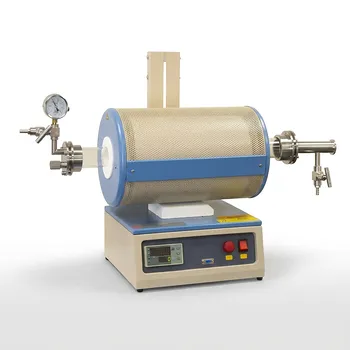
1100C Tube Furnace with Vacuum Flange and Programmable Temperature Controller for Material Science and Industrial Heat Treatment
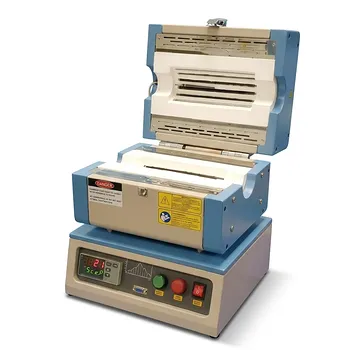
1250C Compact Split Tube Furnace with 8 Inch Heating Zone and Programmable Controller
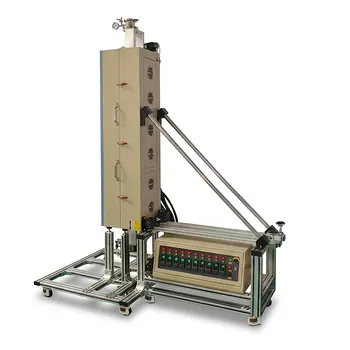
1200°C 10-Zone Split Tube Furnace with Horizontal and Vertical Mounting for Multi-Zone Thermal Gradients and Large Diameter Material Processing
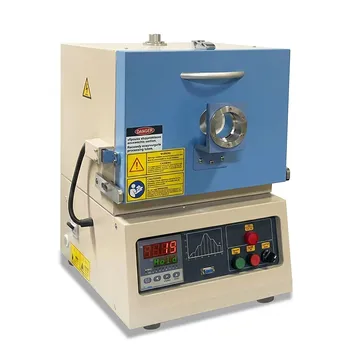
High Temperature Hybrid Muffle and Tube Furnace 1700C Programmable PID Controlled Box System with Vacuum Flange and Alumina Processing Tube
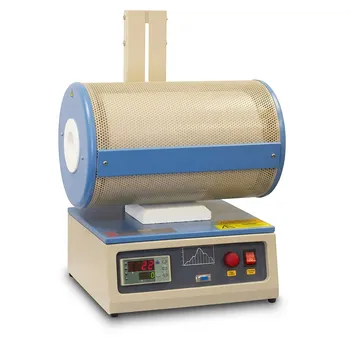
Multi Position Tube Furnace 1100C for Laboratory Material Research and Advanced Industrial Thermal Processing
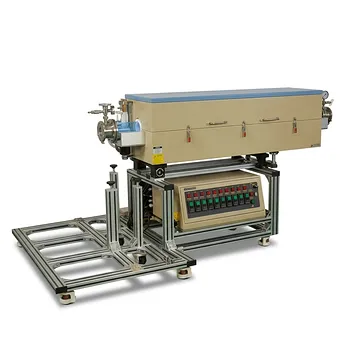
Ten Zone Multi Orientation Laboratory Tube Furnace for 1200C High Temperature Gradient Thermal Processing
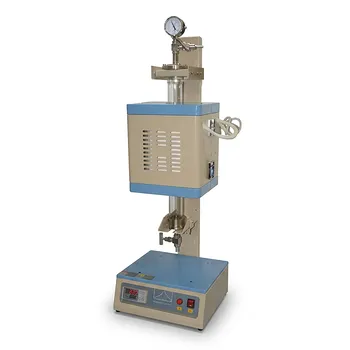
Compact Vertical Split Quartz Tube Furnace with Stainless Steel Vacuum Flanges for Rapid Thermal Quenching and Controlled Atmosphere Material Processing
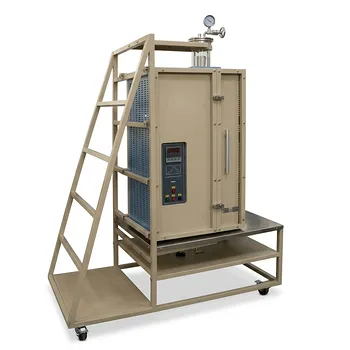
Split Vertical Tube Furnace with 1200C Quartz Tube and Stainless Steel Vacuum Flanges for Rapid Thermal Processing
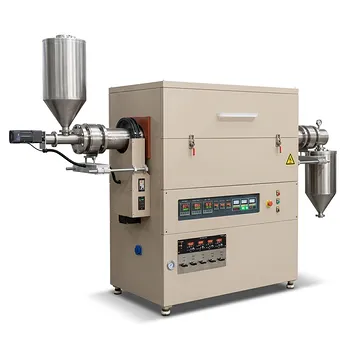
High Temperature Tilting Rotary Tube Furnace with Integrated Mass Flow Control and Multi Zone Heating

Vertical 1700C Vacuum and Atmosphere Tube Furnace with 80mm Alumina Tube

High Temperature 1700C Vertical Tube Furnace for Powder Spherification and Material Sintering
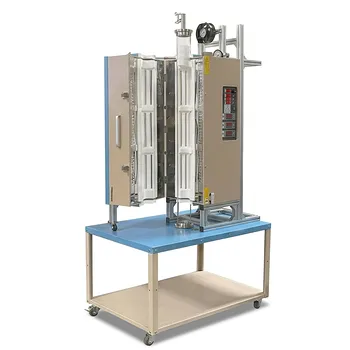
1200C Three Zone Split Vertical Tube Furnace 4 Inch Quartz Tube Stainless Steel Vacuum Flanges
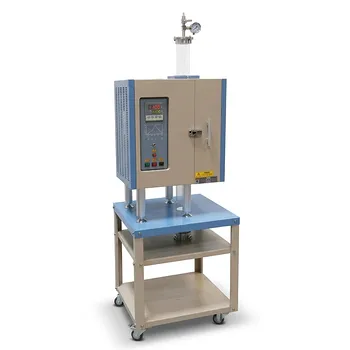
1100°C Split Vertical Tube Furnace with 80mm Quartz Tube and Stainless Steel Vacuum Flanges
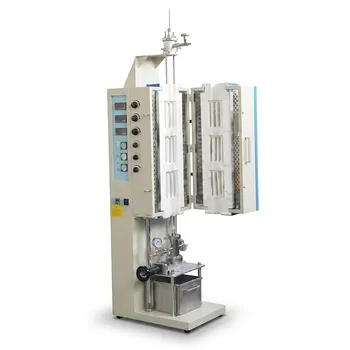
High Temperature Dual Zone Tube Furnace for Material Science Research and Professional Thermal Processing
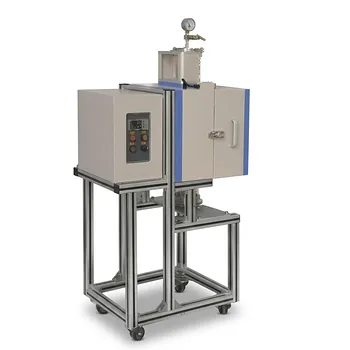
1200°C 5 Inch Vertical Quartz Tube Furnace with Stainless Steel Vacuum Flanges
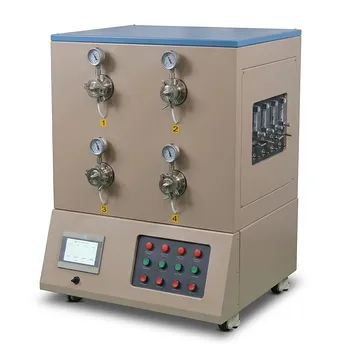
High Throughput 1200C Four Channel Tube Furnace with 3 Inch Quartz Tubes for Multi Zone Annealing and Material Research
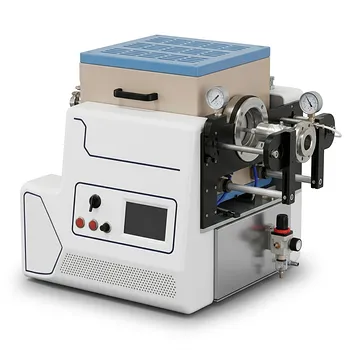
High Temperature Automated 5 Inch Tube Furnace for Autonomous Material Research and Advanced Laboratory R&D
1200C Max Three Zone Tube Furnace 6 Inch OD Max with Tube and Flange
High Temperature 1700C Six Zone Split Tube Furnace with Alumina Tube and Water Cooled Flanges