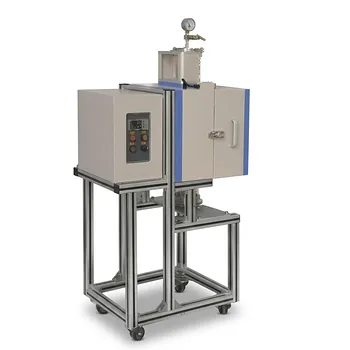
How does a tube atmosphere furnace facilitate the thermochemical conversion of grubs feces into biochar? Expert Insights
Updated 3 months ago
The tube atmosphere furnace serves as a precision-controlled bioreactor that facilitates the thermochemical conversion of grubs feces by providing an oxygen-free environment for pyrolysis. By strictly regulating temperatures between 450°C and 750°C and maintaining a stable nitrogen flow, the furnace triggers chemical decomposition pathways—specifically dehydration, decarburization, and deoxygenation—that transform raw organic waste into a stable, carbon-rich biochar.
The core function of the tube atmosphere furnace is to decouple heat from oxygen, allowing grubs feces to undergo thermal degradation without combusting. This precise control ensures the formation of a high-aromaticity carbon skeleton and a complex pore structure that would be destroyed in a standard furnace.
The Role of Atmospheric Control in Pyrolysis
Creating an Oxygen-Deficient Environment
To prevent the grubs feces from simply burning into ash, the furnace maintains a strictly anaerobic or oxygen-limited environment. This is typically achieved by injecting high-purity nitrogen at a stable flow rate, such as 20 mL/min, which displaces oxygen and prevents aerobic combustion.
Protecting the Carbon Skeleton
By establishing an inert gas shield, the furnace protects the nascent carbon structures during high-temperature phases. This protection is vital for ensuring the resulting biochar retains a high fixed carbon content and a solid skeletal structure rather than being oxidized into carbon dioxide.
Regulating Volatile Removal
The controlled atmosphere allows for the systematic removal of volatile components from the feces. As these gases are purged by the nitrogen flow, they leave behind a network of spaces, contributing to the development of a porous carbonaceous material.
Thermal Dynamics and Chemical Transformation
Precise Heating Rates
The furnace facilitates specific chemical pathways by applying a consistent heating rate, often set at 15 °C/min. Controlled ramping prevents the material from "flashing," which helps in maintaining the integrity of the pore structure and ensures a more uniform chemical transition.
Dehydration and Deoxygenation
As temperatures rise within the sealed tube, the grubs feces undergo dehydration and deoxygenation. These reactions strip away hydrogen and oxygen atoms, which are typical of raw organic matter, leaving behind a denser, more stable carbon-rich residue.
Decarburization and Aromaticity
At peak pyrolysis temperatures—ranging from 450°C to 750°C—the material undergoes decarburization. This process reorganizes the remaining carbon atoms into a high-aromaticity carbon skeleton, which is the defining characteristic of high-quality biochar.
Structural Evolution of the Biochar
Development of Pore Systems
The furnace's ability to maintain stable temperatures is critical for constructing a complex pore system. These pores are essential for applications like phosphate adsorption or use as fillers in industrial processes, as they provide a high specific surface area.
Enrichment of Carbon Elements
Through thermal decomposition, the furnace effectively enriches carbon elements while removing non-essential organic components. This transformation is what turns a soft organic waste product into a mechanically and chemically stable biochar filler.
Customization of Physical Properties
By adjusting variables like residence time and peak temperature, operators can customize the biochar’s properties. This allows for the fine-tuning of the fixed carbon content and volatile matter ratio to meet specific industrial requirements, such as those used in steelmaking or activation.
Understanding the Trade-offs
Equipment Complexity and Cost
Operating a tube atmosphere furnace requires precise sealing mechanisms and high-purity gas supplies, which increases operational costs compared to open-air kilns. Any leak in the system can introduce oxygen, leading to sample oxidation and a total loss of the biochar's structural integrity.
Throughput vs. Precision
These furnaces are designed for high-precision thermal treatment rather than high-volume processing. While they offer superior control over the biochar's chemical signature, the small diameter of the tubes limits the amount of grubs feces that can be processed in a single batch.
Temperature-Dependent Yield
Higher pyrolysis temperatures (e.g., 750°C) produce biochar with higher aromaticity and stability but result in a lower overall yield. Conversely, lower temperatures increase the yield but may leave behind more volatile matter, which might be undesirable for certain high-performance applications.
How to Optimize Your Biochar Production
Before beginning the conversion process, define the intended application for the biochar to determine the optimal furnace settings.
- If your primary focus is high surface area and porosity: Set the furnace to a moderate temperature (around 500-600°C) with a slower heating rate to allow for gradual pore development.
- If your primary focus is maximum carbon stability and aromaticity: Utilize the higher end of the temperature range (750°C) and ensure a rigorous nitrogen purge to facilitate deep decarburization.
- If your primary focus is maximizing biochar yield: Operate at the lower end of the effective pyrolysis range (approximately 450°C) to minimize the loss of mass to volatile gases.
The tube atmosphere furnace remains the definitive tool for transforming grubs feces into a high-value, engineered carbon material through total control over the thermochemical environment.
Summary Table:
| Process Parameter | Role in Conversion | Outcome for Biochar |
|---|---|---|
| Inert Atmosphere | Displaces oxygen using nitrogen flow | Prevents combustion; protects carbon skeleton |
| Temperature (450-750°C) | Regulates thermal degradation | Enhances aromaticity and chemical stability |
| Heating Rate control | Prevents material "flashing" | Ensures uniform pore structure development |
| Volatile Purging | Systematically removes organic gases | Creates high specific surface area and porosity |
Advance Your Material Research with THERMUNITS
Are you looking to optimize your thermochemical conversion processes or scale up your laboratory R&D? THERMUNITS is a leading manufacturer of high-performance thermal processing solutions designed for precision and reliability.
Our extensive range of equipment includes:
- Precision Furnaces: Tube, Muffle, Vacuum, Atmosphere, and Rotary furnaces.
- Advanced Systems: CVD/PECVD systems, Hot Press furnaces, and Vacuum Induction Melting (VIM).
- Specialized Tools: Dental furnaces, electric rotary kilns, and high-quality thermal elements.
Whether you are engineering carbon-rich biochar or developing new materials, our team of experts is ready to provide the custom heat treatment solutions you need to succeed.
Ready to elevate your lab’s efficiency? Contact us today to discuss your project requirements!
References
- Qingsong Zhao, Penggang Pei. Effect of pyrolysis temperature on physicochemical characteristics and toxic elements for grub manure-derived biochar. DOI: 10.1039/d4ra03778b
Mentioned Products
- 1750°C High Temperature Benchtop Vacuum Atmosphere Tube Furnace with Kanthal Super 1800 Heating Elements and 60mm Alumina Processing Tube
- Vertical 1700C Vacuum and Atmosphere Tube Furnace with 80mm Alumina Tube
- 1200C Hybrid Muffle and Tube Furnace for Material Research with Dual Atmosphere Control Quartz Tubes
- Compact Hybrid Muffle and Tube Furnace for 1000C Controlled Atmosphere Laboratory Material Sintering
- Compact Vertical Split Quartz Tube Furnace with Stainless Steel Vacuum Flanges for Rapid Thermal Quenching and Controlled Atmosphere Material Processing
People Also Ask
- What core functions does a high-temperature vacuum tube furnace provide? Optimize np-CuSn Sintering & Joint Integrity
- What is the role of a high-temperature tube furnace in the calcination process of ZnO/In2O3 nanocomposites?
- What role does a high-temperature tube furnace play in the sulfidation heat treatment of CoS@C/MXene nanocomposites? Guide
- Why is a high-temperature tube furnace required for CuAlO2 heat treatment? Master Phase Transformation Today
- What role does a high-temperature tube furnace play in executing nitrogen absorption kinetic experiments? Expert Insights

Tech Team · ThermUnits
Last updated on Jun 02, 2026
Related Products
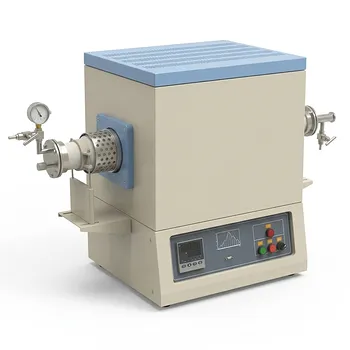
1750°C High Temperature Benchtop Vacuum Atmosphere Tube Furnace with Kanthal Super 1800 Heating Elements and 60mm Alumina Processing Tube

Vertical 1700C Vacuum and Atmosphere Tube Furnace with 80mm Alumina Tube
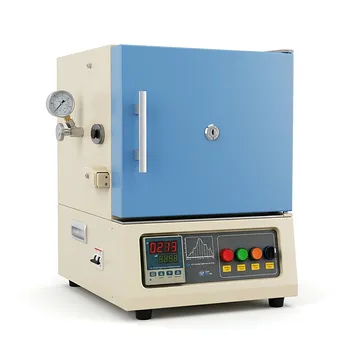
1200C Hybrid Muffle and Tube Furnace for Material Research with Dual Atmosphere Control Quartz Tubes
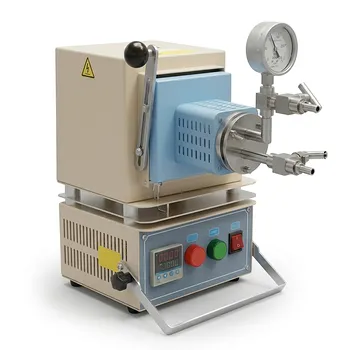
Compact Hybrid Muffle and Tube Furnace for 1000C Controlled Atmosphere Laboratory Material Sintering

Compact Vertical Split Quartz Tube Furnace with Stainless Steel Vacuum Flanges for Rapid Thermal Quenching and Controlled Atmosphere Material Processing
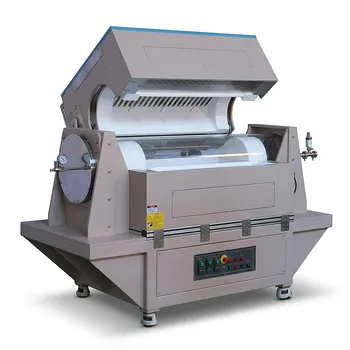
Three Zone Tube Furnace with 11 Inch or 15 Inch Quartz Tube and Hinged Flanges for Vacuum Atmosphere Heat Treatment
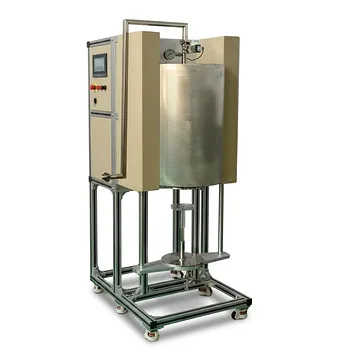
1200°C Atmosphere Controlled Automatic Bottom Loading Furnace with 6 Inch Quartz Tube
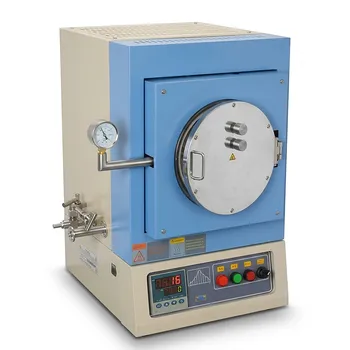
1100°C High Temperature Quartz Chamber Furnace 8 Inch OD with 7.6 Liter Capacity and Vacuum Atmosphere Capability
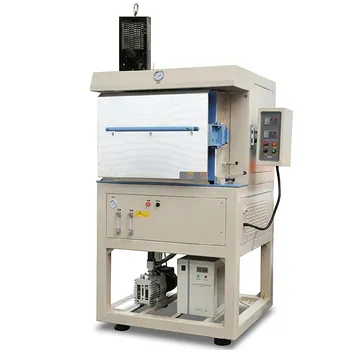
1200C Hydrogen Atmosphere Box Furnace with 5 Heated Sides and 64L Chamber
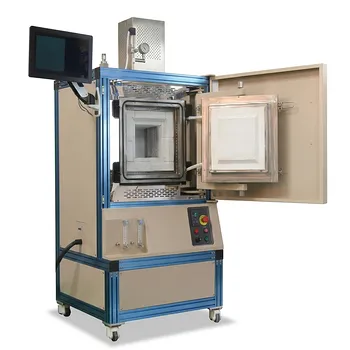
High Temperature Hydrogen Atmosphere Box Furnace 1650C Max Reducing Environment Material Synthesis System 8x8x8 Chamber
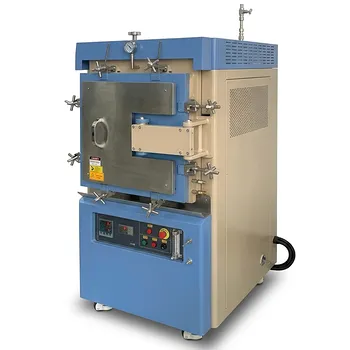
Atmosphere Controlled Muffle Furnace 1700C Maximum Temperature 80L High Capacity Vacuum Inert Gas Box Furnace

High Temperature 1700C Vertical Tube Furnace for Powder Spherification and Material Sintering
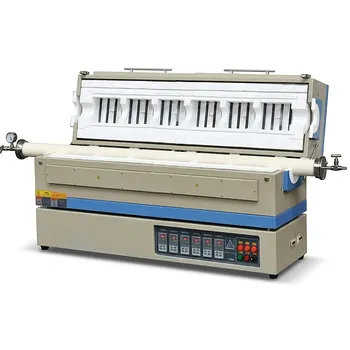
High Temperature 1700C Six Zone Split Tube Furnace with Alumina Tube and Water Cooled Flanges
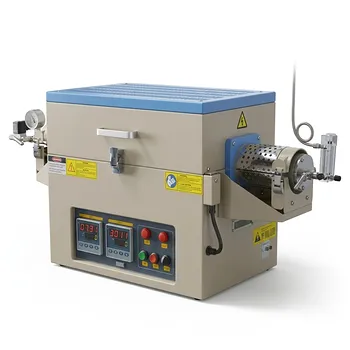
1100C Dual Zone Hydrogen Gas Tube Furnace with Quartz Tube and Integrated H2 Leak Detection System

High Temperature 1700C Tube Furnace with High Vacuum Turbomolecular Pump System and Multi Channel Mass Flow Controller Gas Mixer

1800C High Temperature Compact Vacuum Tube Furnace with 60mm OD Alumina Tube and Kanthal MoSi2 Heating Elements
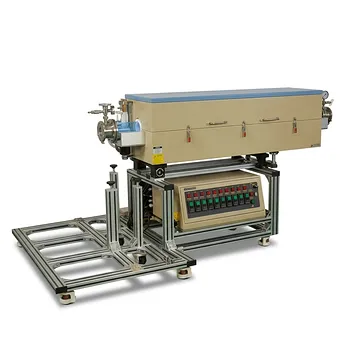
Ten Zone Multi Orientation Laboratory Tube Furnace for 1200C High Temperature Gradient Thermal Processing
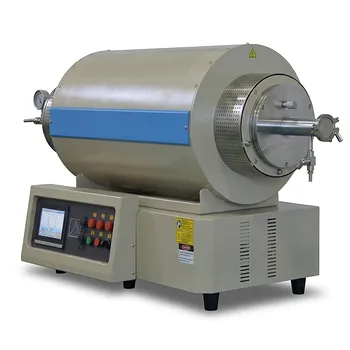
1200C Max Three Zone Tube Furnace 6 Inch OD Max with Tube and Flange

High Temperature 1700C Benchtop Tube Furnace with 5 Inch Heating Zone High Purity Alumina Tube and Vacuum Sealing Flanges