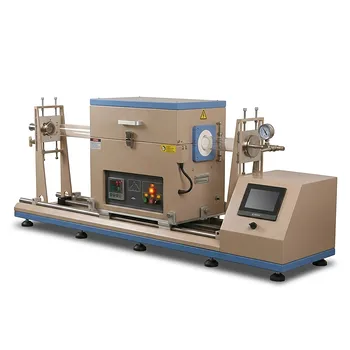
How does a tube furnace contribute to the chemical activation of biochar? Mastering Precision for High Porosity
Updated 3 months ago
The tube furnace serves as the critical reaction chamber for the secondary thermal treatment required to transform biochar into activated carbon. By maintaining a constant temperature of 450°C for 120 minutes, the furnace facilitates the chemical reaction between phosphoric acid and the carbon framework. This precise environment is what enables the development of high porosity and a significantly increased specific surface area.
The tube furnace is the indispensable catalyst for biochar activation, providing the exact thermal precision and inert nitrogen atmosphere necessary for phosphoric acid to chemically etch a complex pore structure into the carbon substrate without losing material to combustion.
The Role of Controlled Thermal Environments
Precision Temperature Regulation
The primary function of the tube furnace in this process is to maintain a stable, high-temperature environment. For phosphoric acid activation, the furnace is typically set to 450°C, a temperature that promotes the necessary thermochemical reactions while preventing the over-sintering of the carbon pores.
Controlled Heating Rates
Tube furnaces allow researchers to set specific heating rates, such as 5°C to 10°C per minute. This gradual increase is essential to prevent structural shock to the biomass, ensuring that dehydration and degassing occur steadily rather than explosively.
Uniform Heat Distribution
Unlike standard ovens, a horizontal or atmosphere tube furnace ensures uniform heating of the pre-treated biomass. This uniformity is vital for creating a consistent product where every grain of biochar has reacted equally with the phosphoric acid.
Facilitating the Chemical Reaction
Maintaining an Inert Atmosphere
The furnace creates an oxygen-free environment by using a continuous flow of high-purity nitrogen. This anaerobic condition is critical; without it, the carbon would simply burn (combust) at 450°C rather than undergoing the controlled carbonization and activation required.
Catalyst Interaction and Etching
Under the heat provided by the furnace, the phosphoric acid acts as an activating agent that strips hydrogen and oxygen from the biomass. This process, facilitated by the furnace’s stable heat, leads to the reorganization of carbon elements into stable graphitic or amorphous frameworks.
Removal of Volatile Matter
The high-temperature environment effectively drives off volatile organic compounds and moisture. As these volatiles are removed, the spaces they once occupied—combined with the chemical etching of the acid—result in a rich, interconnected pore structure.
Understanding the Trade-offs
Equipment Limitations and Risks
While tube furnaces provide unmatched precision, they are limited by batch capacity, making them more suited for laboratory or pilot-scale production than massive industrial throughput. Additionally, the use of phosphoric acid at high temperatures is corrosive, which can degrade the furnace's internal quartz or ceramic tubes over time if not properly maintained.
Balancing Time and Temperature
Increasing the temperature beyond the recommended 450°C or extending the 120-minute duration might seem beneficial for porosity, but it often leads to carbon burn-off. This results in a lower yield and a potential collapse of the very micropores the process intends to create.
Optimizing Your Activation Process
How to Apply This to Your Project
To achieve the highest performance from your activated biochar, you must align your furnace settings with your specific material goals.
- If your primary focus is maximum surface area: Strictly adhere to a slow heating rate of 5°C/min and a precise 450°C dwell time to allow for deep phosphoric acid penetration.
- If your primary focus is structural stability: Ensure a rigorous nitrogen purge before heating to eliminate all oxygen, preventing the oxidative degradation of the carbon walls.
- If your primary focus is functional group doping: Utilize the tube furnace’s ability to maintain high temperatures (up to 700°C) to facilitate the effective integration of elements like boron or nitrogen into the framework.
Mastering the thermal precision of the tube furnace is the single most important factor in successfully converting raw biomass into a high-performance functional material.
Summary Table:
| Key Feature | Role in Biochar Activation | Optimization Tip |
|---|---|---|
| Temperature Control | Maintains stable 450°C to facilitate acid etching without sintering. | Use a precise 120-minute dwell for uniform pore development. |
| Atmosphere Control | Provides an inert N₂ environment to prevent carbon combustion. | Ensure a rigorous nitrogen purge before heating to protect carbon walls. |
| Heating Rate | Controlled ramp (5-10°C/min) prevents structural shock and degassing. | Stick to 5°C/min for maximum specific surface area penetration. |
| Heat Uniformity | Ensures consistent reaction across all biomass grains. | Choose horizontal or atmosphere tube furnaces for batch consistency. |
Elevate Your Material Research with THERMUNITS Precision
Are you looking to achieve superior porosity and surface area in your activated carbon projects? THERMUNITS is a leading manufacturer of high-performance high-temperature laboratory equipment specifically designed for material science and industrial R&D.
We provide the thermal precision and atmosphere control necessary to master complex chemical processes like biochar activation. Our comprehensive range includes:
- Tube & Atmosphere Furnaces: Perfect for precise phosphoric acid activation and inert gas processing.
- Vacuum & CVD/PECVD Systems: Advanced solutions for specialized material synthesis.
- Muffle, Rotary, & Hot Press Furnaces: Versatile tools for diverse heat treatment needs.
- Dental & VIM Furnaces: Specialized equipment for medical and metallurgical applications.
Don't let equipment limitations hinder your breakthrough. Contact our expert team today to find the ideal thermal processing solution for your laboratory and take your research to the next level!
References
- Younes Dehmani, Éder C. Lima. Copper and nickel composite carbon catalysts prepared from olive husks on the adsorption process of phenol and p-nitrophenol: Comparative theoretical study via an analytical model. DOI: 10.1016/j.molliq.2024.125346
Mentioned Products
- Vertical 1700C Vacuum and Atmosphere Tube Furnace with 80mm Alumina Tube
- Compact High Temperature 1600C Tube Furnace with 50mm Alumina Tube and Vacuum Flanges for Material Sintering
- 900°C Max Rotary Tube Furnace with 8 Inch 310S Alloy Tube and Optional Multi Zone Heating for Industrial Material Calcination
- Split Vertical Tube Furnace with 1200C Quartz Tube and Stainless Steel Vacuum Flanges for Rapid Thermal Processing
- High Temperature 1700C Tube Furnace with High Vacuum Turbomolecular Pump System and Multi Channel Mass Flow Controller Gas Mixer
People Also Ask
- How is an industrial-grade vertical tube furnace utilized in smelting leaching residues? Enhance Metal Recovery Efficiency
- What is the function of a laboratory-grade vertical tube furnace in fast pyrolysis? Optimize Composite Research.
- How does a vertical tube furnace facilitate thermoelectric alloy melting? Precision synthesis for material homogeneity.
- Why is a thermocouple sensor indispensable for monitoring the vertical tube furnace during gallium oxide nanowire production? Optimize VLS Growth
- What are the advantages of using a vertical tube furnace for crucible experiments simulating steel-slag interactions?

Tech Team · ThermUnits
Last updated on Jun 02, 2026
Related Products

Vertical 1700C Vacuum and Atmosphere Tube Furnace with 80mm Alumina Tube

Compact High Temperature 1600C Tube Furnace with 50mm Alumina Tube and Vacuum Flanges for Material Sintering
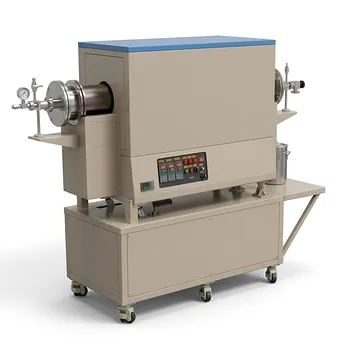
900°C Max Rotary Tube Furnace with 8 Inch 310S Alloy Tube and Optional Multi Zone Heating for Industrial Material Calcination
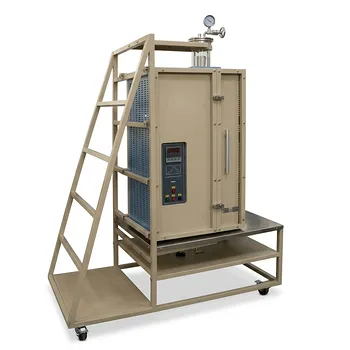
Split Vertical Tube Furnace with 1200C Quartz Tube and Stainless Steel Vacuum Flanges for Rapid Thermal Processing

High Temperature 1700C Tube Furnace with High Vacuum Turbomolecular Pump System and Multi Channel Mass Flow Controller Gas Mixer

1100C Tube Furnace with Vacuum Flange and Programmable Temperature Controller for Material Science and Industrial Heat Treatment

5 Inch Three Zone Rotary Tube Furnace with Integrated Gas Delivery System and 1200C Capability for Advanced Material CVD Processing

1700C Hydrogen Gas Tube Furnace with 60mm Alumina Process Tube and Integrated Hydrogen Safety Detector

1200°C 5 Inch Vertical Quartz Tube Furnace with Stainless Steel Vacuum Flanges

High Temperature 1700C Six Zone Split Tube Furnace with Alumina Tube and Water Cooled Flanges

Compact Vertical Split Quartz Tube Furnace with Stainless Steel Vacuum Flanges for Rapid Thermal Quenching and Controlled Atmosphere Material Processing

High Temperature 1700C Benchtop Tube Furnace with 5 Inch Heating Zone High Purity Alumina Tube and Vacuum Sealing Flanges

1200C High Throughput Multi Channel Tube Furnace with 50mm Quartz Tubes for Annealing and Material Phase Diagram Research

Three Zone Tube Furnace with 11 Inch or 15 Inch Quartz Tube and Hinged Flanges for Vacuum Atmosphere Heat Treatment

1800C High Temperature Compact Vacuum Tube Furnace with 60mm OD Alumina Tube and Kanthal MoSi2 Heating Elements

High Temperature 1700C Vertical Tube Furnace for Powder Spherification and Material Sintering
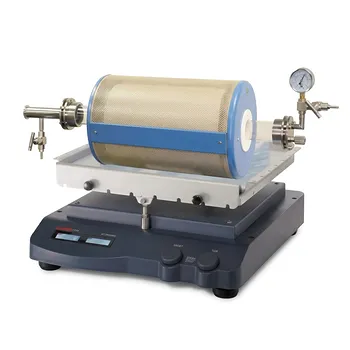
High Temperature Rocking Tube Furnace with Quartz Tube and Vacuum Flange for Materials Synthesis

High Temperature Automated 5 Inch Tube Furnace for Autonomous Material Research and Advanced Laboratory R&D
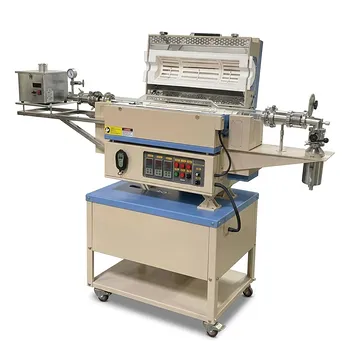
5 Inch Rotary Tube Furnace with Automatic Feeding and Receiving System 1200C Three Zone CVD Powder Processing