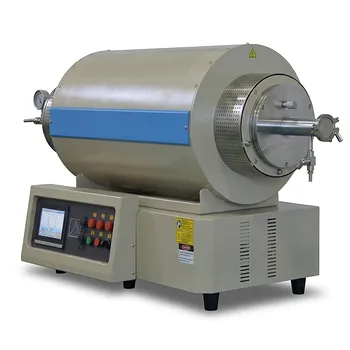
How does a tube furnace facilitate the conversion of precursors into metal phosphides? Optimize Gas-Solid Reactions.
Updated 3 months ago
A tube furnace facilitates phosphidation by acting as a controlled chemical reactor that orchestrates a gas-solid phase reaction between a vaporized phosphorus source and a solid precursor. By utilizing precise spatial positioning, a stable thermal field, and a continuous carrier gas flow, the furnace ensures the uniform conversion of metal precursors into high-purity metal phosphides.
Core Takeaway: The tube furnace is essential because it provides the necessary environmental control to decompose phosphorus sources into reactive gases and transport them precisely to the precursor surface, preventing oxidation while ensuring complete phase transformation.
Spatial Orchestration of the Reaction
The Upstream/Downstream Configuration
The primary mechanism for phosphidation involves placing the phosphorus source (such as sodium hypophosphite) in the upstream section of the furnace and the metal precursor downstream. This arrangement uses the direction of gas flow to carry reactive vapors from the source directly to the target material.
Controlled Diffusion Rates
By adjusting the distance between the quartz boats containing the source and the precursor, researchers can precisely control the diffusion rate of the phosphine ($PH_3$) gas. This spatial management is critical for achieving a complete topological transformation and creating uniform active sites across the resulting material.
Thermal and Atmospheric Control
Precise Isothermal Heating
A tube furnace provides a stable isothermal heating zone, typically ranging from 300°C to 400°C for phosphidation, which is necessary for the controlled decomposition of the phosphorus source. This uniform thermal field ensures that the reaction is thorough and that the resulting metal phosphides possess a superior crystal phase structure.
Inert Atmosphere and Oxidation Prevention
The introduction of high-purity argon or argon/hydrogen mixtures creates a protective inert environment that is vital for the process. This atmosphere prevents metallic components from oxidizing at high temperatures, ensuring the final product is a pure metal phosphide phase rather than a metal oxide.
Gas-Solid Phase Interaction
As the phosphorus source decomposes, it evolves into phosphorus-containing vapors or phosphine gas. The furnace maintains a steady gas flow that forces these vapors to engage in a gas-solid phase reaction with the precursor, facilitating the construction of complex heterojunction interfaces.
Understanding the Trade-offs
Temperature Sensitivity and Phase Purity
While higher temperatures can accelerate the phosphidation process, exceeding the optimal range can lead to unwanted grain growth or the collapse of delicate nanostructures. Precise temperature programming is required to balance the rate of decomposition with the rate of phosphorus diffusion into the metal lattice.
Handling Hazardous Byproducts
The phosphidation process often generates phosphine ($PH_3$), a highly toxic and flammable gas. While the tube furnace provides a contained environment for this reaction, it necessitates specialized exhaust treatment and rigorous safety protocols to manage the hazardous effluent.
Limitations of Gas-Solid Diffusion
In a gas-solid phase reaction, the depth of phosphidation is limited by the ability of phosphorus atoms to diffuse into the solid precursor. If the precursor particles are too large or the gas flow is inconsistent, the reaction may only occur on the surface, leaving an unreacted metallic or oxide core.
How to Apply This to Your Project
Optimizing Your Phosphidation Setup
To achieve high-quality metal phosphides, your furnace parameters must be tailored to the specific precursors and desired crystal structures.
- If your primary focus is phase purity: Prioritize the use of high-purity argon and a strictly controlled isothermal zone to prevent any oxygen contamination or secondary phase formation.
- If your primary focus is nanostructure preservation: Use a dual-zone tube furnace to maintain a lower temperature for the precursor while separately heating the phosphorus source to its decomposition point.
- If your primary focus is uniform active sites: Carefully calibrate the gas flow rate and the distance between boats to ensure an even distribution of phosphine gas across the entire precursor surface.
The tube furnace remains the gold standard for phosphidation because it transforms a simple heating element into a precision instrument for molecular-level material engineering.
Summary Table:
| Feature | Function in Phosphidation | Impact on Material Quality |
|---|---|---|
| Upstream/Downstream Setup | Directs vaporized P-source to metal precursor | Ensures uniform conversion and high-purity phase. |
| Isothermal Heating | Maintains stable 300°C - 400°C zone | Promotes thorough reaction and superior crystal structure. |
| Inert Atmosphere | Uses Ar or Ar/H2 carrier gases | Prevents oxidation and maintains metallic phase purity. |
| Gas Flow Control | Manages phosphine (PH3) diffusion rates | Facilitates complex heterojunction interface construction. |
Elevate Your Material Synthesis with THERMUNITS
As a leading manufacturer of high-temperature laboratory equipment, THERMUNITS provides the precision tools required for advanced material science and industrial R&D. Our high-performance Tube Furnaces, CVD/PECVD systems, and Atmosphere Furnaces are specifically engineered to offer the stable thermal fields and atmospheric control necessary for successful phosphidation and complex heat treatments.
Whether you are developing next-generation catalysts or advanced semiconductors, our comprehensive range—including Vacuum, Rotary, and Hot Press furnaces—delivers the reliability your research demands. Contact our technical experts today to discuss your specific process requirements and discover how our thermal processing solutions can enhance your lab's efficiency and results.
References
- Zhong Li, Xiaochen Dong. Reversing the Interfacial Electric Field in Metal Phosphide Heterojunction by Fe‐Doping for Large‐Current Oxygen Evolution Reaction. DOI: 10.1002/advs.202308477
Mentioned Products
- High Temperature 1700C Vertical Tube Furnace for Powder Spherification and Material Sintering
- Compact Vertical Split Quartz Tube Furnace with Stainless Steel Vacuum Flanges for Rapid Thermal Quenching and Controlled Atmosphere Material Processing
- High Temperature Dual Zone Tube Furnace for Material Science Research and Professional Thermal Processing
- High Temperature 1700C Vertical Split Tube Furnace for Material Quenching and Single Crystal Growth
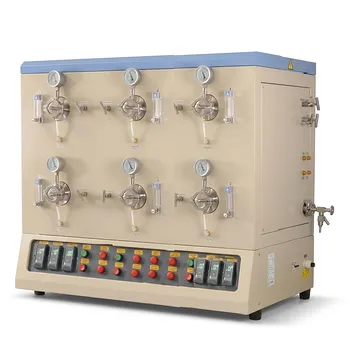
- 1200C High Throughput Multi Channel Tube Furnace with 50mm Quartz Tubes for Annealing and Material Phase Diagram Research
People Also Ask
- What role does a high-temperature vertical tube furnace play in simulating high-carbon ferromanganese slag formation?
- What functions does a vertical high-temperature tube furnace perform? Master Industrial Sintering & R&D Simulation
- What is the primary function of a high-temperature tube furnace in Cu1-N-C synthesis? Precision Thermal Control.
- High-Temp Tube Furnace Role in Converting Microbial Proteins to Iron Single-Atom Sites: Expert Synthesis Guide
- What impact does the heating rate of a tube furnace have on biochar microstructure? Optimize Your Material R&D.

Tech Team · ThermUnits
Last updated on Jun 03, 2026
Related Products

High Temperature 1700C Vertical Tube Furnace for Powder Spherification and Material Sintering
Compact Vertical Split Quartz Tube Furnace with Stainless Steel Vacuum Flanges for Rapid Thermal Quenching and Controlled Atmosphere Material Processing
High Temperature Dual Zone Tube Furnace for Material Science Research and Professional Thermal Processing
High Temperature 1700C Vertical Split Tube Furnace for Material Quenching and Single Crystal Growth
1200C High Throughput Multi Channel Tube Furnace with 50mm Quartz Tubes for Annealing and Material Phase Diagram Research
1200°C 5 Inch Vertical Quartz Tube Furnace with Stainless Steel Vacuum Flanges
1200C Sliding Tube Furnace for Rapid Thermal Processing and CVD Graphene Growth with 100mm OD Capacity
1100C High Pressure Rocking Tube Furnace with 2 Inch Super Alloy Processing Tube for Material Synthesis

Compact High Temperature 1600C Tube Furnace with 50mm Alumina Tube and Vacuum Flanges for Material Sintering
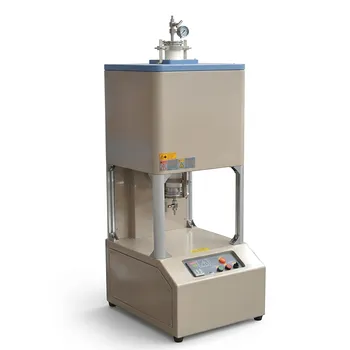
Vertical 1700C Vacuum and Atmosphere Tube Furnace with 80mm Alumina Tube
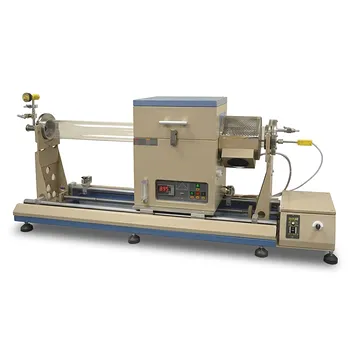
900 ºC Max Sliding RTP Tube Furnace with Rapid IR Heating and 4 Inch OD Quartz Tube
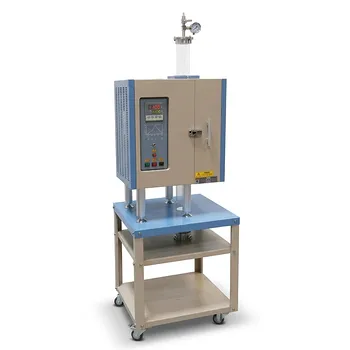
1100°C Split Vertical Tube Furnace with 80mm Quartz Tube and Stainless Steel Vacuum Flanges

1800C High Temperature Compact Vacuum Tube Furnace with 60mm OD Alumina Tube and Kanthal MoSi2 Heating Elements
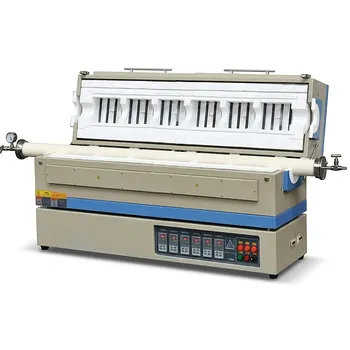
High Temperature 1700C Six Zone Split Tube Furnace with Alumina Tube and Water Cooled Flanges

High Temperature Automated 5 Inch Tube Furnace for Autonomous Material Research and Advanced Laboratory R&D
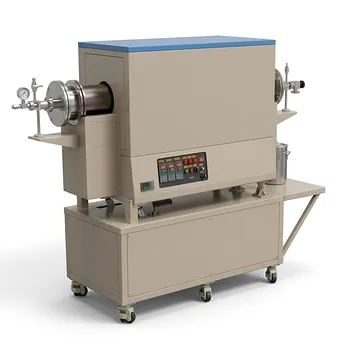
900°C Max Rotary Tube Furnace with 8 Inch 310S Alloy Tube and Optional Multi Zone Heating for Industrial Material Calcination
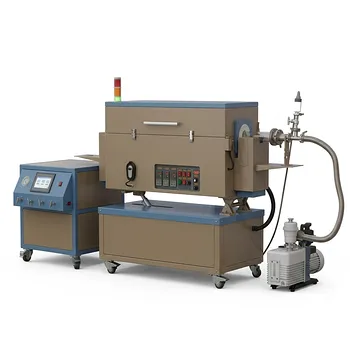
5 Inch Three Zone Rotary Tube Furnace with Integrated Gas Delivery System and 1200C Capability for Advanced Material CVD Processing
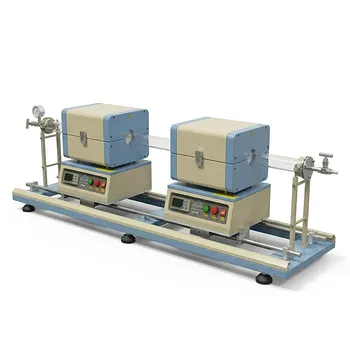
1200C Max Dual Sliding Tube Furnace with 50 mm Tube Flanges for CVD
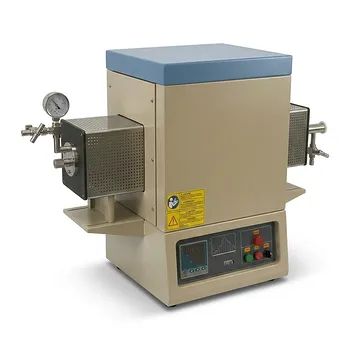
High Temperature 1700C Benchtop Tube Furnace with 5 Inch Heating Zone High Purity Alumina Tube and Vacuum Sealing Flanges