How does a tube furnace facilitate the transformation of self-assembled layers? Optimize Fe2O3 Cathode Coatings
Updated 3 months ago
The tube furnace acts as the primary catalyst for in-situ phase transformation by providing a precise thermal and atmospheric window. In this final stage of functionalization, the furnace maintains a constant temperature—typically 350°C—to trigger the thermal decomposition of oxalate ions and nitrate residues anchored to the cathode surface. This controlled reaction drives the transition of precursor iron ions into a thin, uniform, and chemically stable $Fe_2O_3$ coating.
Core Takeaway: A tube furnace facilitates $Fe_2O_3$ formation by providing the thermal energy required to strip away organic residues and stabilize iron ions into a uniform oxide shell. This process transforms a loose collection of surface precursors into a robust passivation layer that protects the battery's electrolyte from oxidative decay.
The Mechanism of Thermal Transformation
Decomposition of Surface Precursors
The primary role of the tube furnace is to facilitate the thermal decomposition of chemical "anchors" used during the self-assembly phase. At temperatures around 350°C, the furnace provides sufficient kinetic energy to break the bonds of oxalate ions and nitrate residues.
As these organic and inorganic precursors vaporize or decompose, they leave behind purified iron ions. This ensures that the resulting coating is not contaminated by residual processing chemicals that could interfere with electrochemical performance.
In-Situ Oxide Formation
The furnace enables an in-situ conversion process, meaning the protective layer forms directly on the surface of the cathode particles. This ensures a high degree of uniformity and adherence that would be difficult to achieve through mechanical mixing alone.
By precisely controlling the heating ramp and dwell time, the furnace ensures the iron ions reorganize into a thin, dense $Fe_2O_3$ layer. This layer acts as a physical barrier, passivating active sites on the cathode that would otherwise react negatively with the electrolyte.
The Role of Atmospheric Control
Preventing Material Degradation
Tube furnaces allow for the introduction of flowing oxygen or air, which is critical when working with high-nickel cathode materials. This oxidizing environment prevents the cathode from undergoing reduction or lithium loss at elevated temperatures.
Maintaining the correct atmosphere ensures that the cathode's internal crystal structure remains intact while the surface coating forms. Without this control, the material could lose its electrochemical activity, rendering the coating counterproductive.
Chemical Bond Stabilization
The thermal environment within the furnace promotes the formation of stable chemical bonds between the iron oxide nanosheets and the cathode surface. This bonding is essential for the mechanical integrity of the coating during the expansion and contraction of battery cycles.
The heat treatment essentially "welds" the $Fe_2O_3$ layer to the substrate at a molecular level. This ensures that the protective shell does not delaminate or crack when the battery is put into service.
Understanding the Trade-offs
Temperature Sensitivity and Phase Integrity
One of the primary challenges in this process is the narrow temperature window required for a pure $Fe_2O_3$ phase. If the furnace temperature exceeds the target (e.g., reaching 600°C) or if the atmosphere is switched to a reducing gas like argon, the coating may transform into electrochemically active $Fe_3O_4$ or amorphous carbon.
While these alternative structures have their own uses, they do not provide the same passivation benefits as $Fe_2O_3$. Precise isothermal control is mandatory to avoid unwanted side reactions that could change the chemical identity of the coating.
Balancing Thickness and Conductivity
The duration of the heat treatment determines the density and thickness of the $Fe_2O_3$ layer. While a thicker layer provides better protection against oxidative decomposition of the electrolyte, it can also increase interfacial resistance.
If the furnace dwell time is too long, the layer may become an insulating barrier that hinders the movement of lithium ions. Conversely, a treatment that is too short may result in an incomplete coating with exposed active sites.
How to Apply This to Your Process
When configuring a tube furnace for $Fe_2O_3$ coating formation, your technical parameters must align with the specific chemistry of your cathode material.
- If your primary focus is maximizing electrolyte stability: Ensure the furnace is set to 350°C in an air atmosphere to create a uniform $Fe_2O_3$ passivation layer that inhibits side reactions.
- If your primary focus is maintaining high-nickel cathode activity: Utilize a constant flow of oxygen within the tube furnace to prevent lithium loss and preserve the material's structural integrity during heating.
- If your primary focus is creating a conductive core-shell structure: You may need to increase the temperature to 600°C and switch to an argon atmosphere to facilitate the reduction of iron oxide into a more conductive $Fe_3O_4$/carbon matrix.
The tube furnace is not merely a heater, but a sophisticated reactor that defines the chemical and structural success of the cathode coating.
Summary Table:
| Process Stage | Tube Furnace Function | Key Benefit |
|---|---|---|
| Decomposition | 350°C Thermal Energy | Strips organic residues & stabilizes ions |
| Oxide Formation | In-situ Conversion | Ensures uniform, dense $Fe_2O_3$ coating |
| Atmosphere Control | Oxygen/Air Flow | Prevents lithium loss & material degradation |
| Bonding | Isothermal Treatment | 'Welds' coating to surface for mechanical integrity |
Elevate Your Battery Research with THERMUNITS Precision
As a leading manufacturer of high-temperature laboratory equipment, THERMUNITS provides the thermal precision necessary for advanced material science and industrial R&D. Our specialized Tube Furnaces are engineered to deliver the exact atmospheric control and isothermal stability required for complex processes like $Fe_2O_3$ coating and cathode functionalization.
From laboratory-scale R&D to industrial production, we offer a comprehensive range of thermal solutions, including:
- Furnaces: Muffle, Vacuum, Atmosphere, Tube, Rotary, Hot Press, and Dental Furnaces.
- Advanced Systems: CVD/PECVD systems, Electric Rotary Kilns, and Vacuum Induction Melting (VIM) furnaces.
- Components: High-quality Thermal Elements and specialized heat treatment accessories.
Why Choose THERMUNITS? We empower researchers to achieve superior material performance through precise temperature management and robust equipment design. Let us help you refine your thermal processing workflows to ensure maximum electrochemical stability and material integrity.
Contact THERMUNITS today to find the perfect furnace for your application!
References
- Masanao Ishijima, Koichi Kajihara. Oxalate-assisted Fe <sub>2</sub> O <sub>3</sub> surface functionalization of nanosized MgMn <sub>2</sub> O <sub>4</sub> and α-MnO <sub>2</sub> cathodes for rechargeable magnesium batteries. DOI: 10.1039/d4lf00290c
Mentioned Products
- Vertical 1700C Vacuum and Atmosphere Tube Furnace with 80mm Alumina Tube
- Compact High Temperature 1600C Tube Furnace with 50mm Alumina Tube and Vacuum Flanges for Material Sintering
- 900°C Max Rotary Tube Furnace with 8 Inch 310S Alloy Tube and Optional Multi Zone Heating for Industrial Material Calcination
- Split Vertical Tube Furnace with 1200C Quartz Tube and Stainless Steel Vacuum Flanges for Rapid Thermal Processing
- High Temperature 1700C Tube Furnace with High Vacuum Turbomolecular Pump System and Multi Channel Mass Flow Controller Gas Mixer
People Also Ask
- How is an industrial-grade vertical tube furnace utilized in smelting leaching residues? Enhance Metal Recovery Efficiency
- What is the function of a laboratory-grade vertical tube furnace in fast pyrolysis? Optimize Composite Research.
- How does a vertical tube furnace facilitate thermoelectric alloy melting? Precision synthesis for material homogeneity.
- Why is a thermocouple sensor indispensable for monitoring the vertical tube furnace during gallium oxide nanowire production? Optimize VLS Growth
- What are the advantages of a Vertical Tube Furnace for iron coke testing? | Achieve High-Precision CRI Analysis

Tech Team · ThermUnits
Last updated on Jun 03, 2026
Related Products

Vertical 1700C Vacuum and Atmosphere Tube Furnace with 80mm Alumina Tube

Compact High Temperature 1600C Tube Furnace with 50mm Alumina Tube and Vacuum Flanges for Material Sintering
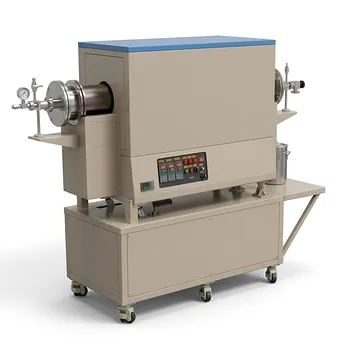
900°C Max Rotary Tube Furnace with 8 Inch 310S Alloy Tube and Optional Multi Zone Heating for Industrial Material Calcination
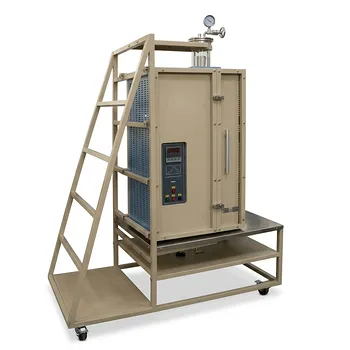
Split Vertical Tube Furnace with 1200C Quartz Tube and Stainless Steel Vacuum Flanges for Rapid Thermal Processing

High Temperature 1700C Tube Furnace with High Vacuum Turbomolecular Pump System and Multi Channel Mass Flow Controller Gas Mixer

1100C Tube Furnace with Vacuum Flange and Programmable Temperature Controller for Material Science and Industrial Heat Treatment
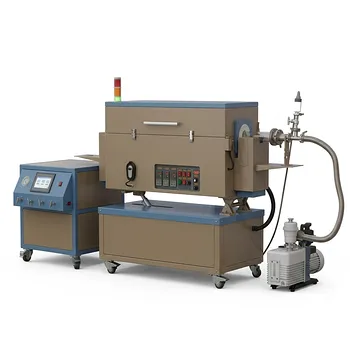
5 Inch Three Zone Rotary Tube Furnace with Integrated Gas Delivery System and 1200C Capability for Advanced Material CVD Processing
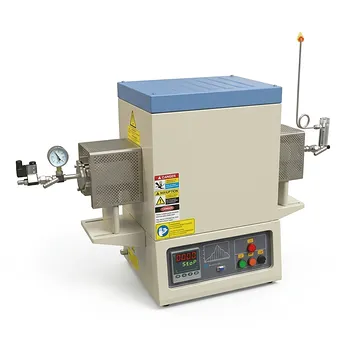
1700C Hydrogen Gas Tube Furnace with 60mm Alumina Process Tube and Integrated Hydrogen Safety Detector
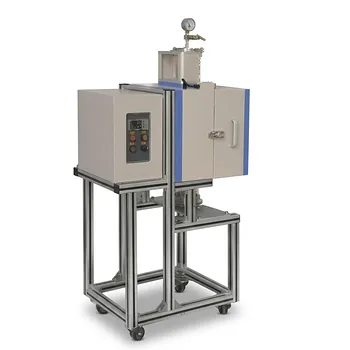
1200°C 5 Inch Vertical Quartz Tube Furnace with Stainless Steel Vacuum Flanges

High Temperature 1700C Six Zone Split Tube Furnace with Alumina Tube and Water Cooled Flanges
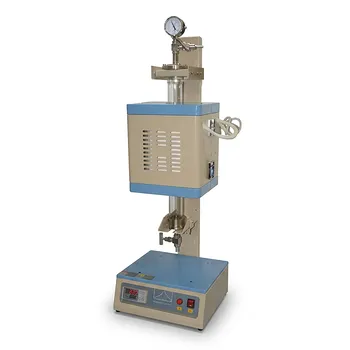
Compact Vertical Split Quartz Tube Furnace with Stainless Steel Vacuum Flanges for Rapid Thermal Quenching and Controlled Atmosphere Material Processing

High Temperature 1700C Benchtop Tube Furnace with 5 Inch Heating Zone High Purity Alumina Tube and Vacuum Sealing Flanges
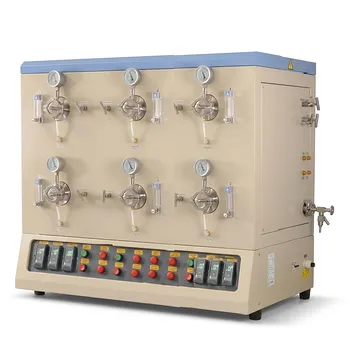
1200C High Throughput Multi Channel Tube Furnace with 50mm Quartz Tubes for Annealing and Material Phase Diagram Research
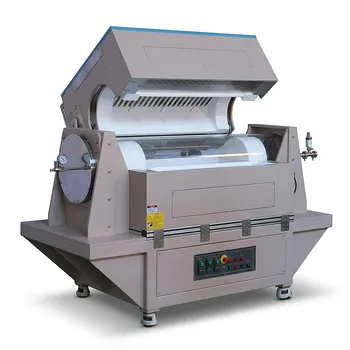
Three Zone Tube Furnace with 11 Inch or 15 Inch Quartz Tube and Hinged Flanges for Vacuum Atmosphere Heat Treatment

1800C High Temperature Compact Vacuum Tube Furnace with 60mm OD Alumina Tube and Kanthal MoSi2 Heating Elements

High Temperature 1700C Vertical Tube Furnace for Powder Spherification and Material Sintering
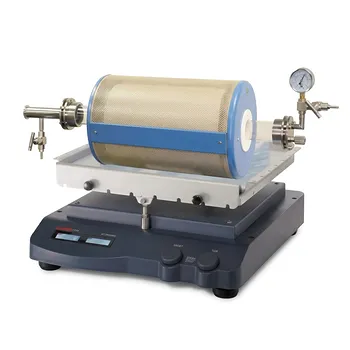
High Temperature Rocking Tube Furnace with Quartz Tube and Vacuum Flange for Materials Synthesis

High Temperature Automated 5 Inch Tube Furnace for Autonomous Material Research and Advanced Laboratory R&D
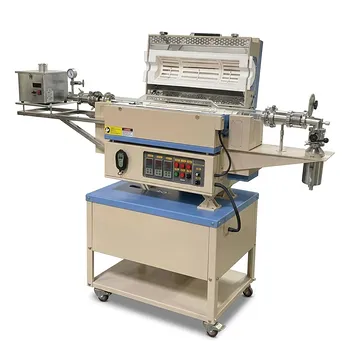
5 Inch Rotary Tube Furnace with Automatic Feeding and Receiving System 1200C Three Zone CVD Powder Processing