How does a tube furnace with an argon atmosphere contribute to the carbonization of Mangifera indica? Expert Insights
Updated 3 months ago
The synergy between precision heating and inert gas flow is the foundation of high-quality carbon material synthesis. A tube furnace provides a controlled environment—typically around 400°C—where a continuous flow of argon gas actively displaces oxygen to prevent combustion. This setup ensures the Mangifera indica (mango) leaves undergo thermochemical dehydration and degassing, transforming raw biomass into a structured, carbon-rich intermediate skeleton.
The tube furnace and argon atmosphere work in tandem to facilitate pyrolysis rather than oxidative combustion. By maintaining a strictly anaerobic, high-temperature environment, this system preserves the structural integrity of the biomass while maximizing the carbon yield.
The Role of the Tube Furnace in Thermal Transformation
Precise Temperature Regulation
A tube furnace provides a stable and constant thermal environment that is critical for the uniform conversion of biomass. It allows for the precise control of temperature ramp rates, ensuring the Mangifera indica powder reaches the target carbonization temperature without thermal shock.
Facilitating Dehydration and Degassing
During the initial stage at approximately 400°C, the furnace provides the heat necessary for thermochemical reactions. These reactions involve the removal of moisture (dehydration) and the release of volatile organic compounds (degassing), which are essential for forming a solid carbon skeleton.
Creating the Intermediate Skeleton
The controlled heat of the furnace facilitates the steady conversion of lignocellulose into a preliminary carbon framework. This stage is vital because it sets the foundation for the pore structure and elemental carbon content that will be refined in later high-temperature activation steps.
The Critical Function of the Argon Atmosphere
Excluding Oxygen Interference
Argon acts as a protective atmosphere that creates a strictly anaerobic (oxygen-free) environment inside the furnace tube. Without this inert shield, the biomass would react with oxygen at high temperatures and undergo oxidative combustion, turning the leaves into ash rather than carbon.
Preserving Microscopic Morphology
By providing a reducing and inert environment, argon ensures that the delicate microscopic morphology of the leaf powder is preserved. This preservation is critical for maximizing the yield and accurately controlling the resulting pore structure of the carbon material.
Ensuring Chemical Stability
High-purity argon prevents the carbon nanofibers and skeletons from burning off or developing unwanted chemical side-products. This results in biomass carbon materials with the desired level of structural defects and long-term stability required for technical applications.
Understanding the Trade-offs and Technical Constraints
Purity and Gas Flow Requirements
The effectiveness of this process depends entirely on the use of industrial-grade, high-purity argon. Even trace amounts of oxygen can cause partial oxidation, which degrades the carbon yield and alters the surface chemistry of the final product.
Energy and Consumable Costs
Utilizing a tube furnace with continuous argon flow is more resource-intensive than simpler carbonization methods. The cost of high-purity inert gas and the energy required to maintain precise temperature ramps must be weighed against the need for high-quality, repeatable carbon structures.
Volatile Management
As the Mangifera indica powder degasses, it releases volatile impurities that must be efficiently swept away by the argon flow. If the flow rate is insufficient, these volatiles may re-deposit on the carbon surface, potentially clogging the emerging micropore network.
Strategies for Optimizing Initial Carbonization
When preparing Mangifera indica leaf powder for carbonization, your approach should align with your specific material requirements.
- If your primary focus is maximizing carbon yield: Maintain a strict anaerobic environment with a steady argon flow to ensure no carbon is lost to oxidative combustion.
- If your primary focus is developing a specific pore structure: Prioritize precise temperature ramp rates and high-purity argon to facilitate clean degassing and a stable intermediate skeleton.
- If your primary focus is industrial scalability: Consider the trade-offs between argon purity and gas flow rates to balance operational costs with the required structural integrity of the carbon material.
A masterfully controlled inert atmosphere is the difference between creating a functional carbon material and simply burning biomass.
Summary Table:
| Component | Role in Carbonization | Key Benefit |
|---|---|---|
| Tube Furnace | Precise temperature regulation (e.g., 400°C) | Ensures uniform pyrolysis and stable carbon skeleton |
| Argon Atmosphere | Inert, anaerobic environment (oxygen-free) | Prevents oxidative combustion; preserves morphology |
| Flow Control | Volatile impurity removal | Prevents re-deposition and ensures clean pore structures |
| Process Outcome | Controlled thermochemical dehydration | Maximizes carbon yield and chemical stability |
Elevate Your Material Research with THERMUNITS Precision Technology
Achieving the perfect carbon structure requires more than just heat—it requires total environmental control. THERMUNITS is a leading manufacturer of high-temperature laboratory equipment specifically designed for material science and industrial R&D.
Whether you are synthesizing biomass-derived carbon or developing advanced nanofibers, our high-performance systems provide the stability and purity your research demands. Our comprehensive range includes:
- Precision Furnaces: Tube, Muffle, Vacuum, Atmosphere, Rotary, and Hot Press Furnaces.
- Advanced Systems: CVD/PECVD systems, Vacuum Induction Melting (VIM), and Dental Furnaces.
- Specialized Components: Electric rotary kilns and high-grade thermal elements.
Ready to optimize your thermal processing? Let our experts help you select the ideal furnace configuration to ensure repeatable, high-quality results for your specific applications.
Contact THERMUNITS Today to Request a Quote
References
- Shreeganesh Subraya Hegde, Badekai Ramachandra Bhat. Sustainable energy storage: <i>Mangifera indica</i> leaf waste-derived activated carbon for long-life, high-performance supercapacitors. DOI: 10.1039/d3ra08910j
Mentioned Products
- Vertical 1700C Vacuum and Atmosphere Tube Furnace with 80mm Alumina Tube
- 1200C Hybrid Muffle and Tube Furnace for Material Research with Dual Atmosphere Control Quartz Tubes
- 1100°C High Temperature Quartz Chamber Furnace 8 Inch OD with 7.6 Liter Capacity and Vacuum Atmosphere Capability
- Compact Hybrid Muffle and Tube Furnace for 1000C Controlled Atmosphere Laboratory Material Sintering
- 1200°C Atmosphere Controlled Automatic Bottom Loading Furnace with 6 Inch Quartz Tube
People Also Ask
- How is an industrial-grade vertical tube furnace utilized in smelting leaching residues? Enhance Metal Recovery Efficiency
- What is the function of a laboratory-grade vertical tube furnace in fast pyrolysis? Optimize Composite Research.
- How does a vertical tube furnace facilitate thermoelectric alloy melting? Precision synthesis for material homogeneity.
- Why is a thermocouple sensor indispensable for monitoring the vertical tube furnace during gallium oxide nanowire production? Optimize VLS Growth
- What are the advantages of using a vertical tube furnace for crucible experiments simulating steel-slag interactions?

Tech Team · ThermUnits
Last updated on Jun 02, 2026
Related Products

Vertical 1700C Vacuum and Atmosphere Tube Furnace with 80mm Alumina Tube
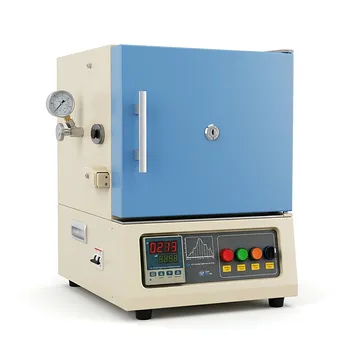
1200C Hybrid Muffle and Tube Furnace for Material Research with Dual Atmosphere Control Quartz Tubes
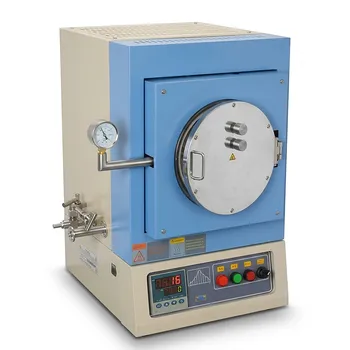
1100°C High Temperature Quartz Chamber Furnace 8 Inch OD with 7.6 Liter Capacity and Vacuum Atmosphere Capability
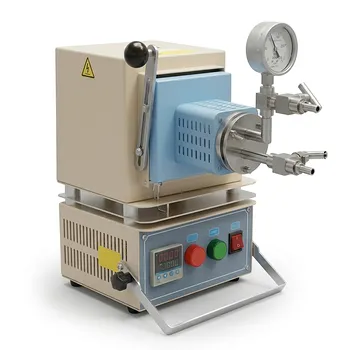
Compact Hybrid Muffle and Tube Furnace for 1000C Controlled Atmosphere Laboratory Material Sintering
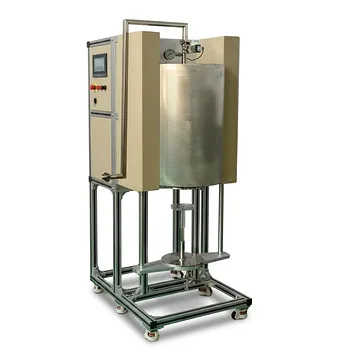
1200°C Atmosphere Controlled Automatic Bottom Loading Furnace with 6 Inch Quartz Tube

Three Zone Tube Furnace with 11 Inch or 15 Inch Quartz Tube and Hinged Flanges for Vacuum Atmosphere Heat Treatment

Compact Vertical Split Quartz Tube Furnace with Stainless Steel Vacuum Flanges for Rapid Thermal Quenching and Controlled Atmosphere Material Processing
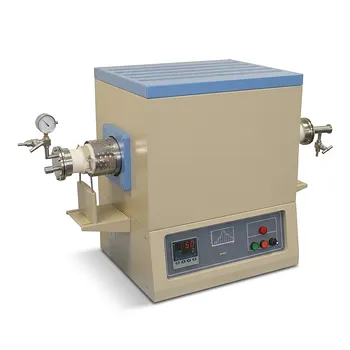
1700C High Temperature Alumina Tube Furnace with 18 Inch Heated Zone and Vacuum Sealing Flanges

1200°C 5 Inch Vertical Quartz Tube Furnace with Stainless Steel Vacuum Flanges
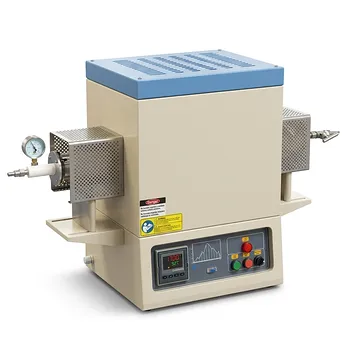
High Temperature Three Zone Tube Furnace 1700C with Alumina Tube and Water Cooled Flanges

High Temperature 1700C Benchtop Tube Furnace with 5 Inch Heating Zone High Purity Alumina Tube and Vacuum Sealing Flanges
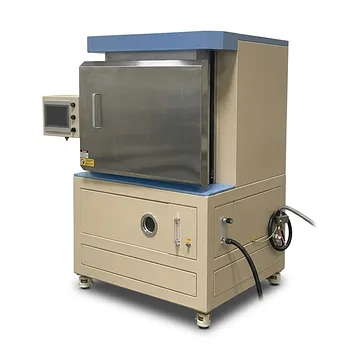
1650C High Temperature Atmosphere Controlled Box Furnace with 65L Chamber for Advanced Material Sintering and Industrial Heat Treatment

1700C Hydrogen Gas Tube Furnace with 60mm Alumina Process Tube and Integrated Hydrogen Safety Detector

Compact High Temperature 1600C Tube Furnace with 50mm Alumina Tube and Vacuum Flanges for Material Sintering
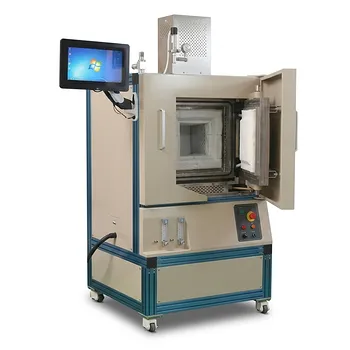
High Temperature Oxygen and Inert Atmosphere Controlled Furnace 8 Liter 1700C Sintering System for Advanced Materials RD

1800C High Temperature Compact Vacuum Tube Furnace with 60mm OD Alumina Tube and Kanthal MoSi2 Heating Elements
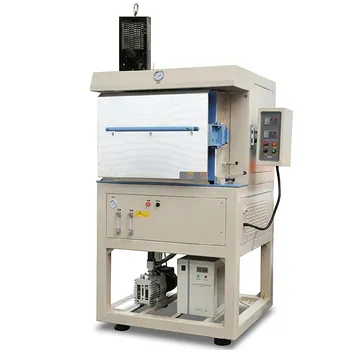
1200C Hydrogen Atmosphere Box Furnace with 5 Heated Sides and 64L Chamber
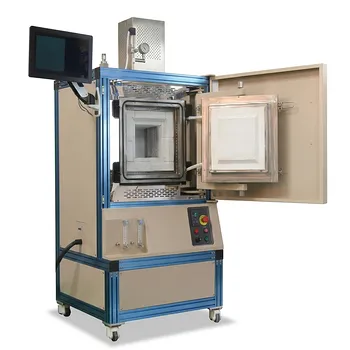
High Temperature Hydrogen Atmosphere Box Furnace 1650C Max Reducing Environment Material Synthesis System 8x8x8 Chamber

High Temperature 1700C Tube Furnace with High Vacuum Turbomolecular Pump System and Multi Channel Mass Flow Controller Gas Mixer
