How does a tube resistance furnace contribute to thermal displacement measurement for refractory high-entropy alloys?
Updated 3 months ago
The primary role of a tube resistance furnace in thermal displacement measurement is to provide a uniform, high-power heating environment that supports rapid thermal cycling. This setup allows researchers to reach temperatures of up to 1600°C with controlled heating rates as high as 35 K/min. By facilitating these rapid transitions, the furnace ensures that the measured displacement reflects the material's inherent thermal expansion rather than structural changes caused by prolonged heat exposure.
Core Takeaway: A tube resistance furnace enables accurate thermal displacement data for refractory high-entropy alloys by combining high power density with precise atmosphere control. This prevents unwanted phase transformations and oxidation that would otherwise compromise the integrity of the measurement.
Preserving Material Integrity During Testing
Preventing Unwanted Phase Precipitation
Refractory high-entropy alloys (RHEAs) often possess supersaturated solid solution structures that are sensitive to time-at-temperature. A tube resistance furnace’s ability to provide rapid heating rates—up to 35 K/min—minimizes the duration the specimen spends in intermediate temperature zones. This speed is critical to prevent unnecessary phase precipitation or structural transformations that would skew thermal displacement readings.
High Power Density and Thermal Cycles
The high power density resistance heating design is what allows the furnace to maintain stability even during aggressive thermal ramps. This capability supports rapid thermal cycle measurements, which are essential for understanding how RHEAs expand and contract under fluctuating loads. By precisely controlling the heating curve, the furnace ensures that displacement data is repeatable and representative of real-world performance.
Precision Control and Environmental Simulation
Ensuring Uniformity of the Thermal Zone
For accurate displacement measurement, the entire gauge length of a specimen must experience a uniform temperature. Tube furnaces are designed to provide a stable and controlled high-temperature environment, typically utilizing high-purity alumina or ceramic tubes to distribute heat evenly. This uniformity eliminates thermal gradients within the sample, which could cause localized warping and lead to false displacement data.
Atmosphere Control for Oxidation Resistance
RHEAs are often tested in controlled atmospheres—such as argon, hydrogen, or pure oxygen—to simulate extreme operating conditions. By introducing reducing gas mixtures, the furnace can eliminate residual oxidation on the sample surface during the heating process. Preventing the formation of an oxide film is vital, as the growth of such layers can artificially increase the measured volume or mass of the specimen.
Understanding the Trade-offs
Thermal Gradients and Specimen Geometry
While tube furnaces offer excellent uniformity, the length of the constant temperature zone is finite. If the specimen is too long or positioned incorrectly, the ends may experience lower temperatures, leading to non-linear thermal expansion across the sample. Users must carefully calibrate the "sweet spot" of the furnace tube to ensure the displacement sensors are capturing data from a uniformly heated area.
Heating Rate vs. Measurement Sensitivity
Pushing a furnace to its maximum heating rate of 35 K/min can introduce mechanical vibrations or electrical noise into sensitive displacement sensors. High-speed testing requires a balance between reaching the target temperature quickly and maintaining the signal-to-noise ratio of the dilatometer or laser displacement meter. Rapid cooling is also more difficult to achieve than rapid heating in a standard resistance furnace, which may limit the speed of complete thermal cycles.
How to Apply This to Your Project
Selecting the Right Test Parameters
To maximize the accuracy of your thermal displacement measurements, consider your specific material goals and the capabilities of your furnace.
- If your primary focus is Phase Stability: Utilize the maximum heating rate (up to 35 K/min) to bypass sensitive temperature ranges where precipitation might occur.
- If your primary focus is Oxidation Kinetics: Maintain isothermal conditions for extended periods (e.g., 168 hours) using the furnace's precise temperature regulation to calculate parabolic rate constants.
- If your primary focus is Thermal Fatigue: Use an automated system to maintain a stable soak temperature before quenching, simulating the thermal shocks of engine startup and shutdown.
By leveraging the high power density and atmospheric control of a tube resistance furnace, you can isolate true thermal displacement from the complex structural evolutions typical of high-entropy alloys.
Summary Table:
| Feature | Benefit for RHEA Testing | Technical Capability |
|---|---|---|
| Rapid Heating | Prevents unwanted phase precipitation | Up to 35 K/min |
| High Temp Range | Supports refractory alloy melting points | Up to 1600°C |
| Atmosphere Control | Eliminates oxidation and surface scaling | Argon, Hydrogen, Oxygen |
| Uniform Thermal Zone | Prevents warping and false displacement | High-purity ceramic tubes |
| Power Density | Ensures stable and repeatable thermal cycles | High-power resistance design |
Optimize Your RHEA Research with THERMUNITS
Are you looking to achieve precise thermal displacement data for next-generation materials? THERMUNITS is a leading manufacturer of high-temperature laboratory equipment specifically designed for material science and industrial R&D.
We provide a comprehensive range of thermal processing solutions tailored to your needs, including:
- Advanced Tube & Rotary Furnaces for uniform thermal zones.
- Vacuum & Atmosphere Furnaces for oxidation-free processing.
- Muffle, Hot Press, and CVD/PECVD Systems for complex material synthesis.
- Specialized Equipment: Dental furnaces, electric rotary kilns, and vacuum induction melting (VIM) furnaces.
Whether you are analyzing phase stability or oxidation kinetics, our high-power density furnaces deliver the stability and control your project demands. Contact us today to discuss your specific heat treatment requirements and discover how our equipment can enhance your laboratory's efficiency!
References
- Ottó K. Temesi, L.K. Varga. Thermal Softening Measurements of Refractory High-Entropy Alloys. DOI: 10.3390/ma17235718
Mentioned Products
- 1100C Dual Zone Hydrogen Gas Tube Furnace with Quartz Tube and Integrated H2 Leak Detection System
- 1100°C Split Vertical Tube Furnace with 80mm Quartz Tube and Stainless Steel Vacuum Flanges
- High Temperature Rocking Tube Furnace with Quartz Tube and Vacuum Flange for Materials Synthesis
- 1200°C 5 Inch Vertical Quartz Tube Furnace with Stainless Steel Vacuum Flanges
- High Temperature 1700C Six Zone Split Tube Furnace with Alumina Tube and Water Cooled Flanges
People Also Ask
- Why is it necessary to place MoS2 devices in a dual-zone tube furnace for annealing? Optimize Lattice Repair & Doping
- What is the primary function of an industrial-grade dual-zone tube furnace? Mastering CuInP2S6 CVT Crystal Growth
- Purpose of the reverse gradient step in CVT growth? Master Crystal Purity with Dual-Zone Furnaces
- What are the technical advantages of using a dual-zone tube furnace for growing large PdCoO2 crystals via CVT? Expert Tips
- What are the advantages of using a dual-zone tube furnace for MoS2 CVD? Optimize Precursor Control and Material Quality

Tech Team · ThermUnits
Last updated on Jun 02, 2026
Related Products
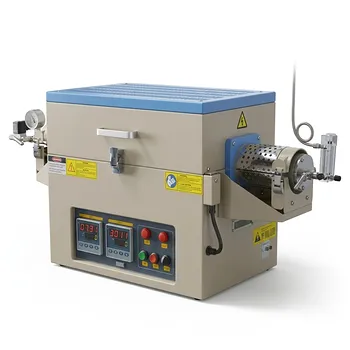
1100C Dual Zone Hydrogen Gas Tube Furnace with Quartz Tube and Integrated H2 Leak Detection System
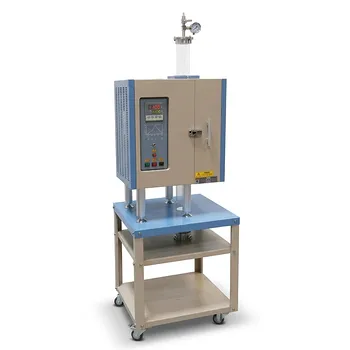
1100°C Split Vertical Tube Furnace with 80mm Quartz Tube and Stainless Steel Vacuum Flanges
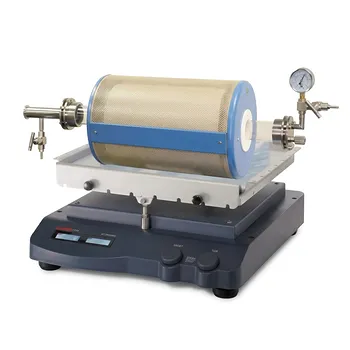
High Temperature Rocking Tube Furnace with Quartz Tube and Vacuum Flange for Materials Synthesis

1200°C 5 Inch Vertical Quartz Tube Furnace with Stainless Steel Vacuum Flanges

High Temperature 1700C Six Zone Split Tube Furnace with Alumina Tube and Water Cooled Flanges
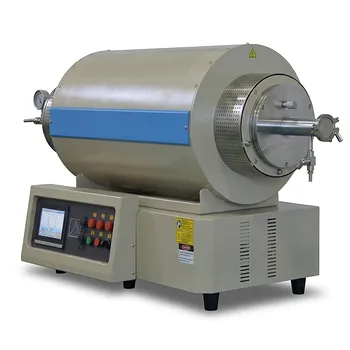
1200C Max Three Zone Tube Furnace 6 Inch OD Max with Tube and Flange

Compact Vertical Split Quartz Tube Furnace with Stainless Steel Vacuum Flanges for Rapid Thermal Quenching and Controlled Atmosphere Material Processing

High Temperature Automated 5 Inch Tube Furnace for Autonomous Material Research and Advanced Laboratory R&D

Vertical 1700C Vacuum and Atmosphere Tube Furnace with 80mm Alumina Tube

Compact High Temperature 1600C Tube Furnace with 50mm Alumina Tube and Vacuum Flanges for Material Sintering

High Temperature 1700C Vertical Tube Furnace for Powder Spherification and Material Sintering
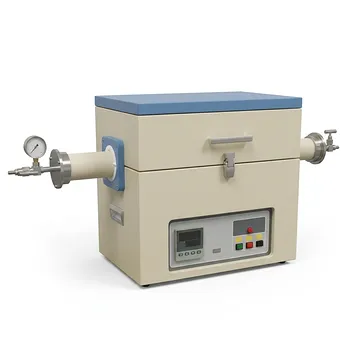
1250C Split Tube Furnace with 3 Inch Mullite Tube and Vacuum Sealing Flanges for Precision Thermal Processing
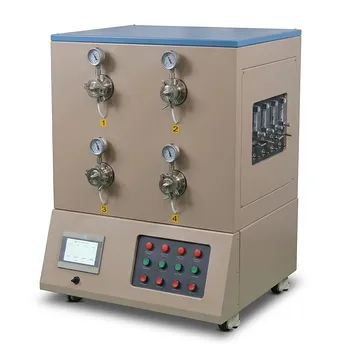
High Throughput 1200C Four Channel Tube Furnace with 3 Inch Quartz Tubes for Multi Zone Annealing and Material Research
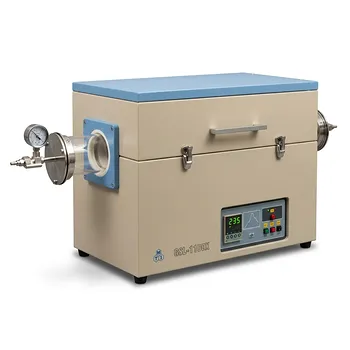
Single Zone Tube Furnace 5 Inch Quartz Tube 36 Inch Heating Zone Vacuum Flanges
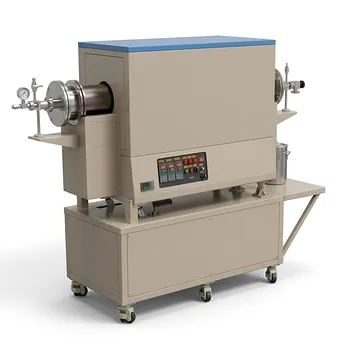
900°C Max Rotary Tube Furnace with 8 Inch 310S Alloy Tube and Optional Multi Zone Heating for Industrial Material Calcination
1200C Hybrid Muffle and Tube Furnace for Material Research with Dual Atmosphere Control Quartz Tubes

1100C Tube Furnace with Vacuum Flange and Programmable Temperature Controller for Material Science and Industrial Heat Treatment

1800C High Temperature Compact Vacuum Tube Furnace with 60mm OD Alumina Tube and Kanthal MoSi2 Heating Elements
Ten Zone Multi Orientation Laboratory Tube Furnace for 1200C High Temperature Gradient Thermal Processing
