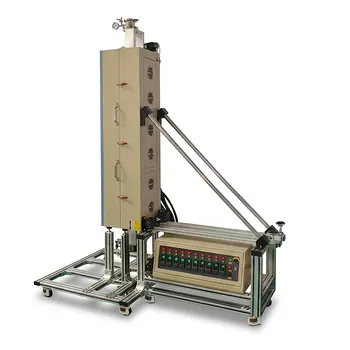
What are the primary technical advantages of using a dual-zone tube furnace for MoS2? Optimize CVD Precision & Yield
Updated 3 months ago
The primary technical advantage of a dual-zone tube furnace is the independent and decoupled thermal control over chemically distinct precursors with vastly different sublimation temperatures. By separating the heating environments for sulfur (S) and molybdenum trioxide ($MoO_3$), the system allows for the precise regulation of precursor vapor concentrations and reaction kinetics. This specialized control is the fundamental requirement for synthesizing large-area, uniform monolayer Molybdenum Disulfide ($MoS_2$) with high crystalline quality.
Using a dual-zone furnace solves the inherent conflict between the low sublimation point of sulfur and the high reaction temperature required for molybdenum. This thermal decoupling ensures a stable stoichiometric ratio in the gas phase, which is critical for suppressing defects and promoting the growth of large single-crystal grains.
Decoupling Precursor Sublimation from Reaction Kinetics
Managing the Sublimation Temperature Delta
Sulfur and molybdenum trioxide possess significantly different thermal properties, with sulfur typically sublimating at approximately 200°C and $MoO_3$ requiring temperatures near 800°C. A dual-zone furnace allows Zone 1 to be dedicated to the low-temperature evaporation of sulfur powder while Zone 2 independently maintains the high-temperature environment necessary for the $MoO_3$ precursor and the substrate.
Regulating Precursor Concentration Ratios
The ability to independently heat each zone allows researchers to fine-tune the local concentration of sulfur vapor relative to the molybdenum source. By optimizing this ratio, the system creates a stable concentration gradient in the gas phase, which is essential for controlled nucleation and the growth of high-quality monolayer grains.
Matching Supply with Reaction Rates
In Chemical Vapor Deposition (CVD), the rate of precursor supply must match the kinetics of the surface reaction on the substrate. The dual-zone configuration ensures that the volatilization rate of the solid precursors is regulated independently of the surface crystallization temperature, preventing the over-saturation or depletion of reactants.
Enhancing Material Quality and Uniformity
Suppressing Sulfur Vacancy (Vs) Defects
One of the most common challenges in $MoS_2$ growth is the formation of sulfur vacancy defects, which degrade the material's electronic properties. A dual-zone furnace allows for a high sulfur vapor pressure during the final stages of growth, which enhances the probability of Mo-S covalent bonding and effectively suppresses the formation of these vacancies.
Promoting Large-Area Monolayer Growth
The precise gradient temperature field provided by two zones facilitates the growth of large-scale, uniform monolayer domains rather than uncontrolled multi-layer clusters. By stabilizing the vapor phase concentrations, the system ensures that the growth remains in the two-dimensional regime, resulting in the characteristic triangular crystal grains of high-quality $MoS_2$.
Improving Nucleation Control on Substrates
Whether growing on sapphire, $SiO_2$, or Gallium Nitride (GaN), the dual-zone setup allows for optimal nucleation density. By controlling the timing and temperature of sulfur delivery relative to the substrate's peak temperature, the furnace ensures that the first layers of $MoS_2$ form with high crystalline integrity and minimal structural strain.
Understanding the Trade-offs
Increased System Complexity
While dual-zone furnaces offer superior control, they introduce complexities in gas flow dynamics. The transition region between the two temperature zones can create thermal turbulence or unexpected deposition on the tube walls if the carrier gas velocity and pressure are not meticulously calibrated.
Thermal Gradient Management
Maintaining a sharp temperature boundary between the two zones is physically challenging due to the thermal conductivity of the quartz tube. Users must often employ insulation or specific spacing strategies to prevent the heat from the high-temperature zone from "bleeding" into the sulfur zone, which would cause uncontrolled precursor evaporation.
How to Apply This to Your Synthesis Goals
Recommendations for Research and Production
- If your primary focus is maximizing grain size: Prioritize the precise calibration of the Zone 1 sulfur temperature to maintain a low but steady vapor pressure, which encourages the growth of fewer, larger $MoS_2$ crystals.
- If your primary focus is electronic performance (low defects): Increase the sulfur zone temperature slightly during the cooldown phase to ensure a sulfur-rich environment, which is the most effective way to heal sulfur vacancies.
- If your primary focus is large-scale uniformity: Focus on the carrier gas flow rate to ensure the concentration gradient established by the dual zones remains consistent across the entire length of the deposition substrate.
The dual-zone tube furnace remains the gold standard for $MoS_2$ synthesis because it transforms a volatile chemical reaction into a highly predictable and repeatable engineering process.
Summary Table:
| Technical Feature | Advantage for MoS2 Synthesis | Material Impact |
|---|---|---|
| Decoupled Thermal Zones | Independent control of Sulfur (200°C) and MoO3 (800°C) | Precise stoichiometric vapor ratios |
| Reaction Kinetics Control | Matches volatilization rate with surface crystallization | Prevents reactant depletion/oversaturation |
| Gradient Management | High sulfur vapor pressure during final growth stages | Effectively suppresses sulfur vacancy (Vs) defects |
| Nucleation Stability | Controlled timing of precursor delivery | Promotes large-area, uniform monolayer grains |
Advance Your Material Science Research with THERMUNITS
Are you looking to achieve superior precision in your 2D material synthesis? THERMUNITS is a leading manufacturer of high-performance laboratory equipment tailored for material science and industrial R&D. Our specialized Dual-Zone Tube Furnaces and CVD/PECVD systems are engineered to provide the decoupled thermal control essential for high-quality MoS2 growth.
From Muffle, Vacuum, and Atmosphere Furnaces to Rotary Kilns and Vacuum Induction Melting (VIM) systems, we offer a comprehensive range of heat treatment solutions designed to enhance your lab's efficiency and experimental repeatability.
Ready to elevate your thermal processing? Contact our expert engineering team today to discuss your specific requirements and discover how THERMUNITS can provide the perfect solution for your research goals.
References
- Irfan Haider Abidi, Sumeet Walia. Oxygen Driven Defect Engineering of Monolayer MoS<sub>2</sub> for Tunable Electronic, Optoelectronic, and Electrochemical Devices. DOI: 10.1002/adfm.202402402
Mentioned Products
- Dual Zone Quartz Tube Furnace with 80mm Diameter 1200C Max Temperature 3 Channel Gas Mixer and Vacuum Pump System
- Dual Zone Tube Furnace 1100C with 11 Inch Quartz Tube and Vacuum Flanges for 8 Inch Wafer Processing
- 1200C Dual Zone Split Tube Furnace with Fused Quartz Tube and Vacuum Flanges Available in 60mm 80mm and 100mm Diameters
- High Temperature Dual Zone Tube Furnace for Material Science Research and Professional Thermal Processing
- High Temperature 1700C Dual Zone Tube Furnace for Material Science and Industrial Chemical Vapor Deposition Research
People Also Ask
- How do dual-zone quartz tube furnaces achieve controllable material preparation? Optimize Perovskite VD Processes
- What are the technical advantages of using a dual-zone tube furnace for growing large PdCoO2 crystals via CVT? Expert Tips
- Purpose of the reverse gradient step in CVT growth? Master Crystal Purity with Dual-Zone Furnaces
- Why is it necessary to place MoS2 devices in a dual-zone tube furnace for annealing? Optimize Lattice Repair & Doping
- Why is a dual-zone tube furnace necessary for ReO3-doped Cu2Te CVD? Essential for precise precursor synchronization.

Tech Team · ThermUnits
Last updated on Jun 02, 2026
Related Products
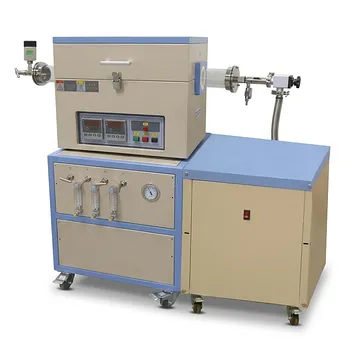
Dual Zone Quartz Tube Furnace with 80mm Diameter 1200C Max Temperature 3 Channel Gas Mixer and Vacuum Pump System
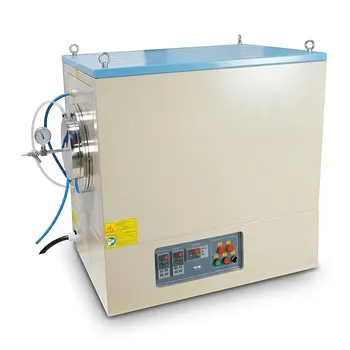
Dual Zone Tube Furnace 1100C with 11 Inch Quartz Tube and Vacuum Flanges for 8 Inch Wafer Processing
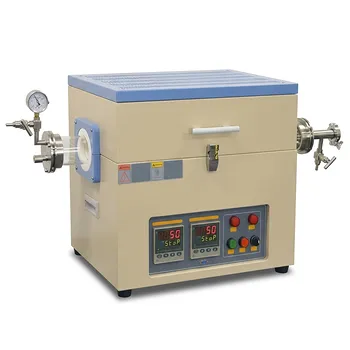
1200C Dual Zone Split Tube Furnace with Fused Quartz Tube and Vacuum Flanges Available in 60mm 80mm and 100mm Diameters
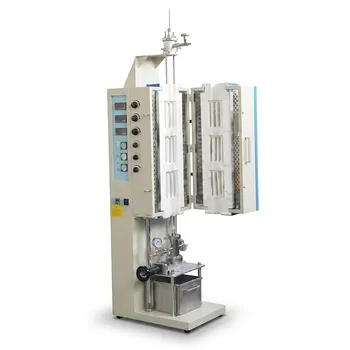
High Temperature Dual Zone Tube Furnace for Material Science Research and Professional Thermal Processing
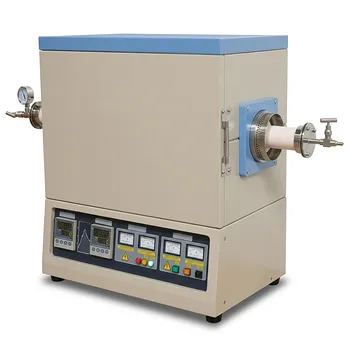
High Temperature 1700C Dual Zone Tube Furnace for Material Science and Industrial Chemical Vapor Deposition Research
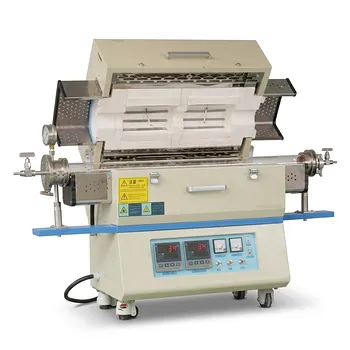
Dual Zone Split Tube Quenching Furnace with High Vacuum Atmosphere Control and Rapid Cooling
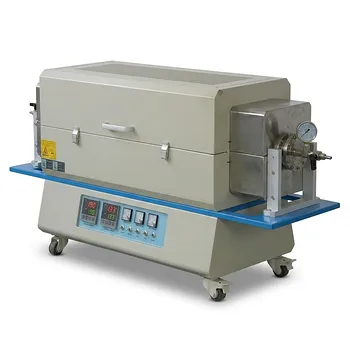
High Temperature Elongated Dual Zone Tube Furnace for Material Research and Industrial Heat Treatment
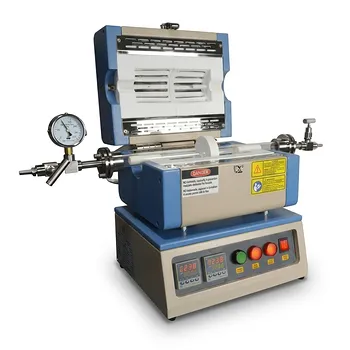
Dual Heating Zone 1200C Compact Split Tube Furnace with Optional 1" - 2" Tube and Vacuum Flanges
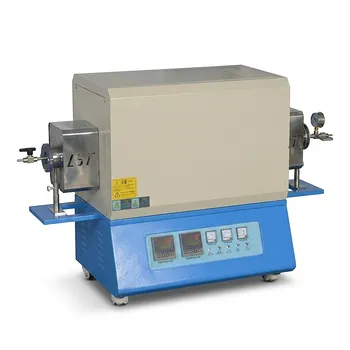
High Temperature Dual Zone Vacuum Tube Furnace for Material Research and CVD Processing
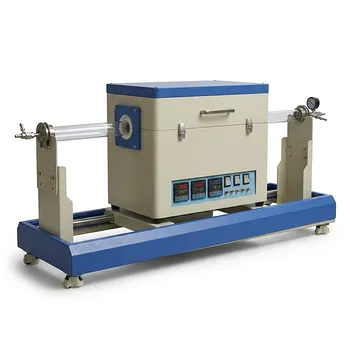
Double Temperature Zone Double Cover Tube Furnace for High Temperature CVD and Vacuum Annealing
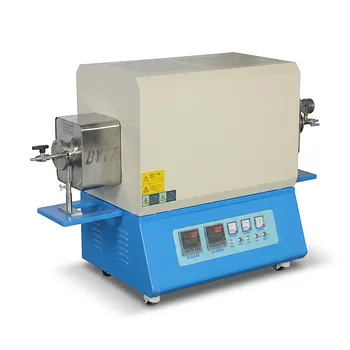
High Temperature Dual Zone Split Tube Furnace for Advanced Atmosphere Sintering and Vacuum CVD Applications
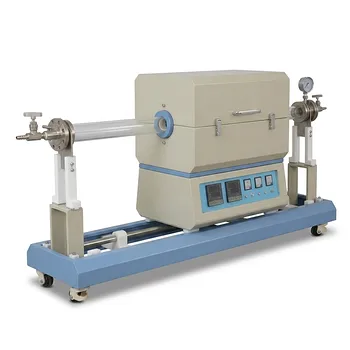
Double Zone Fast Heating Tube Furnace High Temperature Vacuum Atmosphere System
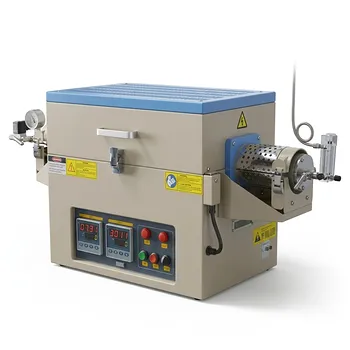
1100C Dual Zone Hydrogen Gas Tube Furnace with Quartz Tube and Integrated H2 Leak Detection System
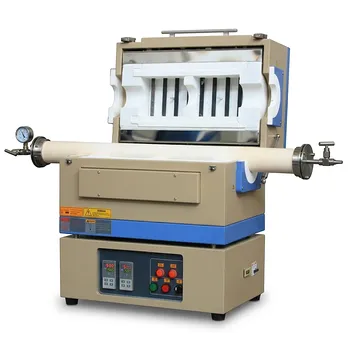
1500C Two Zone Split Tube Furnace with Vacuum Flange and 80mm Alumina Tube
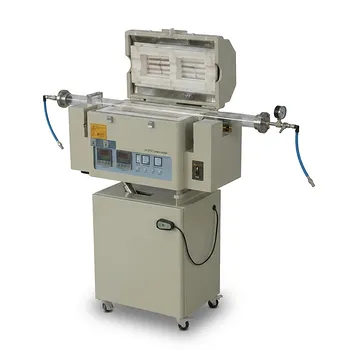
Double Temperature Revolving Tube Furnace with Precision Rotation and Adjustable Inclination for Advanced Material Research
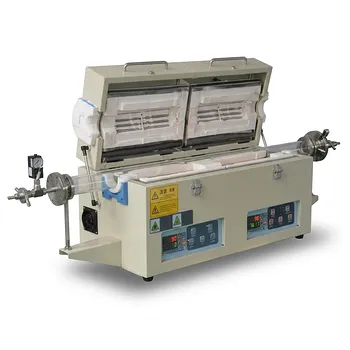
Elongated Two Temperature Zone Pipe Furnace for Industrial Heat Treatment and Material Science Research
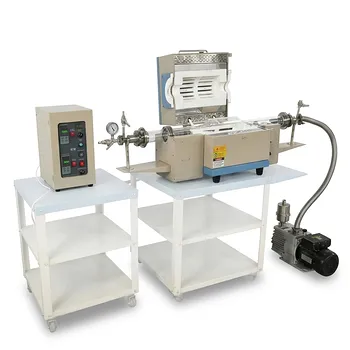
Two Zone Rotary Tube Furnace for Powder CVD Coating and Core Shell Material Synthesis 1100C
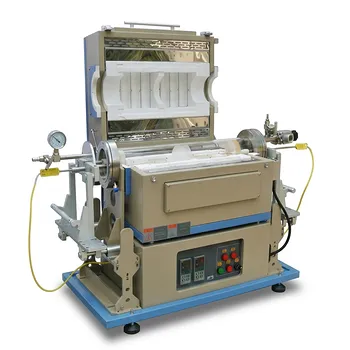
Two Zone IR Heating Rapid Thermal Processing RTP Tube Furnace with 4 Inch ID Quartz Tube and Sliding Sample Holders
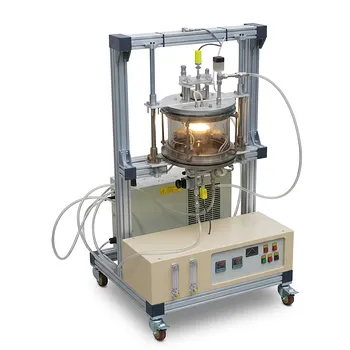
Two Zones CSS Furnace for Rapid Thermal Processing Thin Film Coating 3 Inch Diameter 650C