What are the advantages of using a dual-zone tube furnace for MoS2 CVD? Optimize Precursor Control and Material Quality
Updated 3 months ago
A dual-zone tube furnace is superior for $MoS_2$ synthesis because it decouples the evaporation rates of sulfur and molybdenum precursors. This independent thermal control allows researchers to precisely regulate the vapor concentration ratios in the reaction zone, which is physically impossible in a single-zone system where both precursors would be subject to the same temperature profile.
The primary advantage of a dual-zone furnace lies in its ability to synchronize the supply of sulfur and molybdenum trioxide ($MoO_3$) vapors despite their vastly different sublimation points. This synchronization is the critical factor for achieving high-quality, large-area monolayer $MoS_2$ with minimal structural defects and high repeatability.
The Physics of Independent Precursor Control
Bridging the Sublimation Temperature Gap
Sulfur (S) and molybdenum trioxide ($MoO_3$) have significantly different thermal requirements for phase transition. Sulfur typically sublimates at much lower temperatures (around 200°C), while $MoO_3$ requires significantly higher heat (often exceeding 700-800°C) to generate sufficient vapor for deposition.
Optimizing Vapor Concentration Ratios
In a dual-zone system, Zone 1 (upstream) can be set to the specific sublimation temperature of sulfur, while Zone 2 (downstream) is maintained at the high temperature required for $MoO_3$ evaporation and substrate reaction. This independent regulation ensures that both precursors meet in the reaction zone at an ideal concentration ratio, which is essential for stable nucleation kinetics.
Maintaining Stable Precursor Flux
Single-zone furnaces often suffer from "precursor depletion" or inconsistent flow because one material may evaporate too quickly while waiting for the other to reach its threshold. Dual-zone systems provide a stable vapor concentration throughout the growth cycle, resulting in more uniform and larger triangular $MoS_2$ crystal grains.
Enhancing Material Quality and Uniformity
Suppressing Sulfur Vacancy Defects
A common issue in $MoS_2$ growth is the formation of sulfur vacancies ($V_s$), which degrade the electronic properties of the film. By precisely controlling the sulfur vapor pressure in the low-pressure zone, a dual-zone furnace enhances the probability of Mo-S covalent bonding, effectively "filling" these vacancies during the growth process.
Promoting Large-Scale Crystalline Growth
The ability to maintain a precise gradient temperature field allows for the growth of large-area monolayer single crystals. Because the reaction kinetics are better matched to the precursor supply, the $MoS_2$ domains can expand further before merging, leading to higher-quality films with fewer grain boundaries.
Improving Process Repeatability
Standardizing the evaporation rates of two distinct solid precursors is the core hardware requirement for growth repeatability. Researchers can fine-tune the temperature of the upstream zone to compensate for changes in precursor mass or surface area, ensuring consistent results across multiple batches.
Understanding the Trade-offs
System Complexity and Cross-talk
While dual-zone furnaces offer superior control, they introduce more variables into the experimental setup. Thermal cross-talk—where the high heat from Zone 2 bleeds into Zone 1—can occur if the zones are not properly insulated or spaced, potentially causing unintended sulfur spikes.
Operational Overhead
Managing two independent heating profiles requires more sophisticated PID (Proportional-Integral-Derivative) controllers and more rigorous calibration. The initial cost and maintenance of a dual-zone system are also typically higher than those of a basic single-zone tube furnace.
Strategic Recommendations for $MoS_2$ Synthesis
How to Apply This to Your Project
If you are deciding between furnace configurations, consider your primary research objective:
- If your primary focus is high-mobility electronics: Use a dual-zone furnace to maximize crystal size and minimize sulfur vacancies, as these factors directly impact electron transport.
- If your primary focus is high-throughput screening of catalysts: A single-zone furnace may suffice if precise stoichiometry is less critical than rapid material testing.
- If your primary focus is process scalability: Invest in dual-zone technology to ensure the vapor concentration remains uniform over larger substrate areas.
Independent thermal management is the definitive requirement for overcoming the inherent chemical imbalances in the vapor deposition of transition metal dichalcogenides.
Summary Table:
| Feature | Dual-Zone Tube Furnace | Single-Zone Tube Furnace |
|---|---|---|
| Precursor Control | Independent (Sulfur vs. MoO3) | Unified (Same temp profile) |
| Sublimation Sync | Optimized via temperature gradients | Difficult; prone to depletion |
| MoS2 Film Quality | Large-area crystals; fewer defects | Smaller grains; more sulfur vacancies |
| Repeatability | High (precise vapor concentration) | Low (variable evaporation rates) |
| Ideal Application | Advanced 2D material R&D | High-throughput catalyst screening |
Elevate Your Material Research with THERMUNITS Precision
Achieving high-quality $MoS_2$ monolayers requires exact thermal control that standard equipment often fails to provide. THERMUNITS is a leading manufacturer of high-temperature laboratory equipment, providing the precision needed for cutting-edge material science and industrial R&D.
From high-performance Dual-Zone Tube Furnaces and CVD/PECVD systems to specialized Muffle, Vacuum, Atmosphere, Rotary, and Hot Press furnaces, our solutions are engineered for stability and repeatability. We also offer Vacuum Induction Melting (VIM), Dental Furnaces, and high-quality Thermal Elements to support every stage of your heat treatment workflow.
Why choose THERMUNITS?
- Independent Zone Control: Perfectly synchronize precursor evaporation for 2D materials.
- Expert Engineering: Equipment designed to minimize structural defects and maximize crystal size.
- Versatile Solutions: A comprehensive range of furnaces tailored to your specific R&D needs.
Don't let hardware limitations hinder your scientific breakthroughs. Contact our technical experts today to find the perfect thermal processing solution for your laboratory!
References
- Ting Li, Shuhui Yu. Sodium chloride-assisted CVD enables controlled synthesis of large single-layered MoS<sub>2</sub>. DOI: 10.1039/d4ra02510e
Mentioned Products
- Dual Zone Quartz Tube Furnace with 80mm Diameter 1200C Max Temperature 3 Channel Gas Mixer and Vacuum Pump System
- Dual Zone Tube Furnace 1100C with 11 Inch Quartz Tube and Vacuum Flanges for 8 Inch Wafer Processing
- 1200C Dual Zone Split Tube Furnace with Fused Quartz Tube and Vacuum Flanges Available in 60mm 80mm and 100mm Diameters
- High Temperature Dual Zone Tube Furnace for Material Science Research and Professional Thermal Processing
- Dual Zone Split Tube Quenching Furnace with High Vacuum Atmosphere Control and Rapid Cooling
People Also Ask
- How do dual-zone quartz tube furnaces achieve controllable material preparation? Optimize Perovskite VD Processes
- What are the technical advantages of using a dual-zone tube furnace for growing large PdCoO2 crystals via CVT? Expert Tips
- Purpose of the reverse gradient step in CVT growth? Master Crystal Purity with Dual-Zone Furnaces
- Why is it necessary to place MoS2 devices in a dual-zone tube furnace for annealing? Optimize Lattice Repair & Doping
- Why is a dual-zone tube furnace necessary for ReO3-doped Cu2Te CVD? Essential for precise precursor synchronization.

Tech Team · ThermUnits
Last updated on Jun 03, 2026
Related Products
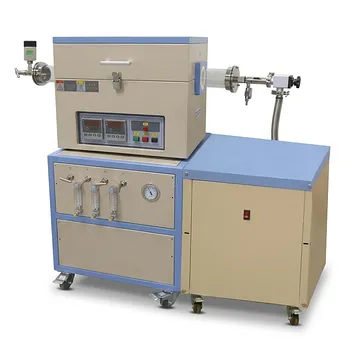
Dual Zone Quartz Tube Furnace with 80mm Diameter 1200C Max Temperature 3 Channel Gas Mixer and Vacuum Pump System
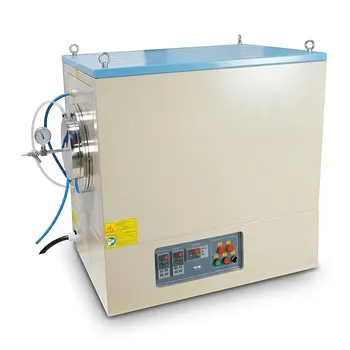
Dual Zone Tube Furnace 1100C with 11 Inch Quartz Tube and Vacuum Flanges for 8 Inch Wafer Processing
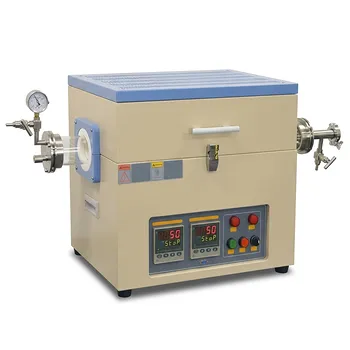
1200C Dual Zone Split Tube Furnace with Fused Quartz Tube and Vacuum Flanges Available in 60mm 80mm and 100mm Diameters
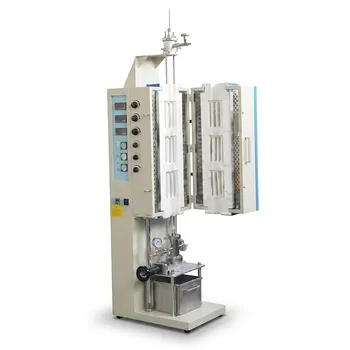
High Temperature Dual Zone Tube Furnace for Material Science Research and Professional Thermal Processing
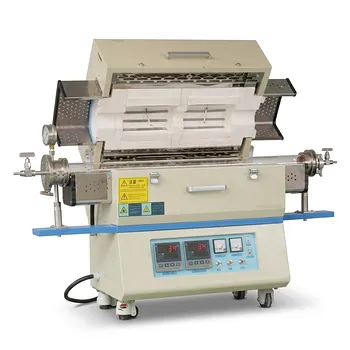
Dual Zone Split Tube Quenching Furnace with High Vacuum Atmosphere Control and Rapid Cooling
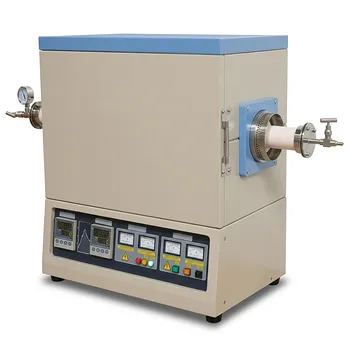
High Temperature 1700C Dual Zone Tube Furnace for Material Science and Industrial Chemical Vapor Deposition Research
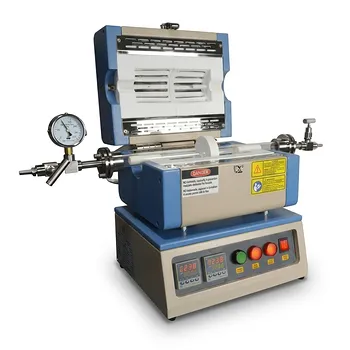
Dual Heating Zone 1200C Compact Split Tube Furnace with Optional 1" - 2" Tube and Vacuum Flanges
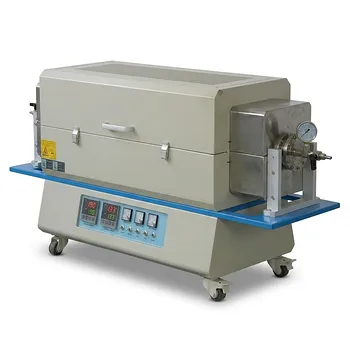
High Temperature Elongated Dual Zone Tube Furnace for Material Research and Industrial Heat Treatment
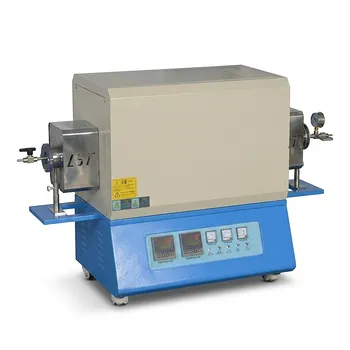
High Temperature Dual Zone Vacuum Tube Furnace for Material Research and CVD Processing
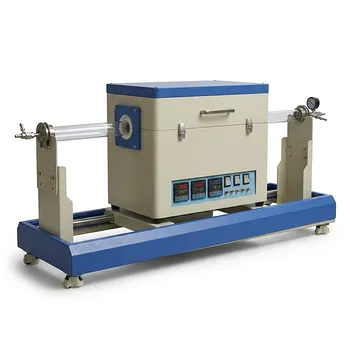
Double Temperature Zone Double Cover Tube Furnace for High Temperature CVD and Vacuum Annealing
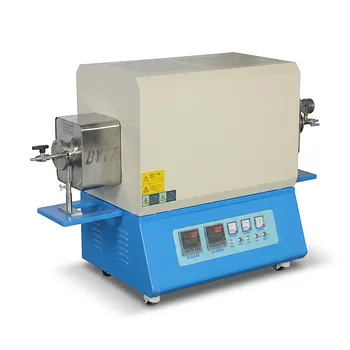
High Temperature Dual Zone Split Tube Furnace for Advanced Atmosphere Sintering and Vacuum CVD Applications
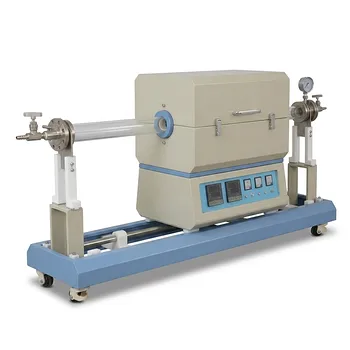
Double Zone Fast Heating Tube Furnace High Temperature Vacuum Atmosphere System
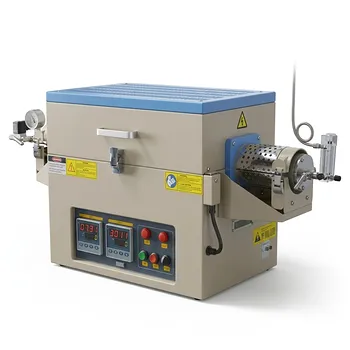
1100C Dual Zone Hydrogen Gas Tube Furnace with Quartz Tube and Integrated H2 Leak Detection System
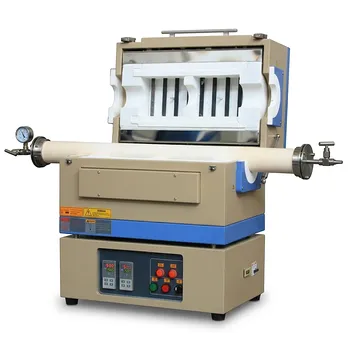
1500C Two Zone Split Tube Furnace with Vacuum Flange and 80mm Alumina Tube
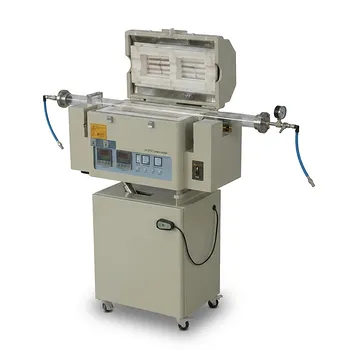
Double Temperature Revolving Tube Furnace with Precision Rotation and Adjustable Inclination for Advanced Material Research
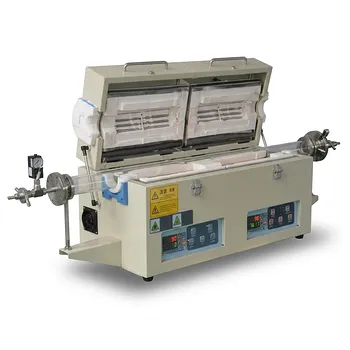
Elongated Two Temperature Zone Pipe Furnace for Industrial Heat Treatment and Material Science Research
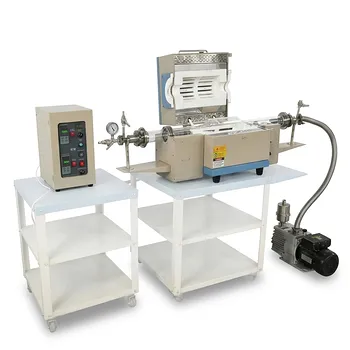
Two Zone Rotary Tube Furnace for Powder CVD Coating and Core Shell Material Synthesis 1100C
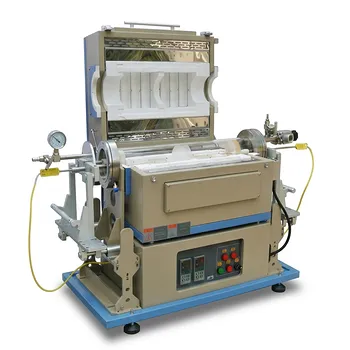
Two Zone IR Heating Rapid Thermal Processing RTP Tube Furnace with 4 Inch ID Quartz Tube and Sliding Sample Holders
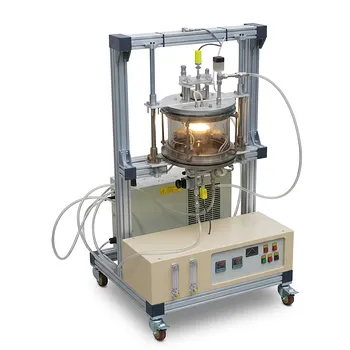
Two Zones CSS Furnace for Rapid Thermal Processing Thin Film Coating 3 Inch Diameter 650C