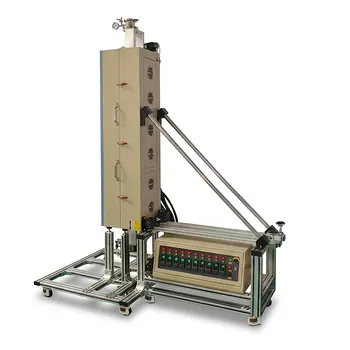
Why is it necessary to place MoS2 devices in a dual-zone tube furnace for annealing? Optimize Lattice Repair & Doping
Updated 3 months ago
The necessity of a dual-zone tube furnace for $MoS_2$ annealing lies in its ability to provide a precisely controlled thermal gradient that repairs structural damage and activates dopant atoms. This post-doping treatment is essential for reversing the lattice defects caused by nitrogen plasma bombardment while ensuring the stable chemical bonding of nitrogen within the crystal structure. By optimizing the electrical performance of the resulting homojunction, the furnace directly enhances the responsiveness and stability of the final $MoS_2$ photodetector.
Core Takeaway: A dual-zone tube furnace provides the specific thermal precision required to restore the $MoS_2$ crystal lattice after plasma doping. It simultaneously facilitates the activation of nitrogen dopants and the repair of bombardment-induced damage to ensure high device performance.
The Role of Post-Doping Thermal Treatment
Repairing Lattice Damage from Plasma Bombardment
Nitrogen plasma doping is an energetic process that often introduces structural defects into the $MoS_2$ crystal lattice. The physical impact of ions can displace atoms, creating vacancies or disordered regions that impede charge carrier mobility.
Thermal annealing provides the necessary kinetic energy for atoms to rearrange themselves into their correct positions. This process effectively "heals" the lattice, reducing scattering centers and improving the overall quality of the thin film.
Activation and Stable Bonding of Dopants
For nitrogen atoms to effectively alter the electrical properties of $MoS_2$, they must be integrated into the lattice through stable chemical bonding. Without sufficient thermal energy, these dopants may remain in interstitial sites or weakly adsorbed on the surface.
The furnace environment promotes the activation of dopant atoms, ensuring they occupy the correct sites within the molybdenum disulfide structure. This stabilization is critical for creating a reliable homojunction with predictable electrical characteristics.
Why Dual-Zone Precision is Required
Independent Control of the Thermal Environment
A dual-zone furnace allows for the creation of a precise temperature gradient across the tube. This independent control ensures that the device area reaches the exact temperature needed for repair without overshooting and causing material degradation.
By separating the heating elements, the system can manage the thermal ramp rates and stability more accurately than a single-zone furnace. This precision prevents thermal shock and ensures uniform treatment across the entire $MoS_2$ flake.
Managing Vapor Phase and Gas Dynamics
In many annealing processes, maintaining a specific gas environment—such as an Argon or Hydrogen mixture—is vital. The dual-zone configuration allows the upstream zone to pre-heat the carrier gas or manage the sublimation of protective precursors.
This control helps eliminate residual impurities, such as PMMA support layers from the transfer process, which can negatively affect interface contact. A clean environment during annealing is paramount for achieving high-performance electrical contacts.
Understanding the Trade-offs
Temperature Balance vs. Material Degradation
While high temperatures (often around 250°C to 1000°C) are necessary for lattice repair, excessive heat can lead to the unwanted creation of sulfur vacancies. If the temperature is not strictly controlled by the dual-zone system, the $MoS_2$ may begin to decompose or lose its stoichiometry.
Processing Time and Efficiency
Dual-zone furnaces require more complex calibration and longer stabilization times compared to single-zone systems. However, the trade-off is a significantly higher yield of functional devices due to the reduction in structural defects and improved dopant stability.
How to Apply This to Your Project
Choosing the Correct Annealing Strategy
- If your primary focus is restoring crystal integrity: Utilize the dual-zone furnace to maintain a stable, high-temperature environment (up to 1000°C) under a controlled $H_2S/Ar$ atmosphere to strengthen Mo-S bonds.
- If your primary focus is precise electrical tuning: Use the furnace to create intentional sulfur vacancies at moderate temperatures (around 250°C) to allow for subsequent chemical adsorption of molecular dopants.
- If your primary focus is clean interface contact: Focus on the upstream zone's ability to provide a stable Ar/H2 flow to effectively remove PMMA residues and other transfer-related impurities.
Properly executed dual-zone annealing transforms a plasma-damaged film into a high-performance electronic component with long-term operational stability.
Summary Table:
| Feature | Impact on MoS2 Devices | Advantage of Dual-Zone Control |
|---|---|---|
| Lattice Repair | Heals plasma bombardment defects | Precise gradient management prevents overshooting. |
| Dopant Activation | Ensures stable Nitrogen chemical bonding | Independent heating zones ensure uniform activation. |
| Gas Management | Removes PMMA and impurities | Upstream zone pre-heats Ar/H2 for cleaner interfaces. |
| Thermal Stability | Prevents unwanted sulfur vacancies | Controlled ramp rates protect stoichiometry at high heat. |
Elevate Your Material Research with THERMUNITS Precision
Achieving the perfect chemical bond in MoS2 devices requires the exact thermal control that only industry-leading equipment can provide. THERMUNITS is a premier manufacturer of high-temperature laboratory equipment, specializing in solutions for material science and industrial R&D.
Whether you need advanced Dual-Zone Tube Furnaces, CVD/PECVD systems, or specialized Vacuum and Atmosphere Furnaces, our equipment is engineered to deliver the stability and precision your annealing processes demand.
Ready to optimize your lab’s thermal processing? Contact our experts today to discuss how our custom furnace solutions can enhance your device performance and yield.
References
- Xiaoyan Liu, Ning Dai. An Ultrasensitive and Broad‐Spectrum MoS<sub>2</sub> Photodetector with Extrinsic Response Using Surrounding Homojunction. DOI: 10.1002/advs.202408299
Mentioned Products
- Dual Zone Quartz Tube Furnace with 80mm Diameter 1200C Max Temperature 3 Channel Gas Mixer and Vacuum Pump System
- Dual Zone Tube Furnace 1100C with 11 Inch Quartz Tube and Vacuum Flanges for 8 Inch Wafer Processing
- 1200C Dual Zone Split Tube Furnace with Fused Quartz Tube and Vacuum Flanges Available in 60mm 80mm and 100mm Diameters
- High Temperature Dual Zone Tube Furnace for Material Science Research and Professional Thermal Processing
- Dual Zone Split Tube Quenching Furnace with High Vacuum Atmosphere Control and Rapid Cooling
People Also Ask
- How do dual-zone quartz tube furnaces achieve controllable material preparation? Optimize Perovskite VD Processes
- What are the technical advantages of using a dual-zone tube furnace for growing large PdCoO2 crystals via CVT? Expert Tips
- Purpose of the reverse gradient step in CVT growth? Master Crystal Purity with Dual-Zone Furnaces
- Why is a dual-zone tube furnace necessary for ReO3-doped Cu2Te CVD? Essential for precise precursor synchronization.
- What are the primary technical advantages of using a dual-zone tube furnace for MoS2? Optimize CVD Precision & Yield

Tech Team · ThermUnits
Last updated on Jun 02, 2026
Related Products
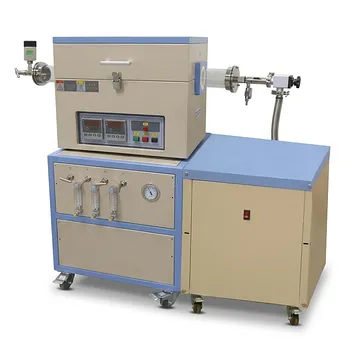
Dual Zone Quartz Tube Furnace with 80mm Diameter 1200C Max Temperature 3 Channel Gas Mixer and Vacuum Pump System
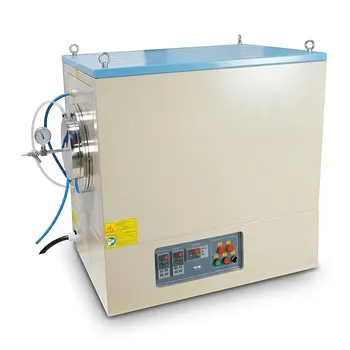
Dual Zone Tube Furnace 1100C with 11 Inch Quartz Tube and Vacuum Flanges for 8 Inch Wafer Processing
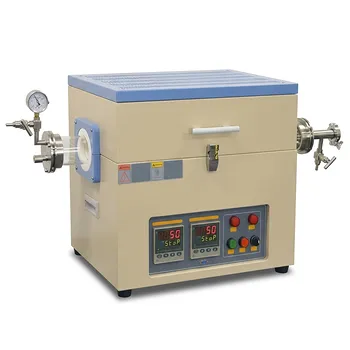
1200C Dual Zone Split Tube Furnace with Fused Quartz Tube and Vacuum Flanges Available in 60mm 80mm and 100mm Diameters
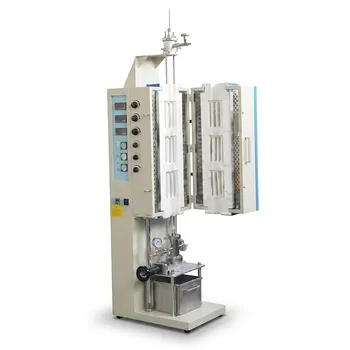
High Temperature Dual Zone Tube Furnace for Material Science Research and Professional Thermal Processing
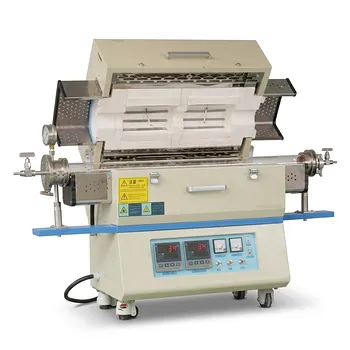
Dual Zone Split Tube Quenching Furnace with High Vacuum Atmosphere Control and Rapid Cooling
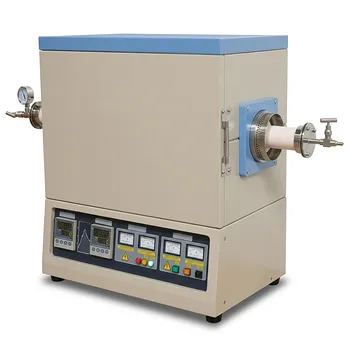
High Temperature 1700C Dual Zone Tube Furnace for Material Science and Industrial Chemical Vapor Deposition Research
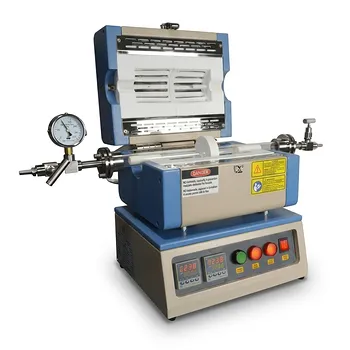
Dual Heating Zone 1200C Compact Split Tube Furnace with Optional 1" - 2" Tube and Vacuum Flanges
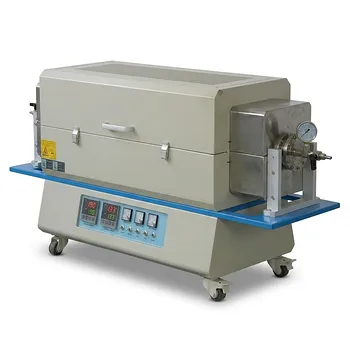
High Temperature Elongated Dual Zone Tube Furnace for Material Research and Industrial Heat Treatment
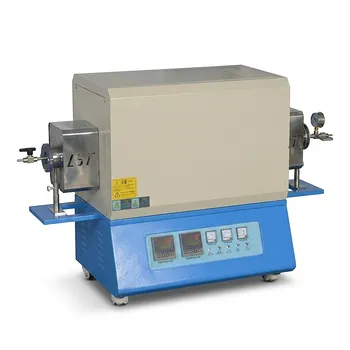
High Temperature Dual Zone Vacuum Tube Furnace for Material Research and CVD Processing
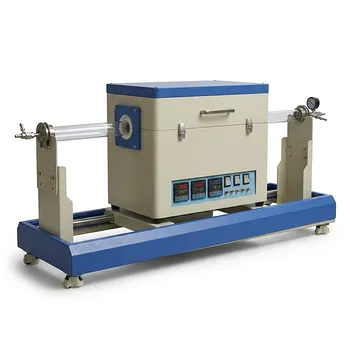
Double Temperature Zone Double Cover Tube Furnace for High Temperature CVD and Vacuum Annealing
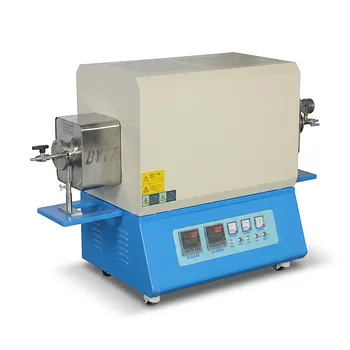
High Temperature Dual Zone Split Tube Furnace for Advanced Atmosphere Sintering and Vacuum CVD Applications
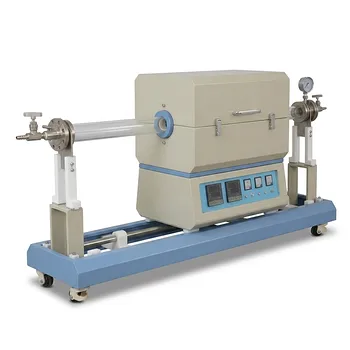
Double Zone Fast Heating Tube Furnace High Temperature Vacuum Atmosphere System
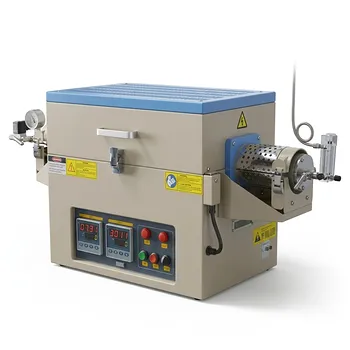
1100C Dual Zone Hydrogen Gas Tube Furnace with Quartz Tube and Integrated H2 Leak Detection System
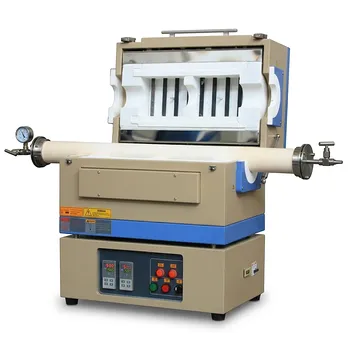
1500C Two Zone Split Tube Furnace with Vacuum Flange and 80mm Alumina Tube
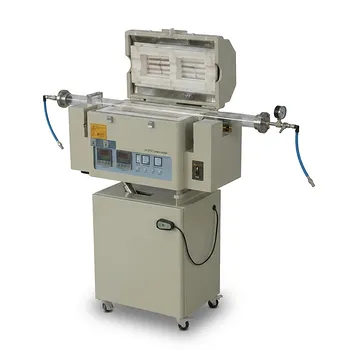
Double Temperature Revolving Tube Furnace with Precision Rotation and Adjustable Inclination for Advanced Material Research
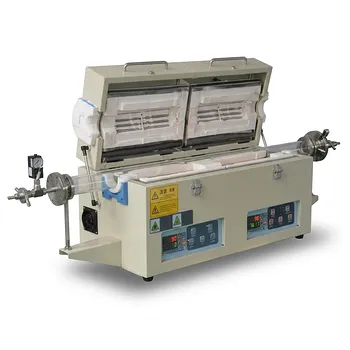
Elongated Two Temperature Zone Pipe Furnace for Industrial Heat Treatment and Material Science Research
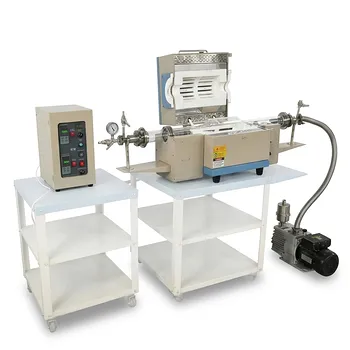
Two Zone Rotary Tube Furnace for Powder CVD Coating and Core Shell Material Synthesis 1100C
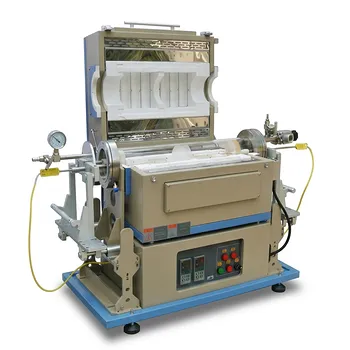
Two Zone IR Heating Rapid Thermal Processing RTP Tube Furnace with 4 Inch ID Quartz Tube and Sliding Sample Holders
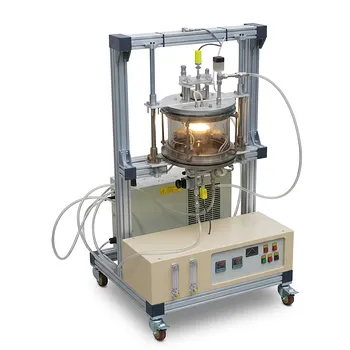
Two Zones CSS Furnace for Rapid Thermal Processing Thin Film Coating 3 Inch Diameter 650C