How does an atmosphere heat treatment furnace facilitate the surface modification of carbon spheres using ammonia (NH3)?
Updated 3 months ago
Atmosphere heat treatment furnaces enable the modification of carbon spheres through precise, multi-stage control of both thermal cycles and gaseous environments. By sequentially switching from a carbon dioxide ($CO_2$) activation phase at $800^\circ C$ to an ammonia ($NH_3$) doping phase at $600^\circ C$, the furnace facilitates the introduction of polar nitrogen groups into the carbon skeleton. This specific process configuration is engineered to enhance chemical adsorption—specifically for vinyl chloride—without compromising the physical micropore structure of the spheres.
The core value of an atmosphere furnace in this context is its ability to separate physical structure development from chemical surfacing. It allows for the creation of a high-surface-area framework followed by the precise integration of active nitrogen atoms derived from the thermal decomposition of ammonia.
The Mechanics of Sequential Atmosphere Control
Phase One: Developing the Pore Structure
The furnace initially operates at 800 °C under a carbon dioxide ($CO_2$) atmosphere to facilitate the development of a complex micropore network. This high-temperature environment promotes the controlled oxidation of the carbon spheres, increasing their surface area.
Phase Two: Precise Thermal Reduction
Following pore development, the furnace transitions to a lower temperature of 600 °C. This reduction is critical because it prepares the carbon surface for chemical bonding with nitrogen without causing thermal degradation of the newly formed pores.
Phase Three: Ammonia Injection and Nitrogen Doping
Once the temperature stabilizes, the furnace switches the atmosphere to high-purity ammonia ($NH_3$). This step introduces polar nitrogen-containing groups into the carbon skeleton, fundamentally altering the surface chemistry of the spheres to improve their affinity for specific molecules.
The Chemical Advantage of Ammonia (NH3)
Overcoming Nitrogen Stability
Molecular nitrogen ($N_2$) is chemically stable and relatively unreactive at these atmospheric pressures. Ammonia is used as the primary nitrogen source because it is significantly more effective at participating in surface reactions.
Thermal Decomposition and Active Atoms
Inside the furnace, $NH_3$ undergoes thermal decomposition, releasing highly reactive "active" nitrogen atoms. These atoms possess the kinetic energy required to penetrate the carbon surface and integrate into the molecular matrix.
Enhancing Adsorption Capacity
The successful introduction of these nitrogen groups creates a polar surface environment. This specific chemical modification is essential for increasing the adsorption capacity for target gases like vinyl chloride ($C_2H_3Cl$).
Navigating the Trade-offs of Precision Heat Treatment
Balancing Porosity and Doping Density
There is a fundamental tension between maximizing pore structure and maximizing nitrogen content. If the $CO_2$ phase is too aggressive, it can weaken the carbon skeleton, while excessive $NH_3$ exposure at high temperatures might cause pore collapse or unintended structural changes.
The Criticality of Temperature Accuracy
Precise temperature control is the most significant constraint in this process. Even minor fluctuations during the switch from $800^\circ C$ to $600^\circ C$ can result in inconsistent nitrogen distribution or a reduction in the material's final adsorption efficiency.
Maintenance of High-Purity Atmospheres
The presence of oxygen or moisture during the gas-switching phase can lead to uncontrolled oxidation. The furnace must maintain an absolute seal and rapid gas-purge capabilities to ensure the purity of the chemical reaction.
How to Apply This to Your Project
When utilizing an atmosphere heat treatment furnace for carbon modification, your strategy should depend on the specific requirements of your end-use application.
- If your primary focus is Maximum Surface Area: Prioritize the $CO_2$ activation phase at $800^\circ C$, ensuring sufficient residence time to develop the micropore network before introducing nitrogen.
- If your primary focus is Chemical Selectivity (Adsorption): Focus on the stability of the $600^\circ C$ $NH_3$ phase to ensure the maximum density of polar nitrogen groups is successfully integrated into the carbon skeleton.
- If your primary focus is Structural Integrity: Implement a gradual temperature ramp between the two stages to prevent thermal shock and protect the delicate micropore structures from collapsing.
By mastering the transition between thermal activation and chemical doping, you can engineer carbon materials with precisely tuned physical and chemical properties.
Summary Table:
| Process Phase | Temperature | Atmosphere | Primary Objective |
|---|---|---|---|
| Pore Development | 800°C | $CO_2$ | Create high-surface-area micropore network |
| Thermal Reduction | 600°C | Transition | Stabilize structure and prepare for bonding |
| Nitrogen Doping | 600°C | $NH_3$ | Integrate polar nitrogen groups for adsorption |
Elevate Your Material Research with THERMUNITS Precision Furnaces
Achieving precise nitrogen doping in carbon materials requires rigorous atmosphere control and uncompromising temperature stability. THERMUNITS is a leading manufacturer of high-performance laboratory equipment, providing the specialized thermal solutions needed for advanced industrial R&D and material science.
Our comprehensive range of thermal processing solutions includes:
- Atmosphere & Vacuum Furnaces for precise gaseous environment control.
- Tube, Rotary, & Muffle Furnaces for uniform and efficient heating.
- Advanced Systems: CVD/PECVD systems, Hot Press furnaces, and Vacuum Induction Melting (VIM) furnaces.
- Specialized Tools: Dental furnaces, electric rotary kilns, and high-quality thermal elements.
Whether your project demands maximum surface area or specific chemical selectivity, our equipment is engineered to provide the accuracy your research deserves. Contact our experts today to find the perfect heat treatment solution for your laboratory.
References
- Yaqi Yao, Yanqiang Huang. Tunable internal structure carbon sphere synthesis driven by water-solubility and its application in gas separation. DOI: 10.1039/d3ra08430b
Mentioned Products
- 1650C High Temperature Atmosphere Controlled Box Furnace with 65L Chamber for Advanced Material Sintering and Industrial Heat Treatment
- 1200C Hydrogen Atmosphere Box Furnace with 5 Heated Sides and 64L Chamber
- Rapid Thermal Processing RTP Atmosphere Controlled Bottom Loading Furnace 1100C High Throughput 50C per Second Heating Rate
- High Temperature Economic Hydrogen Gas Box Furnace 1600C Atmosphere Controlled Thermal Processing System 65L Capacity
- Atmosphere Controlled Muffle Furnace 1700C Maximum Temperature 80L High Capacity Vacuum Inert Gas Box Furnace
People Also Ask
- What role does atmosphere control play in technical ceramics and glass? Master Material Purity and Precision
- What role does a high-temperature atmosphere furnace play in the direct electrochemical reduction of CO2? - Key Insights
- What is the role of a high-temperature box furnace in the solid-state synthesis of Europium-doped M3MgSi2O8 phosphors?
- What is the role of a high-temperature box furnace in Na3MnZr(PO4)3 synthesis? Engineering High-Performance NASICON.
- What physical conditions does a high-temperature atmosphere furnace provide for MXene exfoliation? Process Guide

Tech Team · ThermUnits
Last updated on Jun 03, 2026
Related Products
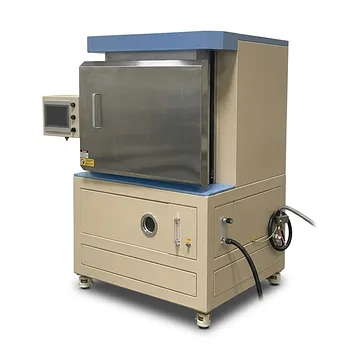
1650C High Temperature Atmosphere Controlled Box Furnace with 65L Chamber for Advanced Material Sintering and Industrial Heat Treatment
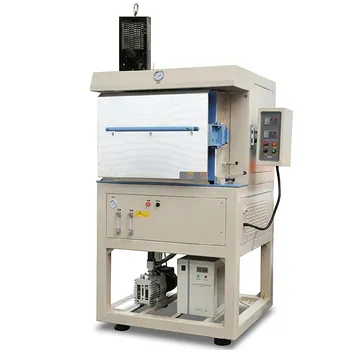
1200C Hydrogen Atmosphere Box Furnace with 5 Heated Sides and 64L Chamber
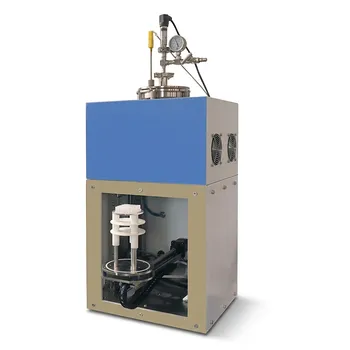
Rapid Thermal Processing RTP Atmosphere Controlled Bottom Loading Furnace 1100C High Throughput 50C per Second Heating Rate
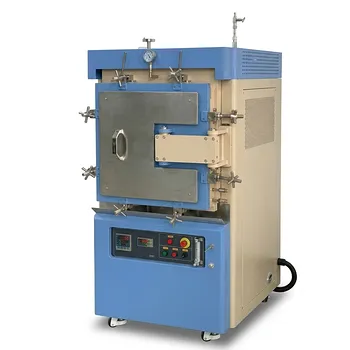
High Temperature Economic Hydrogen Gas Box Furnace 1600C Atmosphere Controlled Thermal Processing System 65L Capacity
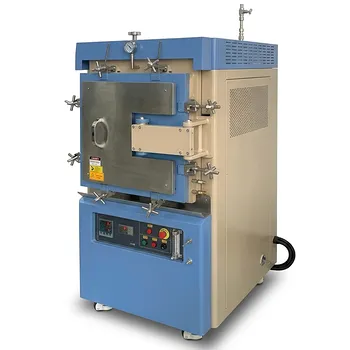
Atmosphere Controlled Muffle Furnace 1700C Maximum Temperature 80L High Capacity Vacuum Inert Gas Box Furnace
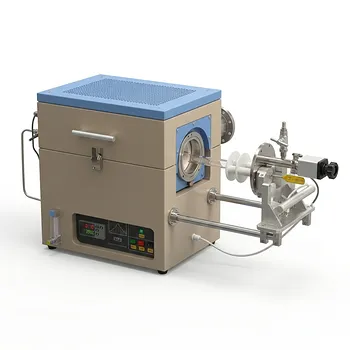
Compact Atmosphere Controlled Rapid Thermal Processing RTP Furnace with 4 Inch ID Quartz Tube 1100C
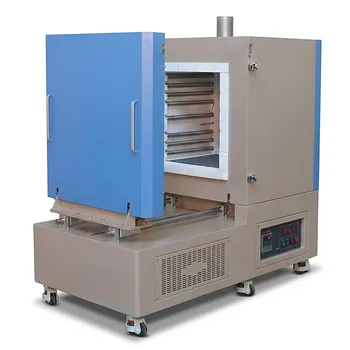
1200C Five Side Heating Muffle Furnace with Sliding Door 125L Volume High Temperature Heat Treatment System for Large Scale Sintering and Annealing
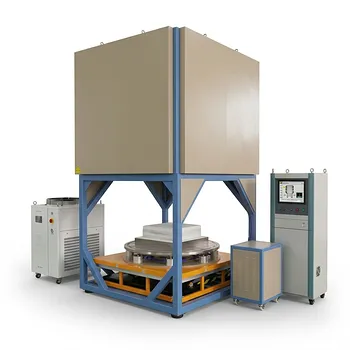
Bottom Loaded Inert Gas Atmosphere Box Furnace 1700C 1300C 216L Large Capacity Industrial Thermal Processing System
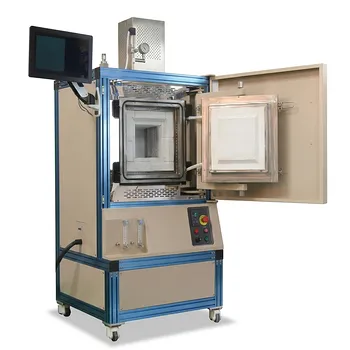
High Temperature Hydrogen Atmosphere Box Furnace 1650C Max Reducing Environment Material Synthesis System 8x8x8 Chamber
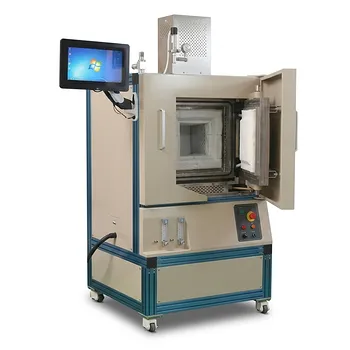
High Temperature Oxygen and Inert Atmosphere Controlled Furnace 8 Liter 1700C Sintering System for Advanced Materials RD
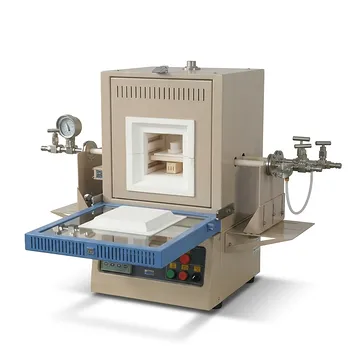
1700C Compact Hybrid Furnace with Dual Layer Box Sintering and Controlled Atmosphere Alumina Tubes
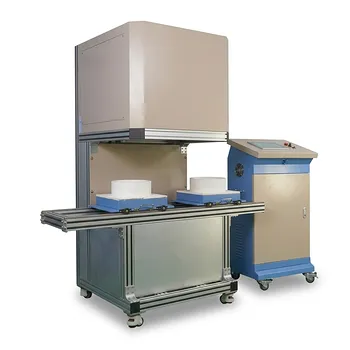
High Temperature Bottom Loading Vertical Furnace 1700C Dual Stage Sample Processing System 18L Large Capacity Thermal Treatment Equipment
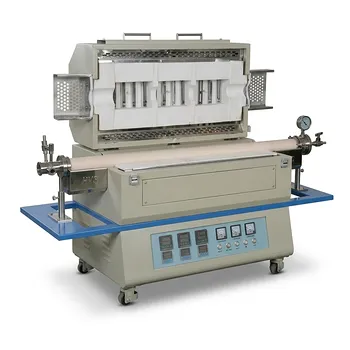
Three Temperature Zone Fast Heating Furnace 1500C Laboratory High Precision Thermal Processing System
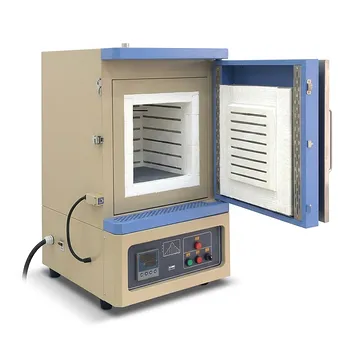
Five Side Heating Muffle Furnace High Purity Alumina Fiber 27L Chamber 1200C High Temperature Thermal Processing System for Sintering Annealing and Materials Research
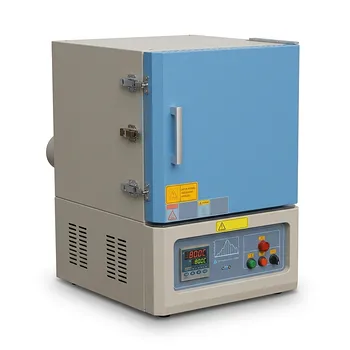
1800C Bench Top Muffle Furnace 18 Liters with Kanthal Super 1900 Heating Elements for High Purity Ceramic Sintering and Material Research

High Temperature Tube Furnace 1500C with Sliding Flanges and 50mm OD for Rapid Thermal Processing Fast Heating and Cooling
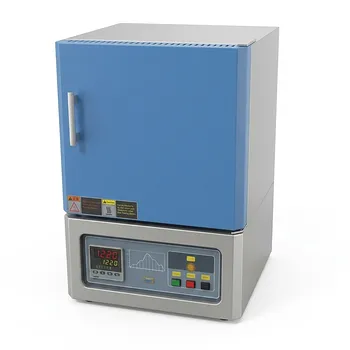
High Temperature Benchtop Muffle Furnace 1700C 10L Chamber Alumina Fiber Insulation MoSi2 Heating Elements
High Temperature 1500C Benchtop Muffle Furnace 3.6L Alumina Fiber Chamber Programmable Controller Sintering Annealing Carbonization Thermal Processing System
High Temperature 1600°C Three Zone Heated Bottom Loading Box Furnace with Rapid Thermal Processing Chamber 72L Volume
