What physical conditions does a high-temperature atmosphere furnace provide for MXene exfoliation? Process Guide
Updated 3 months ago
High-temperature atmosphere furnaces provide the critical thermal and chemical environment required to transition Lewis acid salts into a molten state for MXene exfoliation. By maintaining precise temperatures (typically exceeding 700°C) and an oxygen-free inert atmosphere, these furnaces facilitate a fluorine-free redox reaction that selectively etches the "A" layer atoms from the MAX phase precursor.
Core Takeaway: The atmosphere furnace serves as a controlled thermodynamic reactor that enables the molten salt etching process by providing high-precision heat, preventing material oxidation, and managing the removal of volatile chemical by-products.
The Critical Thermal Environment
Achieving the Molten State
The primary role of the furnace is to provide the extreme heat necessary—often 700°C or higher—to melt Lewis acid salts like zinc chloride ($ZnCl_2$) or copper chloride ($CuCl_2$). In this liquid state, the salts act as powerful etching agents, infiltrating the MAX phase structure to displace the "A" element atoms.
Ensuring Uniform Thermal Distribution
High-quality atmosphere furnaces provide a uniform thermal field, which is essential for consistent material quality across the entire sample. This stability reduces lattice defects in the resulting MXene and ensures that the exfoliation process occurs evenly throughout the precursor powder.
Precise Kinetic Regulation
By allowing for the regulation of heating rates and soaking times, the furnace gives researchers control over the reaction kinetics. This precision is vital for transforming precursors into functional materials with specific physical properties, such as high conductivity or catalytic activity.
Atmospheric Control and Chemical Stability
Oxygen-Free Inert Protection
The furnace maintains a strictly controlled inert protection environment to prevent the oxidation of the MXene layers during the high-temperature reaction. Under these oxygen-free conditions, the redox reaction between the molten salt and the MAX phase can proceed without contaminating the material with unwanted oxides.
Removal of Volatile By-products
A key feature of the atmosphere furnace is its ability to use constant gas flow to manage chemical by-products. For instance, volatile substances like silicon tetrachloride ($SiCl_4$) are efficiently swept away by the gas stream, preventing them from interfering with the exfoliation process or re-depositing on the MXene surface.
Surface Termination Management
The specific atmosphere within the furnace influences the surface termination groups of the resulting MXene. This environment allows for a fluorine-free synthesis path, which is often preferred for applications where the traditional hydrofluoric acid (HF) method would introduce undesirable surface chemistries.
Understanding the Trade-offs
Thermal Lag vs. Precise Control
While these furnaces offer high precision, the mass of the heating elements and insulation can lead to thermal lag. Rapidly changing temperatures to stop a reaction quickly can be difficult, potentially leading to over-etching if the cooling phase is not managed correctly.
Atmosphere Purity vs. Gas Consumption
Maintaining a "strictly controlled" environment requires a constant flow of high-purity inert gases, such as Argon or Nitrogen. The trade-off is the operational cost and the complexity of ensuring the gas delivery system does not introduce trace moisture or oxygen, which could compromise the MXene quality at 700°C.
How to Apply This to Your Synthesis
To achieve the best results in MXene exfoliation using the Lewis acid molten salt method, consider the following recommendations based on your research goals:
- If your primary focus is high structural integrity: Prioritize a furnace with a high-quality heating zone to ensure a uniform thermal field, which minimizes lattice defects during the etching process.
- If your primary focus is surface chemistry purity: Ensure the gas delivery system is equipped with high-purity filters and a high flow rate to effectively remove volatile by-products like $SiCl_4$.
- If your primary focus is scalability and speed: Optimize the heating rates and soaking times to find the minimum required duration for complete exfoliation without over-exposing the material to high heat.
By mastering the physical conditions of the atmosphere furnace, you can successfully leverage molten salt chemistry to produce high-performance, fluorine-free MXenes tailored to your specific application.
Summary Table:
| Physical Condition | Role in MXene Exfoliation | Key Impact on Material |
|---|---|---|
| High Heat (≥700°C) | Melts Lewis acid salts (ZnCl₂, etc.) | Initiates redox reaction to etch "A" layers |
| Inert Atmosphere | Provides oxygen-free protection | Prevents oxidation and ensures material purity |
| Uniform Thermal Field | Maintains stable thermodynamic reactor | Reduces lattice defects and ensures consistency |
| Controlled Gas Flow | Manages volatile by-product removal | Prevents re-deposition of impurities like SiCl₄ |
| Kinetic Regulation | Controls heating rates and soaking times | Tailors conductivity and catalytic activity |
Optimize Your MXene Synthesis with THERMUNITS Precision
Achieving the exact thermodynamic conditions for Lewis acid molten salt exfoliation requires equipment built for high-stakes research. THERMUNITS is a leading manufacturer of high-temperature laboratory equipment specifically designed for material science and industrial R&D.
We provide a comprehensive range of thermal solutions to ensure your MXene production is efficient, pure, and repeatable:
- Atmosphere & Vacuum Furnaces: For strictly controlled, oxygen-free environments.
- Tube & Rotary Furnaces: Ideal for uniform powder processing and gas-flow management.
- Advanced Systems: Including CVD/PECVD, Hot Press, and Vacuum Induction Melting (VIM) furnaces.
- Specialized Equipment: From Muffle and Dental furnaces to high-quality Thermal Elements.
Ready to elevate your lab's capabilities?
Contact THERMUNITS Today to consult with our experts on the ideal thermal processing solution for your specific research goals.
References
- Hengjun Su, Xiaojun Zeng. Recent progress in the synthesis and electrocatalytic application of MXene‐based metal phosphide composites. DOI: 10.1002/cnl2.169
Mentioned Products
- 1650C High Temperature Atmosphere Controlled Box Furnace with 65L Chamber for Advanced Material Sintering and Industrial Heat Treatment
- High Temperature Vertical Atmosphere Controlled Furnace with Automatic Bottom Loading and 1700°C Capacity for Advanced Material Research
- High Temperature Oxygen and Inert Atmosphere Controlled Furnace 8 Liter 1700C Sintering System for Advanced Materials RD
- 1750°C High Temperature Benchtop Vacuum Atmosphere Tube Furnace with Kanthal Super 1800 Heating Elements and 60mm Alumina Processing Tube
- High Temperature Hydrogen Atmosphere Box Furnace 1650C Max Reducing Environment Material Synthesis System 8x8x8 Chamber
People Also Ask
- What role does atmosphere control play in technical ceramics and glass? Master Material Purity and Precision
- What role does a high-temperature atmosphere furnace play in the direct electrochemical reduction of CO2? - Key Insights
- What is the role of a high-temperature box furnace in the solid-state synthesis of Europium-doped M3MgSi2O8 phosphors?
- What is the role of a high-temperature box furnace in Na3MnZr(PO4)3 synthesis? Engineering High-Performance NASICON.
- What is the role of a high-temperature atmosphere furnace in HfCo-N-C catalyst preparation? Expert Synthesis Guide.

Tech Team · ThermUnits
Last updated on Jun 02, 2026
Related Products
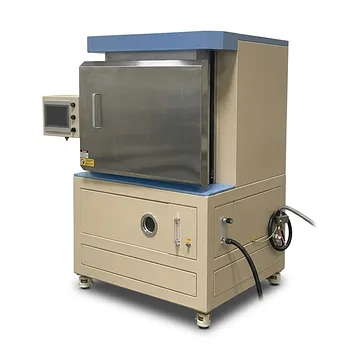
1650C High Temperature Atmosphere Controlled Box Furnace with 65L Chamber for Advanced Material Sintering and Industrial Heat Treatment
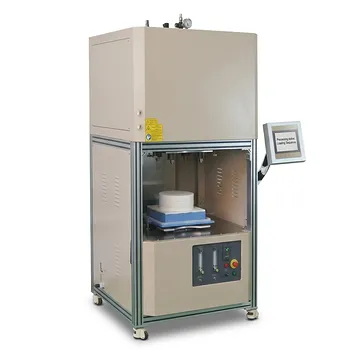
High Temperature Vertical Atmosphere Controlled Furnace with Automatic Bottom Loading and 1700°C Capacity for Advanced Material Research
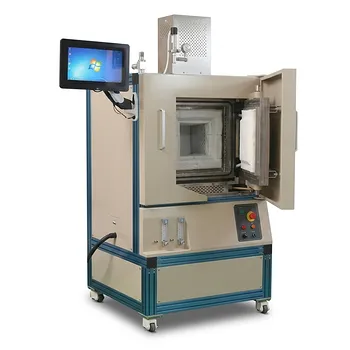
High Temperature Oxygen and Inert Atmosphere Controlled Furnace 8 Liter 1700C Sintering System for Advanced Materials RD
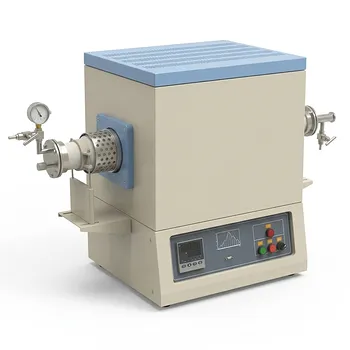
1750°C High Temperature Benchtop Vacuum Atmosphere Tube Furnace with Kanthal Super 1800 Heating Elements and 60mm Alumina Processing Tube
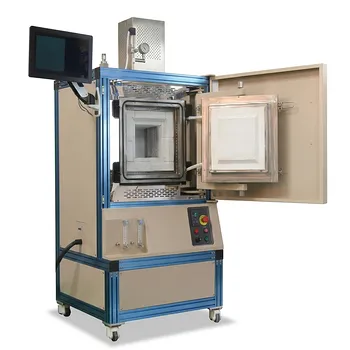
High Temperature Hydrogen Atmosphere Box Furnace 1650C Max Reducing Environment Material Synthesis System 8x8x8 Chamber
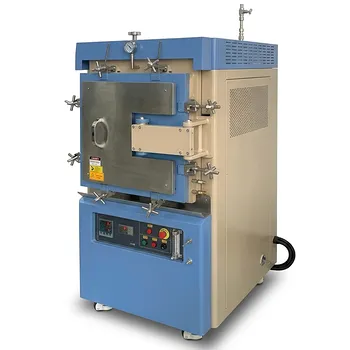
Atmosphere Controlled Muffle Furnace 1700C Maximum Temperature 80L High Capacity Vacuum Inert Gas Box Furnace
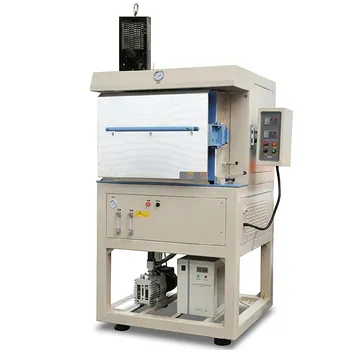
1200C Hydrogen Atmosphere Box Furnace with 5 Heated Sides and 64L Chamber
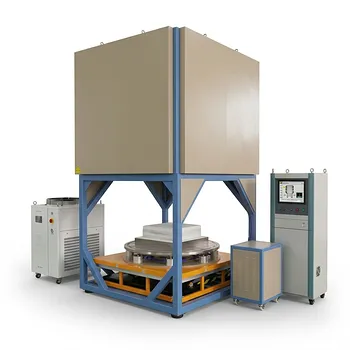
Bottom Loaded Inert Gas Atmosphere Box Furnace 1700C 1300C 216L Large Capacity Industrial Thermal Processing System
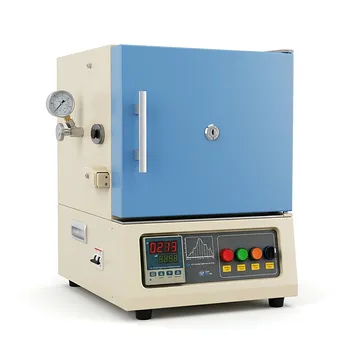
1200C Hybrid Muffle and Tube Furnace for Material Research with Dual Atmosphere Control Quartz Tubes
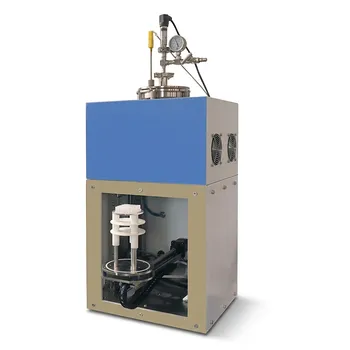
Rapid Thermal Processing RTP Atmosphere Controlled Bottom Loading Furnace 1100C High Throughput 50C per Second Heating Rate

Vertical 1700C Vacuum and Atmosphere Tube Furnace with 80mm Alumina Tube
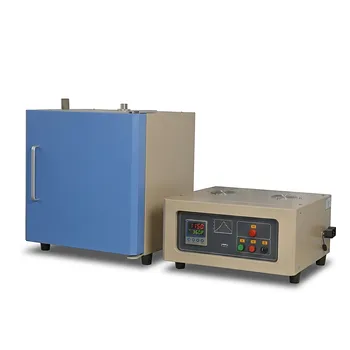
High Temperature Muffle Furnace with Alloy Chamber for Debinding and Sintering Applications
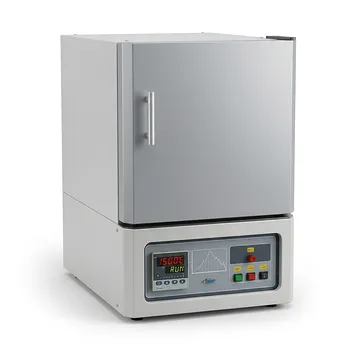
High Temperature 1500C Benchtop Muffle Furnace 3.6L Alumina Fiber Chamber Programmable Controller Sintering Annealing Carbonization Thermal Processing System
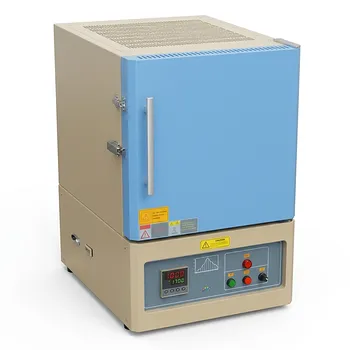
Large Bench Top 1700C High Temperature Muffle Furnace with 19L Chamber for Advanced Material Sintering and Annealing
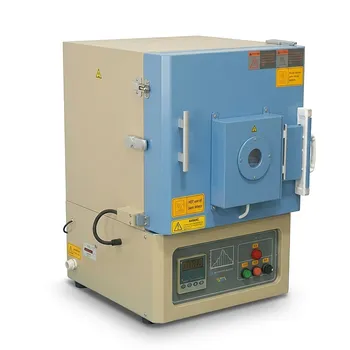
High Temperature Benchtop Muffle Furnace 1500C with 3.6L Chamber and Quartz Observation Window

High Temperature 1700C Tube Furnace with High Vacuum Turbomolecular Pump System and Multi Channel Mass Flow Controller Gas Mixer
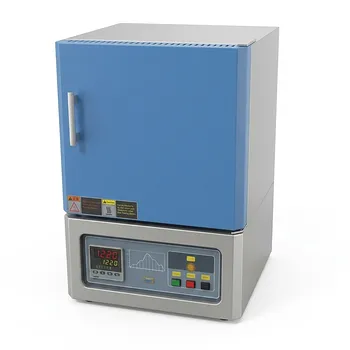
High Temperature Benchtop Muffle Furnace 1700C 10L Chamber Alumina Fiber Insulation MoSi2 Heating Elements
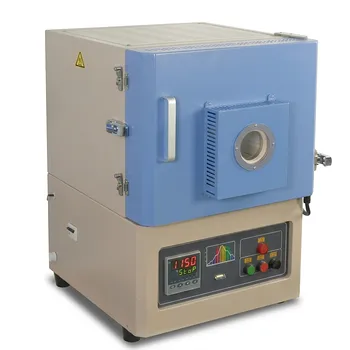
High Temperature Benchtop Muffle Furnace with Quartz Observation Window for Thermal Imaging and Material Analysis
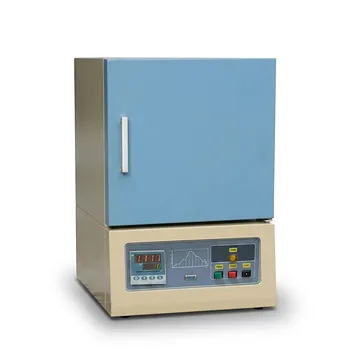
Ultra High Temperature Bench Top Muffle Furnace 1750C Sintering System with Kanthal Super Heating Elements and Precision Digital Control
