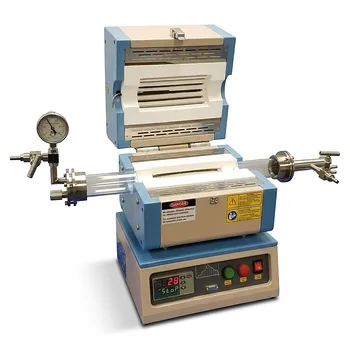
How does an industrial-grade tube furnace benefit sintering porous aluminum wicks? Oxide Removal & Enhanced Bonding
Updated 3 months ago
The use of an industrial-grade tube furnace with a reducing atmosphere is essential for sintering porous aluminum wicks because it actively removes the surface oxide barriers that otherwise prevent metal particles from bonding. This environment, typically utilizing high-purity hydrogen, inhibits secondary oxidation and facilitates the breakdown of stable aluminum oxide ($Al_2O_3$) films. By overcoming these surface films, the furnace enables the atomic diffusion necessary to form strong metallurgical "sintering necks" between particles.
Core Takeaway: An industrial-grade tube furnace transforms aluminum powder into a functional porous structure by combining precise thermal control with a chemical reducing environment. This process eliminates stubborn oxide layers that block particle fusion, ensuring the creation of a high-strength wick with the interconnected porosity required for advanced thermal management applications.
Overcoming the Aluminum Oxide Barrier
The Problem with $Al_2O_3$
Aluminum powder surfaces naturally form a dense, stable aluminum oxide film that acts as a physical barrier. This film is highly resistant to heat and prevents the base metal of adjacent particles from making contact.
Without removing or penetrating this layer, the particles cannot form the sintering necks—the microscopic bridges—necessary for structural integrity.
How a Reducing Atmosphere Enables Bonding
The industrial-grade tube furnace introduces high-purity hydrogen, creating a reducing atmosphere that inhibits secondary oxidation during the heating process.
When used alongside copper sintering additives, this atmosphere helps break down the existing oxide layer. This allows for atomic diffusion, where aluminum atoms move across particle boundaries to create a definitive metallurgical bond.
Precise Thermal Management in Sintering
Solid-State Diffusion Control
The tube furnace provides a controlled thermal environment where temperatures are maintained strictly below the melting point of aluminum.
This allows for solid-state diffusion bonding, where the material fuses without turning into a liquid. Continuous thermal energy activates the atoms, eliminating interfacial gaps and promoting chemical bonding between the metal and any composite additives.
The Importance of Heating Curves
High-precision control systems in these furnaces follow strict heating, soaking, and cooling curves.
By regulating these stages, the furnace ensures the composite material reaches its ideal density. This precision prevents the structural collapse of the pores, ensuring the final wick maintains its intended capillary capabilities.
Enhancing Structural Integrity and Porosity
Achieving Microstructural Uniformity
A controlled atmosphere protects the metal powder from environmental contaminants that could introduce weaknesses.
This results in a finished component with superior mechanical integrity and a highly uniform microstructure. Such uniformity is critical for porous wicks, where inconsistent pore sizes can lead to failure in heat pipe or cooling applications.
Managing Sintering Additives
The tube furnace environment is optimized to work with additives like copper, which assist in the "wetting" of the aluminum particles.
The furnace ensures these additives are distributed and reacted correctly within the hydrogen environment. This synergy results in a three-dimensional skeleton with high connectivity and complete sintering necks.
Understanding the Trade-offs
Technical Challenges and Risks
Operating a hydrogen-reducing atmosphere requires sophisticated safety protocols due to the flammability and explosive potential of the gas. This increases the complexity and operational cost of the sintering process compared to using inert gases like argon or nitrogen.
Limitations of Oxide Reduction
While hydrogen is effective, aluminum oxide is exceptionally stable; the reducing atmosphere must be of extremely high purity with very low dew points to be effective. If the atmosphere contains even trace amounts of moisture or oxygen, the reduction process can fail, resulting in a weak, "green" part that lacks mechanical strength.
How to Apply This to Your Project
Making the Right Choice for Your Goal
- If your primary focus is maximizing wick strength: Ensure your tube furnace is rated for high-purity hydrogen and utilize copper-based additives to facilitate the breakdown of the $Al_2O_3$ layer.
- If your primary focus is precise pore geometry: Prioritize a furnace with multi-stage programmable temperature zones to strictly control the sintering rate and prevent over-densification.
- If your primary focus is cost-efficiency for non-critical parts: Consider if a high-vacuum environment or an inert nitrogen atmosphere could meet your bonding requirements, though these may result in lower mechanical strength than hydrogen reduction.
The synergy of a reducing atmosphere and precise thermal control is the only way to reliably overcome aluminum’s natural oxidation and create high-performance porous structures.
Summary Table:
| Feature | Benefit for Aluminum Sintering | Key Mechanism |
|---|---|---|
| Reducing Atmosphere (H2) | Eliminates oxide barriers ($Al_2O_3$) | Chemical reduction of surface films |
| Precise Thermal Control | Maintains structural porosity | Solid-state diffusion without melting |
| Programmable Cycles | Ensures microstructural uniformity | Strict heating, soaking, and cooling curves |
| High-Purity Gas Flow | Prevents secondary oxidation | High-purity hydrogen with low dew points |
Optimize Your Sintering Process with THERMUNITS
Are you facing challenges with oxide barriers or inconsistent porosity in your material R&D? THERMUNITS is a leading manufacturer of high-temperature laboratory equipment, providing the precision and safety required for advanced material science.
Our specialized Tube Furnaces and Atmosphere Furnaces are engineered for high-purity hydrogen environments, ensuring superior metallurgical bonding for porous aluminum wicks and other complex alloys. Beyond sintering, we offer a comprehensive range of thermal solutions, including:
- Muffle, Vacuum, and Rotary Furnaces
- Hot Press Furnaces & CVD/PECVD Systems
- Vacuum Induction Melting (VIM) & Dental Furnaces
- High-Quality Thermal Elements
Enhance your lab's efficiency and achieve repeatable, high-performance results. Contact our technical experts today to find the perfect furnace for your research!
References
- Yanbo Cai, Bohua Duan. Effect of Copper Content on the Microstructure and Properties of the Sintered Porous Aluminum Wick. DOI: 10.3390/met14040386
Mentioned Products
- Compact Vertical Split Quartz Tube Furnace with Stainless Steel Vacuum Flanges for Rapid Thermal Quenching and Controlled Atmosphere Material Processing
- High Temperature Hydrogen Atmosphere Box Furnace 1650C Max Reducing Environment Material Synthesis System 8x8x8 Chamber
- 1000C Mini Tube Furnace with 20mm Quartz Tube and Vacuum Flanges for Material Science Research and Controlled Atmosphere Small Sample Processing
- Vertical 1700C Vacuum and Atmosphere Tube Furnace with 80mm Alumina Tube
- Compact Hybrid Muffle and Tube Furnace for 1000C Controlled Atmosphere Laboratory Material Sintering
People Also Ask
- Why integrate a vertical split tube furnace with hydraulic loading for HSECC? Essential for In-Situ Fire Simulation.
- What is the role of a split vertical tube furnace during flash sintering of 8YSZ and 20SDC? Master Ultra-Fast R&D
- What is the primary engineering purpose for using a customized ventilation hood when operating a split tube furnace? RCF Safety
- Why is a quartz tube furnace necessary for phosphorus-doped MoS2/GO preparation? Ensure Purity & Precise Synthesis
- What is the primary function of a Quartz Tube Furnace in ZnO VLS growth? Master High-Precision Nanowire Synthesis

Tech Team · ThermUnits
Last updated on Jun 02, 2026
Related Products
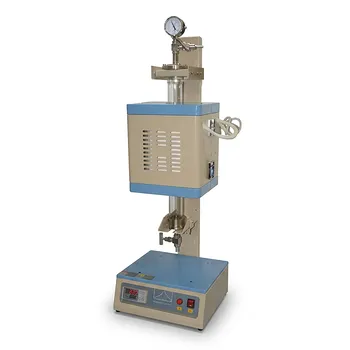
Compact Vertical Split Quartz Tube Furnace with Stainless Steel Vacuum Flanges for Rapid Thermal Quenching and Controlled Atmosphere Material Processing
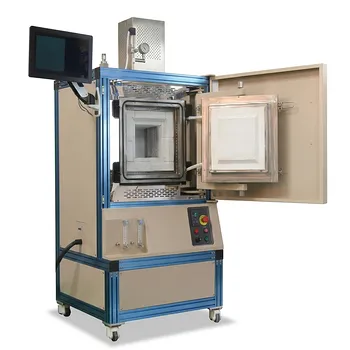
High Temperature Hydrogen Atmosphere Box Furnace 1650C Max Reducing Environment Material Synthesis System 8x8x8 Chamber
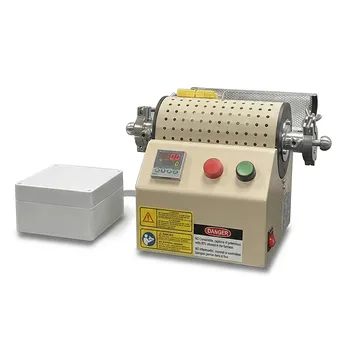
1000C Mini Tube Furnace with 20mm Quartz Tube and Vacuum Flanges for Material Science Research and Controlled Atmosphere Small Sample Processing
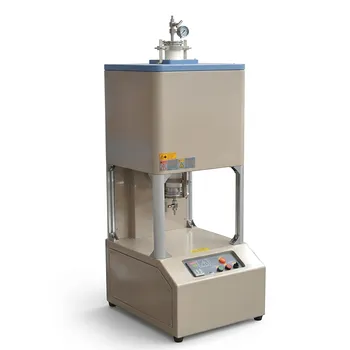
Vertical 1700C Vacuum and Atmosphere Tube Furnace with 80mm Alumina Tube
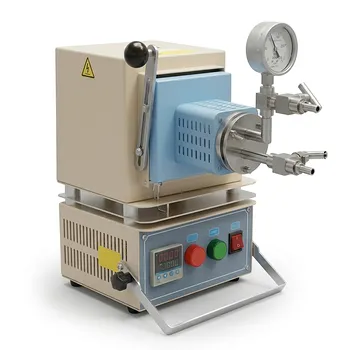
Compact Hybrid Muffle and Tube Furnace for 1000C Controlled Atmosphere Laboratory Material Sintering
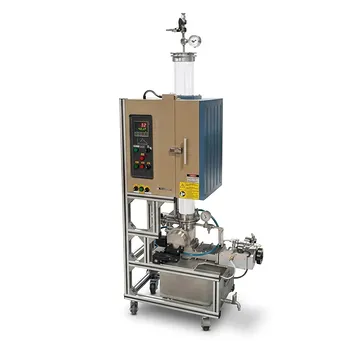
1200C High Temperature Atmosphere Controlled Vertical Quenching Tube Furnace with 4 Inch Quartz Tube
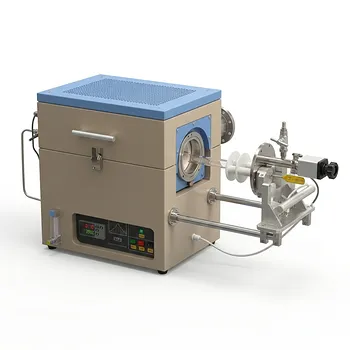
Compact Atmosphere Controlled Rapid Thermal Processing RTP Furnace with 4 Inch ID Quartz Tube 1100C
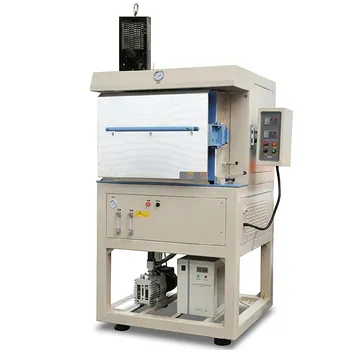
1200C Hydrogen Atmosphere Box Furnace with 5 Heated Sides and 64L Chamber
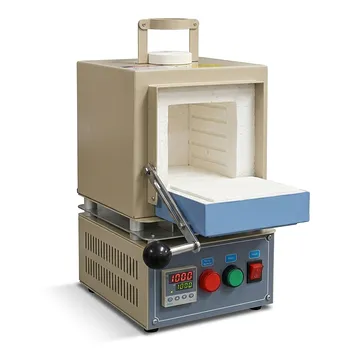
Compact 1000C Muffle Furnace with Programmable Controller and 2 Inch Top Port for Vacuum and Atmosphere Material Research

High Temperature 1700C Vertical Tube Furnace for Powder Spherification and Material Sintering

Compact High Temperature 1600C Tube Furnace with 50mm Alumina Tube and Vacuum Flanges for Material Sintering
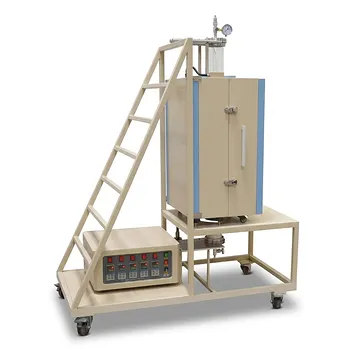
Five Zone Split Vertical Tube Furnace 1200C Max with 4 Inch Quartz Tube and Stainless Steel Vacuum Flanges
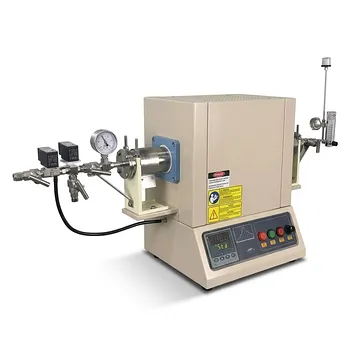
1500C Compact Hydrogen Gas Tube Furnace with 2 Inch Alumina Tube and Hydrogen Detector
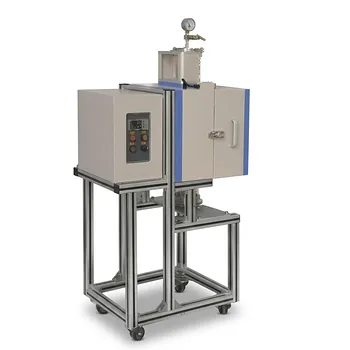
1200°C 5 Inch Vertical Quartz Tube Furnace with Stainless Steel Vacuum Flanges
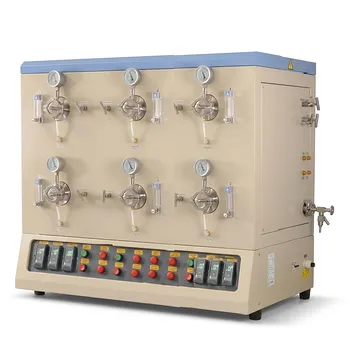
1200C High Throughput Multi Channel Tube Furnace with 50mm Quartz Tubes for Annealing and Material Phase Diagram Research
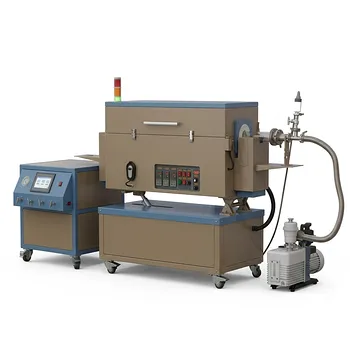
5 Inch Three Zone Rotary Tube Furnace with Integrated Gas Delivery System and 1200C Capability for Advanced Material CVD Processing
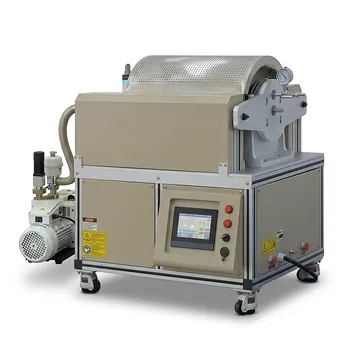
Automated 1200 C Tube Furnace for AI Material Research with 6 Inch OD and Sliding Flange
1200C Three Zone Split Vertical Tube Furnace 4 Inch Quartz Tube Stainless Steel Vacuum Flanges
5 Inch Rotary Tube Furnace with Automatic Feeding and Receiving System 1200C Three Zone CVD Powder Processing