How does extending the deposition time within a tube furnace affect CuPd alloy catalysts? Optimize Morphology & ECSA
Updated 3 months ago
Extending the deposition time within a tube furnace triggers a fundamental morphological transition in CuPd alloy catalysts, evolving them from basic nanoparticle aggregates into complex, vertically oriented tower-like micro-arrays. This structural shift, specifically observed when increasing duration from one to two hours, dramatically expands the electrochemically active surface area.
Core Takeaway: Increasing deposition time acts as a master control for growth kinetics in the Aerosol-Assisted Chemical Vapor Deposition (AACVD) process, shifting catalyst morphology from random clusters to structured micron-scale arrays that provide superior surface area for reactions.
The Evolution of Morphology and Microstructure
From Aggregates to Micro-Tower Arrays
At shorter deposition intervals (approximately one hour), the CuPd alloy typically forms simple nanoparticle aggregates. These are relatively flat, disorganized clusters that provide a baseline level of surface exposure for catalytic activity.
As the deposition time extends to two hours, the growth kinetics favor the development of vertically oriented structures. These evolve into unique, tower-like micron-scale arrays that occupy more three-dimensional space above the substrate.
The Dynamics of Growth Kinetics
The tube furnace environment facilitates a time-dependent growth mechanism where prolonged exposure allows for continuous nucleation and directed crystal growth. This transition is not merely an increase in size but a qualitative change in the "architecture" of the catalyst layer.
Impact on Catalytic Performance
Maximizing Electrochemically Active Surface Area (ECSA)
The primary benefit of the tower-like micron-scale arrays is a significant increase in the Electrochemically Active Surface Area (ECSA). By growing "up" rather than just "out," the catalyst exposes a much higher density of metal atoms to the electrolyte.
Enhancing Active Sites for HER
The structural evolution directly correlates with improved performance in the Hydrogen Evolution Reaction (HER). The increased surface complexity provides more active sites, which lowers the energy barrier for the reaction and enhances overall catalytic efficiency.
The Role of the Furnace Environment
Atmosphere Control and Surface Integrity
While time dictates the shape, the reducing atmosphere (typically a mixture of hydrogen and argon) within the tube furnace ensures chemical purity. This environment prevents the oxidation of copper nanoparticles, which is vital for maintaining the metallic state required for high activity.
Spatial Positioning and Uniformity
The position of the sample within the tube furnace significantly influences the final result. Samples placed near the gas inlet are more vulnerable to trace oxygen impurities, which can create unwanted oxide layers (often visible as pink or brown discolorations) that interfere with the alloy's performance.
Understanding the Trade-offs
The Risk of Thermal Sintering
Extended time at high temperatures can lead to sintering, where smaller particles merge into larger, less active masses. While longer deposition creates taller structures, it must be balanced against the potential loss of fine surface defects and step sites that are critical for specific reactions like CO2 conversion.
Gas Flow and Temperature Field Uniformity
Maintaining a uniform temperature field and consistent flow field is difficult over long durations. Inconsistencies in the tube furnace design can lead to anisotropic growth, where the catalyst morphology varies across the length of the substrate, leading to inconsistent electrochemical performance.
How to Optimize Your Deposition Strategy
To achieve the best results when configuring your tube furnace deposition process, consider your specific performance targets:
- If your primary focus is maximizing ECSA for HER: Extend the deposition time to at least two hours to promote the formation of vertically oriented tower-like arrays.
- If your primary focus is surface purity and preventing oxidation: Ensure the sample is placed away from the gas inlet and maintain a strict reducing atmosphere throughout the heating and cooling cycles.
- If your primary focus is maintaining high-energy step sites: Prioritize adjusting the heating curve and annealing temperature rather than just extending deposition time to avoid over-sintering the crystal defects.
By precisely controlling the duration of the deposition, you can transform a simple alloy coating into a high-performance, three-dimensional catalytic framework.
Summary Table:
| Feature/Parameter | Short Deposition Time (~1h) | Extended Deposition Time (2h+) |
|---|---|---|
| Morphology | Simple nanoparticle aggregates | Vertically oriented tower-like micro-arrays |
| Surface Structure | Flat, disorganized clusters | 3D high-density micron-scale structures |
| ECSA | Baseline active surface area | Significantly expanded active surface area |
| HER Performance | Standard catalytic efficiency | Enhanced efficiency with more active sites |
| Primary Risk | Limited catalytic architecture | Potential thermal sintering/loss of defects |
Elevate Your Material Research with THERMUNITS Precision Solutions
Are you looking to achieve precise control over catalyst morphology and growth kinetics? THERMUNITS is a leading manufacturer of high-temperature laboratory equipment, providing the advanced thermal processing solutions required for world-class material science and industrial R&D.
Our specialized Tube Furnaces, CVD/PECVD systems, and Atmosphere Furnaces are engineered to deliver the uniform temperature fields and strict atmosphere control necessary for transforming simple coatings into high-performance catalytic frameworks. Whether you are working on Hydrogen Evolution Reactions (HER) or complex alloy synthesis, our equipment ensures consistency and scalability.
Our Comprehensive Product Range Includes:
- Muffle, Vacuum, and Atmosphere Furnaces
- Advanced Tube & Rotary Furnaces
- CVD/PECVD Systems for Nano-material Synthesis
- Vacuum Induction Melting (VIM) & Hot Press Furnaces
- Dental Furnaces and High-Quality Thermal Elements
Ready to optimize your heat treatment process? Contact THERMUNITS today to consult with our experts and find the perfect thermal solution for your laboratory needs.
References
- Muhammad Ali Ehsan, Wasif Farooq. Facile fabrication of binary copper–palladium alloy thin film catalysts for exceptional hydrogen evolution performance. DOI: 10.1039/d4ma00410h
Mentioned Products
- Vertical 1700C Vacuum and Atmosphere Tube Furnace with 80mm Alumina Tube
- Compact High Temperature 1600C Tube Furnace with 50mm Alumina Tube and Vacuum Flanges for Material Sintering
- 900°C Max Rotary Tube Furnace with 8 Inch 310S Alloy Tube and Optional Multi Zone Heating for Industrial Material Calcination
- Split Vertical Tube Furnace with 1200C Quartz Tube and Stainless Steel Vacuum Flanges for Rapid Thermal Processing
- High Temperature 1700C Tube Furnace with High Vacuum Turbomolecular Pump System and Multi Channel Mass Flow Controller Gas Mixer
People Also Ask
- How is an industrial-grade vertical tube furnace utilized in smelting leaching residues? Enhance Metal Recovery Efficiency
- What is the function of a laboratory-grade vertical tube furnace in fast pyrolysis? Optimize Composite Research.
- How does a vertical tube furnace facilitate thermoelectric alloy melting? Precision synthesis for material homogeneity.
- Why is a thermocouple sensor indispensable for monitoring the vertical tube furnace during gallium oxide nanowire production? Optimize VLS Growth
- What are the advantages of using a vertical tube furnace for crucible experiments simulating steel-slag interactions?

Tech Team · ThermUnits
Last updated on Jun 03, 2026
Related Products

Vertical 1700C Vacuum and Atmosphere Tube Furnace with 80mm Alumina Tube

Compact High Temperature 1600C Tube Furnace with 50mm Alumina Tube and Vacuum Flanges for Material Sintering
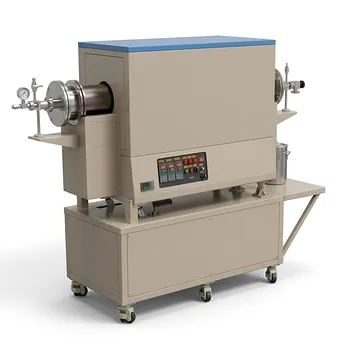
900°C Max Rotary Tube Furnace with 8 Inch 310S Alloy Tube and Optional Multi Zone Heating for Industrial Material Calcination
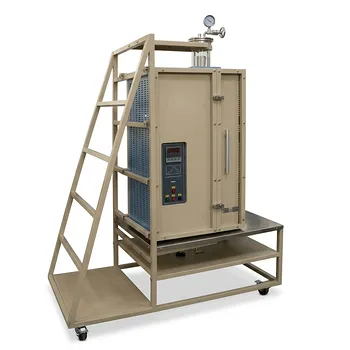
Split Vertical Tube Furnace with 1200C Quartz Tube and Stainless Steel Vacuum Flanges for Rapid Thermal Processing

High Temperature 1700C Tube Furnace with High Vacuum Turbomolecular Pump System and Multi Channel Mass Flow Controller Gas Mixer

1100C Tube Furnace with Vacuum Flange and Programmable Temperature Controller for Material Science and Industrial Heat Treatment
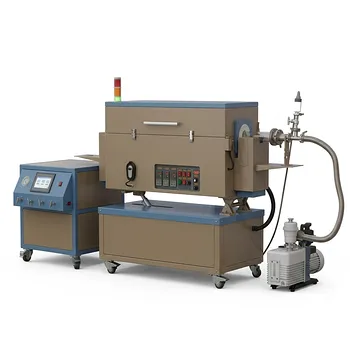
5 Inch Three Zone Rotary Tube Furnace with Integrated Gas Delivery System and 1200C Capability for Advanced Material CVD Processing
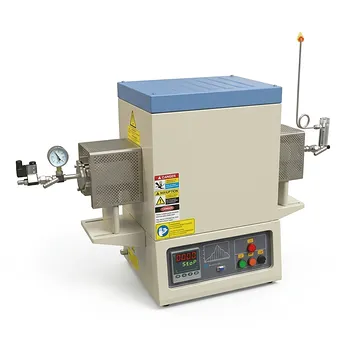
1700C Hydrogen Gas Tube Furnace with 60mm Alumina Process Tube and Integrated Hydrogen Safety Detector

1200°C 5 Inch Vertical Quartz Tube Furnace with Stainless Steel Vacuum Flanges

High Temperature 1700C Six Zone Split Tube Furnace with Alumina Tube and Water Cooled Flanges

Compact Vertical Split Quartz Tube Furnace with Stainless Steel Vacuum Flanges for Rapid Thermal Quenching and Controlled Atmosphere Material Processing

High Temperature 1700C Benchtop Tube Furnace with 5 Inch Heating Zone High Purity Alumina Tube and Vacuum Sealing Flanges
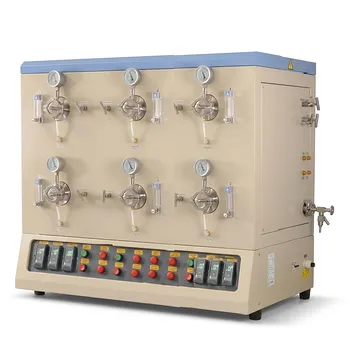
1200C High Throughput Multi Channel Tube Furnace with 50mm Quartz Tubes for Annealing and Material Phase Diagram Research
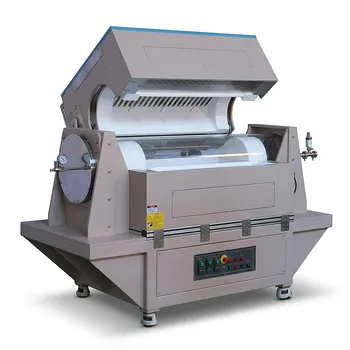
Three Zone Tube Furnace with 11 Inch or 15 Inch Quartz Tube and Hinged Flanges for Vacuum Atmosphere Heat Treatment

1800C High Temperature Compact Vacuum Tube Furnace with 60mm OD Alumina Tube and Kanthal MoSi2 Heating Elements

High Temperature 1700C Vertical Tube Furnace for Powder Spherification and Material Sintering
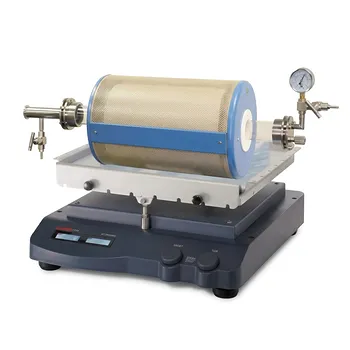
High Temperature Rocking Tube Furnace with Quartz Tube and Vacuum Flange for Materials Synthesis

High Temperature Automated 5 Inch Tube Furnace for Autonomous Material Research and Advanced Laboratory R&D
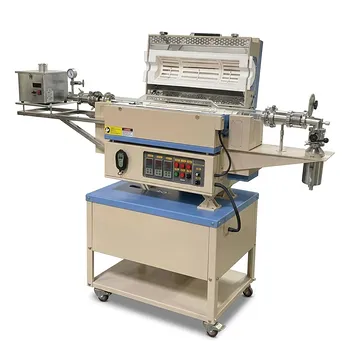
5 Inch Rotary Tube Furnace with Automatic Feeding and Receiving System 1200C Three Zone CVD Powder Processing