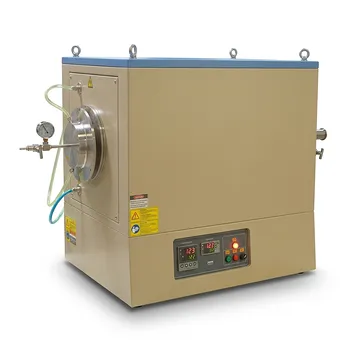
What are the advantages of using a vertical tube furnace for crucible experiments simulating steel-slag interactions?
Updated 3 months ago
Vertical tube furnaces are the preferred choice for steel-slag interface experiments due to their superior spatial and thermal control. This specific configuration allows researchers to position alumina crucibles precisely within a constant temperature zone while facilitating high-speed quenching to preserve the reaction interface. By integrating advanced gas management systems, these furnaces can accurately replicate the extreme chemical and thermal environments found in industrial steelmaking converters and refining vessels.
The vertical tube furnace provides a unique combination of gravity-aligned sample handling and precise atmosphere control, making it indispensable for "freezing" high-temperature chemical states. It is the gold standard for researchers needing to study the kinetic and thermodynamic evolution of the slag-metal interface.
Precision Control of the Reaction Environment
Optimal Crucible Positioning
The vertical arrangement is fundamentally designed to align with gravity, allowing alumina crucibles to be positioned with high accuracy within the furnace’s constant temperature zone. This ensures that the slag and metal reach the desired thermal equilibrium without the displacement risks associated with horizontal designs.
Establishing Uniform Thermal Fields
These furnaces provide a highly stable and uniform thermal field, often exceeding 1600°C (1873 K), which is critical for simulating industrial refining. This stability is essential for determining accurate equilibrium constants and mass transfer coefficients during slag-metal interface reactions.
Reproducing Complex Temperature Profiles
Modern vertical units feature high-precision control systems and movable bases. This allows researchers to simulate sophisticated industrial cycles, such as transitioning from a high-temperature homogenization phase to a lower-temperature separation phase, with extreme accuracy.
Preservation of High-Temperature Chemistry
Facilitating Rapid Quenching
The vertical configuration allows for the immediate transfer of samples from the high-temperature zone to a cooling medium located directly below. By dropping the sample vertically, researchers can "freeze" the reaction interface almost instantaneously, preserving the chemical state for post-mortem analysis.
Capturing Phase Equilibrium
Because the transition from the hot zone to the quenching zone is rapid and smooth, it allows for the capture of phase equilibrium states at specific temperatures. This prevents the formation of secondary phases during slow cooling, which would otherwise obscure the experimental results.
Automation and Repeatability
The vertical alignment supports automated immersion structures. This ensures that every sample is transferred into the cooling medium at the same speed and angle, drastically increasing the reproducibility of dynamic industrial simulations.
Advanced Atmospheric Simulation
Simulating Industrial Gas Transitions
Integrated nitrogen or argon flushing systems allow for the study of non-metallic inclusions in a controlled environment. Researchers can precisely switch between different gas flow rates, such as nitrogen and carbon dioxide, to replicate the solution loss reactions found in blast furnaces.
Protection Against Oxidation
High-purity alumina tubes and inert gas protection systems create an environment free from unintended oxygen contamination. This is vital when investigating sensitive reactions, such as the dissolution kinetics of magnesia-carbon pellets or the evolution of slag phases.
Replicating Refining Conditions
By introducing specific gases like Carbon Monoxide (CO), the furnace can simulate the reduction processes and ore-slag evolution typical of industrial converters. This ability to manipulate the atmosphere at 1500°C–1700°C provides a direct window into the chemistry of large-scale metallurgical processes.
Understanding the Trade-offs
Fragility of Ceramic Components
The high-purity alumina tubes required for these experiments are highly sensitive to thermal shock. Rapid heating or cooling cycles can lead to tube failure, requiring researchers to balance the need for fast quenching with the longevity of the furnace hardware.
Sample Size and Geometry Constraints
The vertical tube diameter limits the size of the crucible and the volume of the steel-slag sample. While ideal for fundamental kinetic studies, it may not fully capture the convection currents present in large-scale industrial ladles.
Sedimentation and Gravity Effects
In a vertical setup, heavier metallic phases will naturally settle at the bottom of the crucible. While this accurately simulates some aspects of refining, it can lead to concentration gradients that researchers must account for when calculating mass transfer across the interface.
Making the Right Choice for Your Goal
How to Apply This to Your Project
Depending on your specific metallurgical objectives, the setup of your vertical tube furnace should be adjusted to prioritize different variables.
- If your primary focus is phase equilibrium analysis: Ensure your furnace is equipped with a rapid-drop quenching mechanism to freeze the high-temperature microstructure instantly.
- If your primary focus is kinetic dissolution studies: Prioritize a furnace with a high-precision movable base to control the exact duration the sample spends in various thermal zones.
- If your primary focus is inclusion evolution: Invest in a high-accuracy gas mixing and flushing system to simulate the specific nitrogen or argon environments used in industrial refining.
- If your primary focus is slag-refractory interactions: Use high-purity alumina or magnesia-carbon crucibles and maintain a stable, long-duration isothermal environment to observe gradual mass transfer.
The vertical tube furnace remains the most reliable instrument for translating complex industrial steel-slag interactions into a controlled and measurable laboratory environment.
Summary Table:
Key Advantages of Vertical Tube Furnaces in Metallurgy
| Feature | Technical Advantage | Research Impact |
|---|---|---|
| Vertical Alignment | Gravity-aligned sample positioning | Precise placement in the constant temperature zone. |
| Rapid Quenching | Instant transfer to cooling medium | "Freezes" chemical states to preserve the reaction interface. |
| Atmosphere Control | Integrated gas flushing (Ar, N2, CO) | Replicates industrial refining and non-metallic inclusion states. |
| Thermal Stability | Uniform fields exceeding 1600°C | Accurately determines equilibrium constants and mass transfer. |
| Movable Bases | Automated immersion structures | High reproducibility for dynamic industrial simulation cycles. |
Elevate Your Metallurgical Research with THERMUNITS
Precision is non-negotiable in material science and industrial R&D. THERMUNITS is a leading manufacturer dedicated to providing high-performance thermal processing solutions. Our specialized equipment, including high-purity Vertical Tube Furnaces, Muffle, Vacuum, and Atmosphere Furnaces, is engineered to meet the rigorous demands of steel-slag interaction studies and beyond.
From CVD/PECVD systems and Vacuum Induction Melting (VIM) to Rotary Kilns and Hot Press Furnaces, we offer the tools necessary to capture accurate phase equilibrium and kinetic data.
Ready to optimize your laboratory's heat treatment capabilities? Contact our technical team today to discuss your specific crucible experiment requirements and discover how our advanced thermal elements and furnace designs can accelerate your research results.
References
- Julian Cejka, Susanne Michelic. Influence of Tramp Elements on Surface Properties of Liquid Medium‐Carbon Steels. DOI: 10.1002/srin.202300715
Mentioned Products
- High Temperature 1700C Vertical Tube Furnace for Powder Spherification and Material Sintering
- Vertical 1700C Vacuum and Atmosphere Tube Furnace with 80mm Alumina Tube
- 500C Vacuum Vertical Tube Furnace 84mm OD Sample Rotation Lifting System
- 1100°C Split Vertical Tube Furnace with 80mm Quartz Tube and Stainless Steel Vacuum Flanges
- Split Vertical Tube Furnace with 1200C Quartz Tube and Stainless Steel Vacuum Flanges for Rapid Thermal Processing
People Also Ask
- What role does a high-temperature vertical tube furnace play in simulating high-carbon ferromanganese slag formation?
- What functions does a vertical high-temperature tube furnace perform? Master Industrial Sintering & R&D Simulation
- What is the primary function of a high-temperature tube furnace in Cu1-N-C synthesis? Precision Thermal Control.
- High-Temp Tube Furnace Role in Converting Microbial Proteins to Iron Single-Atom Sites: Expert Synthesis Guide
- What impact does the heating rate of a tube furnace have on biochar microstructure? Optimize Your Material R&D.

Tech Team · ThermUnits
Last updated on Jun 03, 2026
Related Products

High Temperature 1700C Vertical Tube Furnace for Powder Spherification and Material Sintering
Vertical 1700C Vacuum and Atmosphere Tube Furnace with 80mm Alumina Tube
500C Vacuum Vertical Tube Furnace 84mm OD Sample Rotation Lifting System
1100°C Split Vertical Tube Furnace with 80mm Quartz Tube and Stainless Steel Vacuum Flanges
Split Vertical Tube Furnace with 1200C Quartz Tube and Stainless Steel Vacuum Flanges for Rapid Thermal Processing
Compact Vertical Split Quartz Tube Furnace with Stainless Steel Vacuum Flanges for Rapid Thermal Quenching and Controlled Atmosphere Material Processing
Large Vertical Three Zone Tube Furnace with 8 Inch or 11 Inch Quartz Tube and High Vacuum Flanges 1200C
Five Zone Split Vertical Tube Furnace 1200C Max with 4 Inch Quartz Tube and Stainless Steel Vacuum Flanges
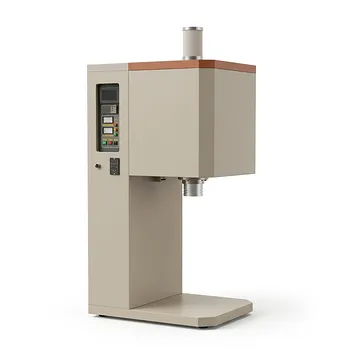
Vertical Openable Tube Furnace 0-1700c High Temperature Laboratory System for CVD and Vacuum Heat Treatment
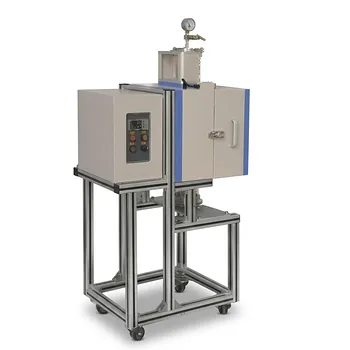
1200°C 5 Inch Vertical Quartz Tube Furnace with Stainless Steel Vacuum Flanges
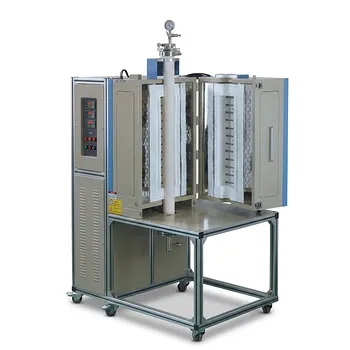
Three Zone Heating Split Vertical Tube Furnace 1700 High Temperature Vacuum Atmosphere Thermal Process System
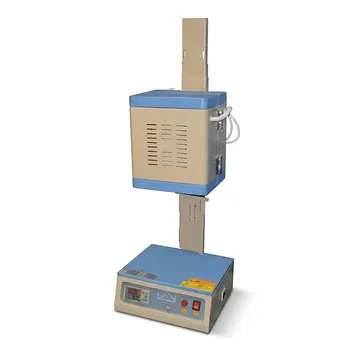
High Temperature Vertical Split Tube Furnace with PID Temperature Controller for 1 and 2 Inch Processing Tubes
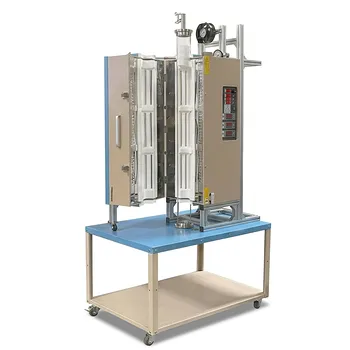
1200C Three Zone Split Vertical Tube Furnace 4 Inch Quartz Tube Stainless Steel Vacuum Flanges
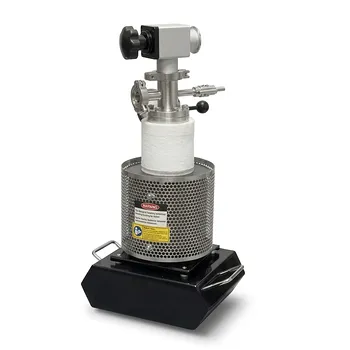
High Temperature 1100C Compact Top Loading Vertical Vacuum Tube Furnace for High Vacuum Noble Metal Melting and Material Research
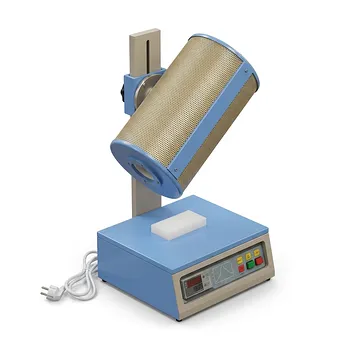
1100°C Vertical Laboratory Furnace for DIY Tubular Reactors with PID Temperature Controller
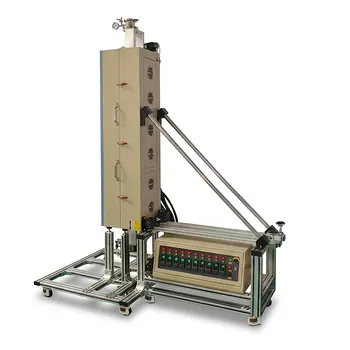
1200°C 10-Zone Split Tube Furnace with Horizontal and Vertical Mounting for Multi-Zone Thermal Gradients and Large Diameter Material Processing
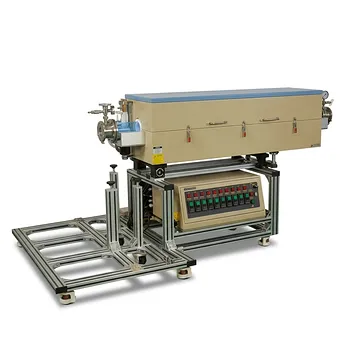
Ten Zone Multi Orientation Laboratory Tube Furnace for 1200C High Temperature Gradient Thermal Processing
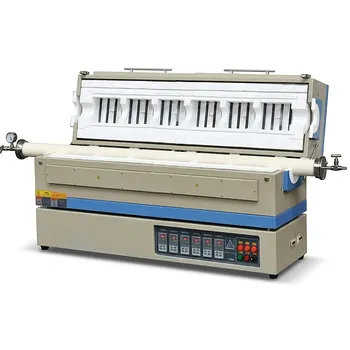
High Temperature 1700C Six Zone Split Tube Furnace with Alumina Tube and Water Cooled Flanges
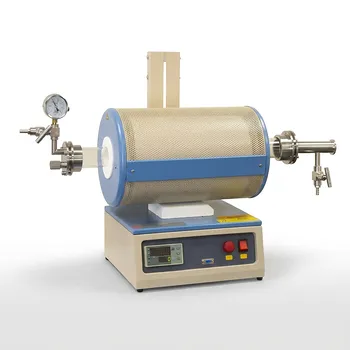
1100C Tube Furnace with Vacuum Flange and Programmable Temperature Controller for Material Science and Industrial Heat Treatment