How does High-Temperature Shock (HTS) synthesis perform vs tube furnaces? Achieve Rapid, Energy-Efficient Production
Updated 3 months ago
High-Temperature Shock (HTS) technology represents a paradigm shift in manufacturing efficiency, reducing reaction times from hours to mere seconds. This drastic reduction in processing time eliminates the massive energy loss associated with prolonged furnace heating and temperature maintenance. By shifting from slow thermal equilibrium to transient kinetic pulses, HTS achieves significantly higher energy utilization efficiency than traditional tube furnace calcination.
Core Takeaway: High-Temperature Shock (HTS) replaces the prolonged heating cycles of traditional calcination with transient thermal pulses. This transition from "equilibrium heating" to "kinetic regulation" drastically lowers energy overhead while enabling the synthesis of superior nanostructures that are impossible to achieve through slow heating.
The Energy Consumption Gap
Eliminating Thermal Maintenance Waste
Traditional tube furnace synthesis typically requires hours or even dozens of hours of holding time. During this period, the furnace must constantly consume energy to maintain high temperatures, leading to significant heat dissipation and energy loss.
Rapid Thermal Cycling
HTS equipment completes the reaction cycle in a fraction of the time, often in just a few seconds. Because the energy is applied in a transient pulse, the total kilowatt-hours required per batch is exponentially lower than a furnace that must remain powered for an entire day.
Focus on Reaction Kinetics
By focusing energy into a transient thermal pulse, HTS ensures that power is used almost exclusively for the chemical transformation. This avoids the inefficiency of heating large furnace volumes and heavy insulation for extended periods.
Efficiency and Kinetic Control
Achieving Fine Microstructure Control
The speed of HTS allows for kinetic regulation, which enables fine control over a material’s microstructure. Because the process is so fast, atoms do not have the time to migrate and aggregate into large, inefficient clumps.
Inhibiting Nanoparticle Agglomeration
In traditional furnaces, long exposure to heat causes nanoparticles to merge (agglomerate). HTS uses extremely rapid cooling rates to "freeze" particles in place, resulting in ultra-fine metal nanoparticles with uniform distribution and higher loading.
Enhancing Battery Performance
For applications like sodium-ion batteries, the smaller particle sizes produced by HTS shorten ion and electron diffusion paths. This directly translates to improved rate performance and higher efficiency in the final energy storage device.
Advanced Material Engineering
Introducing Beneficial Defects
HTS creates extreme thermal stress and rapid thermal cycling within the material. In graphite recycling, for example, this stress introduces significant dislocations and defects that actually improve the material’s performance.
Revitalizing Spent Materials
While traditional heating produces fewer defects, the Defect-Rich Graphite (DRG) produced by HTS enhances the kinetic diffusion of lithium ions. This allows spent battery components to be recycled into high-performance materials in approximately 60 seconds.
Understanding the Trade-offs
Equipment and Scale Complexity
While HTS is more energy-efficient per reaction, the specialized pulse power electronics required can be more complex than the resistive heating elements in a standard furnace. Scaling this technology for mass production requires precise engineering of the electrical discharge systems.
Material Stress Limitations
The "thermal shock" that creates beneficial defects can also lead to structural instability in certain fragile materials. Not every chemical precursor is suited for the rapid expansion and contraction inherent in the HTS process.
Making the Right Choice for Your Goal
HTS is the superior choice for modern nanoparticle synthesis and rapid recycling, whereas traditional furnaces remain the standard for processes requiring slow, defect-free crystal growth.
- If your primary focus is energy cost reduction: HTS is the definitive choice, as it eliminates hours of wasted energy used for furnace maintenance.
- If your primary focus is nanoparticle performance: Use HTS to achieve smaller, more uniform particles and higher loading by preventing high-temperature agglomeration.
- If your primary focus is battery kinetics: Choose HTS to introduce the specific structural defects and dislocations required for faster ion diffusion.
- If your primary focus is high-purity, large-crystal growth: Traditional tube furnaces may still be necessary to provide the slow, equilibrium conditions required for perfect lattice structures.
HTS technology transforms material synthesis from a slow, energy-intensive burden into a rapid, precision-controlled pulse process.
Summary Table:
| Feature | High-Temperature Shock (HTS) | Traditional Tube Furnace |
|---|---|---|
| Reaction Time | Seconds (Transient Pulse) | Hours to Days (Steady State) |
| Energy Efficiency | Ultra-high; minimal heat loss | Low; high maintenance energy waste |
| Microstructure | Ultra-fine, uniform nanoparticles | Tendency for agglomeration |
| Material Defects | High (Beneficial for battery kinetics) | Low (Ideal for perfect crystals) |
| Primary Application | Rapid recycling, nano-synthesis | Large-crystal growth, annealing |
Elevate Your R&D with THERMUNITS Thermal Solutions
Transitioning from traditional heating to advanced synthesis requires the right equipment. THERMUNITS is a leading manufacturer of high-temperature laboratory equipment, providing the precision and reliability needed for cutting-edge material science.
Whether you are exploring High-Temperature Shock kinetics or require the steady equilibrium of traditional calcination, we offer a comprehensive range of thermal processing solutions tailored to your needs:
- Advanced Furnaces: Muffle, Vacuum, Atmosphere, Tube, Rotary, and Hot Press furnaces.
- Specialized Systems: CVD/PECVD systems, Dental Furnaces, and Vacuum Induction Melting (VIM) furnaces.
- Industrial Scale: Electric rotary kilns and high-grade thermal elements.
Ready to optimize your energy consumption and material performance? Contact our expert team today to find the perfect heat treatment solution for your laboratory or industrial R&D facility.
References
- Zhedong Liu, Yanan Chen. Approaching Ultimate Synthesis Reaction Rate of Ni-Rich Layered Cathodes for Lithium-Ion Batteries. DOI: 10.1007/s40820-024-01436-y
Mentioned Products
- Vertical 1700C Vacuum and Atmosphere Tube Furnace with 80mm Alumina Tube
- Compact High Temperature 1600C Tube Furnace with 50mm Alumina Tube and Vacuum Flanges for Material Sintering
- 900°C Max Rotary Tube Furnace with 8 Inch 310S Alloy Tube and Optional Multi Zone Heating for Industrial Material Calcination
- Split Vertical Tube Furnace with 1200C Quartz Tube and Stainless Steel Vacuum Flanges for Rapid Thermal Processing
- High Temperature 1700C Tube Furnace with High Vacuum Turbomolecular Pump System and Multi Channel Mass Flow Controller Gas Mixer
People Also Ask
- How is an industrial-grade vertical tube furnace utilized in smelting leaching residues? Enhance Metal Recovery Efficiency
- What is the function of a laboratory-grade vertical tube furnace in fast pyrolysis? Optimize Composite Research.
- How does a vertical tube furnace facilitate thermoelectric alloy melting? Precision synthesis for material homogeneity.
- Why is a thermocouple sensor indispensable for monitoring the vertical tube furnace during gallium oxide nanowire production? Optimize VLS Growth
- What are the advantages of using a vertical tube furnace for crucible experiments simulating steel-slag interactions?

Tech Team · ThermUnits
Last updated on Jun 03, 2026
Related Products

Vertical 1700C Vacuum and Atmosphere Tube Furnace with 80mm Alumina Tube

Compact High Temperature 1600C Tube Furnace with 50mm Alumina Tube and Vacuum Flanges for Material Sintering
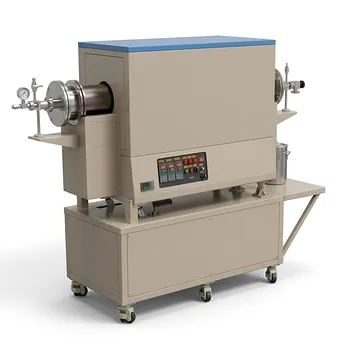
900°C Max Rotary Tube Furnace with 8 Inch 310S Alloy Tube and Optional Multi Zone Heating for Industrial Material Calcination
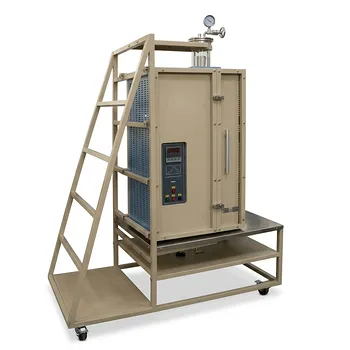
Split Vertical Tube Furnace with 1200C Quartz Tube and Stainless Steel Vacuum Flanges for Rapid Thermal Processing

High Temperature 1700C Tube Furnace with High Vacuum Turbomolecular Pump System and Multi Channel Mass Flow Controller Gas Mixer
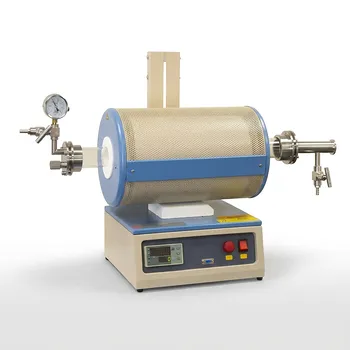
1100C Tube Furnace with Vacuum Flange and Programmable Temperature Controller for Material Science and Industrial Heat Treatment
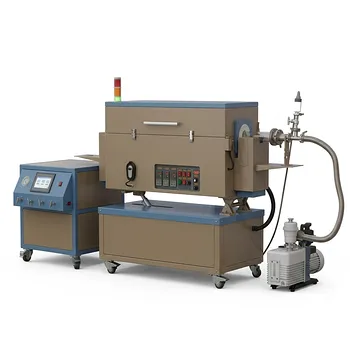
5 Inch Three Zone Rotary Tube Furnace with Integrated Gas Delivery System and 1200C Capability for Advanced Material CVD Processing
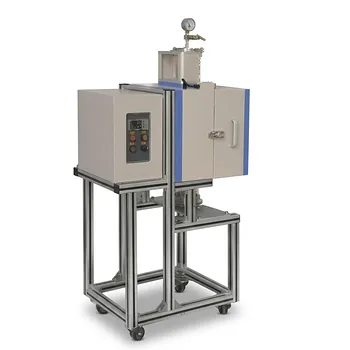
1200°C 5 Inch Vertical Quartz Tube Furnace with Stainless Steel Vacuum Flanges
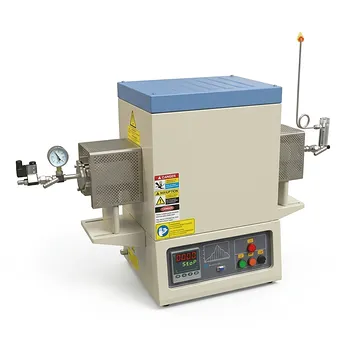
1700C Hydrogen Gas Tube Furnace with 60mm Alumina Process Tube and Integrated Hydrogen Safety Detector
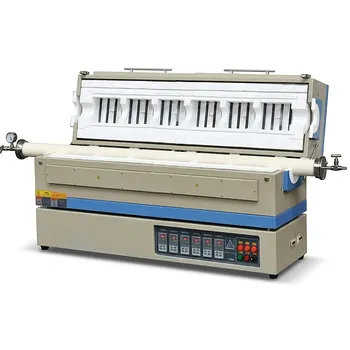
High Temperature 1700C Six Zone Split Tube Furnace with Alumina Tube and Water Cooled Flanges
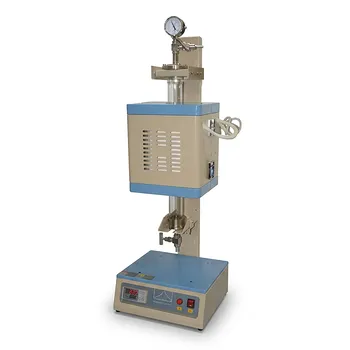
Compact Vertical Split Quartz Tube Furnace with Stainless Steel Vacuum Flanges for Rapid Thermal Quenching and Controlled Atmosphere Material Processing

High Temperature 1700C Benchtop Tube Furnace with 5 Inch Heating Zone High Purity Alumina Tube and Vacuum Sealing Flanges
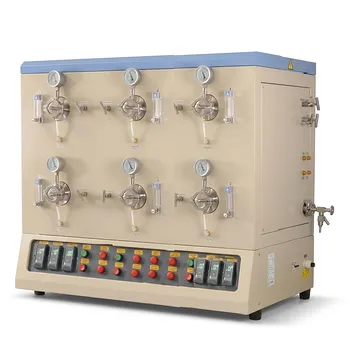
1200C High Throughput Multi Channel Tube Furnace with 50mm Quartz Tubes for Annealing and Material Phase Diagram Research
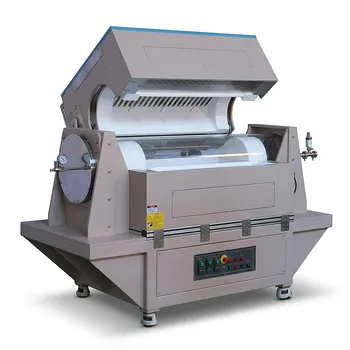
Three Zone Tube Furnace with 11 Inch or 15 Inch Quartz Tube and Hinged Flanges for Vacuum Atmosphere Heat Treatment

1800C High Temperature Compact Vacuum Tube Furnace with 60mm OD Alumina Tube and Kanthal MoSi2 Heating Elements

High Temperature 1700C Vertical Tube Furnace for Powder Spherification and Material Sintering
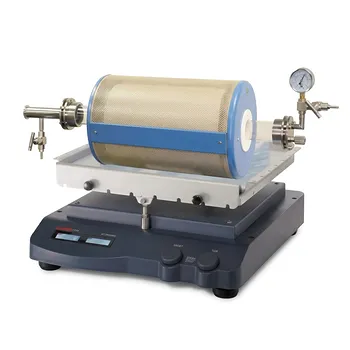
High Temperature Rocking Tube Furnace with Quartz Tube and Vacuum Flange for Materials Synthesis
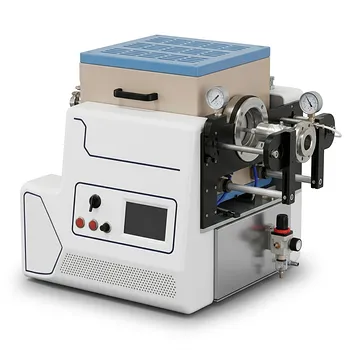
High Temperature Automated 5 Inch Tube Furnace for Autonomous Material Research and Advanced Laboratory R&D
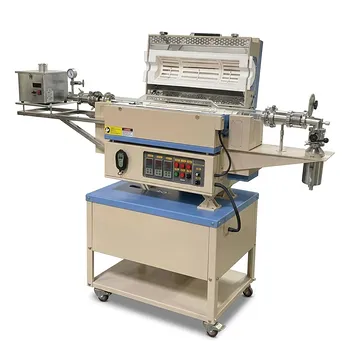
5 Inch Rotary Tube Furnace with Automatic Feeding and Receiving System 1200C Three Zone CVD Powder Processing