How does Joule heating technology compare to traditional tube furnace heating? Maximize energy efficiency and syngas yield.
Updated 3 months ago
Joule heating represents a fundamental leap in thermal efficiency for syngas production. Unlike traditional tube furnaces that rely on indirect radiation and convection, Joule heating directly energizes charge carriers within a conductive medium to generate heat. This mechanism achieves a theoretical 100% energy conversion efficiency and can reach target reaction temperatures in under 30 seconds, drastically minimizing the energy losses associated with thermal conduction delays.
Joule heating eliminates the massive thermal inertia of traditional furnaces by converting electrical energy directly into heat at the molecular level. This results in near-instantaneous startup times, higher catalyst activity through lattice defects, and a significant reduction in wasted energy.
The Physics of Energy Transfer Efficiency
Direct Resistance vs. Indirect Radiation
Traditional tube furnaces are inherently inefficient because they must heat the furnace walls and the internal atmosphere before the heat reaches the target material. This multi-step process results in significant energy dissipation to the surrounding environment and the furnace structure itself.
In contrast, Joule heating utilizes internal electrical resistance to generate heat directly within the heating element or the chemical charge. By driving electrons through a conductive network, the system converts electrical potential into thermal energy with nearly zero loss in the transfer phase.
Theoretical 100% Conversion
Because Joule heating is a resistive process, it operates at a theoretical energy conversion efficiency of 100%. Every watt of electricity supplied to the conductive medium is transformed into heat exactly where the reaction occurs.
This precision eliminates the "thermal lag" that plagues conventional systems. While a tube furnace may require hours to reach steady-state temperatures, Joule heating systems can achieve the same results in 5 to 30 seconds, depending on the power supply and material conductivity.
Temporal Dynamics and Process Control
Eliminating Thermal Inertia
Tube furnaces possess high thermal mass, meaning they retain heat long after the power is cut and take significant time to warm up. This inertia makes precise temperature ramping and rapid cooling nearly impossible to achieve.
Joule heating allows for ultra-fast heating and cooling rates. This temporal control is vital for syngas production as it prevents unwanted side reactions that occur during the slow heat-up or cool-down phases of traditional calcination.
Flash Joule Heating (FJH) Advantages
The Flash Joule Heating method provides a unique advantage by utilizing high-power DC bursts to treat materials. This technique is particularly effective for creating high-performance catalysts, as the speed of the process prevents the agglomeration of particles that typically occurs during hours of furnace heating.
Enhancing Catalyst Performance for Syngas
Inducing Lattice Defects
The rapid energy transfer in Joule heating induces a high density of lattice defects within the catalytic materials. These defects create local charge deficiencies that are highly beneficial for the separation and transport of charge carriers during the syngas reaction.
Superior Particle Morphology
Because the heating duration is so short, catalysts produced via Joule heating maintain a smaller particle size and higher surface area. Traditional furnace heating often leads to "sintering," where particles fuse together, reducing the effective surface area and lowering the overall efficiency of the syngas production process.
Understanding the Trade-offs
Material Conductivity Requirements
The primary limitation of Joule heating is the requirement for a conductive pathway. For non-conductive reaction mixtures, a conductive "host" like a carbon nanotube (CNT) network or a specialized heating wire must be integrated to facilitate the flow of current.
Control System Complexity
While the heating mechanism itself is efficient, the power electronics required to manage high-current DC pulses or precise resistive heating are more complex than the simple resistive coils used in tube furnaces. This requires a higher initial investment in sophisticated monitoring and control hardware.
Scaling and Current Distribution
Ensuring uniform temperature distribution across large-scale reactors can be challenging with Joule heating. If the electrical resistance of the material is not uniform, "hot spots" can develop, which may lead to inconsistent product quality or damage to the reactor components.
Strategic Implementation for Your Project
How to Apply This to Your Process
Choosing between these technologies depends on your specific production goals and the nature of your feedstock.
- If your primary focus is maximizing energy efficiency: Joule heating is the superior choice, as it eliminates the 30-70% energy waste common in indirect radiation furnaces.
- If your primary focus is catalyst longevity and activity: Utilize Flash Joule Heating to create catalysts with high defect densities and small particle sizes, which outperform furnace-calcined alternatives.
- If your primary focus is processing large volumes of non-conductive bulk material: A traditional tube furnace may still be more practical unless you can effectively incorporate a conductive carbon-based heating matrix.
- If your primary focus is rapid prototyping and R&D: The near-instantaneous startup and cool-down of Joule heating allow for significantly faster experimental iterations compared to the hours-long cycles of a furnace.
By shifting from indirect thermal transfer to direct resistive heating, operators can achieve a more responsive, efficient, and precise syngas production environment.
Summary Table:
| Feature | Joule Heating Technology | Traditional Tube Furnace |
|---|---|---|
| Heating Mechanism | Direct resistance (internal) | Indirect radiation & convection |
| Energy Efficiency | ~100% (theoretical conversion) | High loss (30-70% dissipation) |
| Startup Time | Ultra-fast (5 - 30 seconds) | Slow (hours to reach steady state) |
| Thermal Inertia | Minimal; rapid heating/cooling | High; slow temperature ramping |
| Catalyst Impact | Creates high defect density | Risk of sintering and fusing |
| Requirements | Conductive pathway needed | No conductivity requirements |
Maximize Your Research Efficiency with THERMUNITS
Transitioning from traditional heating to advanced thermal processes requires precision-engineered equipment. THERMUNITS is a leading manufacturer of high-temperature laboratory equipment, dedicated to empowering material science and industrial R&D with superior thermal solutions.
Whether you are optimizing syngas production or developing next-generation catalysts, we offer a comprehensive range of solutions, including:
- Specialized Furnaces: Tube, Muffle, Vacuum, Atmosphere, Rotary, and Hot Press furnaces.
- Advanced Systems: CVD/PECVD systems, Vacuum Induction Melting (VIM) furnaces, and Electric Rotary Kilns.
- Components: High-quality Thermal Elements and Dental Furnaces.
Ready to enhance your lab’s throughput and energy efficiency? Contact our technical experts today to discuss how our custom furnace solutions can deliver the precision your projects demand.
References
- Qing Ma, Ding Ma. Grave-to-cradle dry reforming of plastics via Joule heating. DOI: 10.1038/s41467-024-52515-y
Mentioned Products
- Vertical 1700C Vacuum and Atmosphere Tube Furnace with 80mm Alumina Tube
- Compact High Temperature 1600C Tube Furnace with 50mm Alumina Tube and Vacuum Flanges for Material Sintering
- 900°C Max Rotary Tube Furnace with 8 Inch 310S Alloy Tube and Optional Multi Zone Heating for Industrial Material Calcination
- Split Vertical Tube Furnace with 1200C Quartz Tube and Stainless Steel Vacuum Flanges for Rapid Thermal Processing
- High Temperature 1700C Tube Furnace with High Vacuum Turbomolecular Pump System and Multi Channel Mass Flow Controller Gas Mixer
People Also Ask
- How is an industrial-grade vertical tube furnace utilized in smelting leaching residues? Enhance Metal Recovery Efficiency
- What is the function of a laboratory-grade vertical tube furnace in fast pyrolysis? Optimize Composite Research.
- How does a vertical tube furnace facilitate thermoelectric alloy melting? Precision synthesis for material homogeneity.
- Why is a thermocouple sensor indispensable for monitoring the vertical tube furnace during gallium oxide nanowire production? Optimize VLS Growth
- What are the advantages of using a vertical tube furnace for crucible experiments simulating steel-slag interactions?

Tech Team · ThermUnits
Last updated on Jun 03, 2026
Related Products

Vertical 1700C Vacuum and Atmosphere Tube Furnace with 80mm Alumina Tube

Compact High Temperature 1600C Tube Furnace with 50mm Alumina Tube and Vacuum Flanges for Material Sintering
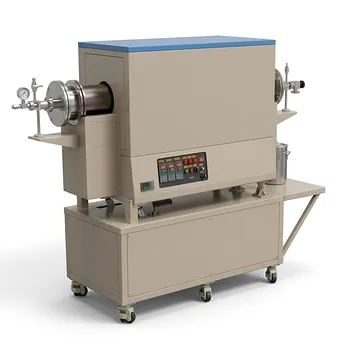
900°C Max Rotary Tube Furnace with 8 Inch 310S Alloy Tube and Optional Multi Zone Heating for Industrial Material Calcination
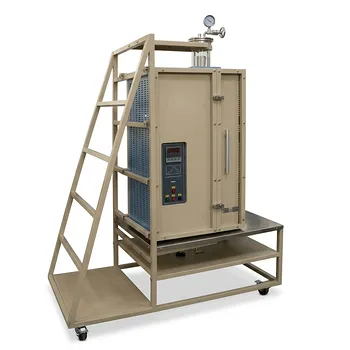
Split Vertical Tube Furnace with 1200C Quartz Tube and Stainless Steel Vacuum Flanges for Rapid Thermal Processing

High Temperature 1700C Tube Furnace with High Vacuum Turbomolecular Pump System and Multi Channel Mass Flow Controller Gas Mixer
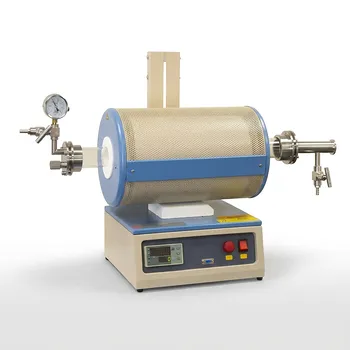
1100C Tube Furnace with Vacuum Flange and Programmable Temperature Controller for Material Science and Industrial Heat Treatment
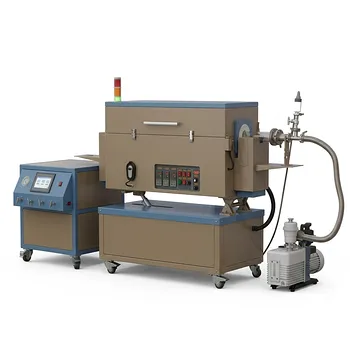
5 Inch Three Zone Rotary Tube Furnace with Integrated Gas Delivery System and 1200C Capability for Advanced Material CVD Processing
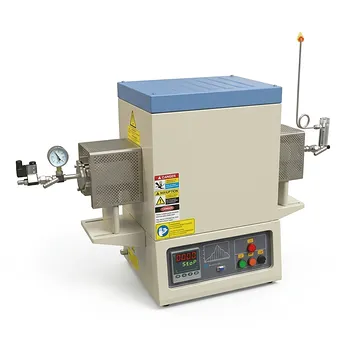
1700C Hydrogen Gas Tube Furnace with 60mm Alumina Process Tube and Integrated Hydrogen Safety Detector

1200°C 5 Inch Vertical Quartz Tube Furnace with Stainless Steel Vacuum Flanges
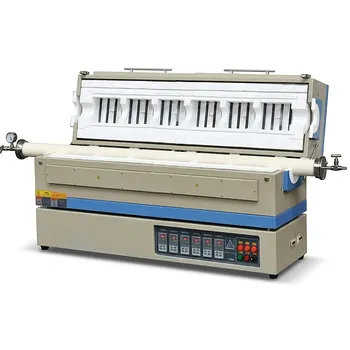
High Temperature 1700C Six Zone Split Tube Furnace with Alumina Tube and Water Cooled Flanges
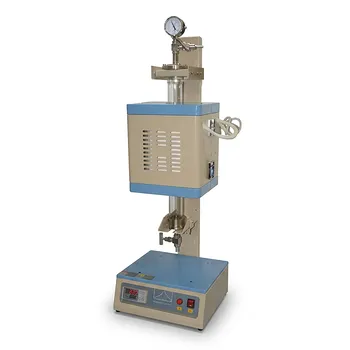
Compact Vertical Split Quartz Tube Furnace with Stainless Steel Vacuum Flanges for Rapid Thermal Quenching and Controlled Atmosphere Material Processing
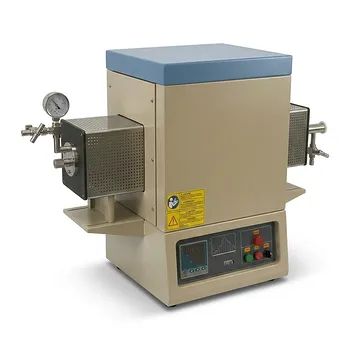
High Temperature 1700C Benchtop Tube Furnace with 5 Inch Heating Zone High Purity Alumina Tube and Vacuum Sealing Flanges
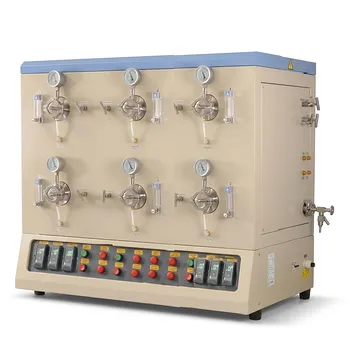
1200C High Throughput Multi Channel Tube Furnace with 50mm Quartz Tubes for Annealing and Material Phase Diagram Research
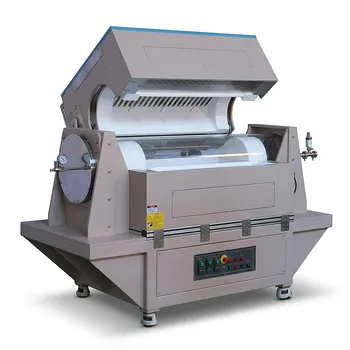
Three Zone Tube Furnace with 11 Inch or 15 Inch Quartz Tube and Hinged Flanges for Vacuum Atmosphere Heat Treatment

1800C High Temperature Compact Vacuum Tube Furnace with 60mm OD Alumina Tube and Kanthal MoSi2 Heating Elements

High Temperature 1700C Vertical Tube Furnace for Powder Spherification and Material Sintering
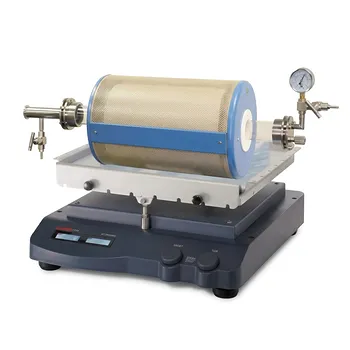
High Temperature Rocking Tube Furnace with Quartz Tube and Vacuum Flange for Materials Synthesis

High Temperature Automated 5 Inch Tube Furnace for Autonomous Material Research and Advanced Laboratory R&D
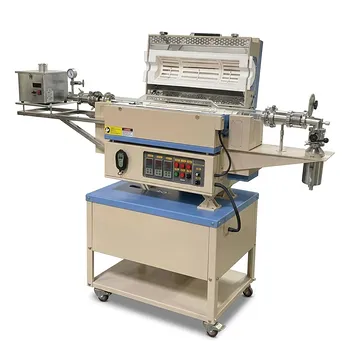
5 Inch Rotary Tube Furnace with Automatic Feeding and Receiving System 1200C Three Zone CVD Powder Processing