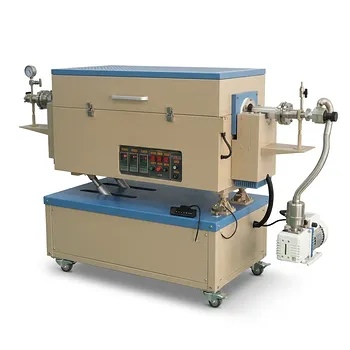
How does annealing temperature in a tube furnace regulate copper oxide foam phase? Precision Thermal Control Guide.
Updated 3 months ago
The thermal environment of an industrial tube furnace serves as the primary dial for manipulating the oxidation states and crystalline structure of copper oxide foams. By precisely tuning the temperature between 100°C and 450°C, the furnace dictates the specific proportions of metallic copper ($Cu^0$), cuprous oxide ($Cu^+$), and cupric oxide ($Cu^{2+}$) within the material. This thermal regulation is the decisive factor in transitioning the foam from an amorphous, disordered state to a highly organized, crystalline framework.
Core Takeaway: Annealing temperature governs the phase composition of copper oxide foam by facilitating a controlled transition from metallic copper to higher oxidation states while simultaneously increasing crystalline order. This allows for the engineering of specific chemical ratios and structural stabilities required for advanced applications like carbon dioxide reduction.
The Mechanics of Phase Transformation
Regulating Oxidation States
The primary role of the tube furnace is to provide the energy necessary to drive the oxidation of copper. At the lower end of the spectrum (100°C), the foam retains a high proportion of metallic copper ($Cu^0$). As the temperature climbs toward 450°C, the material progressively shifts toward cuprous ($Cu^+$) and then cupric oxide ($Cu^{2+}$) phases.
The Amorphous-to-Crystalline Transition
Temperature directly influences the atomic arrangement within the foam. At 100°C, the copper oxide components exist in an amorphous state, lacking a defined long-range order. Once the temperature surpasses the 300°C threshold, the material undergoes significant crystallization, resulting in a highly ordered atomic lattice.
Impact on Reaction Kinetics
By controlling these phase shifts, researchers can observe how different ratios of $Cu^0$, $Cu^+$, and $Cu^{2+}$ affect carbon dioxide reduction kinetics. The ability to freeze the material at a specific oxidation state via temperature control is essential for identifying which phase configuration yields the highest catalytic efficiency.
Structural Stability and Atmospheric Influence
Release of Residual Stresses
Beyond phase composition, the furnace manages the physical integrity of the foam. Industrial annealing helps release residual stresses that are often trapped in the material during the initial electrodeposition process. This "thermal relaxation" prevents the foam from deforming or failing under extreme heat dissipation conditions during actual operation.
Atmospheric Control and Phase Guidance
The precision of an industrial tube furnace allows for the switching between air and high-purity nitrogen environments. While temperature drives the phase change, the atmosphere determines the availability of oxygen. This dual control is often used to stabilize metastable phases that would otherwise revert to a standard state under less controlled conditions.
Simulating Thermal Accumulation
The furnace acts as a simulator for real-world thermal loads. By heating gradient materials at specific temperatures, such as 260°C, engineers can evaluate how the structure handles thermal accumulation. This ensures that the phase-regulated foam remains structurally sound even when subjected to the heat of continuous industrial use.
Understanding the Trade-offs
Crystallinity vs. Surface Activity
While high-temperature annealing (above 300°C) produces a stable, highly crystalline structure, it can sometimes reduce the density of active surface sites. Amorphous structures, though often less stable, may offer unique kinetic advantages due to their disordered atomic arrangements and high energy states.
Oxidation Depth and Material Fragility
Excessive temperature or prolonged exposure can lead to over-oxidation, moving the entire material to the $Cu^{2+}$ (cupric oxide) phase. This can sometimes make the foam more brittle, potentially compromising the mechanical flexibility required for certain gradient materials or structural applications.
Applying Temperature Control to Your Project
Recommendations for Material Optimization
- If your primary focus is maximum catalytic activity: Use lower annealing temperatures (100°C - 200°C) to maintain a higher proportion of metallic copper and amorphous phases.
- If your primary focus is structural longevity and stability: Target temperatures above 300°C to ensure high crystallinity and the full release of residual electrodeposition stresses.
- If your primary focus is precise phase engineering: Utilize a furnace with atmospheric switching (Nitrogen vs. Air) to fine-tune the oxygen availability during the 100°C-450°C ramp.
By mastering the thermal gradient within the furnace, you transform the copper oxide foam from a raw material into a precision-engineered catalyst.
Summary Table:
| Temperature Range | Dominant Phase | Material Structure | Key Application Benefit |
|---|---|---|---|
| 100°C - 200°C | Metallic Copper ($Cu^0$) | Amorphous / Disordered | High catalytic activity & surface site density |
| 300°C - 450°C | Cuprous/Cupric Oxide ($Cu^+/Cu^{2+}$) | Highly Crystalline | Enhanced structural stability & stress relief |
| Atmosphere Control | Phase Stabilization | Metastable Control | Prevents unwanted oxidation via $N_2$ or Air control |
Elevate Your Material Research with THERMUNITS Precision Furnaces
Unlock full control over phase transitions and crystallinity in your material science projects. As a leading manufacturer of high-temperature laboratory equipment, THERMUNITS provides the thermal precision required for advanced industrial R&D.
Our comprehensive range of solutions—including Tube, Vacuum, Atmosphere, Muffle, and Rotary furnaces, as well as CVD/PECVD systems—is engineered to meet the rigorous demands of copper oxide foam synthesis and other heat treatment processes. Whether you need to simulate thermal accumulation or manage complex atmospheric switching, our equipment ensures consistent, reliable results.
Ready to optimize your thermal processing? Contact us today to discuss how our furnace technology can drive your next breakthrough.
References
- Sonja Blaseio, Mehtap Oezaslan. Impact of Cu<sup>+</sup> and Cu<sup>2+</sup> species on the oxide-metal transition processes of Cu<sub><i>x</i></sub>O foams during the CO<sub>2</sub>RR probed by <i>operando</i> Quick-XAS. DOI: 10.1039/d4ta02217c
Mentioned Products
- Continuous Feeding Rotary Tube Furnace for Industrial Powder Heat Treatment and Material Research
- 900°C Max Rotary Tube Furnace with 8 Inch 310S Alloy Tube and Optional Multi Zone Heating for Industrial Material Calcination
- 1100C Tube Furnace with Vacuum Flange and Programmable Temperature Controller for Material Science and Industrial Heat Treatment
- Compact High Temperature 1600C Tube Furnace with 50mm Alumina Tube and Vacuum Flanges for Material Sintering
- Vertical 1700C Vacuum and Atmosphere Tube Furnace with 80mm Alumina Tube
People Also Ask
- How does a rotary tube furnace improve the processing of granular materials? Enhance Uniformity and Reaction Kinetics
- Why use a rotary tube furnace for FACS carbonization? Ensure uniform morphology and prevent sphere agglomeration.
- In what ways do rotary tube furnaces enhance chemical and specialty mineral processing? Drive Precision and Uniformity.
- Why is the precise optimization of residence time essential in the catalyst calcination process? Maximize Your Yields.
- What are the primary types of industrial rotary furnaces and functions? Expert Guide to Rotary Kiln & Hearth Systems

Tech Team · ThermUnits
Last updated on Jun 02, 2026
Related Products
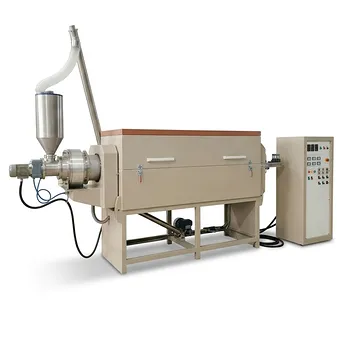
Continuous Feeding Rotary Tube Furnace for Industrial Powder Heat Treatment and Material Research
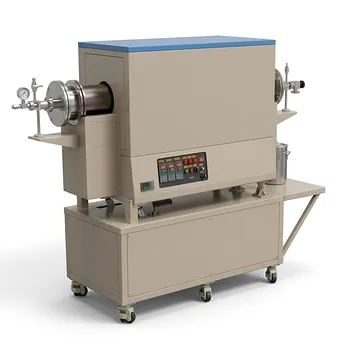
900°C Max Rotary Tube Furnace with 8 Inch 310S Alloy Tube and Optional Multi Zone Heating for Industrial Material Calcination

1100C Tube Furnace with Vacuum Flange and Programmable Temperature Controller for Material Science and Industrial Heat Treatment

Compact High Temperature 1600C Tube Furnace with 50mm Alumina Tube and Vacuum Flanges for Material Sintering

Vertical 1700C Vacuum and Atmosphere Tube Furnace with 80mm Alumina Tube

High Temperature 1700C Tube Furnace with High Vacuum Turbomolecular Pump System and Multi Channel Mass Flow Controller Gas Mixer
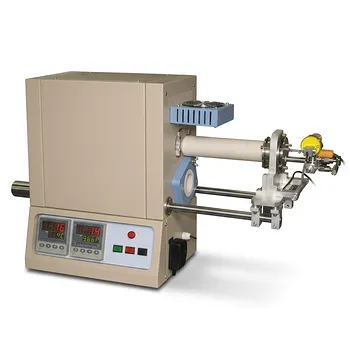
High Temperature Tube Furnace 1500C with Sliding Flanges and 50mm OD for Rapid Thermal Processing Fast Heating and Cooling

High Temperature 1700C Vertical Tube Furnace for Powder Spherification and Material Sintering

1800C High Temperature Compact Vacuum Tube Furnace with 60mm OD Alumina Tube and Kanthal MoSi2 Heating Elements
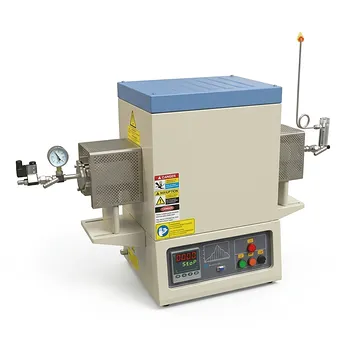
1700C Hydrogen Gas Tube Furnace with 60mm Alumina Process Tube and Integrated Hydrogen Safety Detector

1200C High Throughput Multi Channel Tube Furnace with 50mm Quartz Tubes for Annealing and Material Phase Diagram Research
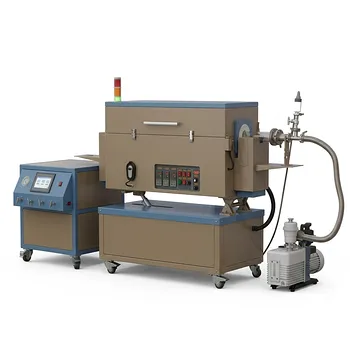
5 Inch Three Zone Rotary Tube Furnace with Integrated Gas Delivery System and 1200C Capability for Advanced Material CVD Processing

High Temperature 1700C Six Zone Split Tube Furnace with Alumina Tube and Water Cooled Flanges

High Temperature 1700C Benchtop Tube Furnace with 5 Inch Heating Zone High Purity Alumina Tube and Vacuum Sealing Flanges

High Temperature Automated 5 Inch Tube Furnace for Autonomous Material Research and Advanced Laboratory R&D
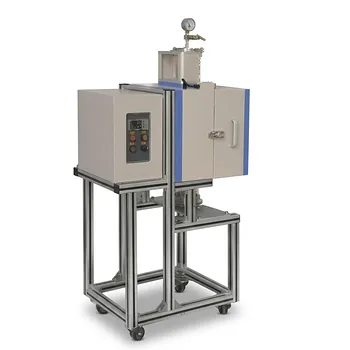
1200°C 5 Inch Vertical Quartz Tube Furnace with Stainless Steel Vacuum Flanges
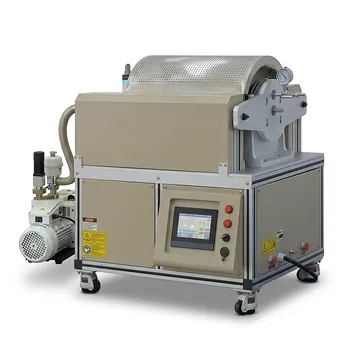
Automated 1200 C Tube Furnace for AI Material Research with 6 Inch OD and Sliding Flange
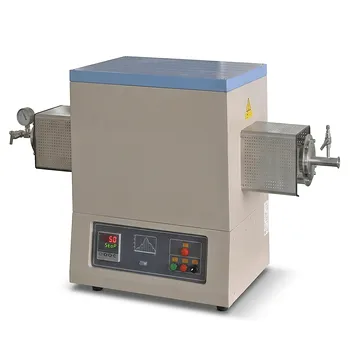
High Temperature 1700C Tube Furnace with 4 Inch OD Alumina Tube and Vacuum Sealing Flanges
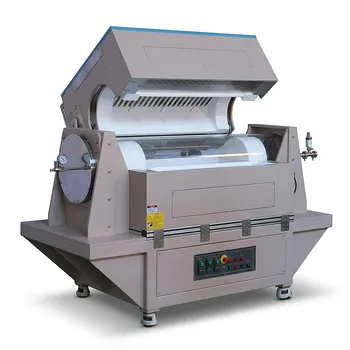
Three Zone Tube Furnace with 11 Inch or 15 Inch Quartz Tube and Hinged Flanges for Vacuum Atmosphere Heat Treatment