How gas flow in a tube furnace removes iron impurities from CNTs? Achieve High-Purity Results with Precision Control.
Updated 3 months ago
The gas flow within a tube furnace facilitates iron removal by acting as a continuous transport medium that sweeps volatile ferric chloride out of the reaction zone. Once the iron impurities are converted into a gaseous state at high temperatures (typically 800 °C), the carrier gas—often argon—physically pushes these vapors to the cooler ends of the furnace, where they condense and are permanently separated from the carbon nanotubes (CNTs).
Core Takeaway: Effective purification relies on a "phase-change and sweep" strategy: iron is chemically converted into a gaseous chloride, allowing a steady gas stream to physically relocate the impurities away from the solid CNT sample.
The Mechanism of Vapor Transport
Exploiting Low Sublimation Points
The purification process leverages the distinct physical properties of metal chlorides compared to metal oxides or pure elements. At 800 °C, ferric chloride ($FeCl_3$) exists in a gaseous state due to its remarkably low sublimation point.
By maintaining this high temperature, the iron impurities are forced into the gas phase. This phase change is the critical prerequisite that allows the gas flow to interact with the impurities.
The Carrier Gas as a Physical Conveyor
Once the iron is volatilized, a continuous flow of argon carrier gas creates a directional stream through the furnace tube. This flow prevents the gaseous iron from lingering near the CNTs or re-incorporating into the sample.
The gas effectively "vacuums" the reaction zone, carrying the $FeCl_3$ molecules toward the furnace exhaust. This movement ensures that the purification is a dynamic, continuous process rather than a static chemical reaction.
Preparing the Impurities for Removal
The Role of Pre-Oxidation
Before the high-temperature gas flow can remove the iron, the impurities must be made accessible. A pre-oxidation phase at 400 °C uses controlled air flows to strip away amorphous carbon layers that often coat the iron catalysts.
This step converts residual iron metal into iron oxide. Oxidizing the iron "exposes" the impurity sites, making them highly reactive and ready for subsequent deep purification steps.
Precision Gas Switching
High-purity results require the ability to switch between different gas environments, such as moving from argon to air. This multi-channel switching ensures that the furnace environment is optimized for each specific stage of the purification.
Precise temperature field control prevents the carbon nanotubes themselves from burning. It maintains the delicate balance between removing "trash" (amorphous carbon and iron) and preserving the "treasure" (the CNT structure).
Understanding the Trade-offs
Flow Rate vs. Heat Uniformity
Increasing the gas flow rate can accelerate the removal of impurities, but it also risks creating thermal gradients. If the flow is too fast, it may cool the sample unevenly, leading to incomplete chlorination in certain zones of the furnace.
Condensation Management
While the gas flow moves impurities out of the reaction zone, they must condense at the furnace end. Failure to manage this "cold zone" can lead to the buildup of corrosive chlorides, which may eventually block the gas path or contaminate subsequent batches if not cleaned regularly.
How to Optimize Your Purification Process
Recommendations for Success
To achieve the highest purity levels in your CNT samples, consider the following strategic focuses:
- If your primary focus is Maximum Purity: Prioritize the pre-oxidation step at 400 °C to ensure all iron sites are fully exposed before the high-temperature sweep.
- If your primary focus is Process Efficiency: Optimize the argon flow rate to be high enough for rapid vapor removal but low enough to maintain a stable 800 °C temperature field.
- If your primary focus is Structural Integrity: Use high-precision temperature control to avoid exceeding the oxidation threshold where carbon nanotubes begin to degrade.
By mastering the transition of iron into the gas phase and the subsequent flow dynamics, you can achieve a level of purity that preserves the unique properties of your carbon nanotubes.
Summary Table:
| Stage | Temperature | Key Function | Mechanism |
|---|---|---|---|
| Pre-Oxidation | 400 °C | Exposes iron catalysts | Strips amorphous carbon layers via air flow. |
| Volatilization | 800 °C | Phase change | Converts solid iron into gaseous ferric chloride ($FeCl_3$). |
| Gas Sweep | 800 °C | Impurity transport | Argon carrier gas physically pushes vapors to the exhaust. |
| Condensation | Cooler Ends | Separation | Gaseous impurities solidify away from the CNT sample. |
Elevate Your Material Research with THERMUNITS
Achieving ultra-high purity in carbon nanotubes requires more than just heat—it requires precision gas dynamics and thermal stability.
THERMUNITS is a leading manufacturer of high-temperature laboratory equipment for material science and industrial R&D. We offer a comprehensive range of thermal processing solutions designed to meet the rigorous demands of nanotechnology, including:
- Advanced Tube & Atmosphere Furnaces (Ideal for CNT purification and CVD/PECVD systems)
- Vacuum & Rotary Furnaces for specialized material processing
- High-Precision Lab Equipment: Muffle, Hot Press, Dental Furnaces, and Vacuum Induction Melting (VIM) systems.
Whether you are refining carbon nanotubes or developing next-generation alloys, our expert-engineered solutions ensure uniform heating and reliable gas control.
Ready to optimize your lab’s efficiency? Contact us today to discuss your specific thermal processing needs!
References
- Yiman Huang, Xilai Jia. Freon–CO<sub>2</sub>-assisted purification of single-walled carbon nanotubes. DOI: 10.1039/d4na00610k
Mentioned Products
- Vertical 1700C Vacuum and Atmosphere Tube Furnace with 80mm Alumina Tube
- Compact High Temperature 1600C Tube Furnace with 50mm Alumina Tube and Vacuum Flanges for Material Sintering
- 900°C Max Rotary Tube Furnace with 8 Inch 310S Alloy Tube and Optional Multi Zone Heating for Industrial Material Calcination
- Split Vertical Tube Furnace with 1200C Quartz Tube and Stainless Steel Vacuum Flanges for Rapid Thermal Processing
- High Temperature 1700C Tube Furnace with High Vacuum Turbomolecular Pump System and Multi Channel Mass Flow Controller Gas Mixer
People Also Ask
- How is an industrial-grade vertical tube furnace utilized in smelting leaching residues? Enhance Metal Recovery Efficiency
- What is the function of a laboratory-grade vertical tube furnace in fast pyrolysis? Optimize Composite Research.
- How does a vertical tube furnace facilitate thermoelectric alloy melting? Precision synthesis for material homogeneity.
- Why is a thermocouple sensor indispensable for monitoring the vertical tube furnace during gallium oxide nanowire production? Optimize VLS Growth
- What are the advantages of using a vertical tube furnace for crucible experiments simulating steel-slag interactions?

Tech Team · ThermUnits
Last updated on Jun 02, 2026
Related Products

Vertical 1700C Vacuum and Atmosphere Tube Furnace with 80mm Alumina Tube

Compact High Temperature 1600C Tube Furnace with 50mm Alumina Tube and Vacuum Flanges for Material Sintering
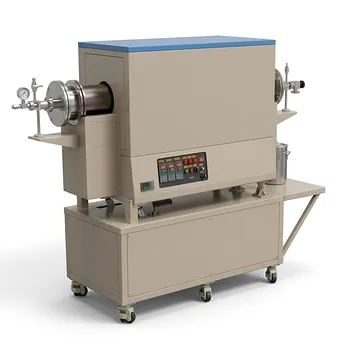
900°C Max Rotary Tube Furnace with 8 Inch 310S Alloy Tube and Optional Multi Zone Heating for Industrial Material Calcination
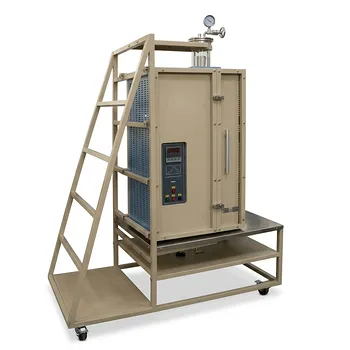
Split Vertical Tube Furnace with 1200C Quartz Tube and Stainless Steel Vacuum Flanges for Rapid Thermal Processing

High Temperature 1700C Tube Furnace with High Vacuum Turbomolecular Pump System and Multi Channel Mass Flow Controller Gas Mixer

1100C Tube Furnace with Vacuum Flange and Programmable Temperature Controller for Material Science and Industrial Heat Treatment

5 Inch Three Zone Rotary Tube Furnace with Integrated Gas Delivery System and 1200C Capability for Advanced Material CVD Processing

1200°C 5 Inch Vertical Quartz Tube Furnace with Stainless Steel Vacuum Flanges

1700C Hydrogen Gas Tube Furnace with 60mm Alumina Process Tube and Integrated Hydrogen Safety Detector

High Temperature 1700C Six Zone Split Tube Furnace with Alumina Tube and Water Cooled Flanges

Compact Vertical Split Quartz Tube Furnace with Stainless Steel Vacuum Flanges for Rapid Thermal Quenching and Controlled Atmosphere Material Processing

High Temperature 1700C Benchtop Tube Furnace with 5 Inch Heating Zone High Purity Alumina Tube and Vacuum Sealing Flanges

1800C High Temperature Compact Vacuum Tube Furnace with 60mm OD Alumina Tube and Kanthal MoSi2 Heating Elements

1200C High Throughput Multi Channel Tube Furnace with 50mm Quartz Tubes for Annealing and Material Phase Diagram Research

Three Zone Tube Furnace with 11 Inch or 15 Inch Quartz Tube and Hinged Flanges for Vacuum Atmosphere Heat Treatment

High Temperature 1700C Vertical Tube Furnace for Powder Spherification and Material Sintering
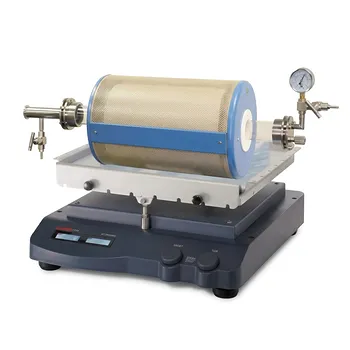
High Temperature Rocking Tube Furnace with Quartz Tube and Vacuum Flange for Materials Synthesis

High Temperature Automated 5 Inch Tube Furnace for Autonomous Material Research and Advanced Laboratory R&D
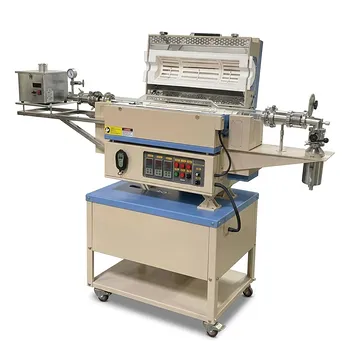
5 Inch Rotary Tube Furnace with Automatic Feeding and Receiving System 1200C Three Zone CVD Powder Processing