How does the heat treatment process in a tube furnace achieve effective sulfur encapsulation within HsGDY? Master Guide
Updated 3 months ago
The heat treatment of Hydrogen-substituted Graphdiyne (HsGDY) composites achieves sulfur encapsulation through a synchronized dual-mechanism of capillary infiltration and structural collapse. By heating the mixture in a controlled environment, elemental sulfur transitions into a liquid state to penetrate the HsGDY pores, while the carbon framework simultaneously undergoes a thermal contraction that physically traps the sulfur. This process is critical for preventing the loss of polysulfides, which is a primary failure mode in advanced battery systems.
Core Takeaway: Effective encapsulation is driven by the thermal instability of the HsGDY framework, which transforms the material from a passive host into an active mechanical trap. This process ensures that sulfur is locked deep within the internal architecture rather than simply adhering to the surface.
The Dual-Mechanism of Encapsulation
Capillary Action and Infiltration
The initial phase of the heat treatment involves raising the temperature until elemental sulfur reaches its melting point. In its liquid state, sulfur exhibits low viscosity and high surface tension, allowing it to be drawn into the microscopic pores of the HsGDY aerogel via capillary action.
Structural Collapse as a Mechanical Lock
As the temperature triggers sulfur mobility, it also induces thermal instability within the HsGDY framework. The heat causes the carbon structure to shrink or partially collapse, effectively "pinching" the pores shut around the molten sulfur.
Suppression of Polysulfide Dissolution
This structural collapse acts as a mechanical trap that prevents sulfur from escaping during the expansion and contraction of battery cycling. By locking the sulfur deep within the pores, the composite significantly reduces the "shuttle effect" of polysulfides, leading to higher electrochemical stability.
The Role of the Tube Furnace Environment
Oxidation Prevention via Inert Atmosphere
A tube furnace is essential because it provides a sealed, controllable environment where oxygen and moisture can be completely displaced. The introduction of an inert gas, such as Argon, prevents the HsGDY carbon framework from oxidizing or combusting at the elevated temperatures required for sulfur melting.
Precision Temperature Control
The furnace allows for the precise maintenance of temperatures, such as 155°C, where sulfur is liquid but not yet vaporizing excessively. This precision ensures that mass loss is driven by the material's intrinsic thermal properties rather than external chemical reactions or uncontrolled evaporation.
Removal of Residual Organics
Beyond encapsulation, the high-temperature calcination process helps remove residual organic matter left over from the initial synthesis of the HsGDY. This purification step cleans the conductive pathways and enhances the overall electrochemical activity of the final composite.
Understanding the Trade-offs and Pitfalls
The Risk of Excessive Framework Collapse
While structural shrinkage is necessary for encapsulation, excessive heat can lead to a total collapse of the HsGDY architecture. If the framework becomes too dense, it may impede the transport of lithium ions, negatively impacting the battery's charging speed and capacity.
Balancing Temperature and Sulfur Retention
There is a narrow thermal window for optimal processing; if the temperature is too low, the sulfur will not penetrate the pores deeply enough. Conversely, if the temperature is held too high for too long, the sulfur may transition into a gaseous state and escape the furnace before the framework has a chance to lock it in.
Dependency on Atmosphere Purity
The success of this process is highly dependent on the purity of the inert gas. Any trace amounts of oxygen in the tube furnace can lead to the formation of functional groups on the carbon surface that may interfere with the sulfur-carbon bond or degrade the conductivity of the HsGDY.
How to Apply This to Your Project
When implementing heat treatment for HsGDY-sulfur composites, your strategy should vary based on your specific performance targets:
- If your primary focus is Maximum Cycle Life: Prioritize the structural collapse phase by carefully calibrating the cooling rate to ensure the mechanical lock is fully formed around the sulfur.
- If your primary focus is High Rate Capability: Limit the duration of the heat treatment to prevent excessive framework shrinkage, maintaining enough porosity for rapid ion transport.
- If your primary focus is Material Purity: Utilize a higher flow rate of Argon during the initial ramp-up to ensure all volatile organic residues are thoroughly purged from the tube furnace.
By precisely controlling the thermal instability of the HsGDY host, you can transform a simple mixture into a high-performance energy storage material.
Summary Table:
| Process Phase | Mechanism | Key Function |
|---|---|---|
| Infiltration | Capillary Action | Molten sulfur penetrates microscopic pores of the HsGDY aerogel. |
| Encapsulation | Structural Collapse | Thermal contraction of the carbon framework mechanically locks sulfur inside. |
| Atmosphere | Inert Gas (Argon) | Prevents oxidation and combustion of the carbon framework at high temps. |
| Optimization | Precision Control | Balances sulfur retention with ion transport by managing framework density. |
Elevate Your Material Research with THERMUNITS
Achieving the perfect balance of capillary infiltration and structural collapse requires the highest level of thermal precision. THERMUNITS is a leading manufacturer of high-temperature laboratory equipment specifically designed for material science and industrial R&D.
Whether you are working on advanced sulfur encapsulation for next-generation batteries or complex CVD/PECVD synthesis, our comprehensive range of thermal solutions—including Tube Furnaces, Vacuum/Atmosphere Furnaces, Rotary Kilns, and Hot Press Furnaces—ensures consistent, repeatable results.
Why partner with THERMUNITS?
- Precision Control: Expertly manage narrow thermal windows to prevent framework over-collapse.
- Atmospheric Integrity: High-purity inert environments to protect your sensitive carbon composites.
- Custom Engineering: Tailored solutions for Muffle, Dental, and Vacuum Induction Melting (VIM) applications.
Ready to optimize your heat treatment process? Contact our technical team today to find the ideal furnace for your R&D goals!
References
- Karam Eeso, Nian Liu. The thermal instability of hydrogen-substituted graphdiyne and its role in lithium–sulfur batteries. DOI: 10.1039/d4cc04459b
Mentioned Products
- Vertical 1700C Vacuum and Atmosphere Tube Furnace with 80mm Alumina Tube
- Compact High Temperature 1600C Tube Furnace with 50mm Alumina Tube and Vacuum Flanges for Material Sintering
- 900°C Max Rotary Tube Furnace with 8 Inch 310S Alloy Tube and Optional Multi Zone Heating for Industrial Material Calcination
- Split Vertical Tube Furnace with 1200C Quartz Tube and Stainless Steel Vacuum Flanges for Rapid Thermal Processing
- High Temperature 1700C Tube Furnace with High Vacuum Turbomolecular Pump System and Multi Channel Mass Flow Controller Gas Mixer
People Also Ask
- How is an industrial-grade vertical tube furnace utilized in smelting leaching residues? Enhance Metal Recovery Efficiency
- What is the function of a laboratory-grade vertical tube furnace in fast pyrolysis? Optimize Composite Research.
- How does a vertical tube furnace facilitate thermoelectric alloy melting? Precision synthesis for material homogeneity.
- Why is a thermocouple sensor indispensable for monitoring the vertical tube furnace during gallium oxide nanowire production? Optimize VLS Growth
- What are the advantages of using a vertical tube furnace for crucible experiments simulating steel-slag interactions?

Tech Team · ThermUnits
Last updated on Jun 03, 2026
Related Products

Vertical 1700C Vacuum and Atmosphere Tube Furnace with 80mm Alumina Tube

Compact High Temperature 1600C Tube Furnace with 50mm Alumina Tube and Vacuum Flanges for Material Sintering
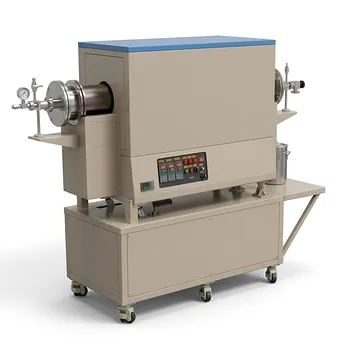
900°C Max Rotary Tube Furnace with 8 Inch 310S Alloy Tube and Optional Multi Zone Heating for Industrial Material Calcination
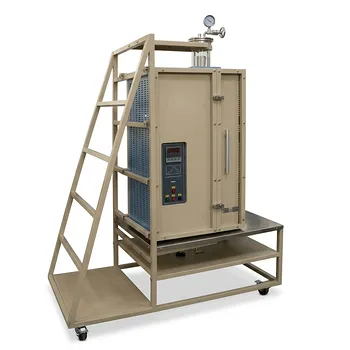
Split Vertical Tube Furnace with 1200C Quartz Tube and Stainless Steel Vacuum Flanges for Rapid Thermal Processing

High Temperature 1700C Tube Furnace with High Vacuum Turbomolecular Pump System and Multi Channel Mass Flow Controller Gas Mixer

1100C Tube Furnace with Vacuum Flange and Programmable Temperature Controller for Material Science and Industrial Heat Treatment
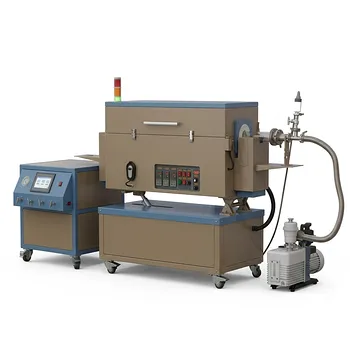
5 Inch Three Zone Rotary Tube Furnace with Integrated Gas Delivery System and 1200C Capability for Advanced Material CVD Processing
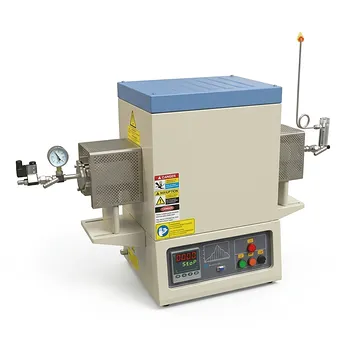
1700C Hydrogen Gas Tube Furnace with 60mm Alumina Process Tube and Integrated Hydrogen Safety Detector

1200°C 5 Inch Vertical Quartz Tube Furnace with Stainless Steel Vacuum Flanges

High Temperature 1700C Six Zone Split Tube Furnace with Alumina Tube and Water Cooled Flanges

Compact Vertical Split Quartz Tube Furnace with Stainless Steel Vacuum Flanges for Rapid Thermal Quenching and Controlled Atmosphere Material Processing

High Temperature 1700C Benchtop Tube Furnace with 5 Inch Heating Zone High Purity Alumina Tube and Vacuum Sealing Flanges

1800C High Temperature Compact Vacuum Tube Furnace with 60mm OD Alumina Tube and Kanthal MoSi2 Heating Elements
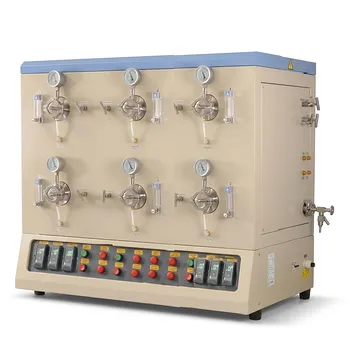
1200C High Throughput Multi Channel Tube Furnace with 50mm Quartz Tubes for Annealing and Material Phase Diagram Research

Three Zone Tube Furnace with 11 Inch or 15 Inch Quartz Tube and Hinged Flanges for Vacuum Atmosphere Heat Treatment

High Temperature 1700C Vertical Tube Furnace for Powder Spherification and Material Sintering
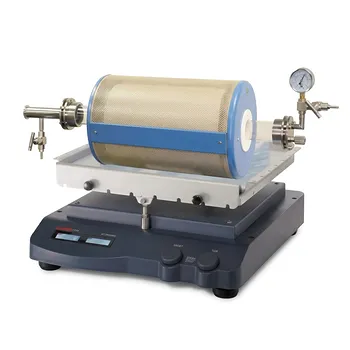
High Temperature Rocking Tube Furnace with Quartz Tube and Vacuum Flange for Materials Synthesis

High Temperature Automated 5 Inch Tube Furnace for Autonomous Material Research and Advanced Laboratory R&D
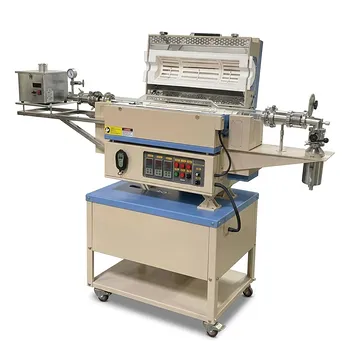
5 Inch Rotary Tube Furnace with Automatic Feeding and Receiving System 1200C Three Zone CVD Powder Processing