How does calcination in a tube furnace under air vs. Argon affect ceramic skeletons? Optimize Purity and Conductivity
Updated 3 months ago
The fundamental difference lies in the oxidative potential of the furnace environment. Calcination in an air atmosphere results in the complete combustion of the organic template, yielding a pure ceramic skeleton. Conversely, an inert Argon environment prevents oxidation, allowing the template to carbonize and form a composite structure (such as 3DBT@C).
The choice of atmosphere determines the final composition of the skeleton: oxygen-rich air removes organic components entirely to isolate the ceramic properties, while Argon retains them as carbon to enhance conductivity and shielding.
The Impact of Atmosphere on Template Removal
Complete Combustion in Air
When calcination occurs in air, the presence of oxygen facilitates the total decomposition of organic materials, such as dust-free wipe templates. This oxidative process converts the organic carbon into gases, leaving behind a pure Barium Titanate (BT) ceramic scaffold.
Carbon Retention in Argon
In an Argon atmosphere, the lack of oxygen prevents the organic template from burning away. Instead, the material undergoes pyrolysis, transforming the template into a stable carbon framework that interpenetrates the ceramic.
Material Properties and Functional Outcomes
Electrical Conductivity and Shielding
The presence or absence of carbon fundamentally changes the material's interaction with energy. A pure ceramic skeleton acts as a baseline for comparison, while the carbon-containing structure provides the necessary pathways for electrical conductivity.
Comparative Research Utility
Producing a pure skeleton via air calcination is critical for verifying the influence of carbon. By comparing a pure BT skeleton to a 3DBT@C composite, researchers can precisely quantify how much the carbon component contributes to electromagnetic shielding.
Understanding the Trade-offs
Purity versus Functionality
Using an air atmosphere ensures maximum chemical purity of the ceramic phase, which is essential if the organic template is merely a temporary structural aid. However, this process eliminates any potential benefits that a secondary carbon phase might provide.
Structural Integrity Challenges
The complete removal of a template in air can sometimes leave a fragile skeleton if the ceramic particles have not yet fully sintered. In contrast, a carbonized template in Argon can provide additional structural support, though it changes the chemical profile of the final part.
Choosing the Right Atmosphere for Your Goal
To achieve the best results for your specific ceramic application, consider the following directions:
- If your primary focus is high-purity ceramic research: Use an air atmosphere to ensure all organic templates are completely oxidized and removed from the skeleton.
- If your primary focus is electromagnetic shielding or conductivity: Utilize an Argon environment to facilitate the carbonization of the template, creating a functional composite structure.
Mastering the furnace atmosphere allows you to precisely engineer the transition from a temporary organic template to a functionalized ceramic architecture.
Summary Table:
| Feature | Air Atmosphere | Argon Atmosphere |
|---|---|---|
| Primary Process | Oxidation / Combustion | Pyrolysis / Carbonization |
| Template Outcome | Completely removed as gas | Transformed into stable carbon |
| Final Structure | Pure Ceramic Skeleton | Ceramic-Carbon Composite |
| Key Property | High Chemical Purity | Electrical Conductivity & Shielding |
| Best Use Case | Baseline material research | Electromagnetic shielding (EMI) |
Elevate Your Material Research with THERMUNITS
Precision control over furnace atmosphere is critical for achieving the right chemical and structural outcomes. THERMUNITS is a leading manufacturer of high-temperature laboratory equipment, providing advanced thermal processing solutions for material science and industrial R&D.
Whether you are performing air calcination for pure ceramic skeletons or inert gas pyrolysis for functional composites, our comprehensive range of equipment delivers unmatched reliability:
- Tube & Atmosphere Furnaces: Perfect for precise gas environment control.
- Advanced Systems: Including CVD/PECVD, Vacuum, and Rotary furnaces.
- Specialized Equipment: Muffle, Hot Press, Dental furnaces, and Vacuum Induction Melting (VIM).
Ready to optimize your heat treatment process? Contact our experts today to discuss how our laboratory solutions can accelerate your innovation.
References
- Dongmei Zhang, Chengzhu Liao. One step synthesis of 3D BaTiO<sub>3</sub>@C for novel electromagnetic shielding of epoxy composites. DOI: 10.1051/e3sconf/202453603019
Mentioned Products
- Vertical 1700C Vacuum and Atmosphere Tube Furnace with 80mm Alumina Tube
- Compact High Temperature 1600C Tube Furnace with 50mm Alumina Tube and Vacuum Flanges for Material Sintering
- 900°C Max Rotary Tube Furnace with 8 Inch 310S Alloy Tube and Optional Multi Zone Heating for Industrial Material Calcination
- Split Vertical Tube Furnace with 1200C Quartz Tube and Stainless Steel Vacuum Flanges for Rapid Thermal Processing
- High Temperature 1700C Tube Furnace with High Vacuum Turbomolecular Pump System and Multi Channel Mass Flow Controller Gas Mixer
People Also Ask
- How is an industrial-grade vertical tube furnace utilized in smelting leaching residues? Enhance Metal Recovery Efficiency
- What is the function of a laboratory-grade vertical tube furnace in fast pyrolysis? Optimize Composite Research.
- How does a vertical tube furnace facilitate thermoelectric alloy melting? Precision synthesis for material homogeneity.
- Why is a thermocouple sensor indispensable for monitoring the vertical tube furnace during gallium oxide nanowire production? Optimize VLS Growth
- What are the advantages of using a vertical tube furnace for crucible experiments simulating steel-slag interactions?

Tech Team · ThermUnits
Last updated on Jun 02, 2026
Related Products

Vertical 1700C Vacuum and Atmosphere Tube Furnace with 80mm Alumina Tube

Compact High Temperature 1600C Tube Furnace with 50mm Alumina Tube and Vacuum Flanges for Material Sintering
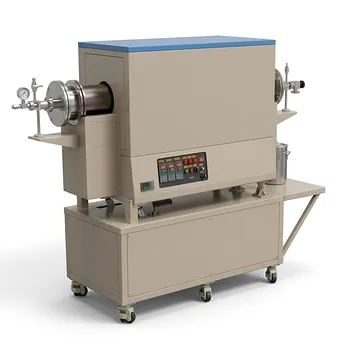
900°C Max Rotary Tube Furnace with 8 Inch 310S Alloy Tube and Optional Multi Zone Heating for Industrial Material Calcination
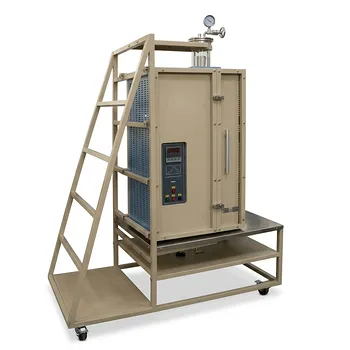
Split Vertical Tube Furnace with 1200C Quartz Tube and Stainless Steel Vacuum Flanges for Rapid Thermal Processing

High Temperature 1700C Tube Furnace with High Vacuum Turbomolecular Pump System and Multi Channel Mass Flow Controller Gas Mixer

1100C Tube Furnace with Vacuum Flange and Programmable Temperature Controller for Material Science and Industrial Heat Treatment

5 Inch Three Zone Rotary Tube Furnace with Integrated Gas Delivery System and 1200C Capability for Advanced Material CVD Processing

1700C Hydrogen Gas Tube Furnace with 60mm Alumina Process Tube and Integrated Hydrogen Safety Detector

1200°C 5 Inch Vertical Quartz Tube Furnace with Stainless Steel Vacuum Flanges

High Temperature 1700C Six Zone Split Tube Furnace with Alumina Tube and Water Cooled Flanges

Compact Vertical Split Quartz Tube Furnace with Stainless Steel Vacuum Flanges for Rapid Thermal Quenching and Controlled Atmosphere Material Processing

High Temperature 1700C Benchtop Tube Furnace with 5 Inch Heating Zone High Purity Alumina Tube and Vacuum Sealing Flanges

1200C High Throughput Multi Channel Tube Furnace with 50mm Quartz Tubes for Annealing and Material Phase Diagram Research

Three Zone Tube Furnace with 11 Inch or 15 Inch Quartz Tube and Hinged Flanges for Vacuum Atmosphere Heat Treatment

1800C High Temperature Compact Vacuum Tube Furnace with 60mm OD Alumina Tube and Kanthal MoSi2 Heating Elements

High Temperature 1700C Vertical Tube Furnace for Powder Spherification and Material Sintering
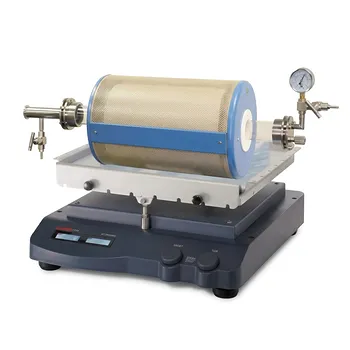
High Temperature Rocking Tube Furnace with Quartz Tube and Vacuum Flange for Materials Synthesis

High Temperature Automated 5 Inch Tube Furnace for Autonomous Material Research and Advanced Laboratory R&D
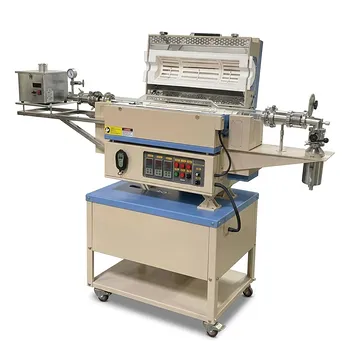
5 Inch Rotary Tube Furnace with Automatic Feeding and Receiving System 1200C Three Zone CVD Powder Processing