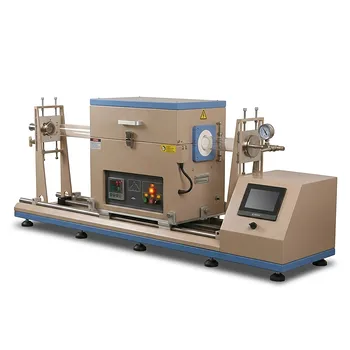
How does the placement of sulfur powder within a tube furnace affect the synthesis of NiS2/NiS/Mn2O3 nanofibers? Key Tips
Updated 3 months ago
The strategic placement of sulfur powder upstream of the target sample is the decisive factor in ensuring the uniform synthesis of $\text{NiS}_2/\text{NiS}/\text{Mn}_2\text{O}_3$ nanofibers. In a tube furnace, placing sulfur in the path of the incoming carrier gas ensures that sublimated sulfur vapor is transported consistently across the downstream sample. This configuration facilitates a complete and uniform sulfurization reaction across the entire nanofiber membrane, resulting in a composite catalyst with stable components.
To synthesize high-quality multi-phase sulfide/oxide composites, sulfur must be positioned as a vapor source upstream of the target material. This setup transforms a simple heating process into a controlled gas-solid interface reaction, which is essential for achieving material homogeneity and structural integrity.
The Mechanics of Sulfur Transport
Upstream Placement and Gas Flow
Placing the sulfur powder in the upstream direction allows the carrier gas (typically an inert gas like nitrogen) to act as a delivery vehicle. As the furnace heats up, the sulfur sublimates into a vapor and is pushed toward the sample by the continuous flow.
Achieving Uniform Concentration
The primary benefit of this layout is the creation of a stable concentration of sulfur within the reaction atmosphere. By ensuring the vapor reaches the sample consistently, the reaction proceeds fully across the entire nanofiber membrane rather than being localized.
Homogeneity in Composite Catalysts
Uniform sulfur delivery is critical for the formation of the $\text{NiS}_2/\text{NiS}/\text{Mn}_2\text{O}_3$ composite. Without this upstream positioning, the resulting nanofibers might suffer from inconsistent phase distributions, compromising their effectiveness as catalysts.
The Role of the Controlled Environment
Preventing Unwanted Oxidation
The tube furnace provides a closed, inert environment that is vital for protecting the nanofibers at high temperatures. By using nitrogen as a carrier gas, the system effectively prevents the unnecessary oxidation of the sulfide phases during the synthesis process.
The Gas-Solid Interface Reaction
The synthesis relies on a gas-solid interface reaction between the sulfur vapor and the $\text{MnNi}_2\text{O}_4$ precursor. This specific interaction is what allows the transition from a pure oxide or precursor state into the final multi-phase sulfide/oxide nanofiber structure.
Thermal Stability and Crystallization
A stable thermal environment is necessary for the crystallization of the desired phases and the maintenance of the nanofiber microstructure. Consistent heating ensures that the metal-organic components decompose properly while the spinel phases form according to the intended design.
Understanding the Trade-offs and Challenges
Risks of Downstream Placement
If sulfur powder is placed downstream or too close to the exhaust, the carrier gas will sweep the sulfur vapor away from the sample. This results in incomplete sulfurization, leaving the precursor largely unreacted or producing a non-uniform material.
Temperature Gradient Limitations
Tube furnaces often have temperature gradients where the center is hotter than the ends. If the sulfur is placed in a zone that is too cool, it will not sublimate sufficiently; if it is too hot, it may sublimate too rapidly, leading to an inconsistent reaction rate.
Managing Gas Flow Velocity
The velocity of the carrier gas must be carefully balanced. If the flow is too fast, the sulfur vapor may not have sufficient residence time to react with the nanofibers; if it is too slow, the vapor concentration may become stagnant and uneven.
How to Apply This to Your Synthesis Project
When setting up your tube furnace for nanofiber sulfurization, the spatial arrangement of your materials will dictate the quality of your final composite.
- If your primary focus is Phase Purity: Ensure the sulfur is placed in a zone that reaches its sublimation point slightly before the sample reaches its peak reaction temperature to saturate the atmosphere.
- If your primary focus is Uniformity across a Large Membrane: Use a steady, low-to-medium flow rate of inert gas to ensure the sulfur vapor is distributed evenly across the entire surface area of the downstream sample.
- If your primary focus is Preventing Oxidation: Double-check the seals of your tube furnace and maintain a positive pressure of nitrogen to ensure no ambient oxygen enters the system during the high-temperature phase.
By masterfully controlling the spatial relationship between your reactants and the gas flow, you ensure the creation of high-performance, structurally sound nanofibers.
Summary Table:
| Placement Position | Impact on Sulfurization | Synthesis Outcome |
|---|---|---|
| Upstream | Vapor transport via carrier gas | Uniform, multi-phase composite nanofibers |
| Downstream | Vapor swept away from sample | Incomplete reaction; non-uniform material |
| Center Zone | Potential rapid sublimation | Inconsistent reaction rates; poor phase control |
| Inert Flow | Prevents unwanted oxidation | High purity sulfide/oxide composite structures |
Master Your Nanofiber Synthesis with THERMUNITS
Achieving the precise spatial and thermal control required for high-quality sulfurization demands reliable equipment. As a leading manufacturer of high-temperature laboratory solutions for material science and industrial R&D, THERMUNITS provides the precision and stability your advanced research requires.
Whether you are synthesizing multi-phase sulfides or complex oxides, our comprehensive range of equipment ensures optimal results:
- Tube & Atmosphere Furnaces: Optimized for gas-solid interface reactions with precise flow and atmosphere control.
- Vacuum & CVD/PECVD Systems: Maintain the high-purity environments necessary for uniform nanofiber and thin-film growth.
- Specialized Solutions: Including Muffle, Rotary, Hot Press, Dental Furnaces, Electric Rotary Kilns, and Vacuum Induction Melting (VIM) furnaces.
Don't let equipment limitations hinder your next breakthrough. Contact THERMUNITS today to consult with our experts and find the perfect heat treatment solution for your laboratory!
References
- Bin Yang, Mingyi Zhang. NiS2/NiS/Mn2O3 Nanofibers with Enhanced Oxygen Evolution Reaction Activity. DOI: 10.3390/molecules29163892
Mentioned Products
- Vertical 1700C Vacuum and Atmosphere Tube Furnace with 80mm Alumina Tube
- Compact High Temperature 1600C Tube Furnace with 50mm Alumina Tube and Vacuum Flanges for Material Sintering
- 900°C Max Rotary Tube Furnace with 8 Inch 310S Alloy Tube and Optional Multi Zone Heating for Industrial Material Calcination
- Split Vertical Tube Furnace with 1200C Quartz Tube and Stainless Steel Vacuum Flanges for Rapid Thermal Processing
- High Temperature 1700C Tube Furnace with High Vacuum Turbomolecular Pump System and Multi Channel Mass Flow Controller Gas Mixer
People Also Ask
- How is an industrial-grade vertical tube furnace utilized in smelting leaching residues? Enhance Metal Recovery Efficiency
- What is the function of a laboratory-grade vertical tube furnace in fast pyrolysis? Optimize Composite Research.
- How does a vertical tube furnace facilitate thermoelectric alloy melting? Precision synthesis for material homogeneity.
- Why is a thermocouple sensor indispensable for monitoring the vertical tube furnace during gallium oxide nanowire production? Optimize VLS Growth
- What are the advantages of using a vertical tube furnace for crucible experiments simulating steel-slag interactions?

Tech Team · ThermUnits
Last updated on Jun 03, 2026
Related Products

Vertical 1700C Vacuum and Atmosphere Tube Furnace with 80mm Alumina Tube

Compact High Temperature 1600C Tube Furnace with 50mm Alumina Tube and Vacuum Flanges for Material Sintering
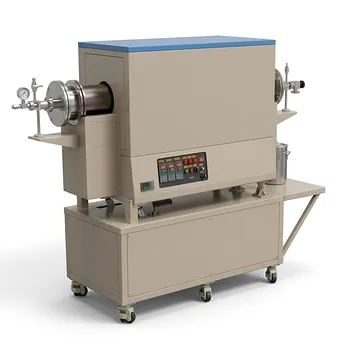
900°C Max Rotary Tube Furnace with 8 Inch 310S Alloy Tube and Optional Multi Zone Heating for Industrial Material Calcination
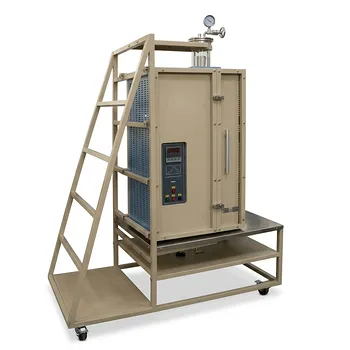
Split Vertical Tube Furnace with 1200C Quartz Tube and Stainless Steel Vacuum Flanges for Rapid Thermal Processing

High Temperature 1700C Tube Furnace with High Vacuum Turbomolecular Pump System and Multi Channel Mass Flow Controller Gas Mixer

1100C Tube Furnace with Vacuum Flange and Programmable Temperature Controller for Material Science and Industrial Heat Treatment

5 Inch Three Zone Rotary Tube Furnace with Integrated Gas Delivery System and 1200C Capability for Advanced Material CVD Processing

1700C Hydrogen Gas Tube Furnace with 60mm Alumina Process Tube and Integrated Hydrogen Safety Detector
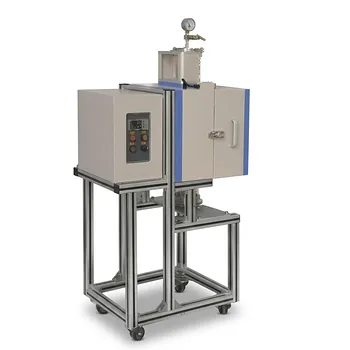
1200°C 5 Inch Vertical Quartz Tube Furnace with Stainless Steel Vacuum Flanges

High Temperature 1700C Six Zone Split Tube Furnace with Alumina Tube and Water Cooled Flanges

Compact Vertical Split Quartz Tube Furnace with Stainless Steel Vacuum Flanges for Rapid Thermal Quenching and Controlled Atmosphere Material Processing

High Temperature 1700C Benchtop Tube Furnace with 5 Inch Heating Zone High Purity Alumina Tube and Vacuum Sealing Flanges

1200C High Throughput Multi Channel Tube Furnace with 50mm Quartz Tubes for Annealing and Material Phase Diagram Research

Three Zone Tube Furnace with 11 Inch or 15 Inch Quartz Tube and Hinged Flanges for Vacuum Atmosphere Heat Treatment

1800C High Temperature Compact Vacuum Tube Furnace with 60mm OD Alumina Tube and Kanthal MoSi2 Heating Elements

High Temperature 1700C Vertical Tube Furnace for Powder Spherification and Material Sintering
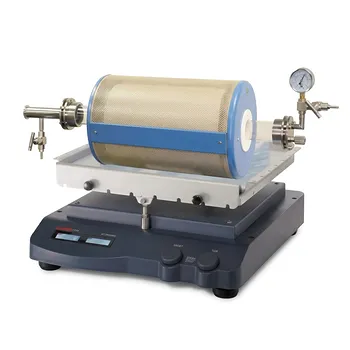
High Temperature Rocking Tube Furnace with Quartz Tube and Vacuum Flange for Materials Synthesis

High Temperature Automated 5 Inch Tube Furnace for Autonomous Material Research and Advanced Laboratory R&D
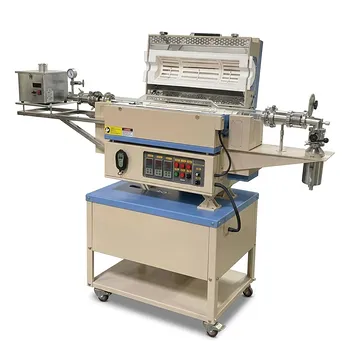
5 Inch Rotary Tube Furnace with Automatic Feeding and Receiving System 1200C Three Zone CVD Powder Processing