How does the precise heating rate control of a tube furnace impact the structural integrity of VAGNAs?
Updated 3 months ago
Precise heating rate control is the mechanical safeguard of VAGNA architecture. This control regulates the decomposition speed of organic precursors and dictates the timing of salt activation reactions within the furnace. By preventing the sudden, explosive release of internal gases, a precise heating rate allows Vertically Aligned Graphene Nanosheet Arrays (VAGNAs) to maintain their orientation and structural integrity during the transition to high temperatures.
Core Takeaway: The structural integrity of VAGNAs depends on synchronizing the rate of volatile gas release with the strengthening of the carbon skeleton. Precise heating rate control prevents the mechanical collapse of the array by ensuring that internal pressures do not exceed the material's developing structural limits.
Managing Gas Evolution Kinetics
Preventing Structural Rupture
During the synthesis of VAGNAs, biomass or organic precursors undergo rapid chemical changes as they reach temperatures up to 1000°C. A controlled heating rate, typically around 5°C per minute, ensures that the decomposition of organic components happens gradually.
If the heating rate is too high, the instantaneous release of large volumes of gas creates internal pressure that can physically shred the nanosheet array. Precise control allows these gases to escape at a velocity that the developing microstructure can withstand.
Regulating Decomposition Rates
The heating rate determines exactly when organic components begin to break down and when activation salts begin to react. This timing is critical for the "exfoliation effect," where gases like carbon dioxide help guide the vertical growth of the sheets.
By maintaining a smooth transition from room temperature to the final reaction temperature, the tube furnace ensures the carbonization process is steady. This prevents the formation of amorphous carbon "sludge" and instead promotes a clean, crystalline growth path.
The Thermodynamics of Vertical Alignment
Facilitating Intercalation and Exfoliation
The precise thermal environment of a tube furnace provides the necessary conditions for potassium ion intercalation and catalytic graphitization. These processes are highly sensitive to temperature gradients and the speed of thermal energy intake.
A stable heating rate ensures that the activation salts are distributed and react uniformly across the precursor. This uniformity is what allows the graphene sheets to exfoliate and grow in a vertically oriented structure rather than in random, disordered clusters.
Synchronizing Carbon Source Delivery
The kinetics of volatile matter release must match the reaction rate at the catalyst's active sites. If the furnace provides heat too quickly, the supply of carbon source gases (like hydrocarbons) will overwhelm the catalyst.
Precise control synchronizes this supply, preventing catalyst deactivation and the accumulation of unordered carbon. This synchronization is what ultimately results in nanosheets with uniform diameters and superior morphology.
Understanding the Kinetic Trade-offs
Process Efficiency vs. Structural Quality
While a rapid heating rate (e.g., 10°C/s or higher) can increase production throughput, it poses a significant risk to microstructural development. High speeds often lead to the collapse of pore structures and reduced chemical activity in the resulting material.
Aggregation and Surface Area
Using a lower, more precise heating rate helps prevent the excessive aggregation of active particles or nanoparticles during nucleation. While slower rates require more time, they yield a much higher specific surface area and a higher density of active sites, which are critical for the functionality of VAGNAs in energy storage or catalysis.
Optimizing the Thermal Profile for VAGNA Synthesis
To achieve the best results when synthesizing carbon nanostructures, the heating profile must be tailored to the specific precursor and desired density of the array.
- If your primary focus is Maximum Structural Integrity: Utilize a slower heating rate of 2°C/min to 5°C/min to ensure gas evolution does not outpace the mechanical strength of the carbon skeleton.
- If your primary focus is High Specific Surface Area: Maintain a lower, precise heating rate to prevent nanoparticle aggregation and ensure uniform carbonization of organic ligands.
- If your primary focus is Vertical Growth Density: Prioritize the synchronization of the heating rate with the activation salt reactions to maximize the exfoliation effect of carbon dioxide.
Mastering the thermal kinetics within a tube furnace is the definitive factor in transforming raw biomass into highly ordered, functional graphene architectures.
Summary Table:
| Parameter | Impact on VAGNA Structure | Key Benefit |
|---|---|---|
| Controlled Rate (2-5°C/min) | Gradual decomposition and gas release | Maintains vertical orientation & structural integrity |
| Rapid Rate (>10°C/min) | Internal pressure spikes & structural rupture | High throughput but risks pore collapse & aggregation |
| Salt Activation Timing | Synchronized exfoliation and intercalation | High density of active sites and crystalline growth |
| Thermal Uniformity | Prevents amorphous carbon formation | Superior morphology and high specific surface area |
Maximize Your VAGNA Research with THERMUNITS Precision
To achieve elite structural integrity and high-density vertical alignment in graphene nanosheets, your laboratory requires the industry-leading precision of THERMUNITS. As a global leader in high-temperature laboratory equipment for material science and industrial R&D, we provide the thermal control necessary to master complex gas evolution kinetics.
Our comprehensive range of thermal solutions includes:
- Precision Tube & Atmosphere Furnaces (Tailored for VAGNA/CVD workflows)
- Muffle, Vacuum, and Hot Press Furnaces
- Advanced CVD/PECVD Systems
- Rotary Kilns and Vacuum Induction Melting (VIM) Furnaces
- Dental Furnaces and specialized Thermal Elements
Don't let unstable heating rates compromise your nanomaterial quality. Contact THERMUNITS today to find the perfect furnace for your sophisticated heat treatment needs!
References
- Qincheng Yang, Mingxi Wang. Gram-scale production of vertically aligned holey graphene nanosheet arrays derived from a renewable biomass precursor <i>via</i> a facile hydrothermal/salt-assisted pyrolysis method for aqueous high-performance redox supercapacitors. DOI: 10.1039/d4ta01328j
Mentioned Products
- 1500C Max Dual Zone Rotary Tube Furnace with 60 mm OD Alumina Tube for High Temperature Material Synthesis
- High Temperature Dual Zone Rotating Tube Furnace 1500C Silicon Carbide Heating for Advanced Material Synthesis
- 1100C High Pressure Rocking Tube Furnace with 2 Inch Super Alloy Processing Tube for Material Synthesis
- 24 Inch Three Zone Split Tube Furnace with Optional Quartz Tube and Vacuum Flange System for High Temperature Material Synthesis
- 1500C 3-Zone Rotary Tube Furnace 60mm with Automatic Powder Feeding and Receiving System for Continuous Material Synthesis
People Also Ask
- How does a rotary tube furnace improve the processing of granular materials? Enhance Uniformity and Reaction Kinetics
- Why is the precise optimization of residence time essential in the catalyst calcination process? Maximize Your Yields.
- Why use a rotary tube furnace for FACS carbonization? Ensure uniform morphology and prevent sphere agglomeration.
- In what ways do rotary tube furnaces enhance chemical and specialty mineral processing? Drive Precision and Uniformity.
- What parameters must operators control to maintain product quality in a rotary furnace? Master Your Heat Treatment.

Tech Team · ThermUnits
Last updated on Jun 03, 2026
Related Products
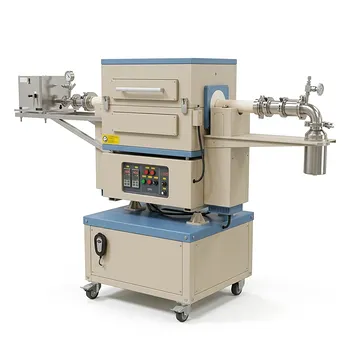
1500C Max Dual Zone Rotary Tube Furnace with 60 mm OD Alumina Tube for High Temperature Material Synthesis
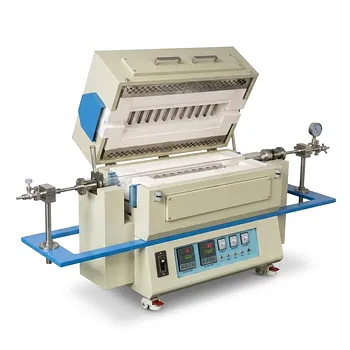
High Temperature Dual Zone Rotating Tube Furnace 1500C Silicon Carbide Heating for Advanced Material Synthesis
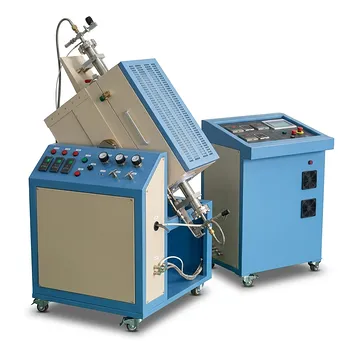
1100C High Pressure Rocking Tube Furnace with 2 Inch Super Alloy Processing Tube for Material Synthesis
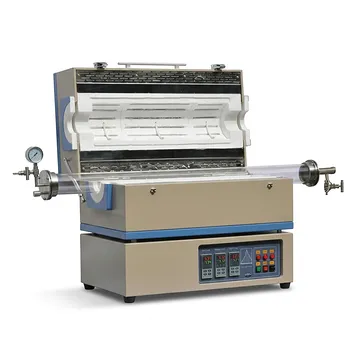
24 Inch Three Zone Split Tube Furnace with Optional Quartz Tube and Vacuum Flange System for High Temperature Material Synthesis
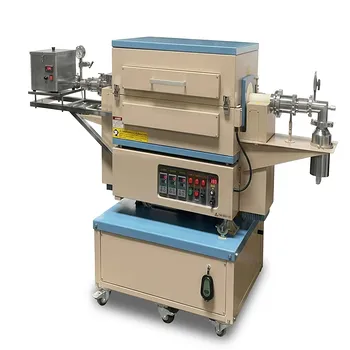
1500C 3-Zone Rotary Tube Furnace 60mm with Automatic Powder Feeding and Receiving System for Continuous Material Synthesis

High Temperature 1700C Vertical Tube Furnace for Powder Spherification and Material Sintering
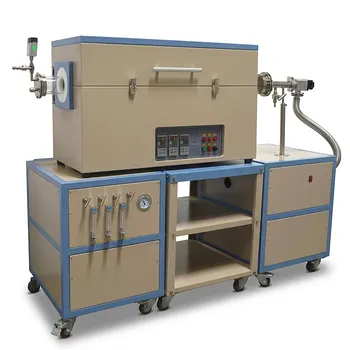
Three Zone Quartz Tube Furnace with 3 Channel Gas Mixer Vacuum Pump and Anti Corrosive Vacuum Gauge
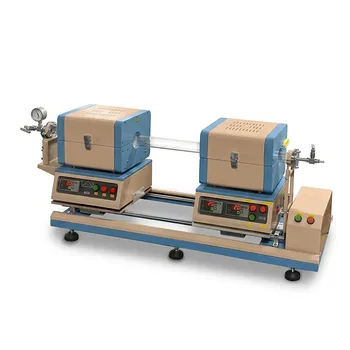
High Temperature 1200C Automatic Sliding Dual Zone Tube Furnace for 2D Transition Metal Dichalcogenides Growth and Material Sublimation Research

High Temperature Automated 5 Inch Tube Furnace for Autonomous Material Research and Advanced Laboratory R&D
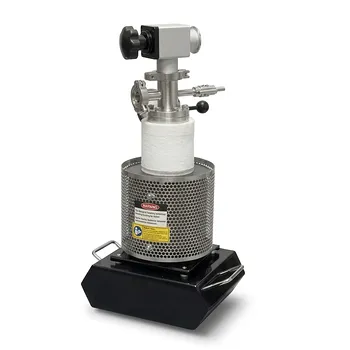
High Temperature 1100C Compact Top Loading Vertical Vacuum Tube Furnace for High Vacuum Noble Metal Melting and Material Research
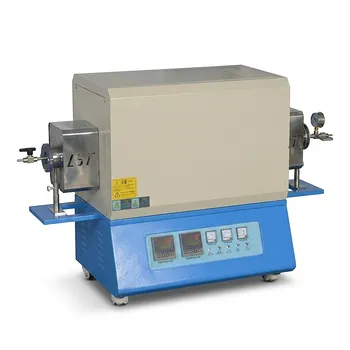
High Temperature Dual Zone Vacuum Tube Furnace for Material Research and CVD Processing
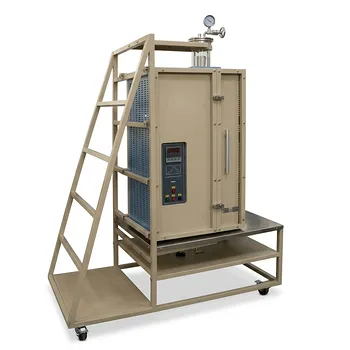
Split Vertical Tube Furnace with 1200C Quartz Tube and Stainless Steel Vacuum Flanges for Rapid Thermal Processing

Vertical 1700C Vacuum and Atmosphere Tube Furnace with 80mm Alumina Tube

1800C High Temperature Compact Vacuum Tube Furnace with 60mm OD Alumina Tube and Kanthal MoSi2 Heating Elements
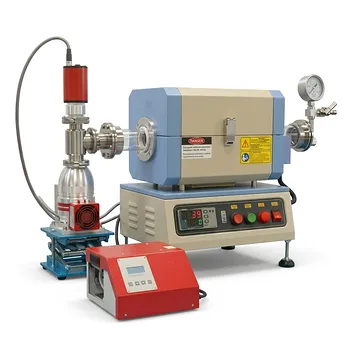
High Vacuum Compact Tube Furnace 1200C with Integrated Turbo Pump System and 8 Inch Heating Zone

5 Inch Three Zone Rotary Tube Furnace with Integrated Gas Delivery System and 1200C Capability for Advanced Material CVD Processing
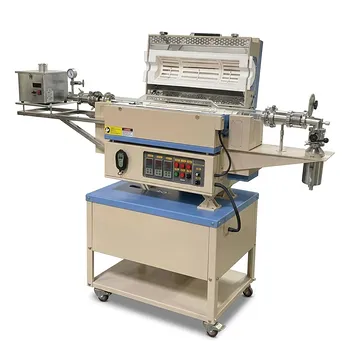
5 Inch Rotary Tube Furnace with Automatic Feeding and Receiving System 1200C Three Zone CVD Powder Processing

Three Zone Tube Furnace with 11 Inch or 15 Inch Quartz Tube and Hinged Flanges for Vacuum Atmosphere Heat Treatment

1100C Tube Furnace with Vacuum Flange and Programmable Temperature Controller for Material Science and Industrial Heat Treatment
