How does tube furnace temperature control affect silane deposition? Optimize silicon coating morphology & uniformity.
Updated 3 months ago
Temperature control accuracy is the primary determinant of whether silane forms a uniform surface coating or undesirable free-floating nanoparticles. High precision ensures the reaction remains within the regime of surface-controlled kinetics, typically requiring temperatures to stay strictly below 550°C. If control is lost and temperatures exceed this threshold, the deposition shifts from a controlled coating to gas-phase self-nucleation, fundamentally ruining the microscopic morphology and pore-filling efficiency.
Core Takeaway: Accurate temperature regulation prevents premature silane decomposition in the gas phase, ensuring silicon atoms deposit directly onto internal substrate surfaces rather than creating loose nanoparticles that block pores and aggregate.
The Impact of Kinetics on Microscopic Morphology
Transition from Surface to Gas-Phase Nucleation
The thermal decomposition mechanism of silane is extremely sensitive to the environment inside the tube furnace. When temperature control is precise, the reaction occurs primarily on the internal surfaces of the substrate, allowing for a high-quality, uniform coating.
If the temperature fluctuates above 550°C, the silane begins to undergo gas-phase self-nucleation. This process generates free silicon nanoparticles that settle haphazardly, rather than forming a cohesive film.
Blockage of Internal Porosity
In porous carbon substrates, the morphology is heavily dependent on the silane reaching deep into the structure. Self-nucleation creates clusters that physically block the carbon pores.
This blockage prevents the silicon from filling the interior, leading to a "crust" of silicon on the outside while leaving the internal volume empty. Precise control is the only way to ensure deep, uniform internal filling.
Thermal Precision and Structural Integrity
Managing Diffusion and Cracking Rates
The temperature control precision directly influences the cracking rate of the precursor gas and the diffusion of atoms. Within narrow temperature windows, even minor fluctuations can cause a shift from a sparse coating to a dense, entangled network.
Consistent thermal fields are a prerequisite for achieving specific microstructures. Without this stability, the resulting silicon morphology will be non-homogeneous across the length of the furnace tube.
Preventing Structural Collapse
Maintaining a slow heating rate, such as 2°C per minute, is often necessary to preserve the delicate skeleton of the substrate. Rapid or inaccurate temperature spikes create internal stress from the sudden decomposition of components.
Accuracy in the heating curve allows sufficient time for atoms to migrate and stabilize. This prevents the microscopic "skeleton" of the material from collapsing during the silicon deposition process.
Understanding the Trade-offs
Precision vs. Processing Time
Achieving high morphological quality often requires very slow heating rates and long holding times. While this ensures a two-dimensional, leaf-like skeleton or uniform film, it significantly reduces the throughput of the furnace.
Thermodynamic Barriers vs. Grain Growth
Higher temperatures may be needed to overcome certain thermodynamic barriers for specific crystalline phases. However, exceeding the target range leads to abnormal grain growth and particle agglomeration.
If the temperature is too high, nanosheets or coatings may shrink and aggregate. This reduces the surface area and the number of exposed active sites, lowering the material's eventual performance.
How to Apply This to Your Project
To achieve the desired microscopic morphology, your furnace programming should be tailored to your specific material goals:
- If your primary focus is uniform internal pore filling: Maintain the temperature strictly below 550°C to prevent gas-phase self-nucleation and ensure surface-controlled growth.
- If your primary focus is preventing structural collapse: Utilize a slow heating rate (e.g., 2°C/min) to allow for uniform decomposition and stress relaxation in the substrate.
- If your primary focus is achieving specific crystalline phases: Use high-precision programmed heating to reach the exact thermodynamic threshold required while avoiding the grain growth associated with overheating.
- If your primary focus is thin-film density: Maintain a highly constant thermal field to ensure stable cracking rates and consistent atom diffusion across the entire substrate.
Mastering the thermal environment of the tube furnace is the most effective way to transition from unpredictable silicon clusters to engineered microscopic coatings.
Summary Table:
| Factor | High Precision Control | Poor Temperature Control |
|---|---|---|
| Reaction Regime | Surface-controlled kinetics | Gas-phase self-nucleation |
| Deposition Temperature | Strictly below 550°C | Fluctuations exceeding 550°C |
| Microscopic Morphology | Uniform film / internal pore filling | Loose nanoparticles / surface clusters |
| Structural Integrity | Preserved skeleton (slow heating) | Internal stress / structural collapse |
| Precursor Cracking | Stable and predictable rates | Inconsistent diffusion and blockage |
Achieve Precision in Your Silane Deposition Processes
Uniform microscopic morphology begins with world-class thermal stability. THERMUNITS is a leading manufacturer of high-temperature laboratory equipment, providing the precision required for critical material science and industrial R&D.
Our comprehensive range of thermal solutions includes:
- Advanced CVD/PECVD Systems specifically designed for silane deposition.
- High-Precision Tube & Atmosphere Furnaces for consistent thermal fields.
- Muffle, Vacuum, Rotary, and Hot Press Furnaces, plus Vacuum Induction Melting (VIM) systems.
Don't let temperature fluctuations ruin your thin-film quality. Contact THERMUNITS today to discuss your specific heat treatment requirements and discover how our equipment can enhance your lab's research outcomes.
References
- Zhinan Han, Yuan Yang. Modeling Silane Deposition in Nanoporous Carbon for High-Capacity Si/C Composite Anodes. DOI: 10.34133/energymatadv.0111
Mentioned Products
- Vertical 1700C Vacuum and Atmosphere Tube Furnace with 80mm Alumina Tube
- Compact High Temperature 1600C Tube Furnace with 50mm Alumina Tube and Vacuum Flanges for Material Sintering
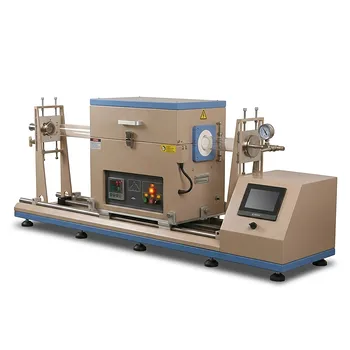
- 900°C Max Rotary Tube Furnace with 8 Inch 310S Alloy Tube and Optional Multi Zone Heating for Industrial Material Calcination
- Split Vertical Tube Furnace with 1200C Quartz Tube and Stainless Steel Vacuum Flanges for Rapid Thermal Processing
- High Temperature 1700C Tube Furnace with High Vacuum Turbomolecular Pump System and Multi Channel Mass Flow Controller Gas Mixer
People Also Ask
- How is an industrial-grade vertical tube furnace utilized in smelting leaching residues? Enhance Metal Recovery Efficiency
- What is the function of a laboratory-grade vertical tube furnace in fast pyrolysis? Optimize Composite Research.
- How does a vertical tube furnace facilitate thermoelectric alloy melting? Precision synthesis for material homogeneity.
- Why is a thermocouple sensor indispensable for monitoring the vertical tube furnace during gallium oxide nanowire production? Optimize VLS Growth
- What are the advantages of using a vertical tube furnace for crucible experiments simulating steel-slag interactions?

Tech Team · ThermUnits
Last updated on Jun 03, 2026
Related Products

Vertical 1700C Vacuum and Atmosphere Tube Furnace with 80mm Alumina Tube

Compact High Temperature 1600C Tube Furnace with 50mm Alumina Tube and Vacuum Flanges for Material Sintering
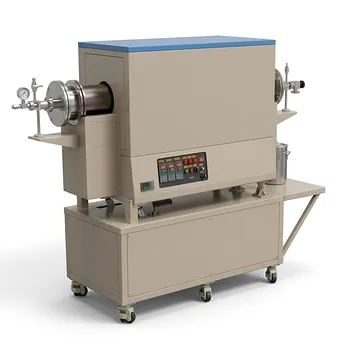
900°C Max Rotary Tube Furnace with 8 Inch 310S Alloy Tube and Optional Multi Zone Heating for Industrial Material Calcination
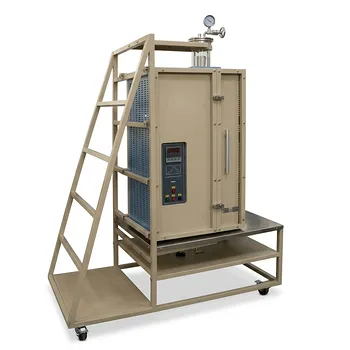
Split Vertical Tube Furnace with 1200C Quartz Tube and Stainless Steel Vacuum Flanges for Rapid Thermal Processing

High Temperature 1700C Tube Furnace with High Vacuum Turbomolecular Pump System and Multi Channel Mass Flow Controller Gas Mixer

1100C Tube Furnace with Vacuum Flange and Programmable Temperature Controller for Material Science and Industrial Heat Treatment
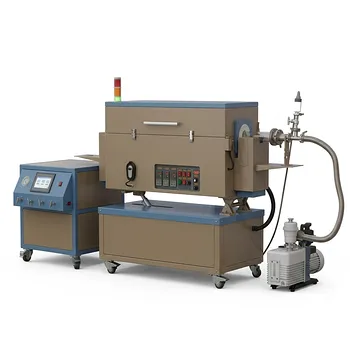
5 Inch Three Zone Rotary Tube Furnace with Integrated Gas Delivery System and 1200C Capability for Advanced Material CVD Processing

1700C Hydrogen Gas Tube Furnace with 60mm Alumina Process Tube and Integrated Hydrogen Safety Detector

1200°C 5 Inch Vertical Quartz Tube Furnace with Stainless Steel Vacuum Flanges

High Temperature 1700C Six Zone Split Tube Furnace with Alumina Tube and Water Cooled Flanges

Compact Vertical Split Quartz Tube Furnace with Stainless Steel Vacuum Flanges for Rapid Thermal Quenching and Controlled Atmosphere Material Processing

High Temperature 1700C Benchtop Tube Furnace with 5 Inch Heating Zone High Purity Alumina Tube and Vacuum Sealing Flanges

1200C High Throughput Multi Channel Tube Furnace with 50mm Quartz Tubes for Annealing and Material Phase Diagram Research
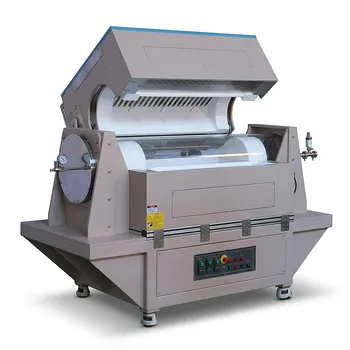
Three Zone Tube Furnace with 11 Inch or 15 Inch Quartz Tube and Hinged Flanges for Vacuum Atmosphere Heat Treatment

1800C High Temperature Compact Vacuum Tube Furnace with 60mm OD Alumina Tube and Kanthal MoSi2 Heating Elements

High Temperature 1700C Vertical Tube Furnace for Powder Spherification and Material Sintering
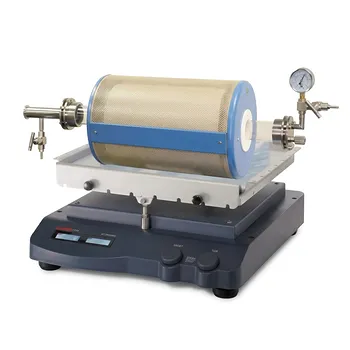
High Temperature Rocking Tube Furnace with Quartz Tube and Vacuum Flange for Materials Synthesis

High Temperature Automated 5 Inch Tube Furnace for Autonomous Material Research and Advanced Laboratory R&D
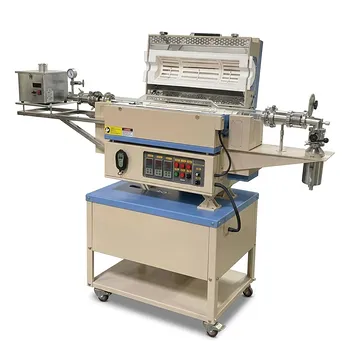
5 Inch Rotary Tube Furnace with Automatic Feeding and Receiving System 1200C Three Zone CVD Powder Processing