How does the temperature control precision of a tube furnace affect WS2 thin film growth? Optimize Material Morphology.
Updated 3 months ago
The temperature control precision of a tube furnace is the primary factor determining whether tungsten disulfide ($WS_2$) grows horizontally or vertically.
Precisely maintaining temperatures below 950°C encourages horizontal growth along the substrate, while a precise shift to 1000°C or higher triggers a transition to vertical growth. This ability to regulate growth orientation is essential for tailoring the material's active surface area for specific technological applications.
Core Takeaway: Temperature precision acts as a mechanical switch for $WS_2$ morphology; high-precision stability at specific thresholds allows researchers to choose between flat thin films for electronics or vertical nanosheets for high-surface-area catalysis.
The Mechanics of Temperature-Induced Orientation
Horizontal Growth and Low-Energy States
At temperatures below 950°C, the thermal energy provided by the furnace is relatively low. This environment encourages the $WS_2$ molecules to align horizontally along the substrate, minimizing the system's overall surface energy. Precise control in this range is vital to prevent localized "hot spots" that might inadvertently trigger vertical growth seeds.
Transition to Vertical Growth at 1000°C
When the furnace temperature is precisely regulated at 1000°C or higher, the reaction kinetics change drastically. High temperatures induce rapid precursor evaporation and accelerated chemical reactions, forcing the film to grow vertically. This orientation is highly valued for creating catalytic materials because it maximizes the active surface area exposed to reactants.
Beyond Absolute Temperature: The Role of Thermal Precision
Managing Internal Stress Through Cooling
Precision is not limited to the heating phase; the cooling program is equally critical. A controlled cooling rate, such as 10°C per minute, helps release internal stresses caused by the different thermal expansion coefficients of the $WS_2$ and the substrate. Without this precision, the film is prone to cracking or peeling, which compromises the integrity of the lattice structure.
Protecting Structural Integrity During Heating
A slow, precise heating rate (e.g., 2°C per minute) is often required to maintain the structural skeleton of the precursor materials. This strategy ensures uniform decomposition of organic components and prevents structural collapse due to sudden thermal stress. Precision heating provides the necessary time for atoms to migrate and catalyze the formation of the desired crystal structure.
Multi-Zone Precision and Precursor Control
Independent Control in Dual-Zone Furnaces
Advanced synthesis often requires a dual-zone tube furnace to provide independent thermal environments. Zone-1 typically manages the low-pressure evaporation of Sulfur (S), while Zone-2 controls the reaction and deposition of Tungsten Trioxide ($WO_3$). Precise, graded heating ensures that sulfur vapor reaches the reaction zone at the optimal moment to react with precursor vapors.
Regulating Stoichiometry and Doping
Precision temperature control allows for the management of the chemical stoichiometry of the film. By regulating the temperature, and thus the evaporation rate, the system minimizes sulfur deficiency defects. Furthermore, this micro-level control is critical when introducing dopants, such as Niobium (Nb), to ensure uniform concentration throughout the crystal.
Understanding the Trade-offs
Precision vs. Throughput
Maintaining extreme temperature precision often requires slower ramp rates and longer "soaking" times. While this produces superior crystal quality and controlled orientation, it reduces the overall throughput of the fabrication process.
Equipment Complexity and Stability
Achieving high precision, especially in dual-zone or vacuum-integrated systems, increases operational complexity. Small fluctuations in gas flow or pressure can negate the benefits of precise temperature control, meaning the entire system—not just the heating elements—must be perfectly synchronized.
How to Apply This to Your Project
Making the Right Choice for Your Goal
- If your primary focus is Optoelectronics: Prioritize horizontal growth by maintaining stable temperatures below 950°C and utilizing a slow cooling rate of 10°C/min to ensure a defect-free lattice.
- If your primary focus is Catalysis or Sensors: Target temperatures of 1000°C or higher with high precision to induce vertical growth, thereby maximizing the active surface area for chemical reactions.
- If your primary focus is Doped $WS_2$ Synthesis: Utilize a dual-zone furnace to independently control the sulfur source and the reaction zone, ensuring precise timing for vapor delivery and doping concentration.
Mastering the thermal precision of your tube furnace transforms it from a simple heating tool into a sophisticated instrument for molecular architecture.
Summary Table:
| Temperature Range | Growth Orientation | Application Focus | Key Mechanism |
|---|---|---|---|
| < 950°C | Horizontal | Electronics & Optoelectronics | Minimizes surface energy for flat films |
| ≥ 1000°C | Vertical | Catalysis & Gas Sensors | Accelerates kinetics for high surface area |
| Controlled Cooling | - | Structural Integrity | Reduces internal stress to prevent cracking |
| Dual-Zone Control | - | Stoichiometry & Doping | Manages precursor evaporation & vapor timing |
Achieve Precision in Material Architecture with THERMUNITS
Unlock the full potential of your research with THERMUNITS, a leading manufacturer of high-temperature laboratory equipment tailored for material science and industrial R&D. We understand that precise thermal control is the difference between a successful synthesis and a failed experiment.
Our comprehensive range of thermal processing solutions is designed to deliver the exact stability required for complex growths like WS2 thin films. Whether you need Tube Furnaces for precise orientation control, CVD/PECVD systems for advanced vapor deposition, or specialized equipment like Muffle, Vacuum, Atmosphere, Rotary, and Hot Press furnaces, we have the technology to elevate your results. We also offer Dental Furnaces, electric rotary kilns, vacuum induction melting furnaces (VIM), and Thermal Elements to support every stage of your heat treatment workflow.
Ready to optimize your high-temperature processes? Contact our experts today to find the perfect solution for your lab and ensure superior material performance.
References
- Yuxin Zhang, Yue Wang. WS2 with Controllable Layer Number Grown Directly on W Film. DOI: 10.3390/nano14161356
Mentioned Products
- Vertical 1700C Vacuum and Atmosphere Tube Furnace with 80mm Alumina Tube
- Compact High Temperature 1600C Tube Furnace with 50mm Alumina Tube and Vacuum Flanges for Material Sintering
- 900°C Max Rotary Tube Furnace with 8 Inch 310S Alloy Tube and Optional Multi Zone Heating for Industrial Material Calcination
- Split Vertical Tube Furnace with 1200C Quartz Tube and Stainless Steel Vacuum Flanges for Rapid Thermal Processing
- High Temperature 1700C Tube Furnace with High Vacuum Turbomolecular Pump System and Multi Channel Mass Flow Controller Gas Mixer
People Also Ask
- How is an industrial-grade vertical tube furnace utilized in smelting leaching residues? Enhance Metal Recovery Efficiency
- What is the function of a laboratory-grade vertical tube furnace in fast pyrolysis? Optimize Composite Research.
- How does a vertical tube furnace facilitate thermoelectric alloy melting? Precision synthesis for material homogeneity.
- Why is a thermocouple sensor indispensable for monitoring the vertical tube furnace during gallium oxide nanowire production? Optimize VLS Growth
- What are the advantages of using a vertical tube furnace for crucible experiments simulating steel-slag interactions?

Tech Team · ThermUnits
Last updated on Jun 02, 2026
Related Products

Vertical 1700C Vacuum and Atmosphere Tube Furnace with 80mm Alumina Tube

Compact High Temperature 1600C Tube Furnace with 50mm Alumina Tube and Vacuum Flanges for Material Sintering
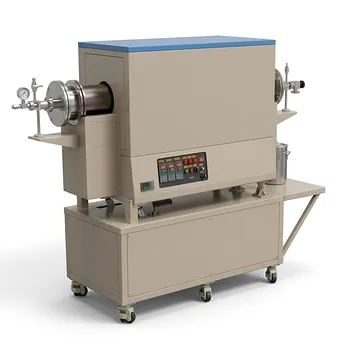
900°C Max Rotary Tube Furnace with 8 Inch 310S Alloy Tube and Optional Multi Zone Heating for Industrial Material Calcination
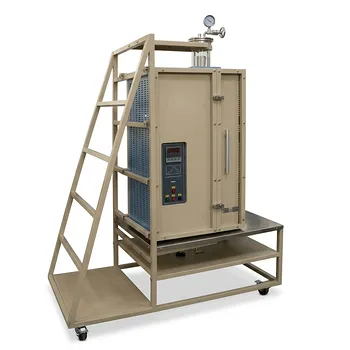
Split Vertical Tube Furnace with 1200C Quartz Tube and Stainless Steel Vacuum Flanges for Rapid Thermal Processing

High Temperature 1700C Tube Furnace with High Vacuum Turbomolecular Pump System and Multi Channel Mass Flow Controller Gas Mixer

1100C Tube Furnace with Vacuum Flange and Programmable Temperature Controller for Material Science and Industrial Heat Treatment
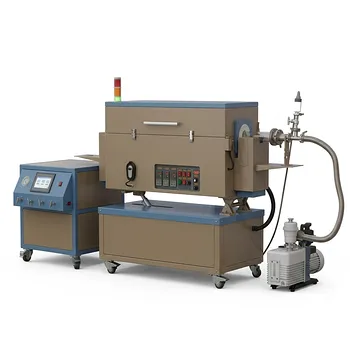
5 Inch Three Zone Rotary Tube Furnace with Integrated Gas Delivery System and 1200C Capability for Advanced Material CVD Processing
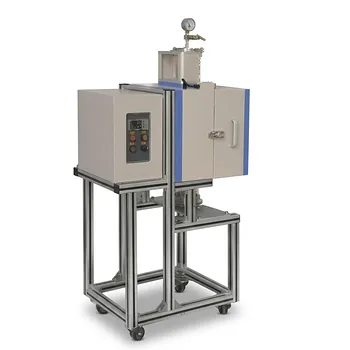
1200°C 5 Inch Vertical Quartz Tube Furnace with Stainless Steel Vacuum Flanges

High Temperature 1700C Six Zone Split Tube Furnace with Alumina Tube and Water Cooled Flanges
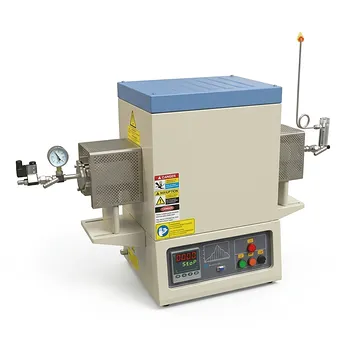
1700C Hydrogen Gas Tube Furnace with 60mm Alumina Process Tube and Integrated Hydrogen Safety Detector

Compact Vertical Split Quartz Tube Furnace with Stainless Steel Vacuum Flanges for Rapid Thermal Quenching and Controlled Atmosphere Material Processing

High Temperature 1700C Benchtop Tube Furnace with 5 Inch Heating Zone High Purity Alumina Tube and Vacuum Sealing Flanges

1800C High Temperature Compact Vacuum Tube Furnace with 60mm OD Alumina Tube and Kanthal MoSi2 Heating Elements

1200C High Throughput Multi Channel Tube Furnace with 50mm Quartz Tubes for Annealing and Material Phase Diagram Research
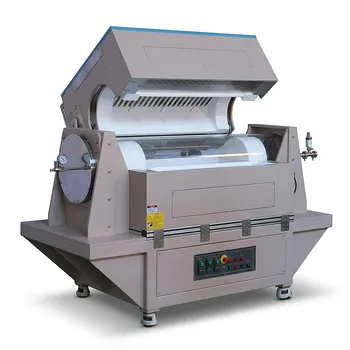
Three Zone Tube Furnace with 11 Inch or 15 Inch Quartz Tube and Hinged Flanges for Vacuum Atmosphere Heat Treatment

High Temperature 1700C Vertical Tube Furnace for Powder Spherification and Material Sintering
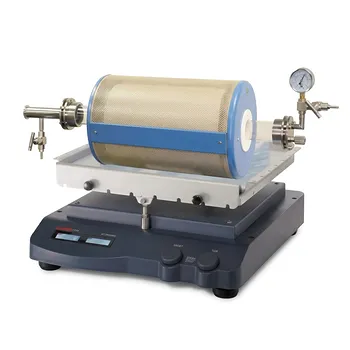
High Temperature Rocking Tube Furnace with Quartz Tube and Vacuum Flange for Materials Synthesis

High Temperature Automated 5 Inch Tube Furnace for Autonomous Material Research and Advanced Laboratory R&D
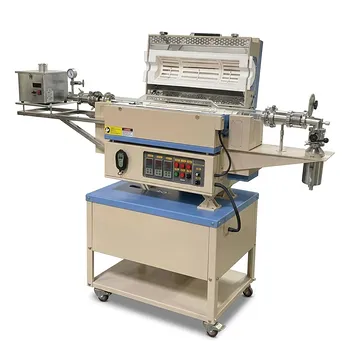
5 Inch Rotary Tube Furnace with Automatic Feeding and Receiving System 1200C Three Zone CVD Powder Processing