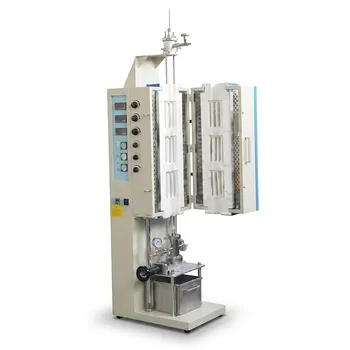
What is the role of a high-precision Tube Furnace in TOPCon solar cell structures? Mastering 1.5nm Oxide Precision
Updated 3 months ago
The high-precision Tube Furnace is the critical instrument used to grow the ultra-thin silicon dioxide (SiO2) tunnel oxide layer required for TOPCon solar cells. This layer, typically 1.5 to 1.7 nanometers thick, serves as the physical foundation for carrier-selective contact and surface passivation. By providing a highly controlled thermal environment, the furnace ensures the oxide layer is uniform and dense across the entire silicon wafer.
Core Takeaway: The high-precision Tube Furnace enables the growth of a nanometer-scale tunnel oxide layer that allows charge carriers to "tunnel" through while simultaneously preventing electron-hole recombination, which is the key to achieving high-efficiency TOPCon solar cell performance.
The Mechanism of Tunnel Oxide Growth
Achieving Nanometer-Scale Precision
The primary role of the furnace is to facilitate a thermal oxidation process on n-type Czochralski (n-Cz) silicon wafers. Because the target thickness is only 1.5 to 1.7 nm, the furnace must maintain an incredibly stable temperature profile to prevent over-growth. This level of precision ensures that the oxide layer is thick enough to provide passivation but thin enough to allow for efficient quantum tunneling of carriers.
Ensuring Uniformity and Density
A high-precision furnace provides a uniform thermal field and strictly managed gas flow rates. This consistency is vital for creating a high-density oxide layer that is free from structural defects or pinholes. Uniformity across the wafer surface directly translates to consistent electrical performance and prevents "hot spots" within the solar cell.
Impact on Electrical Performance
Facilitating Carrier Selectivity
The tunnel oxide layer grown in the furnace acts as a selective barrier. It allows majority carriers to pass through to the doped polysilicon layer while blocking minority carriers. This selectivity is what allows TOPCon cells to surpass the theoretical efficiency limits of standard PERC (Passivated Emitter and Rear Cell) technology.
Efficient Surface Passivation
Beyond tunneling, the SiO2 layer passivates the silicon surface by chemically satisfying "dangling bonds." Reducing these surface defects significantly lowers the rate of carrier recombination. The high-precision furnace ensures this passivation is robust enough to maintain high open-circuit voltages (Voc).
Understanding the Trade-offs and Pitfalls
The Risk of Thickness Deviation
Small fluctuations in temperature or gas concentration can lead to deviations in oxide thickness. If the layer exceeds approximately 2.0 nm, the resistance increases sharply because charge carriers can no longer tunnel effectively. Conversely, if the layer is too thin (below 1.0 nm), the passivation quality drops, leading to massive energy losses through recombination.
Atmospheric Contamination
The purity of the environment inside the tube is as important as the temperature. Any trace metallic impurities or moisture introduced during the oxidation process can degrade the dielectric strength of the tunnel oxide. High-precision furnaces utilize specialized quartz or silicon carbide tubes to minimize the risk of outgassing or external contamination.
How to Optimize Your Fabrication Process
Choosing the Right Strategy for Your Goal
To maximize the output of a TOPCon production line, the furnace must be calibrated to specific operational targets.
- If your primary focus is Maximum Cell Efficiency: Prioritize a furnace with the tightest temperature tolerance (±0.5°C) to ensure the tunnel oxide is exactly at the 1.5 nm sweet spot.
- If your primary focus is High Throughput: Implement a furnace with a larger "constant temperature zone" to process more wafers simultaneously without sacrificing edge-to-edge uniformity.
- If your primary focus is Long-Term Stability: Invest in advanced gas-phase control systems to maintain a strictly controlled chemical environment, preventing degradation of the oxide-silicon interface over time.
The high-precision Tube Furnace is not merely a heater, but a sophisticated chemical reactor that defines the electrical limits of modern high-efficiency solar technology.
Summary Table:
| Parameter | Role in TOPCon Fabrication |
|---|---|
| Primary Process | Thermal oxidation for ultra-thin SiO₂ growth |
| Oxide Thickness | 1.5 – 1.7 nanometers (Quantum Tunneling range) |
| Thermal Precision | Stability within ±0.5°C to ensure uniform density |
| Key Benefit | Facilitates carrier selectivity & surface passivation |
| Critical Factor | High-purity quartz/SiC tubes prevent contamination |
| Result | Surpasses theoretical efficiency of standard PERC cells |
Unlock High-Efficiency Solar Innovation with THERMUNITS
Precision is the difference between peak performance and energy loss. THERMUNITS is a leading manufacturer of high-temperature laboratory equipment dedicated to material science and industrial R&D. We provide the ultra-stable thermal environments necessary for growing nanometer-scale layers in TOPCon solar cell fabrication.
Our comprehensive range of thermal solutions includes:
- High-Precision Tube Furnaces (Horizontal and Vertical)
- CVD/PECVD Systems for advanced thin-film deposition
- Vacuum, Atmosphere, and Muffle Furnaces
- Rotary Kilns and Hot Press Furnaces
- Vacuum Induction Melting (VIM) & Specialty Dental Furnaces
Whether you are refining oxide growth or scaling your R&D pilot line, our engineering expertise ensures your heat treatment is consistent, pure, and optimized for maximum efficiency.
Ready to elevate your research? Contact us today to find the perfect furnace for your laboratory’s unique requirements.
References
- David L. Young, Melbs LeMieux. Metal-Complex Inks for Lower Cost and Improved Passivation for Silicon Photovoltaic Metallization. DOI: 10.52825/siliconpv.v1i.853
Mentioned Products
- High Temperature 1700C Benchtop Tube Furnace with 5 Inch Heating Zone High Purity Alumina Tube and Vacuum Sealing Flanges
- Compact High Temperature 1600C Tube Furnace with 50mm Alumina Tube and Vacuum Flanges for Material Sintering
- High Temperature 1700C Vertical Tube Furnace for Powder Spherification and Material Sintering
- 1200C High Throughput Multi Channel Tube Furnace with 50mm Quartz Tubes for Annealing and Material Phase Diagram Research
- High Temperature Tube Furnace 1500C with Sliding Flanges and 50mm OD for Rapid Thermal Processing Fast Heating and Cooling
People Also Ask
- How are high-temperature tube furnaces utilized to repair etching damage? Precision Lattice Restoration Solutions
- What is the function of a high-temperature tube furnace in the synthesis of g-C3N4? Optimize Thermal Polycondensation
- What impact does the heating rate of a tube furnace have on biochar microstructure? Optimize Your Material R&D.
- What is the role of a high-temperature tube furnace in the calcination process of ZnO/In2O3 nanocomposites?
- Conditions for nZVI Synthesis in Tube Furnaces? Learn to Optimize Thermal and Atmospheric Control for High Purity.

Tech Team · ThermUnits
Last updated on Jun 02, 2026
Related Products

High Temperature 1700C Benchtop Tube Furnace with 5 Inch Heating Zone High Purity Alumina Tube and Vacuum Sealing Flanges

Compact High Temperature 1600C Tube Furnace with 50mm Alumina Tube and Vacuum Flanges for Material Sintering

High Temperature 1700C Vertical Tube Furnace for Powder Spherification and Material Sintering
1200C High Throughput Multi Channel Tube Furnace with 50mm Quartz Tubes for Annealing and Material Phase Diagram Research
High Temperature Tube Furnace 1500C with Sliding Flanges and 50mm OD for Rapid Thermal Processing Fast Heating and Cooling

High Temperature Automated 5 Inch Tube Furnace for Autonomous Material Research and Advanced Laboratory R&D
High Temperature Compact Vacuum Tube Furnace 1750C Max 60mm OD Alumina Tube
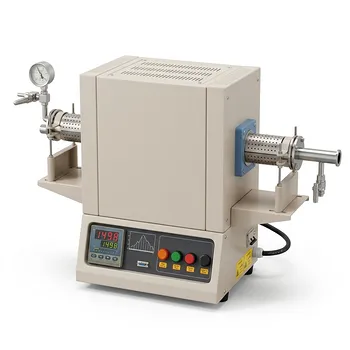
1500C High Temperature Compact Tube Furnace 2 Inch OD with Vacuum Flanges and Complete Accessories
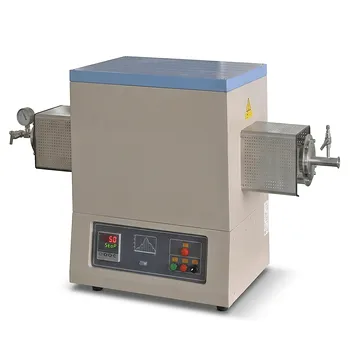
High Temperature 1700C Tube Furnace with 4 Inch OD Alumina Tube and Vacuum Sealing Flanges

High Temperature 1700C Six Zone Split Tube Furnace with Alumina Tube and Water Cooled Flanges

High Temperature 1700C Tube Furnace with High Vacuum Turbomolecular Pump System and Multi Channel Mass Flow Controller Gas Mixer

1800C High Temperature Compact Vacuum Tube Furnace with 60mm OD Alumina Tube and Kanthal MoSi2 Heating Elements
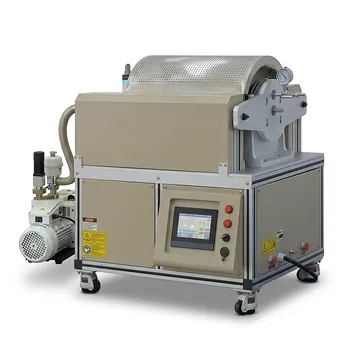
Automated 1200 C Tube Furnace for AI Material Research with 6 Inch OD and Sliding Flange
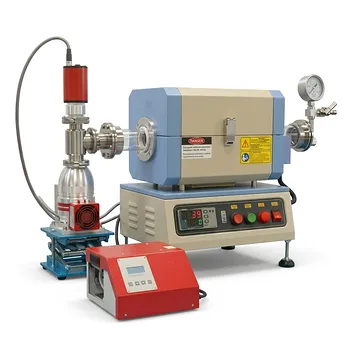
High Vacuum Compact Tube Furnace 1200C with Integrated Turbo Pump System and 8 Inch Heating Zone

1750°C High Temperature Benchtop Vacuum Atmosphere Tube Furnace with Kanthal Super 1800 Heating Elements and 60mm Alumina Processing Tube
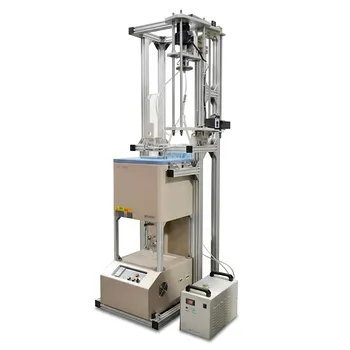
500C Vacuum Vertical Tube Furnace 84mm OD Sample Rotation Lifting System
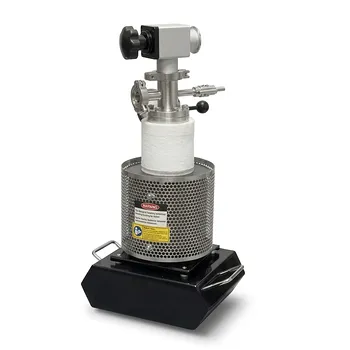
High Temperature 1100C Compact Top Loading Vertical Vacuum Tube Furnace for High Vacuum Noble Metal Melting and Material Research
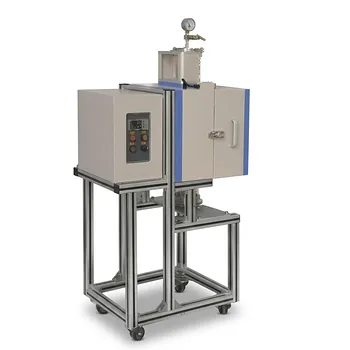
1200°C 5 Inch Vertical Quartz Tube Furnace with Stainless Steel Vacuum Flanges
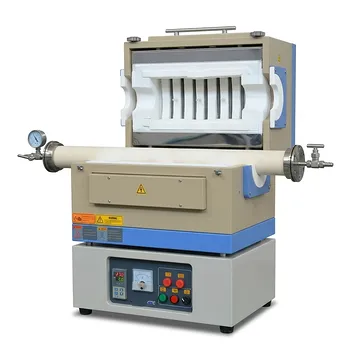
High Temperature 1600C Split Tube Furnace Vacuum Flanges Valves Optional 60mm 80mm Alumina Tube