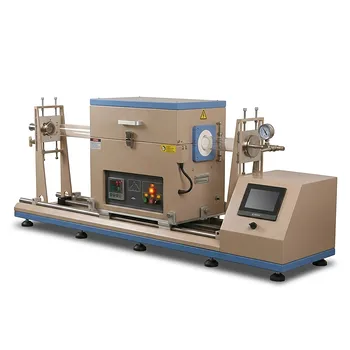
How is a Tube Furnace utilized during the isothermal oxidation experiments of HEAs? Achieve precise oxidation kinetics.
Updated 3 months ago
A tube furnace serves as the primary reaction vessel for High-Entropy Alloy (HEA) isothermal oxidation experiments by providing a strictly regulated thermal and atmospheric environment. Its primary function is to maintain specimens at constant temperatures—typically between 800°C and 1100°C—for extended periods ranging from 168 to over 1,000 hours. This precise regulation ensures that the resulting oxidation kinetic data is reliable, allowing for the accurate calculation of the oxidation rate constant ($K_p$) based on parabolic rate laws.
The tube furnace acts as a high-precision simulator that isolates the effects of temperature and atmosphere on HEA specimens. By maintaining extreme thermal stability over long durations, it enables researchers to quantify how these complex alloys will degrade in real-world, high-temperature environments.
Providing a Stable Thermal Field
Maintaining Isothermal Conditions
The tube furnace is engineered to provide a constant high-temperature environment that minimizes fluctuations. During isothermal tests, even minor temperature swings can introduce significant errors in mass-gain data, which is why industrial-grade furnaces are used to ensure the specimen remains at its nominal temperature for the duration of the test.
Identifying the Constant Temperature Zone
Expert researchers utilize multiple N-type thermocouples to map the furnace’s internal temperature profile. This allows for the identification of the "constant temperature zone," a specific area with a high length-to-diameter ratio where thermal gradients are virtually non-existent.
Simulating Extreme Operating Ranges
While many tests focus on the 800°C to 1100°C range, high-performance tube furnaces can reach up to 1200°C or even 1973 K. This capability allows for the study of HEAs under extreme conditions, including solid-phase reactions and the melting points of specific oxide precursors.
Precision Atmosphere Management
Static Air and Pure Oxygen Environments
In many HEA studies, the furnace provides a controlled static air atmosphere to simulate standard atmospheric oxidation. However, the sealed design also allows for the introduction of pure oxygen, which can drive metal atoms from a metallic state to an oxide state, aiding in the synthesis of high-entropy spinel structures.
Defining the Reaction Start Time
Advanced tube furnaces allow researchers to heat samples under an inert atmosphere, such as nitrogen, before rapidly switching to a reaction gas like synthetic air. This capability is critical for accurately defining the starting time of oxidation, which is essential for studying the kinetic behavior of alloy particles during transition zones.
Eliminating Residual Oxidation
By introducing reducing gas mixtures like hydrogen and argon, the tube furnace can eliminate any pre-existing oxidation on the sample surface. This "cleans" the specimen before the experiment begins, ensuring that the observed grain growth and structural changes are purely a result of the test conditions.
Understanding the Trade-offs and Pitfalls
The Risk of Thermal Gradients
Even in high-end furnaces, the temperature at the center of the tube may differ from the ends. If a specimen is placed outside the constant temperature zone, the oxidation kinetics will be based on inaccurate temperature readings, leading to a flawed calculation of the parabolic rate constant.
Atmospheric Leakage
While tube furnaces are designed to be sealed, any degradation in the tube seals or gaskets can allow ambient air to seep in during inert gas tests. This unintended oxidation can contaminate the results, particularly when studying the structural stability of alloys sensitive to trace amounts of oxygen.
Cooling Rate Impacts
Isothermal oxidation is only one part of the story; how the furnace cools down can also affect the results. If the furnace cools too slowly, additional oxidation may occur post-test; if it cools too quickly (quenching), the oxide film may spall or crack due to thermal shock, complicating the analysis of the oxide's evolution.
How to Apply This to Your Research
To maximize the utility of a tube furnace in your HEA experiments, align your furnace settings with your specific analytical goals.
- If your primary focus is oxidation kinetics: Utilize a furnace with high thermal stability and map the constant temperature zone with thermocouples to ensure your $K_p$ values are mathematically sound.
- If your primary focus is simulating gas turbine conditions: Use a sealed furnace to maintain a static air environment for at least 1,000 hours to observe long-term oxide film evolution.
- If your primary focus is defining precise reaction starts: Select a furnace with a dual-gas manifold that allows for a rapid switch from an inert gas (like nitrogen) to a reactive gas at the target temperature.
The tube furnace is more than a heater; it is a precision instrument that defines the integrity of your material's performance data.
Summary Table:
| Application Feature | Description | Benefit for HEA Research |
|---|---|---|
| Thermal Stability | Maintains constant 800°C–1100°C+ | Ensures reliable $K_p$ (oxidation rate) calculations |
| Atmosphere Control | Static air, pure O2, or inert gas | Simulates real-world degradation or synthesizes spinels |
| Thermal Mapping | N-type thermocouple profiling | Identifies the constant zone to eliminate gradient errors |
| Gas Manifolding | Rapid switching (Inert to Reactive) | Defines precise reaction start times for kinetic studies |
| Reducing Capabilities | Hydrogen/Argon gas flow | Cleans specimens by removing pre-existing oxidation |
Elevate Your HEA Research with THERMUNITS Precision Furnaces
As a leading manufacturer of high-temperature laboratory equipment, THERMUNITS understands that the integrity of your material science research depends on thermal precision. Our advanced Tube Furnaces, alongside our extensive range of Muffle, Vacuum, Atmosphere, and Hot Press furnaces, are engineered to provide the stable isothermal environments and gas-tight atmosphere control required for complex HEA oxidation studies.
Why Choose THERMUNITS for Your R&D?
- Unmatched Stability: High-precision temperature control for long-duration kinetic studies (1,000+ hours).
- Atmosphere Versatility: Seamlessly integrate CVD/PECVD or dual-gas manifolds for complex reaction environments.
- Comprehensive Solutions: Trusted by global R&D labs for everything from Dental Furnaces to Vacuum Induction Melting (VIM) and Electric Rotary Kilns.
Contact THERMUNITS Today to discuss your specific heat treatment requirements and discover how our thermal solutions can accelerate your material breakthroughs.
References
- Eddy Agus Basuki, Muhamad Hananuputra Setianto. High-Temperature Oxidation Behaviour of High Entropy Alloys. DOI: 10.1051/e3sconf/202454303001
Mentioned Products
- Vertical 1700C Vacuum and Atmosphere Tube Furnace with 80mm Alumina Tube
- Compact High Temperature 1600C Tube Furnace with 50mm Alumina Tube and Vacuum Flanges for Material Sintering
- 900°C Max Rotary Tube Furnace with 8 Inch 310S Alloy Tube and Optional Multi Zone Heating for Industrial Material Calcination
- Split Vertical Tube Furnace with 1200C Quartz Tube and Stainless Steel Vacuum Flanges for Rapid Thermal Processing
- High Temperature 1700C Tube Furnace with High Vacuum Turbomolecular Pump System and Multi Channel Mass Flow Controller Gas Mixer
People Also Ask
- How is an industrial-grade vertical tube furnace utilized in smelting leaching residues? Enhance Metal Recovery Efficiency
- What is the function of a laboratory-grade vertical tube furnace in fast pyrolysis? Optimize Composite Research.
- How does a vertical tube furnace facilitate thermoelectric alloy melting? Precision synthesis for material homogeneity.
- Why is a thermocouple sensor indispensable for monitoring the vertical tube furnace during gallium oxide nanowire production? Optimize VLS Growth
- What are the advantages of using a vertical tube furnace for crucible experiments simulating steel-slag interactions?

Tech Team · ThermUnits
Last updated on Jun 03, 2026
Related Products

Vertical 1700C Vacuum and Atmosphere Tube Furnace with 80mm Alumina Tube

Compact High Temperature 1600C Tube Furnace with 50mm Alumina Tube and Vacuum Flanges for Material Sintering
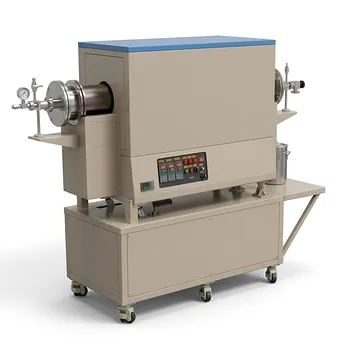
900°C Max Rotary Tube Furnace with 8 Inch 310S Alloy Tube and Optional Multi Zone Heating for Industrial Material Calcination
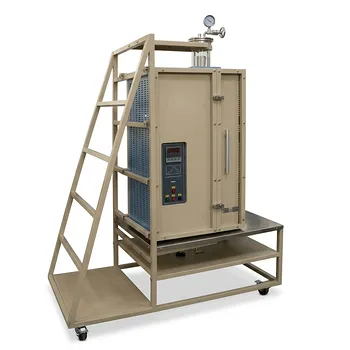
Split Vertical Tube Furnace with 1200C Quartz Tube and Stainless Steel Vacuum Flanges for Rapid Thermal Processing

High Temperature 1700C Tube Furnace with High Vacuum Turbomolecular Pump System and Multi Channel Mass Flow Controller Gas Mixer

1100C Tube Furnace with Vacuum Flange and Programmable Temperature Controller for Material Science and Industrial Heat Treatment
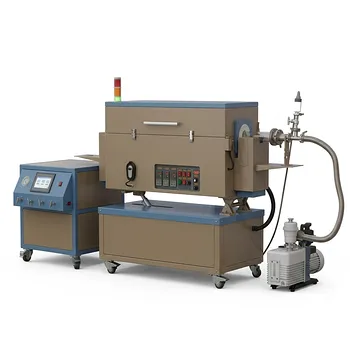
5 Inch Three Zone Rotary Tube Furnace with Integrated Gas Delivery System and 1200C Capability for Advanced Material CVD Processing

1200°C 5 Inch Vertical Quartz Tube Furnace with Stainless Steel Vacuum Flanges

High Temperature 1700C Six Zone Split Tube Furnace with Alumina Tube and Water Cooled Flanges
1700C Hydrogen Gas Tube Furnace with 60mm Alumina Process Tube and Integrated Hydrogen Safety Detector

Compact Vertical Split Quartz Tube Furnace with Stainless Steel Vacuum Flanges for Rapid Thermal Quenching and Controlled Atmosphere Material Processing

High Temperature 1700C Benchtop Tube Furnace with 5 Inch Heating Zone High Purity Alumina Tube and Vacuum Sealing Flanges
1200C High Throughput Multi Channel Tube Furnace with 50mm Quartz Tubes for Annealing and Material Phase Diagram Research

1800C High Temperature Compact Vacuum Tube Furnace with 60mm OD Alumina Tube and Kanthal MoSi2 Heating Elements

Three Zone Tube Furnace with 11 Inch or 15 Inch Quartz Tube and Hinged Flanges for Vacuum Atmosphere Heat Treatment

High Temperature 1700C Vertical Tube Furnace for Powder Spherification and Material Sintering
High Temperature Rocking Tube Furnace with Quartz Tube and Vacuum Flange for Materials Synthesis

High Temperature Automated 5 Inch Tube Furnace for Autonomous Material Research and Advanced Laboratory R&D
5 Inch Rotary Tube Furnace with Automatic Feeding and Receiving System 1200C Three Zone CVD Powder Processing