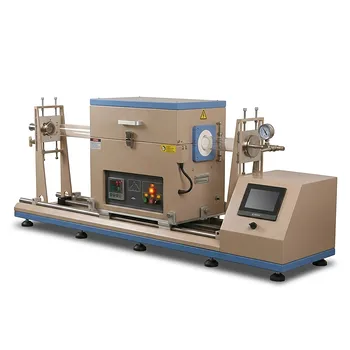
How is temperature regulation and stability maintained in a tube furnace? Mastering Precision for R&D Excellence
Updated 5 months ago
Temperature regulation in a tube furnace is a sophisticated balancing act managed by a closed-loop feedback system. This system utilizes high-precision sensors to monitor the internal thermal environment and digital controllers to modulate electrical energy in real-time. By continuously adjusting the power output to resistive heating elements, these furnaces achieve remarkable stability, often maintaining temperatures within a variance of ±1 °C.
Core Takeaway: Tube furnaces maintain stability through a continuous feedback loop where PID controllers interpret data from thermocouples to precisely regulate power flow, ensuring consistent thermal energy for sensitive chemical and material processes.
The Mechanics of the Closed-Loop Feedback System
Sensing with Precision Thermocouples
The process begins with thermocouples (typically Type K, S, or B) positioned near the process tube to measure real-time temperature. These sensors convert thermal energy into an electrical signal, providing the critical data needed to determine if the furnace is meeting its programmed setpoint.
The Role of the PID Controller
The "brain" of the furnace is the PID-based controller, which uses Proportional, Integral, and Derivative logic to calculate the necessary adjustments. This allows the system to not only react to current temperature changes but also to predict and mitigate potential overshoots during rapid heating phases.
Power Regulation via Relays and Thyristors
Once the controller determines the required energy, it communicates with solid-state relays or thyristors. These components act as high-speed switches, modulating the electrical power sent to the heating elements to maintain a steady thermal state without the mechanical wear of traditional switches.
Heat Generation and Transfer Dynamics
Joule Heating and Resistive Elements
The furnace generates heat through Joule (resistive) heating, where electric current passes through high-resistance elements embedded in a thermal matrix. This matrix surrounds the work tube, acting as a reservoir of thermal energy that helps dampen sudden temperature fluctuations.
Radial Heat Transfer Modes
Energy moves from the heating elements to the sample via conduction, convection, and radiation. At lower temperatures, conduction and convection are significant, but at high temperatures, infrared radiation becomes the dominant mode, ensuring rapid and direct energy transfer to the process tube surface.
Programmable Thermal Profiles
Advanced regulation allows users to define complex thermal profiles, including specific ramp rates (how fast it heats), soaking times (holding a constant temperature), and controlled cooling. This level of control is essential for applications like catalyst aging or diffusion kinetics, where "thermal stress" must be strictly managed.
Stability Beyond Temperature: Atmosphere and Uniformity
Atmospheric Control for Process Integrity
Temperature stability is often paired with atmospheric regulation using gas-tight seals and mass flow controllers. By introducing inert gases like nitrogen or argon, the furnace prevents oxidation and ensures that chemical reactions, such as pyrolysis, occur in a controlled, oxygen-free environment.
Multi-Zone Control for Uniformity
To achieve high temperature uniformity over long distances, some furnaces utilize multi-zone control. By placing independent thermocouples and heating elements in different sections of the tube, the system can compensate for heat loss at the ends, creating a larger "constant temperature zone."
Understanding the Trade-offs and Pitfalls
Sensor Placement and Thermal Lag
A common challenge is thermal lag, the delay between the heating element changing temperature and the sensor detecting that change. If the thermocouple is placed too far from the work tube, the system may oscillate, failing to reach a steady state or causing localized overheating.
Material Limitations and Sintering
While high temperatures are necessary for processes like sintering silver nanoparticles, excessive thermal stress can lead to delamination or substrate damage. Precise regulation is a double-edged sword; while it enables high-performance materials, even minor calibration errors can lead to irreversible structural failure in sensitive samples.
Maximizing Precision for Your Application
How to Apply This to Your Project
To achieve the best results with a tube furnace, you must align the control settings with your specific material requirements.
- If your primary focus is sensitive chemical kinetics: Prioritize a PID controller with high "Derivative" sensitivity to prevent any temperature overshoot that could alter reaction laws.
- If your primary focus is long-term material aging: Use multi-zone heating and Type S or B thermocouples to ensure high-temperature stability over extended periods (50+ hours) without sensor drift.
- If your primary focus is preventing oxidation: Ensure the furnace is equipped with gas-tight end seals and a mass flow controller to maintain a stable inert atmosphere alongside your thermal profile.
By mastering the intersection of digital feedback and atmospheric control, you ensure that your thermal processing is both repeatable and reliable.
Summary Table:
| Component | Role in Regulation | Key Benefit |
|---|---|---|
| Thermocouples | Real-time thermal sensing | High-accuracy temperature feedback |
| PID Controller | Algorithmic logic (P-I-D) | Prevents overshoots and maintains setpoints |
| Thyristors/SSRs | High-speed power modulation | Smooth, wear-free energy adjustment |
| Multi-Zone Control | Independent heating sections | Superior longitudinal temperature uniformity |
| Gas-Tight Seals | Atmospheric regulation | Prevents oxidation and process contamination |
Achieve Unmatched Thermal Precision with THERMUNITS
In high-stakes material science and industrial R&D, even a 1°C variance can alter your results. THERMUNITS is a leading manufacturer of high-performance laboratory heat treatment equipment designed to provide the stability your research demands.
From advanced Tube and Muffle furnaces to specialized CVD/PECVD systems, Vacuum Induction Melting (VIM) furnaces, and Hot Press solutions, our equipment is engineered for peak reliability. We also provide high-quality Thermal Elements and Dental Furnaces to support a wide range of thermal processing needs.
Ready to enhance your lab's capabilities? Contact our technical experts today to find the perfect thermal solution for your application!
Mentioned Products
- Vertical 1700C Vacuum and Atmosphere Tube Furnace with 80mm Alumina Tube
- Compact High Temperature 1600C Tube Furnace with 50mm Alumina Tube and Vacuum Flanges for Material Sintering
- 900°C Max Rotary Tube Furnace with 8 Inch 310S Alloy Tube and Optional Multi Zone Heating for Industrial Material Calcination
- Split Vertical Tube Furnace with 1200C Quartz Tube and Stainless Steel Vacuum Flanges for Rapid Thermal Processing
- High Temperature 1700C Tube Furnace with High Vacuum Turbomolecular Pump System and Multi Channel Mass Flow Controller Gas Mixer
People Also Ask
- How is an industrial-grade vertical tube furnace utilized in smelting leaching residues? Enhance Metal Recovery Efficiency
- What is the function of a laboratory-grade vertical tube furnace in fast pyrolysis? Optimize Composite Research.
- How does a vertical tube furnace facilitate thermoelectric alloy melting? Precision synthesis for material homogeneity.
- Why is a thermocouple sensor indispensable for monitoring the vertical tube furnace during gallium oxide nanowire production? Optimize VLS Growth
- What are the advantages of using a vertical tube furnace for crucible experiments simulating steel-slag interactions?

Tech Team · ThermUnits
Last updated on Apr 14, 2026
Related Products

Vertical 1700C Vacuum and Atmosphere Tube Furnace with 80mm Alumina Tube

Compact High Temperature 1600C Tube Furnace with 50mm Alumina Tube and Vacuum Flanges for Material Sintering
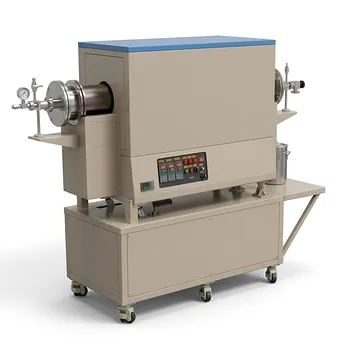
900°C Max Rotary Tube Furnace with 8 Inch 310S Alloy Tube and Optional Multi Zone Heating for Industrial Material Calcination
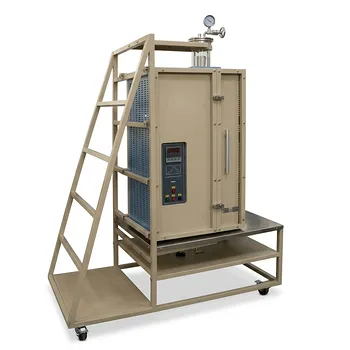
Split Vertical Tube Furnace with 1200C Quartz Tube and Stainless Steel Vacuum Flanges for Rapid Thermal Processing

High Temperature 1700C Tube Furnace with High Vacuum Turbomolecular Pump System and Multi Channel Mass Flow Controller Gas Mixer

1100C Tube Furnace with Vacuum Flange and Programmable Temperature Controller for Material Science and Industrial Heat Treatment
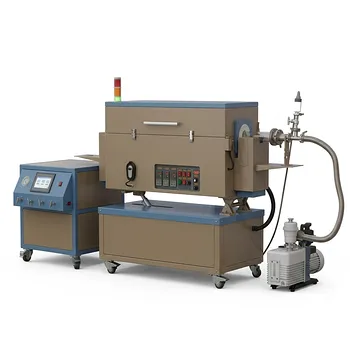
5 Inch Three Zone Rotary Tube Furnace with Integrated Gas Delivery System and 1200C Capability for Advanced Material CVD Processing

1700C Hydrogen Gas Tube Furnace with 60mm Alumina Process Tube and Integrated Hydrogen Safety Detector

1200°C 5 Inch Vertical Quartz Tube Furnace with Stainless Steel Vacuum Flanges

High Temperature 1700C Six Zone Split Tube Furnace with Alumina Tube and Water Cooled Flanges

Compact Vertical Split Quartz Tube Furnace with Stainless Steel Vacuum Flanges for Rapid Thermal Quenching and Controlled Atmosphere Material Processing

High Temperature 1700C Benchtop Tube Furnace with 5 Inch Heating Zone High Purity Alumina Tube and Vacuum Sealing Flanges

1200C High Throughput Multi Channel Tube Furnace with 50mm Quartz Tubes for Annealing and Material Phase Diagram Research

Three Zone Tube Furnace with 11 Inch or 15 Inch Quartz Tube and Hinged Flanges for Vacuum Atmosphere Heat Treatment

1800C High Temperature Compact Vacuum Tube Furnace with 60mm OD Alumina Tube and Kanthal MoSi2 Heating Elements

High Temperature 1700C Vertical Tube Furnace for Powder Spherification and Material Sintering
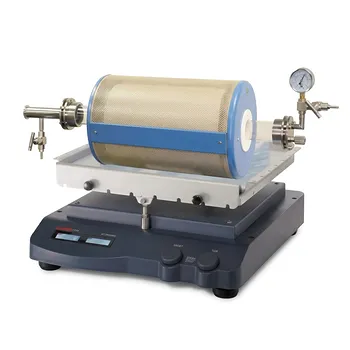
High Temperature Rocking Tube Furnace with Quartz Tube and Vacuum Flange for Materials Synthesis

High Temperature Automated 5 Inch Tube Furnace for Autonomous Material Research and Advanced Laboratory R&D
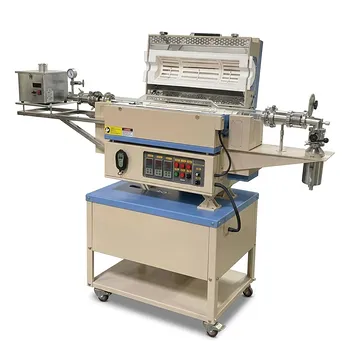
5 Inch Rotary Tube Furnace with Automatic Feeding and Receiving System 1200C Three Zone CVD Powder Processing