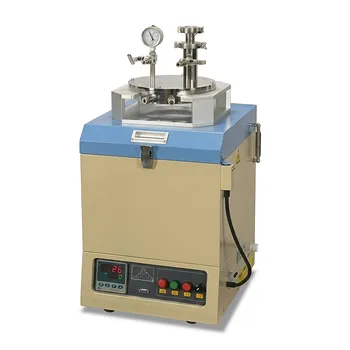
What are the advantages of using a quartz boat for lignin activation? Maximize Purity and Protect Your Furnace
Updated 3 months ago
Quartz boats are the preferred carrier for high-temperature lignin activation because they provide a unique combination of thermal stability up to 800°C and exceptional resistance to corrosive chemical activators. By acting as a chemically inert barrier, they prevent sample contamination while protecting the expensive internal components of the tube furnace from alkali erosion.
The use of quartz boats in lignin activation ensures high-purity carbon production by providing a stable, non-reactive environment that withstands molten alkalis. This choice balances the need for material purity with the practical necessity of protecting laboratory equipment from chemical degradation.
Superior Material Resilience at High Temperatures
Exceptional High-Temperature Stability
Quartz boats maintain their structural integrity in environments reaching 800°C to 1100°C, which is the standard range for lignin carbonization and activation. This allows the carrier to support sample loads without deforming or failing during the thermal cycle.
Resistance to Chemical Erosion
The primary advantage during chemical activation is the quartz boat's ability to resist strong alkaline activators such as potassium hydroxide (KOH) and potassium carbonate (K2CO3). At high temperatures, these substances become molten and highly aggressive, yet high-purity quartz remains largely unreactive.
Thermal Shock Resistance
Quartz is known for its ability to withstand rapid temperature changes without cracking. This thermal shock resistance is critical during the heating and cooling phases of the activation process, ensuring the carrier does not fail and ruin the sample.
Ensuring Product Purity and Process Consistency
Prevention of Cross-Contamination
Because quartz is chemically inert, it does not introduce metallic or non-metallic impurities into the lignin-derived carbon. This is essential for researchers who need to study the precise electrochemical performance of the resulting material without interference from the container.
Uniform Heating Through Design
The typically flat structural design of a quartz boat ensures that the lignin and activator mixture is spread thinly and evenly. This configuration promotes uniform heat distribution across the sample, leading to a consistent activation reaction throughout the entire batch.
Gas-Solid Interaction Efficiency
The open-top design of these boats facilitates maximum contact between the precursor powders and the gas stream (such as Nitrogen or Argon). This ensures that volatile byproducts are efficiently removed and the atmosphere remains controlled throughout the reaction.
Equipment Protection and Longevity
Shielding the Furnace Tube
One of the most critical roles of the quartz boat is to act as a sacrificial barrier for the furnace. It prevents molten alkalis from coming into direct contact with the internal walls of the tube furnace, which are often more difficult and expensive to replace.
Maintaining a Clean Environment
By containing the reaction within the boat, users prevent the splattering or migration of corrosive chemicals into the heating elements or insulation. This containment is vital for maintaining the long-term reliability and vacuum-seal integrity of the furnace system.
Understanding the Trade-offs
Susceptibility to Physical Fragility
While thermally robust, quartz is mechanically brittle and can easily break if mishandled or subjected to physical impact. Care must be taken during loading and cleaning to avoid micro-fractures that could lead to failure under heat.
Gradual Degradation by Alkalis
Although quartz is highly resistant, it is not completely immune to long-term etching by molten alkalis at extreme temperatures. Over many cycles, the surface may become cloudy or pitted, eventually requiring the boat to be replaced to ensure process repeatability.
Temperature Limitations
While suitable for most lignin activation, quartz begins to soften or undergo devitrification above 1100°C–1200°C. If your specific activation process requires higher temperatures, alternative materials like alumina or graphite may be necessary.
Making the Right Choice for Your Goal
When selecting a carrier for lignin activation, your choice should be driven by the specific parameters of your chemical process.
- If your primary focus is material purity: High-purity quartz is the ideal choice as it introduces zero metallic contaminants into your carbon samples.
- If your primary focus is equipment longevity: Use a quartz boat specifically to shield your furnace tube from the corrosive effects of KOH or K2CO3 vapors.
- If your primary focus is process uniformity: Utilize a flat-bottom quartz boat to ensure your sample is heated evenly and has maximum exposure to the carrier gas.
By leveraging the unique properties of quartz, you can achieve a highly controlled, pure, and efficient chemical activation process while safeguarding your laboratory infrastructure.
Summary Table:
| Key Feature | Advantage in Lignin Activation |
|---|---|
| Thermal Stability | Maintains structural integrity at temperatures up to 1100°C. |
| Chemical Inertness | Resists aggressive alkaline activators like KOH and K2CO3. |
| High Purity | Prevents metallic or non-metallic contamination of carbon samples. |
| Thermal Shock Resistance | Withstands rapid temperature cycles during heating and cooling. |
| Equipment Protection | Acts as a sacrificial barrier to prevent furnace tube alkali erosion. |
Elevate Your Material Research with THERMUNITS
Are you looking to optimize your chemical activation or high-temperature carbonization processes? THERMUNITS is a leading manufacturer of high-performance laboratory equipment tailored for material science and industrial R&D. We provide the precision and reliability your research demands.
Our comprehensive thermal solutions include:
- Advanced Furnaces: Muffle, Vacuum, Atmosphere, Tube, Rotary, and Hot Press furnaces.
- Specialized Systems: CVD/PECVD systems, Dental Furnaces, and Vacuum Induction Melting (VIM) furnaces.
- Industrial Equipment: Electric rotary kilns and high-quality Thermal Elements.
Whether you need to protect your equipment from corrosive activators or ensure the highest purity for your lignin-derived carbon, our experts are here to help. Contact us today to discuss your specific heat treatment requirements and discover how THERMUNITS can empower your next breakthrough!
References
- Ping Cao, Jingli Shao. Experimental Study on the Preparation of Lignin-Based Activated Carbon and the Adsorption Performance for Phenol. DOI: 10.1021/acsomega.4c00352
Mentioned Products
- Compact Vertical Split Quartz Tube Furnace with Stainless Steel Vacuum Flanges for Rapid Thermal Quenching and Controlled Atmosphere Material Processing
- 1200°C 5 Inch Vertical Quartz Tube Furnace with Stainless Steel Vacuum Flanges
- 1100°C High Temperature Quartz Chamber Furnace 8 Inch OD with 7.6 Liter Capacity and Vacuum Atmosphere Capability
- 1100°C Large Diameter Quartz Tube Furnace with 24 Inch Heating Zone and Water Cooled Flanges
- 1200C High Temperature Atmosphere Controlled Vertical Quenching Tube Furnace with 4 Inch Quartz Tube
People Also Ask
- Why integrate a vertical split tube furnace with hydraulic loading for HSECC? Essential for In-Situ Fire Simulation.
- What is the role of a split vertical tube furnace during flash sintering of 8YSZ and 20SDC? Master Ultra-Fast R&D
- What is the primary engineering purpose for using a customized ventilation hood when operating a split tube furnace? RCF Safety
- Why is a quartz tube furnace necessary for phosphorus-doped MoS2/GO preparation? Ensure Purity & Precise Synthesis
- What is the primary function of a Quartz Tube Furnace in ZnO VLS growth? Master High-Precision Nanowire Synthesis

Tech Team · ThermUnits
Last updated on Jun 02, 2026
Related Products
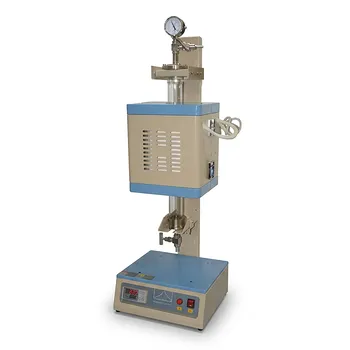
Compact Vertical Split Quartz Tube Furnace with Stainless Steel Vacuum Flanges for Rapid Thermal Quenching and Controlled Atmosphere Material Processing
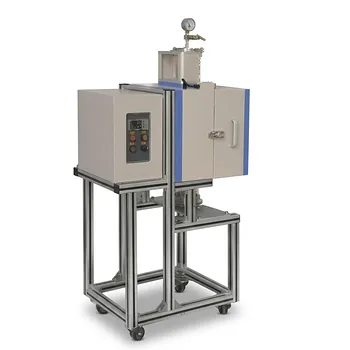
1200°C 5 Inch Vertical Quartz Tube Furnace with Stainless Steel Vacuum Flanges
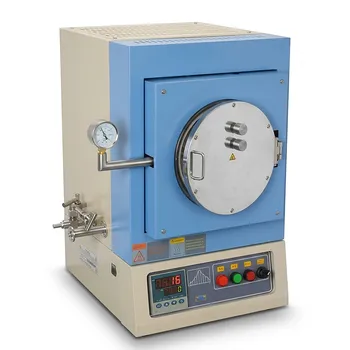
1100°C High Temperature Quartz Chamber Furnace 8 Inch OD with 7.6 Liter Capacity and Vacuum Atmosphere Capability
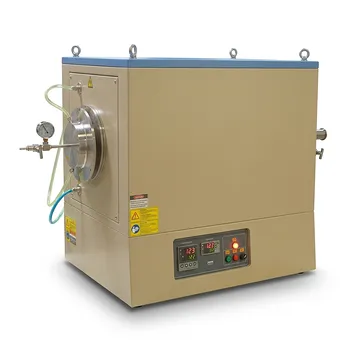
1100°C Large Diameter Quartz Tube Furnace with 24 Inch Heating Zone and Water Cooled Flanges
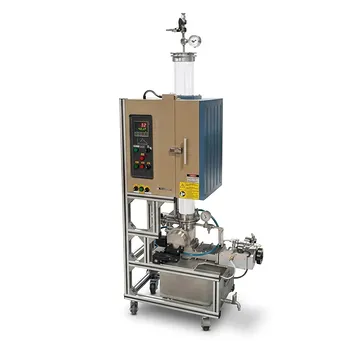
1200C High Temperature Atmosphere Controlled Vertical Quenching Tube Furnace with 4 Inch Quartz Tube
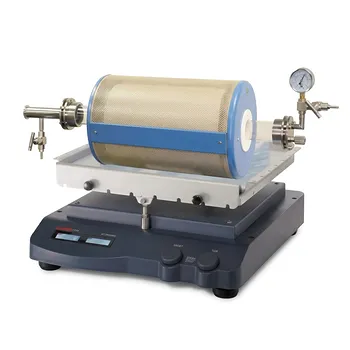
High Temperature Rocking Tube Furnace with Quartz Tube and Vacuum Flange for Materials Synthesis
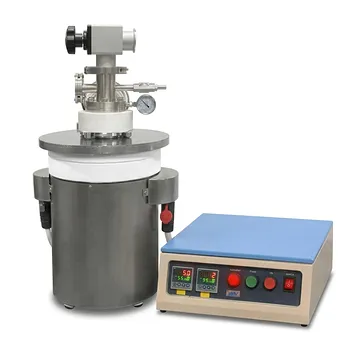
1100C High Temperature Vacuum Crucible Furnace with Quartz Chamber for Thermal Processing and Sintering
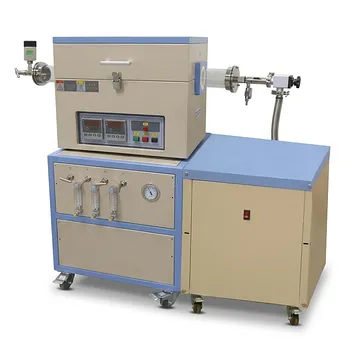
Dual Zone Quartz Tube Furnace with 80mm Diameter 1200C Max Temperature 3 Channel Gas Mixer and Vacuum Pump System