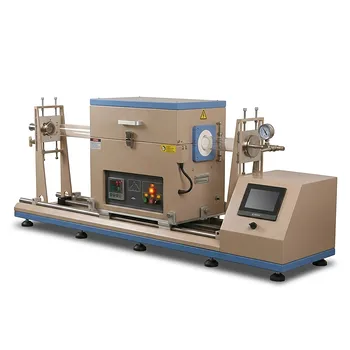
What are the core functions of a tube furnace in carbon synthesis from Pine Rosin? Expert Spray Pyrolysis Insights
Updated 3 months ago
In the synthesis of carbon materials from Pine Rosin via spray pyrolysis, the tube furnace serves as the primary reactor for rapid molecular transformation. It provides a precisely controlled high-temperature environment—typically set at 1000°C—where aerosolized precursor droplets undergo simultaneous solvent evaporation, thermal cracking, and dehydrogenation to form complex carbon microstructures or nanomaterials.
The tube furnace functions as a dynamic thermal chamber that converts liquid-phase Pine Rosin into solid-state carbon by strictly governing the temperature field, residence time, and chemical atmosphere. It is the decisive factor in determining the final material's morphology, porosity, and structural integrity.
Facilitating the Chemical Evolution of Pine Rosin
Rapid Solvent Evaporation and Solute Precipitation
As the carrier gas transports Pine Rosin droplets into the furnace, the immediate exposure to high heat causes flash evaporation of the solvent. This rapid transition forces the Pine Rosin molecules to precipitate into spherical precursors before chemical decomposition begins.
Thermal Cracking and Dehydrogenation
Within the heating zone, the Pine Rosin molecules undergo cracking and dehydrogenation reactions. The high-precision temperature control ensures that these complex organic molecules break down predictably, stripping away hydrogen and other volatile components to leave behind a concentrated carbon framework.
High-Temperature Carbonization
The final stage of the chemical transition is carbonization, where the remaining solute is converted into stable carbon microstructures. The furnace provides the sustained thermal energy required to finalize the atomic rearrangement, resulting in high-purity carbon materials with specific crystal structures.
Engineering Material Morphology and Porosity
Control of Spherical Morphology
The temperature gradient and the speed at which droplets move through the furnace—known as residence time—directly influence the spherical shape of the particles. A stable temperature field ensures that the droplets solidify uniformly, preventing structural collapse and ensuring high-crystallinity in the final product.
Hierarchical Pore Formation and Functionalization
The tube furnace environment allows for activation etching and surface functionalization to occur simultaneously with carbonization. By controlling the heating rate and the internal environment, researchers can facilitate the development of complex, hierarchical pore networks essential for high-performance applications.
Atmospheric Protection and Purity
The superior sealing performance of a tube furnace allows for the introduction of inert gases like Nitrogen or Argon, or reducing atmospheres like Argon-Hydrogen. This oxygen-free environment is critical to prevent the oxidation of the Pine Rosin at high temperatures, ensuring the chemical stability and electrical conductivity of the carbon nanofibers or particles.
Understanding the Trade-offs
Temperature vs. Residence Time
Setting the furnace to an excessively high temperature may speed up carbonization but can lead to uncontrolled particle aggregation or the loss of specific surface functional groups. Conversely, a temperature that is too low may result in incomplete carbonization, leaving residual organic impurities that degrade the material's performance.
Atmosphere Integrity and Scaling
While the tube furnace offers excellent control over the chemical atmosphere, any leakage or oxygen infiltration can result in the total combustion of the biomass precursor. Additionally, the fixed volume of the furnace tube limits the throughput of the spray pyrolysis process, representing a trade-off between material quality and production volume.
How to Optimize Your Synthesis Goal
Applying This to Your Project
To achieve the best results in carbon synthesis from Pine Rosin, you must align the furnace parameters with your desired material properties.
- If your primary focus is High Porosity: Prioritize a stable temperature field that allows for activation etching and use programmed temperature increases to facilitate degassing.
- If your primary focus is Spherical Morphology: Optimize the carrier gas flow rate to control residence time and ensure the temperature is high enough for rapid solvent evaporation and immediate solute precipitation.
- If your primary focus is Electrical Conductivity: Operate at the higher end of the temperature scale (near 1000°C) under a strictly inert or reducing atmosphere to maximize graphitization and eliminate non-carbon elements.
The tube furnace is the core engine of the spray pyrolysis process, transforming raw Pine Rosin into high-value carbon through precise thermal and atmospheric management.
Summary Table:
| Core Function | Key Process | Desired Outcome |
|---|---|---|
| Chemical Evolution | Flash evaporation & thermal cracking | Conversion of biomass to high-purity carbon |
| Morphology Control | Residence time & temp gradient management | Uniform spherical particles and crystallinity |
| Pore Engineering | Controlled heating & activation etching | Hierarchical pore networks for high performance |
| Atmosphere Protection | Inert gas (Ar/N2) shielding | Prevention of oxidation and enhanced conductivity |
Optimize Your Carbon Synthesis with THERMUNITS
Achieving precise molecular transformation in spray pyrolysis requires world-class thermal control. THERMUNITS is a leading manufacturer of high-temperature laboratory equipment, providing specialized Tube Furnaces, CVD/PECVD systems, and Vacuum Furnaces designed for the rigors of material science and industrial R&D.
Our thermal solutions—ranging from rotary kilns to high-precision tube furnaces—ensure the residence time and atmospheric integrity needed to transform precursors like Pine Rosin into high-value carbon nanomaterials.
Ready to upgrade your laboratory’s heat treatment capabilities?
Contact our technical team today to discuss your specific research requirements and find the ideal furnace for your project.
References
- Jayadi Jayadi, Yessie Widya Sari. Effect of Precursor Solvent on the Carbon Micro-Structures Derived from Spray Pyrolysis of Pine Resin (Gondorukem): Preliminary Study. DOI: 10.55981/jsmi.2024.893
Mentioned Products
- Vertical 1700C Vacuum and Atmosphere Tube Furnace with 80mm Alumina Tube
- Compact High Temperature 1600C Tube Furnace with 50mm Alumina Tube and Vacuum Flanges for Material Sintering
- 900°C Max Rotary Tube Furnace with 8 Inch 310S Alloy Tube and Optional Multi Zone Heating for Industrial Material Calcination
- Split Vertical Tube Furnace with 1200C Quartz Tube and Stainless Steel Vacuum Flanges for Rapid Thermal Processing
- High Temperature 1700C Tube Furnace with High Vacuum Turbomolecular Pump System and Multi Channel Mass Flow Controller Gas Mixer
People Also Ask
- How does a vertical tube furnace facilitate thermoelectric alloy melting? Precision synthesis for material homogeneity.
- Why is a thermocouple sensor indispensable for monitoring the vertical tube furnace during gallium oxide nanowire production? Optimize VLS Growth
- What is the function of a laboratory-grade vertical tube furnace in fast pyrolysis? Optimize Composite Research.
- How is an industrial-grade vertical tube furnace utilized in smelting leaching residues? Enhance Metal Recovery Efficiency
- Why is a vertical tube furnace preferred for Ga2O3 CVD? Optimize Convection & Nanowire Growth

Tech Team · ThermUnits
Last updated on Jun 03, 2026
Related Products

Vertical 1700C Vacuum and Atmosphere Tube Furnace with 80mm Alumina Tube

Compact High Temperature 1600C Tube Furnace with 50mm Alumina Tube and Vacuum Flanges for Material Sintering
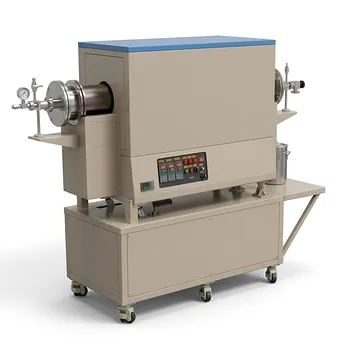
900°C Max Rotary Tube Furnace with 8 Inch 310S Alloy Tube and Optional Multi Zone Heating for Industrial Material Calcination
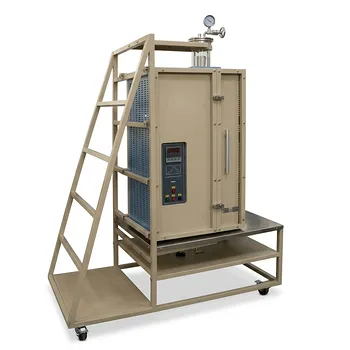
Split Vertical Tube Furnace with 1200C Quartz Tube and Stainless Steel Vacuum Flanges for Rapid Thermal Processing

High Temperature 1700C Tube Furnace with High Vacuum Turbomolecular Pump System and Multi Channel Mass Flow Controller Gas Mixer

1100C Tube Furnace with Vacuum Flange and Programmable Temperature Controller for Material Science and Industrial Heat Treatment
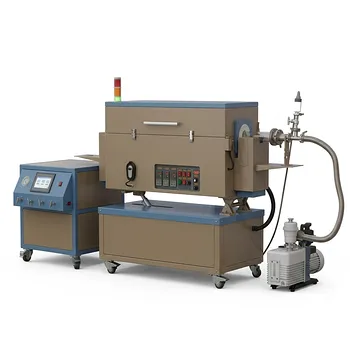
5 Inch Three Zone Rotary Tube Furnace with Integrated Gas Delivery System and 1200C Capability for Advanced Material CVD Processing

1200°C 5 Inch Vertical Quartz Tube Furnace with Stainless Steel Vacuum Flanges
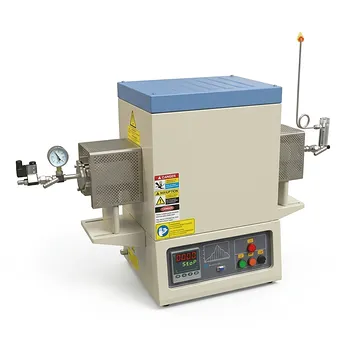
1700C Hydrogen Gas Tube Furnace with 60mm Alumina Process Tube and Integrated Hydrogen Safety Detector

High Temperature 1700C Six Zone Split Tube Furnace with Alumina Tube and Water Cooled Flanges

Compact Vertical Split Quartz Tube Furnace with Stainless Steel Vacuum Flanges for Rapid Thermal Quenching and Controlled Atmosphere Material Processing

High Temperature 1700C Benchtop Tube Furnace with 5 Inch Heating Zone High Purity Alumina Tube and Vacuum Sealing Flanges
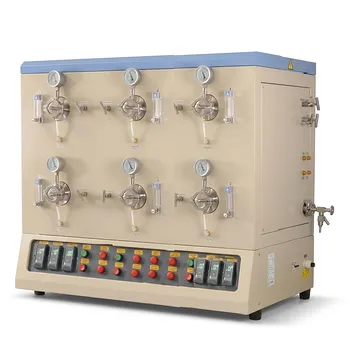
1200C High Throughput Multi Channel Tube Furnace with 50mm Quartz Tubes for Annealing and Material Phase Diagram Research

Three Zone Tube Furnace with 11 Inch or 15 Inch Quartz Tube and Hinged Flanges for Vacuum Atmosphere Heat Treatment

1800C High Temperature Compact Vacuum Tube Furnace with 60mm OD Alumina Tube and Kanthal MoSi2 Heating Elements

High Temperature 1700C Vertical Tube Furnace for Powder Spherification and Material Sintering
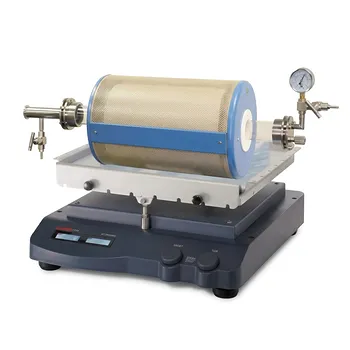
High Temperature Rocking Tube Furnace with Quartz Tube and Vacuum Flange for Materials Synthesis

High Temperature Automated 5 Inch Tube Furnace for Autonomous Material Research and Advanced Laboratory R&D
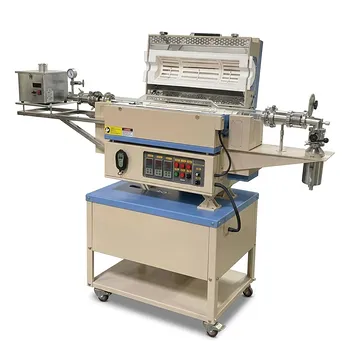
5 Inch Rotary Tube Furnace with Automatic Feeding and Receiving System 1200C Three Zone CVD Powder Processing