What is the primary objective of using a tube furnace for Bi2Te3? Optimize Thermoelectric Efficiency & Grain Growth
Updated 3 months ago
The primary objective of using a tube furnace for the high-temperature heat treatment of sealed Bismuth Telluride (Bi2Te3) thick films is to facilitate recrystallization and grain growth within a stable thermal environment. This process allows for the precise control of the material's crystallinity, enabling a critical balance between lattice defects—specifically tellurium vacancies—and carrier concentrations. Ultimately, this treatment is designed to achieve a synergistic improvement in both electrical conductivity and the Seebeck coefficient, which are vital for high-performance thermoelectric applications.
Takeaway: A tube furnace serves as a precision tool for structural and electronic optimization, transforming compacted thick films into efficient thermoelectric materials by managing microscopic lattice defects and densification.
Facilitating Microstructural Evolution
Thermal Stability for Recrystallization
The tube furnace provides the sustained, uniform heat required to trigger recrystallization in compacted Bi2Te3 particles. This process eliminates structural stresses introduced during the initial film preparation and organizes the atomic lattice into a more ordered state.
Controlled Grain Growth
By maintaining precise temperatures over specific durations, the furnace promotes the growth of grains within the film. Larger grain sizes are preferred as they generally reduce grain-boundary scattering, which can significantly enhance charge carrier mobility.
Material Densification
High-temperature treatment facilitates the diffusion and migration of atoms between individual particles and adjacent nanosheets. This atomic migration closes internal voids and strengthens physical connections, transforming separate particles into a continuous conductive network.
Electronic Optimization via Defect Engineering
Governing Tellurium Vacancies
The high-temperature environment is essential for managing Tellurium vacancies, which are the primary lattice defects in Bi2Te3 materials. Proper annealing in the furnace balances these vacancies with the material's carrier concentration to optimize its electronic signature.
Enhancing the Power Factor
Through the stabilization of the crystal structure and carrier density, the tube furnace treatment allows for the simultaneous improvement of the Seebeck coefficient and electrical conductivity. This synergy is necessary to increase the overall power factor and the thermoelectric figure of merit (zT).
Atmosphere and Pressure Management
In many cases, the tube furnace is used to maintain a strict inert atmosphere or introduce forming gases to prevent oxidation at high temperatures. This controlled environment ensures that the chemical composition of the Bismuth Telluride remains stable during the sintering process.
Understanding the Trade-offs
Stoichiometry and Sublimation
While high temperatures facilitate grain growth, they also increase the risk of Tellurium sublimation. If the temperature is too high or the film is not properly sealed, the loss of Te can lead to an unwanted shift in stoichiometry, negatively impacting the p-type or n-type characteristics of the material.
Thermal Gradient Risks
Uneven temperature distribution within the furnace chamber can lead to localized variations in grain size or defect density. This inconsistency can result in non-uniform thermoelectric properties across the film's surface, reducing the efficiency of the final device.
Processing Time vs. Performance
Longer annealing durations typically lead to higher crystallinity but can also cause excessive grain growth that may embrittle the thick film. Finding the "dwell time" sweet spot is a critical technical challenge for maintaining mechanical integrity while maximizing electrical performance.
Applying Thermal Treatment to Your Goals
If your primary focus is Maximum Electrical Conductivity: Prioritize higher annealing temperatures within the stable range to maximize grain size and reduce grain-boundary resistance.
If your primary focus is Seebeck Coefficient Optimization: Focus on precise temperature setpoints and sealed environments to strictly manage Tellurium vacancies and carrier concentration.
If your primary focus is Material Densification: Utilize the furnace to promote solid-state reactions or liquid-phase sintering, especially if excess Tellurium is present to act as a sintering aid.
Mastering the thermal kinetics of a tube furnace is the definitive step in transitioning Bi2Te3 thick films from raw precursors to high-efficiency energy conversion devices.
Summary Table:
| Objective | Key Process | Desired Outcome |
|---|---|---|
| Microstructural Evolution | Recrystallization & Controlled Grain Growth | Reduced grain-boundary scattering & higher mobility |
| Electronic Optimization | Tellurium (Te) Vacancy Management | Balanced carrier concentration & higher Power Factor |
| Material Densification | Atomic Diffusion & Void Closure | Robust conductive network & mechanical integrity |
| Atmosphere Control | Inert/Sealed Environment Processing | Prevention of Te sublimation and oxidation |
Maximize Your Material Research with THERMUNITS
Are you looking to achieve precise thermoelectric properties in Bi2Te3 or other advanced materials? THERMUNITS is a leading manufacturer specializing in high-temperature laboratory equipment for material science and industrial R&D.
We provide a comprehensive range of thermal solutions, including Tube, Muffle, Vacuum, Atmosphere, and Rotary furnaces, as well as CVD/PECVD systems, VIM (Vacuum Induction Melting) furnaces, and Dental furnaces. Our equipment is engineered to provide the stable thermal environments and atmosphere control necessary for critical heat treatments like recrystallization and sintering.
Take the next step in your high-performance R&D—Contact THERMUNITS today for expert guidance and customized heat treatment solutions!
References
- Xiaowen Sun, Yuan Deng. General strategy for developing thick-film micro-thermoelectric coolers from material fabrication to device integration. DOI: 10.1038/s41467-024-48346-6
Mentioned Products
- High Temperature Tube Furnace 1500C with Sliding Flanges and 50mm OD for Rapid Thermal Processing Fast Heating and Cooling
- Vertical 1700C Vacuum and Atmosphere Tube Furnace with 80mm Alumina Tube
- 1100C Tube Furnace with Vacuum Flange and Programmable Temperature Controller for Material Science and Industrial Heat Treatment
- Compact High Temperature 1600C Tube Furnace with 50mm Alumina Tube and Vacuum Flanges for Material Sintering
- 900°C Max Rotary Tube Furnace with 8 Inch 310S Alloy Tube and Optional Multi Zone Heating for Industrial Material Calcination
People Also Ask
- How are high-temperature tube furnaces utilized to repair etching damage? Precision Lattice Restoration Solutions
- What role does a high-temperature tube furnace play in CVD synthesis of silicon nanowires? Master VLS Growth Precision.
- What core conditions does a high-temperature tube furnace provide for rGO aerogels? Mastering Precision Synthesis.
- What role does a high-temperature tube furnace play in the sulfidation heat treatment of CoS@C/MXene nanocomposites? Guide
- How does precision tube furnace control influence CoFe nanoparticle formation? Master Your Bimetallic Synthesis.

Tech Team · ThermUnits
Last updated on Jun 02, 2026
Related Products
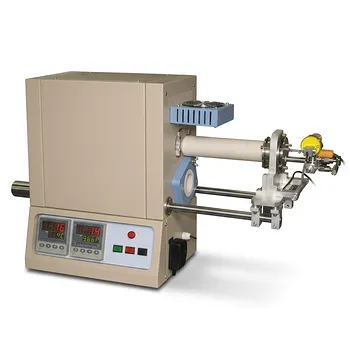
High Temperature Tube Furnace 1500C with Sliding Flanges and 50mm OD for Rapid Thermal Processing Fast Heating and Cooling

Vertical 1700C Vacuum and Atmosphere Tube Furnace with 80mm Alumina Tube

1100C Tube Furnace with Vacuum Flange and Programmable Temperature Controller for Material Science and Industrial Heat Treatment

Compact High Temperature 1600C Tube Furnace with 50mm Alumina Tube and Vacuum Flanges for Material Sintering
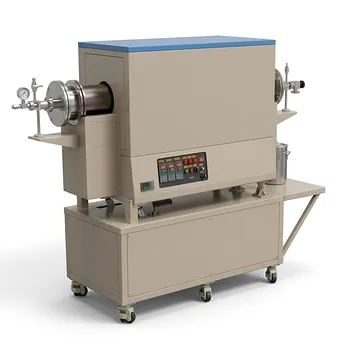
900°C Max Rotary Tube Furnace with 8 Inch 310S Alloy Tube and Optional Multi Zone Heating for Industrial Material Calcination
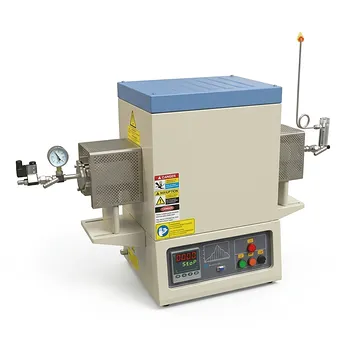
1700C Hydrogen Gas Tube Furnace with 60mm Alumina Process Tube and Integrated Hydrogen Safety Detector

High Temperature 1700C Tube Furnace with High Vacuum Turbomolecular Pump System and Multi Channel Mass Flow Controller Gas Mixer
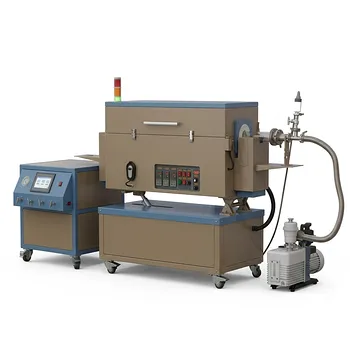
5 Inch Three Zone Rotary Tube Furnace with Integrated Gas Delivery System and 1200C Capability for Advanced Material CVD Processing
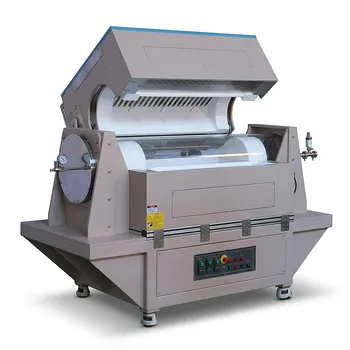
Three Zone Tube Furnace with 11 Inch or 15 Inch Quartz Tube and Hinged Flanges for Vacuum Atmosphere Heat Treatment
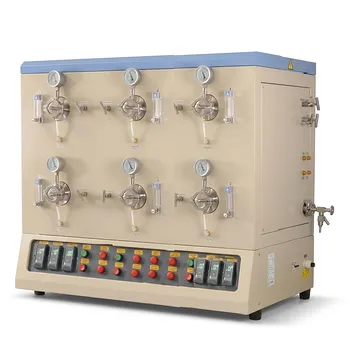
1200C High Throughput Multi Channel Tube Furnace with 50mm Quartz Tubes for Annealing and Material Phase Diagram Research
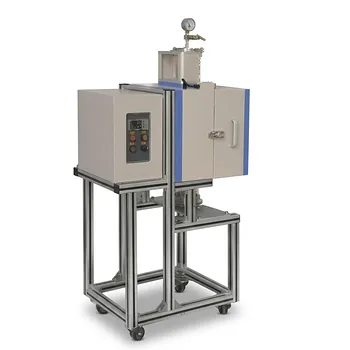
1200°C 5 Inch Vertical Quartz Tube Furnace with Stainless Steel Vacuum Flanges
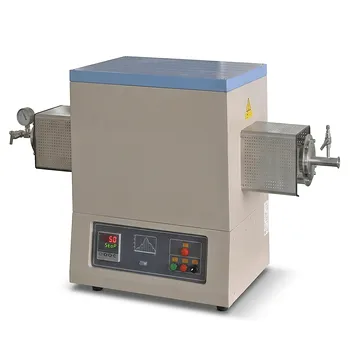
High Temperature 1700C Tube Furnace with 4 Inch OD Alumina Tube and Vacuum Sealing Flanges

High Temperature 1700C Benchtop Tube Furnace with 5 Inch Heating Zone High Purity Alumina Tube and Vacuum Sealing Flanges
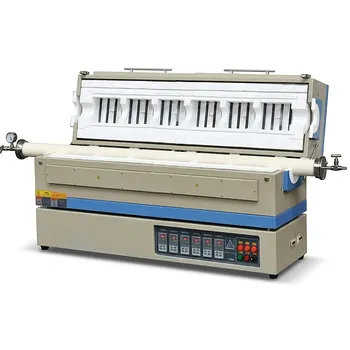
High Temperature 1700C Six Zone Split Tube Furnace with Alumina Tube and Water Cooled Flanges

Compact Vertical Split Quartz Tube Furnace with Stainless Steel Vacuum Flanges for Rapid Thermal Quenching and Controlled Atmosphere Material Processing

1800C High Temperature Compact Vacuum Tube Furnace with 60mm OD Alumina Tube and Kanthal MoSi2 Heating Elements
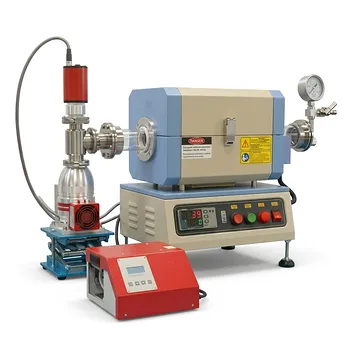
High Vacuum Compact Tube Furnace 1200C with Integrated Turbo Pump System and 8 Inch Heating Zone
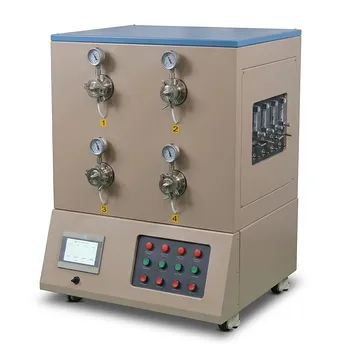
High Throughput 1200C Four Channel Tube Furnace with 3 Inch Quartz Tubes for Multi Zone Annealing and Material Research

High Temperature Automated 5 Inch Tube Furnace for Autonomous Material Research and Advanced Laboratory R&D
