In the preparation of copper or nickel-supported activated carbon catalysts, how is a tube furnace used to achieve metal anchoring? Thermal Decomposition Guide
Updated 3 months ago
In the preparation of copper or nickel-supported activated carbon catalysts, a tube furnace achieves metal anchoring through a process of controlled thermal decomposition. By heating metal-impregnated carbon to specific temperatures (typically 450°C) under an inert nitrogen flow, the furnace forces metal precursors to decompose and bond within the carbon’s pore structure as stable nanoparticles.
The tube furnace serves as a precision reactor that utilizes high-temperature thermal energy and atmosphere control to transform liquid-phase metal precursors into solid-phase active sites. This process ensures the metal is physically and chemically "locked" into the activated carbon support, preventing leaching and maximizing catalytic activity.
The Mechanism of Thermal Decomposition
Breaking Down Metal Precursors
The primary role of the tube furnace is to provide the heat necessary to break the chemical bonds of metal salts, such as metal nitrates. As the temperature rises within the furnace, these precursors undergo pyrolysis, leaving behind metal ions that begin to form stable structures.
Formation of Metal Oxide Nanoparticles
Under a controlled nitrogen environment, the decomposed precursors transition into metal oxide nanoparticles. The tube furnace's ability to maintain a steady temperature, such as 450°C, is critical for ensuring these oxides form uniformly rather than in irregular, inactive clumps.
Anchoring Within the Pore Structure
The high-temperature environment facilitates the migration of metal species into the micropores and mesopores of the activated carbon. This deep penetration allows the metal to "anchor" via metal bridging, creating a strong bond with the carbon surface that enhances its ability to adsorb pollutants.
Precise Atmosphere and Temperature Control
Protecting the Carbon Support
A tube furnace allows for a strictly inert atmosphere, usually using nitrogen or argon. This is essential to prevent the activated carbon support from burning or oxidizing at high temperatures, which would otherwise destroy the material's specific surface area.
Inducing Phase Transformations
Depending on the goal, the furnace can be used for calcination to develop specific crystal phases, such as transforming copper hydroxide into CuO or Cu2O. This precision determines the final oxidation state of the catalyst, which directly impacts its efficiency in chemical reactions.
Reducing Oxides to Metallic States
If the application requires pure metallic copper or nickel rather than oxides, the tube furnace facilitates a reduction step. By switching the gas flow to a reducing agent like hydrogen (H2) at lower temperatures (e.g., 250°C–300°C), the furnace converts the anchored oxides into highly active elemental metal nanoparticles.
Understanding the Trade-offs
The Risk of Metal Sintering
While high temperatures are required for anchoring, excessive heat in the tube furnace can lead to sintering. This occurs when small metal nanoparticles merge into larger clusters, significantly reducing the available active surface area and catalytic performance.
Pore Blockage vs. Active Site Density
Increasing the metal loading can improve activity, but it risks clogging the pore structure of the activated carbon. If the tube furnace process is not carefully calibrated, the metal may anchor primarily on the external surface rather than within the pores, leading to a catalyst that is easily deactivated.
Energy Consumption and Processing Time
Tube furnaces require significant energy to maintain high temperatures over long dwell times. Balancing the time required for complete decomposition against the energy costs is a primary concern for scaling catalyst production from the lab to an industrial level.
How to Apply This to Your Project
Recommendations for Catalyst Synthesis
To achieve the best results in metal anchoring, your approach should be dictated by the specific requirements of your catalytic reaction.
- If your primary focus is maximizing adsorption of pollutants: Use a nitrogen atmosphere at 450°C to ensure metal oxides are deeply anchored within the pores via metal bridging.
- If your primary focus is hydrogenation or CO2 conversion: Follow the initial anchoring with a secondary reduction phase in the furnace using hydrogen gas at 300°C to create metallic active sites.
- If your primary focus is high-temperature stability: Use a programmable tube furnace to slowly ramp the temperature, preventing rapid precursor decomposition and ensuring a more uniform distribution of nanoparticles.
By mastering the thermal and atmospheric variables of the tube furnace, you can precisely engineer the interface between the metal and the carbon support for optimal performance.
Summary Table:
| Process Stage | Purpose | Typical Parameters |
|---|---|---|
| Thermal Decomposition | Breaks metal salts into ions/nanoparticles | ~450°C, Nitrogen flow |
| Phase Transformation | Induces specific crystal phases (e.g., CuO) | Controlled calcination |
| Reduction Step | Converts oxides to active metallic states | 250°C–300°C, Hydrogen gas |
| Metal Anchoring | Secures particles in carbon pore structure | Precise ramp & dwell times |
Optimize Your Material Synthesis with THERMUNITS Precision
As a leading manufacturer of high-temperature laboratory equipment, THERMUNITS empowers material science and industrial R&D with advanced thermal solutions. Our precision-engineered Tube Furnaces and CVD/PECVD systems are designed to provide the strict atmosphere and temperature control necessary for successful metal anchoring and nanoparticle formation.
From Muffle, Vacuum, and Atmosphere Furnaces to specialized Rotary, Hot Press, and Vacuum Induction Melting (VIM) furnaces, we offer the complete range of heat treatment equipment to ensure your catalysts achieve maximum activity and stability.
Ready to enhance your lab's research efficiency?
Contact THERMUNITS Today for Expert Guidance
References
- Younes Dehmani, Éder C. Lima. Copper and nickel composite carbon catalysts prepared from olive husks on the adsorption process of phenol and p-nitrophenol: Comparative theoretical study via an analytical model. DOI: 10.1016/j.molliq.2024.125346
Mentioned Products
- High Temperature Tube Furnace 1500C with Sliding Flanges and 50mm OD for Rapid Thermal Processing Fast Heating and Cooling
- Vertical 1700C Vacuum and Atmosphere Tube Furnace with 80mm Alumina Tube
- 1100C Tube Furnace with Vacuum Flange and Programmable Temperature Controller for Material Science and Industrial Heat Treatment
- Compact High Temperature 1600C Tube Furnace with 50mm Alumina Tube and Vacuum Flanges for Material Sintering
- 900°C Max Rotary Tube Furnace with 8 Inch 310S Alloy Tube and Optional Multi Zone Heating for Industrial Material Calcination
People Also Ask
- How are high-temperature tube furnaces utilized to repair etching damage? Precision Lattice Restoration Solutions
- What core conditions does a high-temperature tube furnace provide for rGO aerogels? Mastering Precision Synthesis.
- What role does a high-temperature tube furnace play in CVD synthesis of silicon nanowires? Master VLS Growth Precision.
- How does precision tube furnace control influence CoFe nanoparticle formation? Master Your Bimetallic Synthesis.
- What role does a high-temperature tube furnace play in the sulfidation heat treatment of CoS@C/MXene nanocomposites? Guide

Tech Team · ThermUnits
Last updated on Jun 02, 2026
Related Products

High Temperature Tube Furnace 1500C with Sliding Flanges and 50mm OD for Rapid Thermal Processing Fast Heating and Cooling

Vertical 1700C Vacuum and Atmosphere Tube Furnace with 80mm Alumina Tube

1100C Tube Furnace with Vacuum Flange and Programmable Temperature Controller for Material Science and Industrial Heat Treatment

Compact High Temperature 1600C Tube Furnace with 50mm Alumina Tube and Vacuum Flanges for Material Sintering
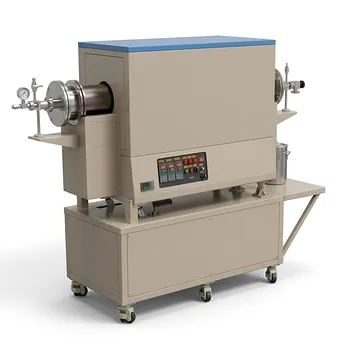
900°C Max Rotary Tube Furnace with 8 Inch 310S Alloy Tube and Optional Multi Zone Heating for Industrial Material Calcination

1700C Hydrogen Gas Tube Furnace with 60mm Alumina Process Tube and Integrated Hydrogen Safety Detector

High Temperature 1700C Tube Furnace with High Vacuum Turbomolecular Pump System and Multi Channel Mass Flow Controller Gas Mixer

5 Inch Three Zone Rotary Tube Furnace with Integrated Gas Delivery System and 1200C Capability for Advanced Material CVD Processing

Three Zone Tube Furnace with 11 Inch or 15 Inch Quartz Tube and Hinged Flanges for Vacuum Atmosphere Heat Treatment

1200C High Throughput Multi Channel Tube Furnace with 50mm Quartz Tubes for Annealing and Material Phase Diagram Research

1200°C 5 Inch Vertical Quartz Tube Furnace with Stainless Steel Vacuum Flanges
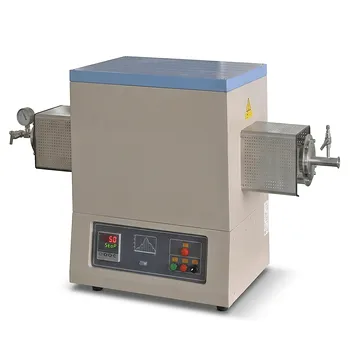
High Temperature 1700C Tube Furnace with 4 Inch OD Alumina Tube and Vacuum Sealing Flanges

High Temperature 1700C Benchtop Tube Furnace with 5 Inch Heating Zone High Purity Alumina Tube and Vacuum Sealing Flanges

High Temperature 1700C Six Zone Split Tube Furnace with Alumina Tube and Water Cooled Flanges

Compact Vertical Split Quartz Tube Furnace with Stainless Steel Vacuum Flanges for Rapid Thermal Quenching and Controlled Atmosphere Material Processing

1800C High Temperature Compact Vacuum Tube Furnace with 60mm OD Alumina Tube and Kanthal MoSi2 Heating Elements
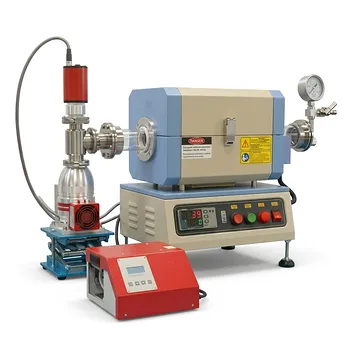
High Vacuum Compact Tube Furnace 1200C with Integrated Turbo Pump System and 8 Inch Heating Zone
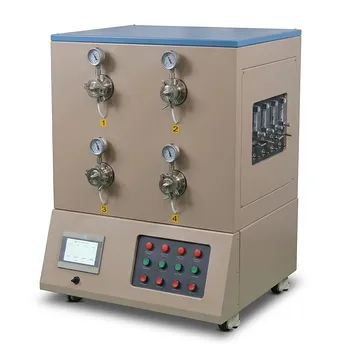
High Throughput 1200C Four Channel Tube Furnace with 3 Inch Quartz Tubes for Multi Zone Annealing and Material Research

High Temperature Automated 5 Inch Tube Furnace for Autonomous Material Research and Advanced Laboratory R&D
