What are the functions of a high-purity quartz tube in IF-MoS2 sulfurization? Ensure Purity and Precise Thermal Control
Updated 3 months ago
The high-purity quartz tube acts as a chemically inert reaction vessel that isolates precursors from external contaminants, maintains the specific hydrogen reduction environment required for sulfurization, and withstands high temperatures up to 850°C. It serves as the physical boundary that allows for the precise sublimation of precursors and the controlled growth of $IF-MoS_2$ nanospheres without the introduction of metallic or atmospheric impurities.
Core Takeaway: During the synthesis of $IF-MoS_2$ nanospheres, the quartz tube is the essential hardware that enables a hermetically sealed, high-temperature environment. It ensures the structural integrity and chemical purity of the nanospheres by facilitating precise atmospheric control and stable thermal zones.
Maintaining Atmospheric Integrity and Purity
Isolation from External Contaminants
The primary function of the quartz tube is to serve as a hermetically sealed reaction chamber. This isolation is critical to prevent the introduction of oxygen or moisture from the external atmosphere, which would cause uncontrolled oxidation of the molybdenum precursors.
Preservation of the Reduction Environment
In the sulfurization process, a precise hydrogen reduction environment is often required to facilitate the transformation of molybdenum oxides into sulfides. The quartz tube maintains this specific gas chemistry, ensuring that the reduction and sulfurization occur simultaneously and at the intended rates.
Prevention of Impurity Migration
Because the tube is made of high-purity quartz, it is chemically inert and does not react with the sulfur vapor or molybdenum precursors. This prevents foreign metallic or non-metallic impurities from leaching into the samples, which is vital for maintaining the authenticity of characterization results like XPS or EXAFS.
Thermal Management and Phase Transformation
High-Temperature Structural Stability
The sulfurization of $IF-MoS_2$ requires sustained temperatures, often reaching 850°C. High-purity quartz provides the necessary high-temperature resistance, maintaining its structural integrity and vacuum-sealing capabilities under intense thermal stress without deforming or outgassing.
Facilitating Precursor Sublimation
The tube furnace creates a stable thermal field across the quartz tube, allowing for the sublimation of solid precursors such as Molybdenum Trioxide ($MoO_3$) and sulfur powder. The tube provides the internal volume necessary for these precursors to gasify and interact in the vapor phase.
Regulation of Crystal Growth Kinetics
By acting as the conduit for heat, the quartz tube helps maintain a uniform thermal field. This uniformity is essential for regulating the reaction rate of precursor vapors, which directly influences the crystallinity, morphology, and high consistency of the resulting nanospheres.
Vapor Transport and Visual Monitoring
Controlled Carrier Gas Flow
The quartz tube facilitates the introduction of high-purity carrier gases, such as Argon (Ar), to transport sulfur vapor to the downstream substrate. This flow control ensures that the sulfurization occurs at the correct site and that the domain boundaries of the $MoS_2$ remain intact.
Support for Vacuum and Pressure Regulation
The tube's ability to maintain a seal allows researchers to regulate the internal atmospheric pressure. Whether the process requires a vacuum or a specific positive pressure of inert gas, the quartz tube acts as the pressure vessel that makes these adjustments possible.
Real-Time Visual Observation
The transparency of the quartz allows for the visual monitoring of the reaction status. Technicians can observe the sublimation of sulfur or changes in the precursor's physical state, providing an immediate qualitative check on the process's progress.
Understanding the Trade-offs and Limitations
Vulnerability to Thermal Shock
While quartz is highly heat-resistant, it is susceptible to thermal shock if heated or cooled too rapidly. Rapid temperature fluctuations can lead to cracking or catastrophic failure of the tube, potentially ruining the batch and damaging the furnace elements.
Chemical Sensitivity to Certain Salts
At high temperatures, quartz can react with certain alkaline materials or specific molten salts. While it is inert to sulfur and molybdenum, researchers must ensure that no alkali metal contaminants are present, as these can cause devitrification, leading to the quartz becoming brittle and opaque over time.
Maintenance and Cleaning Requirements
The accumulation of residual sulfur or molybdenum oxides on the inner walls can affect the thermal emissivity and purity of subsequent runs. Regular, rigorous cleaning with acids or specialized solvents is required to ensure that "memory effects" from previous experiments do not contaminate new $IF-MoS_2$ cycles.
How to Apply This to Your Project
Recommendations for Experimental Success
- If your primary focus is Phase Purity: Always use a high-purity (99.99%+) quartz tube to ensure no metallic ions migrate into the $IF-MoS_2$ lattice during the 850°C soak.
- If your primary focus is Morphological Control: Ensure the quartz tube is positioned precisely within the furnace's "sweet spot" to take advantage of the most uniform thermal zone for consistent nanosphere growth.
- If your primary focus is System Longevity: Implement a programmable heating and cooling ramp (typically <10°C/min) to prevent devitrification and thermal stress cracking of the quartz material.
The high-purity quartz tube is the silent enabler of $IF-MoS_2$ synthesis, providing the sterile, stable, and controlled environment necessary for complex chemical vapor transformations.
Summary Table:
| Function | Key Benefit | Impact on IF-MoS2 Synthesis |
|---|---|---|
| Atmospheric Isolation | Prevents oxygen/moisture ingress | Ensures phase purity & prevents oxidation |
| Thermal Stability | Withstands up to 850°C | Maintains structural integrity during soaking |
| Chemical Inertness | No reaction with sulfur/precursors | Prevents impurity leaching & contamination |
| Vapor Management | Facilitates gas flow & sublimation | Regulates morphology & growth kinetics |
| Pressure Control | Enables vacuum or inert pressure | Optimizes reaction environment for nanospheres |
Elevate Your Material Research with THERMUNITS Precision Solutions
Achieving the perfect $IF-MoS_2$ morphology requires more than just a recipe; it requires world-class thermal hardware. THERMUNITS is a leading manufacturer of high-temperature laboratory equipment specifically designed for the rigors of material science and industrial R&D.
Whether you are conducting sulfurization, CVD, or complex annealing, our solutions provide the stability and purity your research demands. Our comprehensive range includes:
- Advanced Furnaces: Tube, Muffle, Vacuum, Atmosphere, Rotary, and Hot Press Furnaces.
- Specialized Systems: CVD/PECVD systems, Dental Furnaces, and Vacuum Induction Melting (VIM) furnaces.
- Essential Components: High-purity Quartz/Alumina tubes and specialized Thermal Elements.
Ready to optimize your heat treatment process? Contact our engineering team today to discuss your specific application requirements and discover how THERMUNITS can accelerate your path to discovery.
References
- Kai Du, Ronghui Wei. Synthesis and lubrication properties of hollow IF-MoS2 nanospheres. DOI: 10.1063/5.0207159
Mentioned Products
- 1200C Four Zone Split Tube Furnace with Touch Screen Control and High Purity Quartz Tube and Vacuum Sealing Flanges
- High Throughput 1200C Four Channel Tube Furnace with 3 Inch Quartz Tubes for Multi Zone Annealing and Material Research
- 1100°C High Temperature Quartz Chamber Furnace 8 Inch OD with 7.6 Liter Capacity and Vacuum Atmosphere Capability
- 1100°C Large Diameter Quartz Tube Furnace with 24 Inch Heating Zone and Water Cooled Flanges
- 1100°C Three Zone Tube Furnace with 8.5 to 11 Inch OD Quartz Tube and Vacuum Flanges for Large Wafer Processing
People Also Ask
- What are the primary functions of a high-purity quartz tube furnace during the molten salt treatment of MXene? Expert Guide
- What are the technical advantages of using a multi-zone independently controlled tube furnace in the modified USP process?
- Why is a quartz tube furnace necessary for phosphorus-doped MoS2/GO preparation? Ensure Purity & Precise Synthesis
- What role does a single-temperature zone quartz tube furnace play in the growth of monolayer MoS2? Optimize 2D Synthesis
- What conditions does a quartz tube furnace provide for AlxCoCrFeNi steam corrosion tests? Achieve Precise R&D Control.

Tech Team · ThermUnits
Last updated on Jun 02, 2026
Related Products
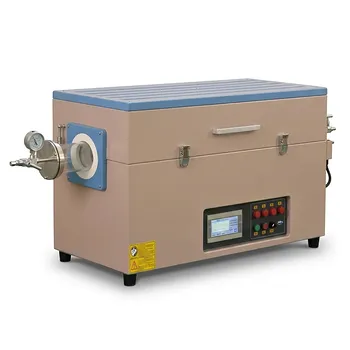
1200C Four Zone Split Tube Furnace with Touch Screen Control and High Purity Quartz Tube and Vacuum Sealing Flanges
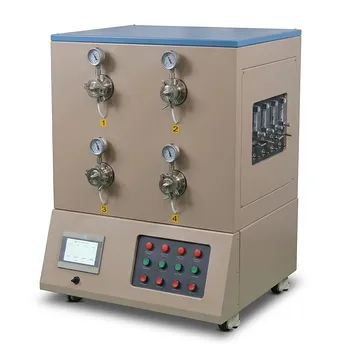
High Throughput 1200C Four Channel Tube Furnace with 3 Inch Quartz Tubes for Multi Zone Annealing and Material Research
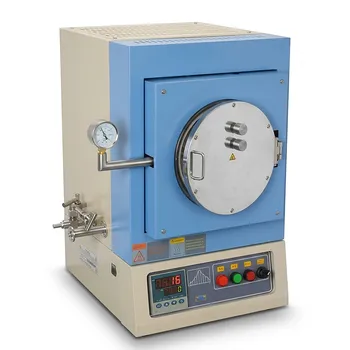
1100°C High Temperature Quartz Chamber Furnace 8 Inch OD with 7.6 Liter Capacity and Vacuum Atmosphere Capability
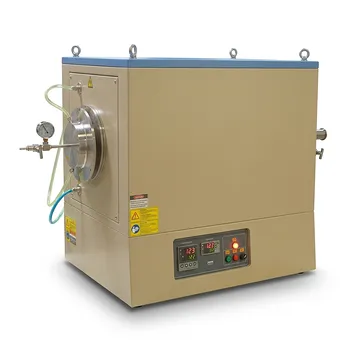
1100°C Large Diameter Quartz Tube Furnace with 24 Inch Heating Zone and Water Cooled Flanges
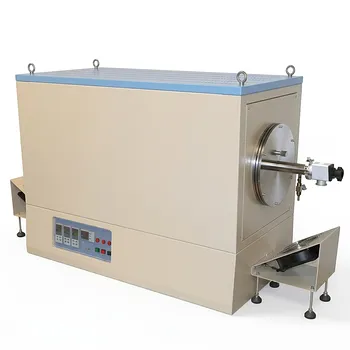
1100°C Three Zone Tube Furnace with 8.5 to 11 Inch OD Quartz Tube and Vacuum Flanges for Large Wafer Processing
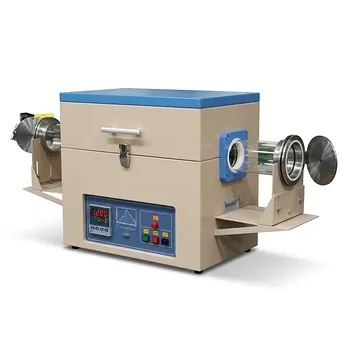
High Temperature 1200C Split Tube Furnace with Hinged Vacuum Flanges and 4 Inch Quartz Tube for Laboratory Research

1200°C 5 Inch Vertical Quartz Tube Furnace with Stainless Steel Vacuum Flanges
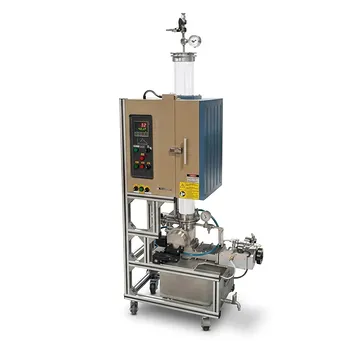
1200C High Temperature Atmosphere Controlled Vertical Quenching Tube Furnace with 4 Inch Quartz Tube

High Temperature 1700C Benchtop Tube Furnace with 5 Inch Heating Zone High Purity Alumina Tube and Vacuum Sealing Flanges
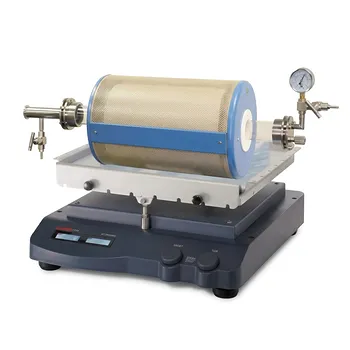
High Temperature Rocking Tube Furnace with Quartz Tube and Vacuum Flange for Materials Synthesis

High Temperature Automated 5 Inch Tube Furnace for Autonomous Material Research and Advanced Laboratory R&D
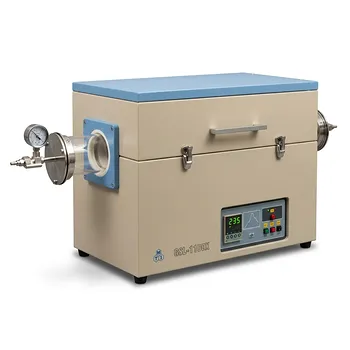
Single Zone Tube Furnace 5 Inch Quartz Tube 36 Inch Heating Zone Vacuum Flanges
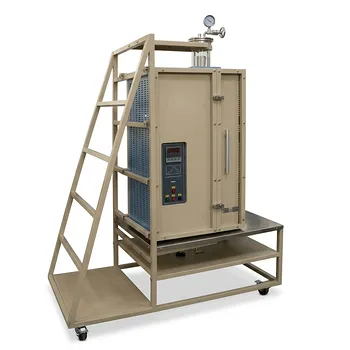
Split Vertical Tube Furnace with 1200C Quartz Tube and Stainless Steel Vacuum Flanges for Rapid Thermal Processing
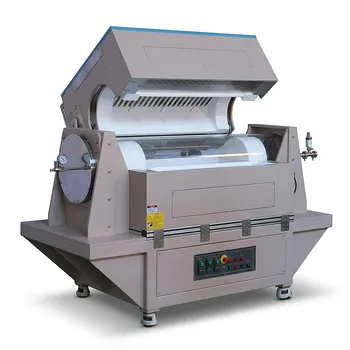
Three Zone Tube Furnace with 11 Inch or 15 Inch Quartz Tube and Hinged Flanges for Vacuum Atmosphere Heat Treatment
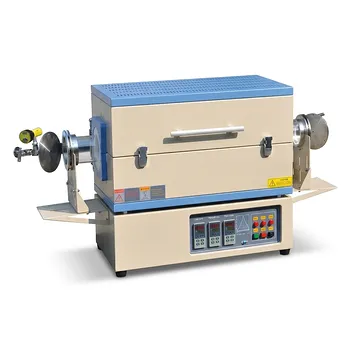
Three Zone Tube Furnace with 24 Inch Heating Length and Hinged Flange Quartz Tube System
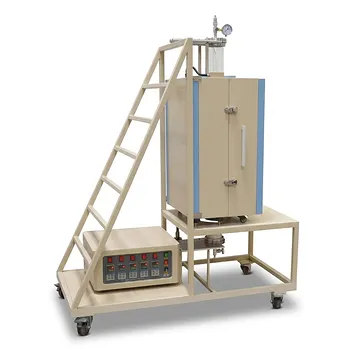
Five Zone Split Vertical Tube Furnace 1200C Max with 4 Inch Quartz Tube and Stainless Steel Vacuum Flanges

Compact Vertical Split Quartz Tube Furnace with Stainless Steel Vacuum Flanges for Rapid Thermal Quenching and Controlled Atmosphere Material Processing
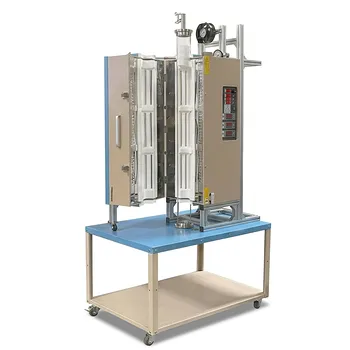
1200C Three Zone Split Vertical Tube Furnace 4 Inch Quartz Tube Stainless Steel Vacuum Flanges

Compact High Temperature 1600C Tube Furnace with 50mm Alumina Tube and Vacuum Flanges for Material Sintering