Why is the Sealed Quartz Tube process utilized for solubility research? Master Stoichiometry & Prevent Material Loss
Updated 3 months ago
The Sealed Quartz Tube process is the definitive solution for high-temperature research involving volatile elements because it creates a closed-system thermodynamic equilibrium. By confining elements like sulfur or alkali metals within a vacuum-sealed environment, the system allows the volatile components to reach their vapor saturation pressure. This saturation effectively halts further evaporation, ensuring that the sample's chemical composition remains stable and accurate throughout the heating process.
The core value of the Sealed Quartz Tube method lies in its ability to prevent material loss through vapor phase management. By maintaining a constant stoichiometric ratio and an inert environment, it enables the precise study of solubility and chemical synthesis that would otherwise be impossible in open systems.
Maintaining Thermodynamic Equilibrium
The Role of Vapor Saturation Pressure
In a Sealed Quartz Tube (SQT), volatile elements evaporate until the headspace reaches vapor saturation. Once this pressure is achieved, a state of equilibrium is established where no further net evaporation occurs from the condensed phase. This mechanism is critical for solubility research, as it prevents the sample from evolving or changing its concentration during the experiment.
Inhibiting Sublimation and Loss
Without a sealed environment, elements like sulfur would sublimate rapidly at high temperatures, escaping the reaction zone entirely. For example, in the synthesis of Yttrium Oxysulfate, the SQT acts as a physical barrier that keeps sulfur vapor in close contact with the solid intermediate. This confinement ensures a complete chemical reaction, whereas an open system would result in the loss of sulfur and the unwanted formation of oxides.
Preserving Chemical Stoichiometry and Purity
Eliminating Compositional Drift
Maintaining an accurate stoichiometric ratio is the primary challenge when working with multi-element compounds like oxysulfides. The SQT process ensures that the mass of volatile chalcogenides—such as sulfur or selenium—remains constant within the tube. This allows researchers to produce complex semiconductors with predictable and repeatable chemical properties.
Preventing Environmental Interference
The vacuum-sealing process removes atmospheric oxygen and moisture, creating a purely inert environment. This is vital when working with sensitive materials, such as copper ions, which are easily oxidized by air at elevated temperatures. By eliminating oxygen, the SQT guarantees the chemical stability of the sample and prevents the formation of secondary impurity phases.
Understanding the Technical Constraints
Pressure and Temperature Limits
While quartz is highly resilient, it has finite mechanical strength and can fail if internal vapor pressure exceeds the tube's burst rating. Researchers must carefully calculate the amount of volatile material added to ensure the pressure remains within safe limits at the target temperature. Failure to manage these variables can result in tube explosions and the loss of the experiment.
Chemical Compatibility Challenges
At extremely high temperatures, certain alkali metals or aggressive volatiles may react with the silica in the quartz tube itself. This "tube attack" can introduce silicon impurities into the sample or weaken the quartz walls. In these specific cases, researchers may need to utilize inner crucibles made of inert materials like alumina or tantalum to protect the quartz.
How to Apply SQT to Your Research Goals
Choosing the right sealing parameters is essential for achieving reliable experimental outcomes.
- If your primary focus is Phase Purity: Use vacuum sealing to eliminate oxygen and ensure that volatile reactants remain in the system long enough to fully incorporate into the crystal lattice.
- If your primary focus is Solubility Measurement: Ensure the headspace volume is minimized to reach vapor saturation quickly, which prevents significant changes to the liquid or solid composition.
- If your primary focus is Oxidation Prevention: Utilize high-vacuum sealing (typically $10^{-3}$ Torr or better) to protect air-sensitive transition metals from forming unwanted oxide layers.
By mastering the equilibrium of the sealed environment, you transform a volatile reaction into a controlled and measurable scientific process.
Summary Table:
| Feature | Key Benefit | Research Impact |
|---|---|---|
| Vapor Saturation | Halts evaporation by reaching equilibrium | Maintains stable sample concentration |
| Vacuum Sealing | Eliminates oxygen and moisture | Prevents oxidation and ensures high purity |
| Closed System | Conserves total mass of volatile components | Ensures precise stoichiometric ratios |
| Physical Barrier | Inhibits sublimation of elements like Sulfur | Enables complete reactions in synthesis |
| Inert Environment | Protects air-sensitive materials | Stabilizes reactive ions (e.g., Copper) |
Elevate Your Material Research with THERMUNITS Precision
At THERMUNITS, we specialize in providing the high-precision thermal environments necessary for advanced material science and industrial R&D. Understanding the complexities of the Sealed Quartz Tube process is just the beginning; having the right equipment is what drives results.
As a leading manufacturer of high-temperature laboratory equipment, we offer a comprehensive range of thermal processing solutions tailored to your specific needs, including:
- Advanced Furnaces: Muffle, Vacuum, Atmosphere, Tube, Rotary, and Hot Press furnaces.
- Specialized Systems: CVD/PECVD systems, Dental Furnaces, and Electric Rotary Kilns.
- High-End Melting: Vacuum Induction Melting (VIM) furnaces and high-performance Thermal Elements.
Whether you are studying the solubility of volatile elements or developing complex semiconductors, our equipment ensures the stability and temperature control your research demands.
Ready to optimize your heat treatment process? Contact our expert team today to discuss your application and find the perfect laboratory solution.
References
- Célia Dalou, Paolo A. Sossi. Review of experimental and analytical techniques to determine H, C, N, and S solubility and metal–silicate partitioning during planetary differentiation. DOI: 10.1186/s40645-024-00629-8
Mentioned Products
- 1200C Four Zone Split Tube Furnace with Touch Screen Control and High Purity Quartz Tube and Vacuum Sealing Flanges
- Three Zone Tube Furnace with 11 Inch or 15 Inch Quartz Tube and Hinged Flanges for Vacuum Atmosphere Heat Treatment
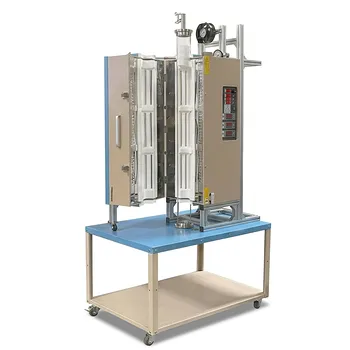
- Compact Vertical Split Quartz Tube Furnace with Stainless Steel Vacuum Flanges for Rapid Thermal Quenching and Controlled Atmosphere Material Processing
- High Temperature 1200C Split Tube Furnace with Hinged Vacuum Flanges and 4 Inch Quartz Tube for Laboratory Research
- Three Zone Tube Furnace with 24 Inch Heating Length and Hinged Flange Quartz Tube System
People Also Ask
- What are the functions of a high-purity quartz tube in IF-MoS2 sulfurization? Ensure Purity and Precise Thermal Control
- What are the primary functions of a high-purity quartz tube furnace during the molten salt treatment of MXene? Expert Guide
- What are the technical advantages of using a multi-zone independently controlled tube furnace in the modified USP process?
- Why is a quartz tube furnace necessary for phosphorus-doped MoS2/GO preparation? Ensure Purity & Precise Synthesis
- What role does a single-temperature zone quartz tube furnace play in the growth of monolayer MoS2? Optimize 2D Synthesis

Tech Team · ThermUnits
Last updated on Jun 02, 2026
Related Products
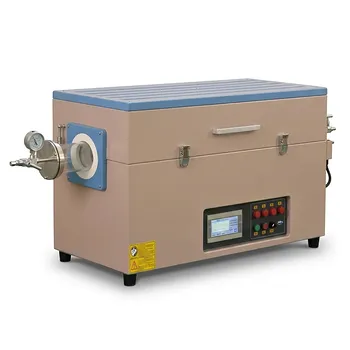
1200C Four Zone Split Tube Furnace with Touch Screen Control and High Purity Quartz Tube and Vacuum Sealing Flanges
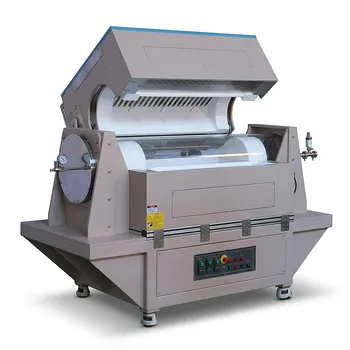
Three Zone Tube Furnace with 11 Inch or 15 Inch Quartz Tube and Hinged Flanges for Vacuum Atmosphere Heat Treatment

Compact Vertical Split Quartz Tube Furnace with Stainless Steel Vacuum Flanges for Rapid Thermal Quenching and Controlled Atmosphere Material Processing
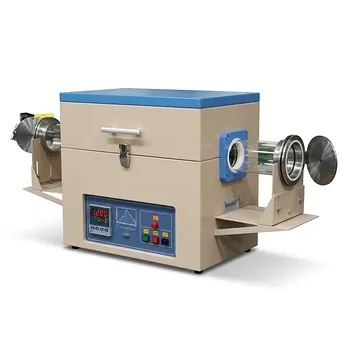
High Temperature 1200C Split Tube Furnace with Hinged Vacuum Flanges and 4 Inch Quartz Tube for Laboratory Research
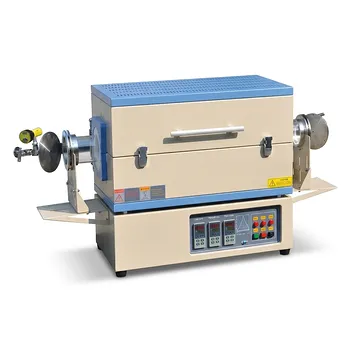
Three Zone Tube Furnace with 24 Inch Heating Length and Hinged Flange Quartz Tube System
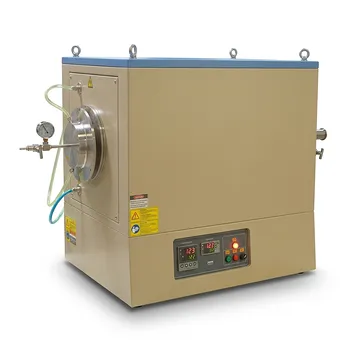
1100°C Large Diameter Quartz Tube Furnace with 24 Inch Heating Zone and Water Cooled Flanges
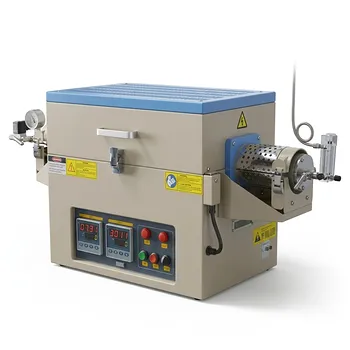
1100C Dual Zone Hydrogen Gas Tube Furnace with Quartz Tube and Integrated H2 Leak Detection System
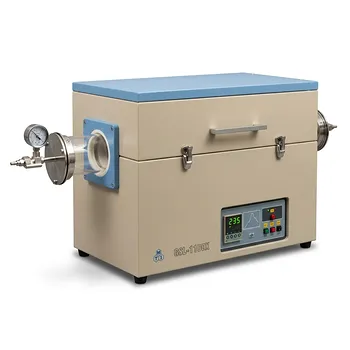
Single Zone Tube Furnace 5 Inch Quartz Tube 36 Inch Heating Zone Vacuum Flanges

1200°C 5 Inch Vertical Quartz Tube Furnace with Stainless Steel Vacuum Flanges

1100°C High Temperature Quartz Chamber Furnace 8 Inch OD with 7.6 Liter Capacity and Vacuum Atmosphere Capability
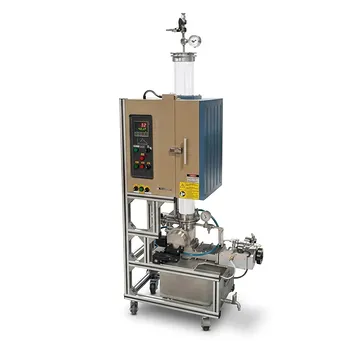
1200C High Temperature Atmosphere Controlled Vertical Quenching Tube Furnace with 4 Inch Quartz Tube
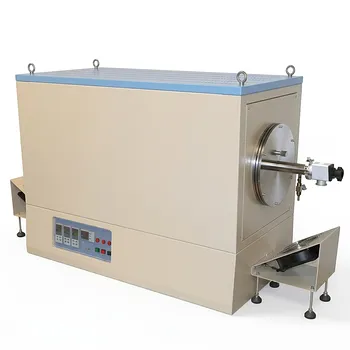
1100°C Three Zone Tube Furnace with 8.5 to 11 Inch OD Quartz Tube and Vacuum Flanges for Large Wafer Processing
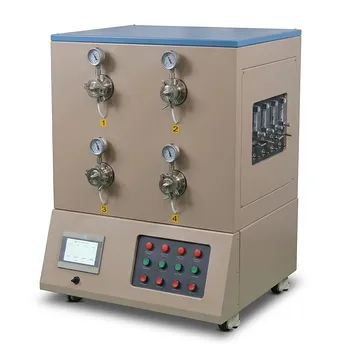
High Throughput 1200C Four Channel Tube Furnace with 3 Inch Quartz Tubes for Multi Zone Annealing and Material Research
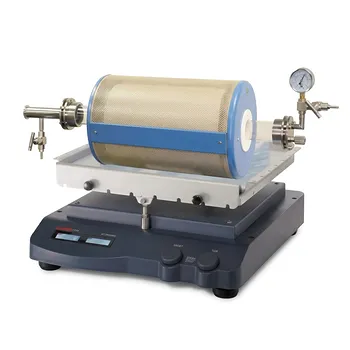
High Temperature Rocking Tube Furnace with Quartz Tube and Vacuum Flange for Materials Synthesis
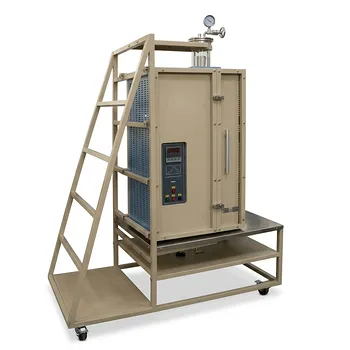
Split Vertical Tube Furnace with 1200C Quartz Tube and Stainless Steel Vacuum Flanges for Rapid Thermal Processing
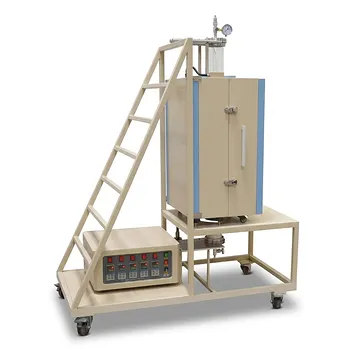
Five Zone Split Vertical Tube Furnace 1200C Max with 4 Inch Quartz Tube and Stainless Steel Vacuum Flanges
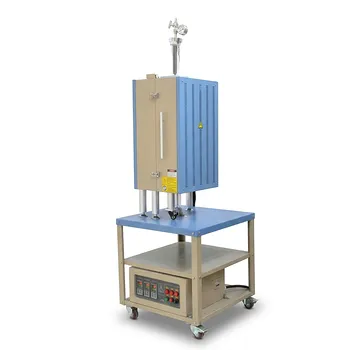
1200C Three Zone Vertical Tube Furnace with 2 Inch Quartz Tube and Vacuum Flanges
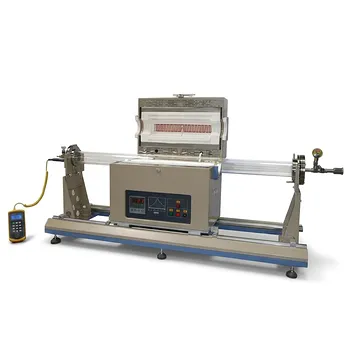
1200C Max Sliding Tube Furnace with 80mm OD Quartz Tube and Vacuum Flanges for Rapid Thermal Processing Fast Heating and Cooling
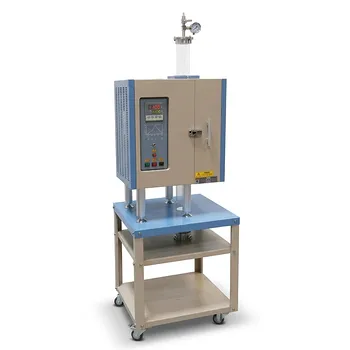
1100°C Split Vertical Tube Furnace with 80mm Quartz Tube and Stainless Steel Vacuum Flanges