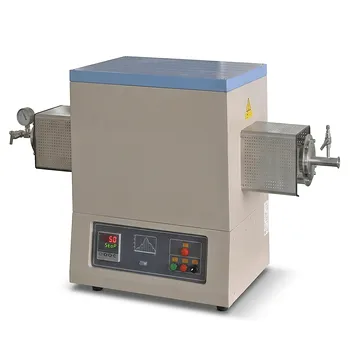
What are the primary functions of a high-precision tube furnace in CaO:Eu synthesis? Master Precision Heat Treatment
Updated 3 months ago
The high-precision high-temperature tube furnace serves as the critical reactor for both thermal activation and chemical reduction during phosphor synthesis. It provide the stable 1200°C heat required to decompose calcium carbonate into calcium oxide and triggers the solid-state diffusion between the host material and europium dopants. Simultaneously, it maintains a strictly controlled $H_2/N_2$ atmosphere to reduce europium ions to their active luminescent state ($Eu^{2+}$).
Core Takeaway: A tube furnace is a specialized chemical vessel that simultaneously provides the thermal energy necessary for atomic diffusion and the atmospheric control required to engineer the electronic properties (valence states) of the phosphor.
Driving Chemical Transformation and Diffusion
Decomposition of Precursor Compounds
The primary role of the furnace is to provide a stable 1200°C environment to drive the thermal decomposition of calcium carbonate ($CaCO_3$). This process releases carbon dioxide and produces highly reactive calcium oxide (CaO).
CaO then acts as the host precursor that reacts with europium oxide. Without this high-precision temperature control, the precursors would fail to transform into the necessary reactive states.
Providing Activation Energy for Solid-Phase Diffusion
Solid-state reactions require significant thermal activation energy to allow atoms to move across material boundaries. The furnace maintains the constant high temperature needed for metal oxides to encounter one another and bond.
This sustained heat allows various components in the raw materials to undergo diffusion and recombination. These processes are essential for forming the specific crystal structure of the CaO:Eu phosphor.
Facilitating Lattice Substitution
A high-precision furnace ensures that dopant ions, such as Europium, are uniformly distributed within the crystal lattice. The precision of the thermal field ensures that trace ions can stably occupy the $Ca^{2+}$ sites.
Consistent temperature control prevents the formation of "dead zones" within the material. This uniformity is what allows the final phosphor to exhibit consistent luminescent properties.
Precise Atmospheric Control and Valence Regulation
Reduction of Europium Ions
The tube furnace acts as a gas-tight vessel that maintains a precise flow of controlled atmospheres, such as $H_2/N_2$ mixtures. This is critical for regulating the valence state of the europium ions.
The reducing atmosphere converts trivalent europium ($Eu^{3+}$) to the divalent state ($Eu^{2+}$). This specific reduction is a non-negotiable requirement for the material to achieve its intended luminescence.
Preventing Unwanted Oxidation
High temperatures often accelerate the oxidation of transition metals and rare-earth elements. The furnace uses protective atmospheres to shield the material from oxygen during the heating cycle.
By excluding air, the furnace secures the specific luminescent properties of the material. This environmental isolation ensures that the chemistry at 1200°C remains strictly focused on the desired reaction pathway.
Managing Thermal Dynamics and Material Morphology
Controlling Thermal Stress through Precise Ramping
High-precision furnaces allow for specific heating and cooling rates, often as gradual as 2°C per minute. This precision is essential to prevent internal thermal stress within the crystal grains.
Controlled cooling rates help prevent defects such as cracks or bloating in the final particles. This ensures the structural integrity of the synthesized phosphor.
Influence on Grain Size and Phase Stability
The furnace provides the thermal field necessary for crystallization into a stable phase structure. By maintaining a constant sintering temperature for several hours, the furnace dictates the final grain size of the phosphor.
Consistency in the thermal zone ensures that the entire batch of material undergoes the same transformation. This results in a high-quality, homogeneous product with predictable optical performance.
Understanding the Trade-offs
- Atmospheric Purity vs. Flow Rate: High flow rates of $H_2/N_2$ can improve the reduction efficiency but may cause temperature fluctuations within the tube. Users must balance gas velocity with the furnace's ability to maintain a rock-solid 1200°C.
- Heating Speed vs. Throughput: While rapid heating increases production speed, it often leads to non-uniform grain growth and increased lattice defects. Slow ramping is technically superior for material quality but reduces total daily output.
- Tube Material Limitations: Alumina or quartz tubes have different temperature and chemical resistance limits. Selecting the wrong tube material for a 1200°C reaction can lead to contamination of the phosphor or structural failure of the furnace itself.
How to Apply This to Your Project
When utilizing a tube furnace for CaO:Eu synthesis, your operational parameters should align with your specific material requirements:
- If your primary focus is Maximum Luminescence: Prioritize the precision of your reducing atmosphere ($H_2/N_2$) to ensure the complete conversion of $Eu^{3+}$ to $Eu^{2+}$.
- If your primary focus is Particle Uniformity: Utilize slow heating and cooling ramps (e.g., 2°C/min) to allow for even grain growth and to minimize internal structural defects.
- If your primary focus is Phase Purity: Ensure the furnace is calibrated to maintain exactly 1200°C for the duration of the soak to facilitate the complete decomposition of $CaCO_3$.
By mastering the dual controls of temperature and atmosphere, you can transform simple oxide precursors into high-performance luminescent materials.
Summary Table:
| Key Function | Role in Synthesis | Process Outcome |
|---|---|---|
| Thermal Activation | Drives $CaCO_3$ decomposition & solid-phase diffusion | Formation of reactive CaO host lattice |
| Atmosphere Control | Provides precise $H_2/N_2$ reducing environment | Converts $Eu^{3+}$ to active $Eu^{2+}$ state |
| Valence Regulation | Excludes oxygen to prevent unwanted oxidation | Secures specific luminescent properties |
| Thermal Dynamics | Controlled heating/cooling rates (e.g., 2°C/min) | Uniform grain size & minimal lattice defects |
Elevate Your Material Research with THERMUNITS Precision solutions
As a global leader in high-temperature laboratory equipment, THERMUNITS specializes in providing the thermal precision necessary for complex material science applications. From the synthesis of high-performance phosphors to advanced industrial R&D, our equipment ensures stable thermal fields and rigorous atmospheric control.
Our Comprehensive Thermal Solutions include:
- Specialized Furnaces: Tube, Muffle, Vacuum, Atmosphere, and Rotary furnaces.
- Advanced Systems: CVD/PECVD systems, Vacuum Induction Melting (VIM), and Hot Press furnaces.
- Specialty Equipment: Dental furnaces, electric rotary kilns, and high-quality thermal elements.
Whether you need to maintain a strict $H_2/N_2$ atmosphere for valence regulation or require precise ramping for crystal growth, we have the expertise to support your project.
Ready to optimize your heat treatment process? Contact our technical experts today to discuss your specific requirements and find the ideal furnace for your laboratory.
References
- Casper van Aarle, H.T. Hintzen. Demonstration of Eu<sup>3+</sup> → Eu<sup>2+</sup> Energy Transfer in NIR Emitting CaO:Eu<sup>2+</sup>,Eu<sup>3+</sup> LED Phosphor and its Implication for the Role of Eu<sup>3+</sup> as a Killer Center for Long Wavelength Eu<sup>2+</sup> Emission. DOI: 10.1002/adom.202401738
Mentioned Products
- High Temperature Rocking Tube Furnace 1700°C Alumina Processing Tube with Precision Oscillation for Material Synthesis
- 1100C High Pressure Rocking Tube Furnace with 2 Inch Super Alloy Processing Tube for Material Synthesis
- High Temperature 1700C Vertical Tube Furnace for Powder Spherification and Material Sintering
- High Temperature Dual Zone Rotating Tube Furnace 1500C Silicon Carbide Heating for Advanced Material Synthesis
- Compact High Temperature 1600C Tube Furnace with 50mm Alumina Tube and Vacuum Flanges for Material Sintering
People Also Ask
- What is the primary function of a high-temperature tube furnace in Cu1-N-C synthesis? Precision Thermal Control.
- What impact does the heating rate of a tube furnace have on biochar microstructure? Optimize Your Material R&D.
- How does a high-temp tube furnace ensure stability for Rare Earth Hexaborides? Expert Atmospheric & Thermal Control
- What is the function of a high-temperature tube furnace in zirconia catalyst prep? Optimize phase and performance.
- What is the function of a high-temperature tube furnace in the synthesis of g-C3N4? Optimize Thermal Polycondensation

Tech Team · ThermUnits
Last updated on Jun 03, 2026
Related Products
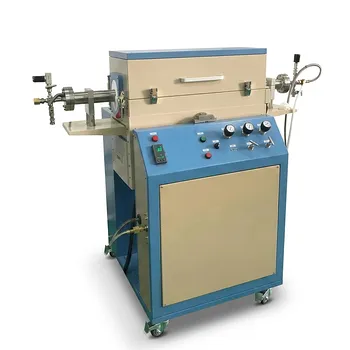
High Temperature Rocking Tube Furnace 1700°C Alumina Processing Tube with Precision Oscillation for Material Synthesis
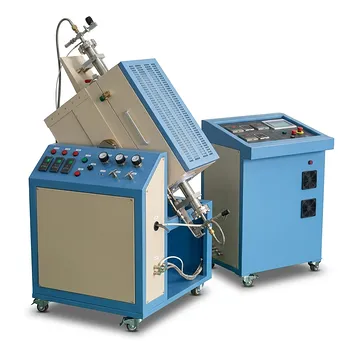
1100C High Pressure Rocking Tube Furnace with 2 Inch Super Alloy Processing Tube for Material Synthesis

High Temperature 1700C Vertical Tube Furnace for Powder Spherification and Material Sintering
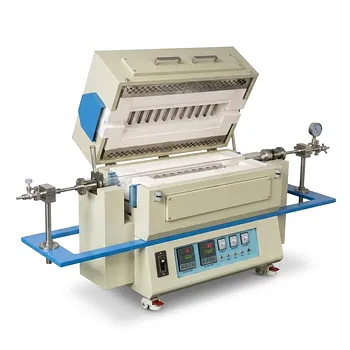
High Temperature Dual Zone Rotating Tube Furnace 1500C Silicon Carbide Heating for Advanced Material Synthesis

Compact High Temperature 1600C Tube Furnace with 50mm Alumina Tube and Vacuum Flanges for Material Sintering
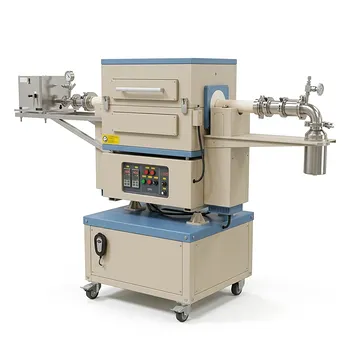
1500C Max Dual Zone Rotary Tube Furnace with 60 mm OD Alumina Tube for High Temperature Material Synthesis

High Temperature Automated 5 Inch Tube Furnace for Autonomous Material Research and Advanced Laboratory R&D
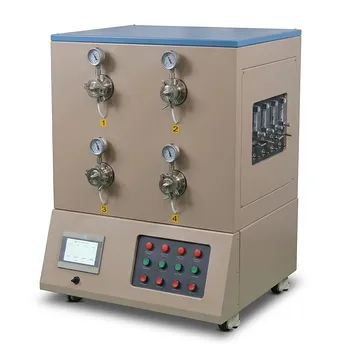
High Throughput 1200C Four Channel Tube Furnace with 3 Inch Quartz Tubes for Multi Zone Annealing and Material Research
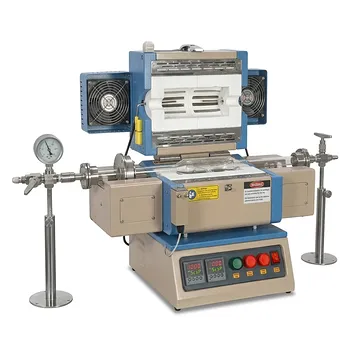
Dual Zone Rotary Tube Furnace for Uniform Powder Calcination 1000C 2 Inch Quartz Tube
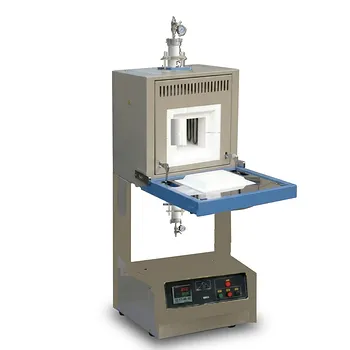
High Temperature Vertical Hybrid Furnace with Alumina Tube and SiC Heating for SOFC Coin Cell Testing and Atmosphere Processing

High Temperature 1700C Tube Furnace with High Vacuum Turbomolecular Pump System and Multi Channel Mass Flow Controller Gas Mixer
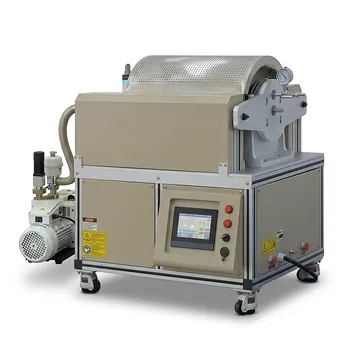
Automated 1200 C Tube Furnace for AI Material Research with 6 Inch OD and Sliding Flange
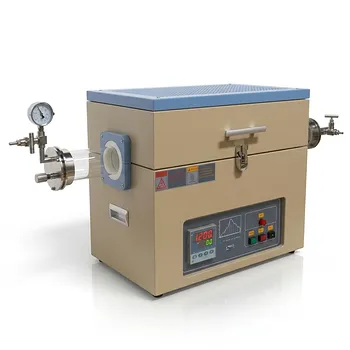
High Temperature 1200C Split Tube Furnace with Optional Quartz Tube Sizes and Vacuum Sealing Flanges for Material Science Research
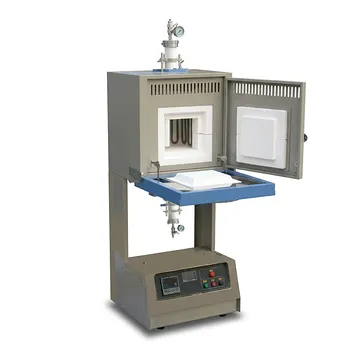
Vertical Hybrid High Temperature Furnace 1500C Alumina Tube SOFC Fuel Cell Testing Laboratory Heat Treatment Research Equipment

1800C High Temperature Compact Vacuum Tube Furnace with 60mm OD Alumina Tube and Kanthal MoSi2 Heating Elements
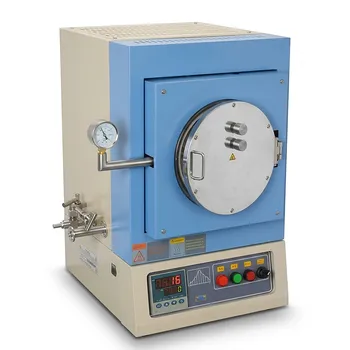
1100°C High Temperature Quartz Chamber Furnace 8 Inch OD with 7.6 Liter Capacity and Vacuum Atmosphere Capability
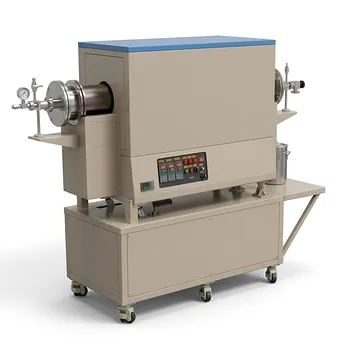
900°C Max Rotary Tube Furnace with 8 Inch 310S Alloy Tube and Optional Multi Zone Heating for Industrial Material Calcination

High Temperature 1700C Benchtop Tube Furnace with 5 Inch Heating Zone High Purity Alumina Tube and Vacuum Sealing Flanges
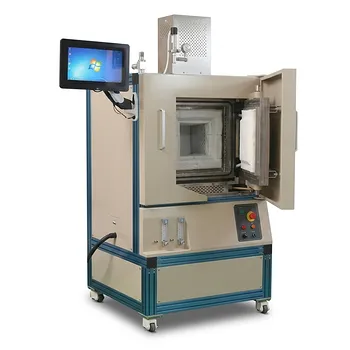
High Temperature Oxygen and Inert Atmosphere Controlled Furnace 8 Liter 1700C Sintering System for Advanced Materials RD