What are the advantages of a Vertical Tube Furnace for iron coke testing? | Achieve High-Precision CRI Analysis
Updated 5 months ago
A laboratory high-temperature vertical tube furnace provides a controlled, simulated environment specifically designed to quantify the solution loss reaction rate and hot strength of iron coke. By integrating precise gas flow management (e.g., nitrogen and carbon dioxide) with a stable vertical thermal field, this equipment allows researchers to replicate the complex atmospheric conditions inside a blast furnace. This results in highly accurate data on the Coke Reactivity Index (CRI) and the chemical kinetics governing the reduction process.
The primary advantage of a vertical tube furnace for iron coke testing lies in its ability to combine precise atmospheric control with a vertical flow path. This configuration ensures uniform gas-solid contact and rapid byproduct removal, directly enabling the quantitative measurement of reaction kinetics under simulated industrial conditions.
Precise Atmospheric Control and Simulation
Replicating Blast Furnace Conditions
The vertical tube furnace is essential for simulating the Boudouard reaction, where carbon dioxide reacts with coke. By precisely switching between nitrogen and carbon dioxide flow rates at specific temperatures (such as 1100°C), the furnace creates a localized environment that mirrors the internal atmosphere of a blast furnace.
Quantitative Kinetic Measurement
This equipment allows for the quantitative measurement of the solution loss reaction rate of iron coke. Because the gas flow is strictly controlled (often at rates like 5 L/min or 120 mL/min), technical personnel can accurately determine mass loss and evaluate how different coke blends perform under thermal stress.
Structural and Flow Advantages
Uniform Gas-Solid Interaction
The vertical configuration facilitates a more uniform flow of reaction gases through the sample bed compared to horizontal designs. This ensures that the entire volume of the iron coke sample is exposed to the same gas concentration, which is critical for obtaining consistent reactivity data.
Efficient Byproduct Removal
The design facilitates the rapid removal of gaseous byproducts, such as carbon monoxide or water vapor. Maintaining a low partial pressure of these byproducts within the reaction zone drives the chemical equilibrium toward the desired reaction, ensuring the measurements reflect the material's true reactivity potential.
Simplified Sample Handling
The vertical structure allows for easier sample placement and retrieval. In many setups, a gas lance can be inserted from the top to inject reducing gases directly into the reaction zone, significantly improving gas-solid contact efficiency and ensuring reactions occur uniformly.
Thermal Precision and Stability
Stable Thermal Fields
High-temperature tube furnaces provide a stable thermal field often reaching up to 1400°C or higher. This stability is vital for determining equilibrium constants and mass transfer coefficients, which are highly sensitive to even minor temperature fluctuations.
Accurate Pore Etching
Superior temperature control determines the depth of pore etching and the final specific surface area of the coke. This precision allows researchers to evaluate not just if the coke reacts, but how the physical structure of the iron coke degrades during the solution loss process.
Understanding the Trade-offs
Scale and Representativeness
While laboratory tube furnaces offer high precision, they utilize small sample sizes that may not always capture the macro-structural heterogeneity of industrial-grade coke. Researchers must ensure that the small sample used is truly representative of the larger batch.
Vertical Temperature Gradients
Despite their stability, vertical furnaces can develop temperature gradients along the length of the tube if the heating elements are not properly zoned. This requires rigorous calibration to ensure the sample resides entirely within the "constant temperature zone" of the furnace.
Equipment Maintenance
The use of reactive gases like $CO_2$ and $H_2$ at high temperatures can be corrosive to the furnace tube and internal sensors. Frequent inspections of seals and tube integrity are necessary to maintain a safe and airtight reaction environment.
How to Apply This to Your Project
Recommendations for Testing Goals
- If your primary focus is determining the Coke Reactivity Index (CRI): Utilize a vertical furnace with a stable $CO_2$ flow of 120 mL/min at 1000°C to ensure results are comparable to international standards.
- If your primary focus is simulating deep reduction kinetics: Prioritize a furnace setup that allows for high-purity hydrogen flow and rapid byproduct removal to drive chemical equilibrium toward metallic iron.
- If your primary focus is material service life in complex environments: Opt for a controlled-atmosphere furnace with multiple gas inlet lines to simulate multi-gas boiler fireside or blast furnace atmospheres.
The laboratory vertical tube furnace remains the definitive tool for bridging the gap between theoretical carbon chemistry and the practical demands of blast furnace operations.
Summary Table:
| Benefit | Goal | Technical Detail |
|---|---|---|
| Precise Simulation | Replicate blast furnace conditions | Accurate $CO_2$ and $N_2$ flow management |
| Uniform Contact | Consistent reactivity measurements | Vertical configuration for better gas-solid interaction |
| Thermal Stability | Accurate chemical kinetics data | Stable thermal fields for reliable mass transfer |
| Efficient Flow | Drive chemical equilibrium | Rapid removal of gaseous byproducts ($CO$, $H_2O$) |
Maximize Your Research Precision with THERMUNITS
Enhance your iron coke reactivity studies and material science experiments with advanced thermal solutions from THERMUNITS. As a leading manufacturer of high-temperature laboratory equipment, we specialize in providing researchers and industrial R&D teams with the tools they need for success.
Our comprehensive product line includes Vertical Tube Furnaces, Atmosphere and Vacuum Furnaces, CVD/PECVD systems, and Hot Press furnaces, all designed for superior stability and atmospheric control. Contact us today to learn how our customized heat treatment equipment can streamline your laboratory workflows and deliver precise, actionable data.
References
- Yanhui Li, Liangyuan Hao. Compressive Strength and Thermal Properties of Ferro Coke Prepared by Cold Pressing Method. DOI: 10.2355/isijinternational.isijint-2024-295
Mentioned Products
- High Temperature 1700C Vertical Tube Furnace for Powder Spherification and Material Sintering
- Vertical 1700C Vacuum and Atmosphere Tube Furnace with 80mm Alumina Tube
- 500C Vacuum Vertical Tube Furnace 84mm OD Sample Rotation Lifting System
- 1100°C Split Vertical Tube Furnace with 80mm Quartz Tube and Stainless Steel Vacuum Flanges
- Split Vertical Tube Furnace with 1200C Quartz Tube and Stainless Steel Vacuum Flanges for Rapid Thermal Processing
People Also Ask
- What role does a high-temperature vertical tube furnace play in simulating high-carbon ferromanganese slag formation?
- What functions does a vertical high-temperature tube furnace perform? Master Industrial Sintering & R&D Simulation
- What is the primary function of a high-temperature tube furnace in Cu1-N-C synthesis? Precision Thermal Control.
- High-Temp Tube Furnace Role in Converting Microbial Proteins to Iron Single-Atom Sites: Expert Synthesis Guide
- What impact does the heating rate of a tube furnace have on biochar microstructure? Optimize Your Material R&D.

Tech Team · ThermUnits
Last updated on Apr 14, 2026
Related Products

High Temperature 1700C Vertical Tube Furnace for Powder Spherification and Material Sintering

Vertical 1700C Vacuum and Atmosphere Tube Furnace with 80mm Alumina Tube
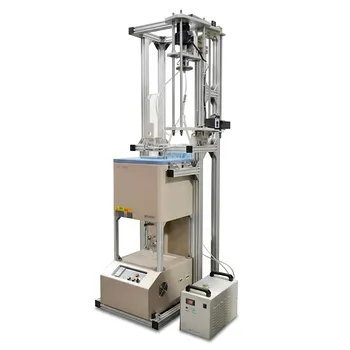
500C Vacuum Vertical Tube Furnace 84mm OD Sample Rotation Lifting System
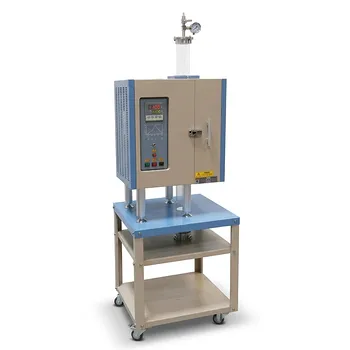
1100°C Split Vertical Tube Furnace with 80mm Quartz Tube and Stainless Steel Vacuum Flanges
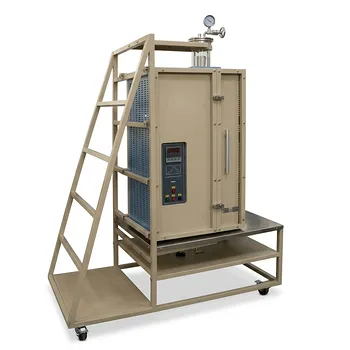
Split Vertical Tube Furnace with 1200C Quartz Tube and Stainless Steel Vacuum Flanges for Rapid Thermal Processing

Compact Vertical Split Quartz Tube Furnace with Stainless Steel Vacuum Flanges for Rapid Thermal Quenching and Controlled Atmosphere Material Processing
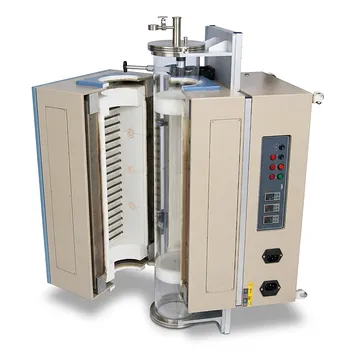
Large Vertical Three Zone Tube Furnace with 8 Inch or 11 Inch Quartz Tube and High Vacuum Flanges 1200C
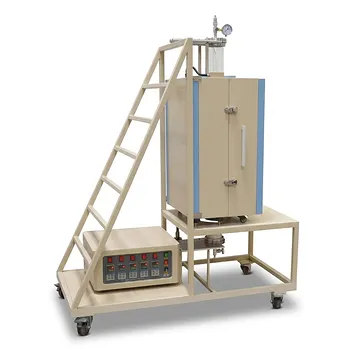
Five Zone Split Vertical Tube Furnace 1200C Max with 4 Inch Quartz Tube and Stainless Steel Vacuum Flanges
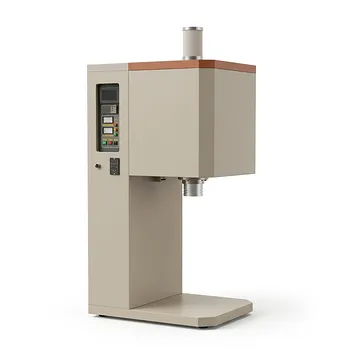
Vertical Openable Tube Furnace 0-1700c High Temperature Laboratory System for CVD and Vacuum Heat Treatment

1200°C 5 Inch Vertical Quartz Tube Furnace with Stainless Steel Vacuum Flanges
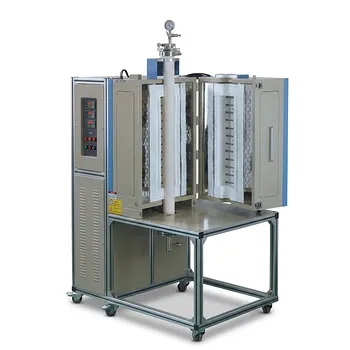
Three Zone Heating Split Vertical Tube Furnace 1700 High Temperature Vacuum Atmosphere Thermal Process System
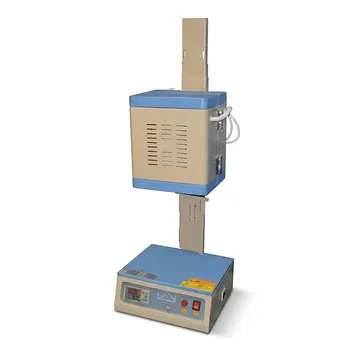
High Temperature Vertical Split Tube Furnace with PID Temperature Controller for 1 and 2 Inch Processing Tubes
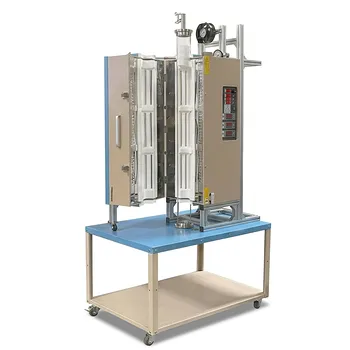
1200C Three Zone Split Vertical Tube Furnace 4 Inch Quartz Tube Stainless Steel Vacuum Flanges
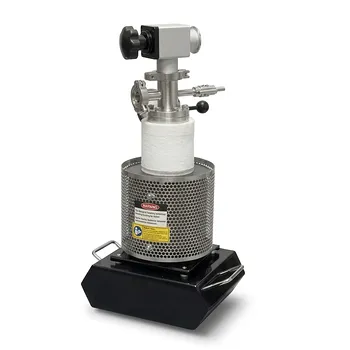
High Temperature 1100C Compact Top Loading Vertical Vacuum Tube Furnace for High Vacuum Noble Metal Melting and Material Research
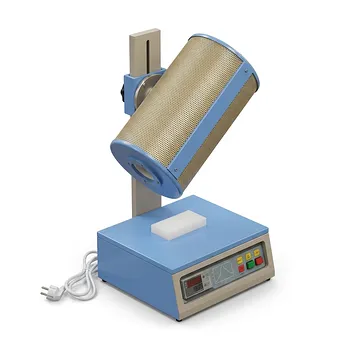
1100°C Vertical Laboratory Furnace for DIY Tubular Reactors with PID Temperature Controller
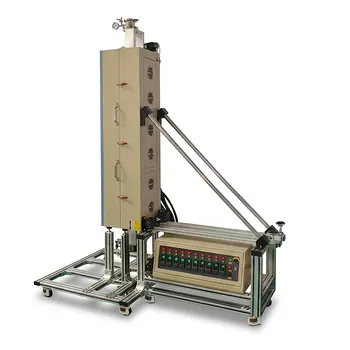
1200°C 10-Zone Split Tube Furnace with Horizontal and Vertical Mounting for Multi-Zone Thermal Gradients and Large Diameter Material Processing
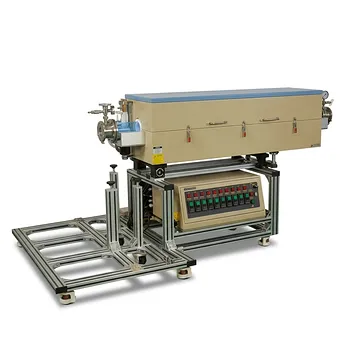
Ten Zone Multi Orientation Laboratory Tube Furnace for 1200C High Temperature Gradient Thermal Processing

High Temperature 1700C Six Zone Split Tube Furnace with Alumina Tube and Water Cooled Flanges

1100C Tube Furnace with Vacuum Flange and Programmable Temperature Controller for Material Science and Industrial Heat Treatment
