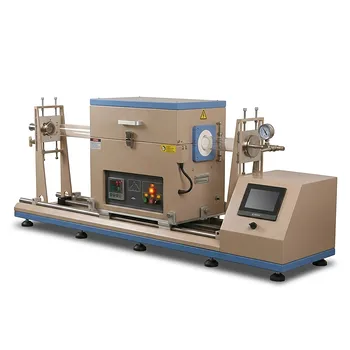
What are the specific advantages of a Tube Furnace compared to a lab oven? Precise atmosphere for material modification.
Updated 3 months ago
A tube furnace is the definitive tool for material modification requiring high-purity environments.
Unlike standard laboratory ovens, tube furnaces utilize a sealed tubular reaction space to provide high-vacuum capabilities and precise gas flow management. This architecture enables the introduction of inert, reducing, or reactive gases while completely isolating the sample from ambient oxygen and moisture, which is critical for preventing unintended chemical reactions.
While standard ovens are designed for general bulk heating, tube furnaces act as controlled micro-reactors. They provide the environmental isolation necessary to prevent contamination and maintain the exact chemical stoichiometry of advanced materials.
Superior Environmental Isolation
High Vacuum and Gas-Tight Sealing
The primary advantage of a tube furnace is its ability to operate under high vacuum conditions. Gas-tight end seals and integrated vacuum pumping systems allow researchers to evacuate the chamber entirely, removing atmospheric impurities that would otherwise degrade sensitive samples.
Total Atmospheric Exclusion
By creating a sealed microenvironment, these furnaces effectively isolate oxygen and moisture from the air. This isolation is mandatory for high-temperature annealing, carbonization, or reduction reactions where even trace amounts of oxygen could cause unwanted oxidation.
Precision Atmosphere Management
Dynamic Gas Flow Control
Tube furnaces support the continuous injection of high-purity gases, such as Argon or specific reducing gases. Using mass-flow controllers, you can regulate the residence time and flow direction of reaction gases to influence the crystal phase structure and surface morphology of the material.
Maintaining Chemical Stoichiometry
Precise atmosphere regulation allows for the use of buffering components, such as Ni-NiO buffer pairs or specific CO/CO2 ratios. This locks the chemical state of the sample, preventing phase decomposition or non-stoichiometric changes caused by fluctuations in oxygen partial pressure.
Simulation of Industrial Conditions
High-temperature tube furnaces can reach stable environments up to 1723 K. This capability, combined with controlled gas environments, allows researchers to accurately simulate industrial metallurgical conditions, such as the transport mechanisms of carbon within molten slag.
Enhanced Thermal and Physical Control
Inhibition of Nanoparticle Coarsening
Tube furnaces provide rapid heating and cooling capabilities within an elongated reaction space. This dynamic thermal control, paired with stable temperature gradients, inhibits the coarsening of nanoparticles, resulting in a much narrower particle size distribution than traditional methods.
Uniformity in Continuous Processing
For larger-scale powder production, rotary or continuous tube furnaces offer superior uniformity compared to static ovens. By rotating the tube or moving the material, every particle is exposed to the same temperature field and process gas, eliminating the "center heat lag effect" common in bulk heating.
Understanding the Trade-offs
Sample Geometry and Volume
The most significant limitation of a tube furnace is its restrictive internal volume. Because the material must fit inside a narrow tube, they are unsuitable for large, bulky components or high-volume batch processing of large parts.
Operational Complexity
Achieving precise atmospheric control requires additional infrastructure, including gas cylinders, regulators, and vacuum pumps. This complexity increases the initial setup time and requires a higher level of technical expertise to operate safely and effectively compared to a "plug-and-play" laboratory oven.
Selecting the Right System for Your Process
Carefully matching the furnace design to your material goals ensures the integrity of your results.
- If your primary focus is Nanomaterial Synthesis: A tube furnace is essential for its ability to create stable temperature gradients and inhibit nanoparticle coarsening through rapid thermal cycling.
- If your primary focus is Preventing Oxidation in Sensitive Metals: Utilize a tube furnace with gas-tight seals and Argon flow to ensure the chemical stoichiometry remains unchanged during high-temperature treatment.
- If your primary focus is High-Volume Batch Processing of Large Parts: A standard muffle furnace or laboratory oven is likely more appropriate, provided that strict atmospheric control is not a requirement.
- If your primary focus is Consistent Powder Production: A rotary tube furnace is the superior choice to ensure every particle reacts fully with the process gas and avoids thermal lag.
The right tube furnace transforms heat treatment from a simple heating process into a precision engineering tool for advanced material synthesis.
Summary Table:
| Feature | Tube Furnace | Standard Laboratory Oven |
|---|---|---|
| Atmospheric Control | High-purity inert, reducing, or reactive gases | Limited (mostly ambient air) |
| Vacuum Capability | High vacuum (removes oxygen/moisture) | No vacuum or very low vacuum |
| Thermal Dynamics | Rapid heating/cooling; stable gradients | Uniform bulk heating; slow cycles |
| Sample Volume | Small, restricted to tube diameter | Large, batch processing capability |
| Ideal Application | Nanomaterial synthesis, CVD, carbonization | Drying, sterilization, bulk annealing |
Elevate Your Material Research with THERMUNITS
Precise thermal processing is the backbone of advanced material science. THERMUNITS is a leading manufacturer of high-temperature laboratory equipment, providing the precision tools necessary for cutting-edge industrial R&D.
Whether you require a Tube Furnace for high-purity atmospheric control, a Rotary Kiln for uniform powder production, or advanced CVD/PECVD systems, we offer a comprehensive range of solutions including:
- Furnaces: Muffle, Vacuum, Atmosphere, Tube, Rotary, and Hot Press.
- Specialized Systems: Dental Furnaces, Vacuum Induction Melting (VIM), and Thermal Elements.
Don't let atmospheric contamination or temperature fluctuations compromise your results. Our expert team is ready to help you select the perfect heat treatment configuration tailored to your specific research goals.
Contact THERMUNITS Today to Request a Quote
References
- Huabo Li, Wei‐Lin Dai. Size‐Dependent Copper Nanoparticles Supported on Carbon Nanotubes with Balanced Cu<sup>+</sup> and Cu<sup>0</sup> Dual Sites for the Selective Hydrogenation of Ethylene Carbonate. DOI: 10.1002/chem.202402699
Mentioned Products
- Vertical 1700C Vacuum and Atmosphere Tube Furnace with 80mm Alumina Tube
- Compact High Temperature 1600C Tube Furnace with 50mm Alumina Tube and Vacuum Flanges for Material Sintering
- 900°C Max Rotary Tube Furnace with 8 Inch 310S Alloy Tube and Optional Multi Zone Heating for Industrial Material Calcination
- Split Vertical Tube Furnace with 1200C Quartz Tube and Stainless Steel Vacuum Flanges for Rapid Thermal Processing
- High Temperature 1700C Tube Furnace with High Vacuum Turbomolecular Pump System and Multi Channel Mass Flow Controller Gas Mixer
People Also Ask
- How is an industrial-grade vertical tube furnace utilized in smelting leaching residues? Enhance Metal Recovery Efficiency
- What is the function of a laboratory-grade vertical tube furnace in fast pyrolysis? Optimize Composite Research.
- How does a vertical tube furnace facilitate thermoelectric alloy melting? Precision synthesis for material homogeneity.
- Why is a thermocouple sensor indispensable for monitoring the vertical tube furnace during gallium oxide nanowire production? Optimize VLS Growth
- What are the advantages of using a vertical tube furnace for crucible experiments simulating steel-slag interactions?

Tech Team · ThermUnits
Last updated on Jun 02, 2026
Related Products

Vertical 1700C Vacuum and Atmosphere Tube Furnace with 80mm Alumina Tube

Compact High Temperature 1600C Tube Furnace with 50mm Alumina Tube and Vacuum Flanges for Material Sintering
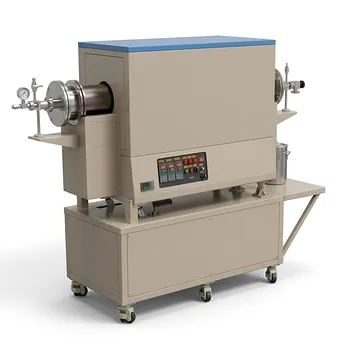
900°C Max Rotary Tube Furnace with 8 Inch 310S Alloy Tube and Optional Multi Zone Heating for Industrial Material Calcination
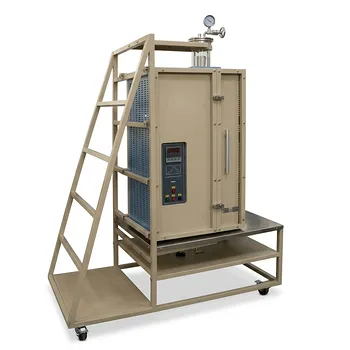
Split Vertical Tube Furnace with 1200C Quartz Tube and Stainless Steel Vacuum Flanges for Rapid Thermal Processing

High Temperature 1700C Tube Furnace with High Vacuum Turbomolecular Pump System and Multi Channel Mass Flow Controller Gas Mixer

1100C Tube Furnace with Vacuum Flange and Programmable Temperature Controller for Material Science and Industrial Heat Treatment
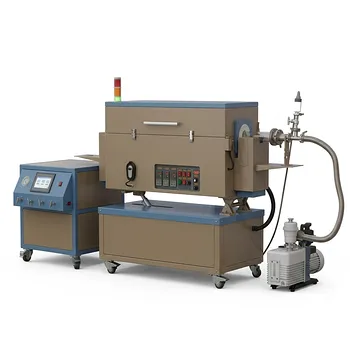
5 Inch Three Zone Rotary Tube Furnace with Integrated Gas Delivery System and 1200C Capability for Advanced Material CVD Processing
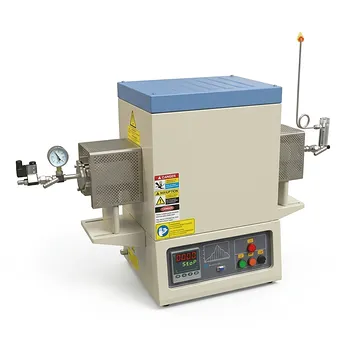
1700C Hydrogen Gas Tube Furnace with 60mm Alumina Process Tube and Integrated Hydrogen Safety Detector
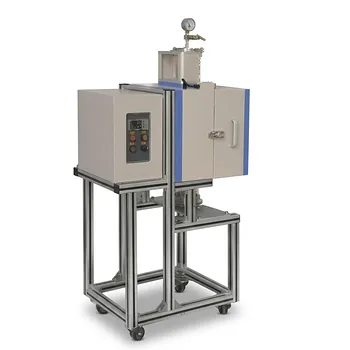
1200°C 5 Inch Vertical Quartz Tube Furnace with Stainless Steel Vacuum Flanges

High Temperature 1700C Six Zone Split Tube Furnace with Alumina Tube and Water Cooled Flanges

Compact Vertical Split Quartz Tube Furnace with Stainless Steel Vacuum Flanges for Rapid Thermal Quenching and Controlled Atmosphere Material Processing

High Temperature 1700C Benchtop Tube Furnace with 5 Inch Heating Zone High Purity Alumina Tube and Vacuum Sealing Flanges
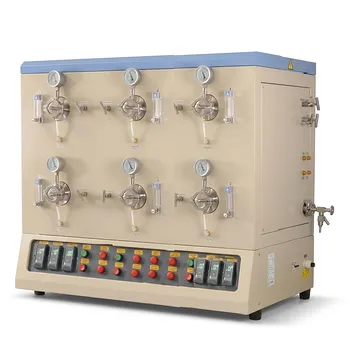
1200C High Throughput Multi Channel Tube Furnace with 50mm Quartz Tubes for Annealing and Material Phase Diagram Research
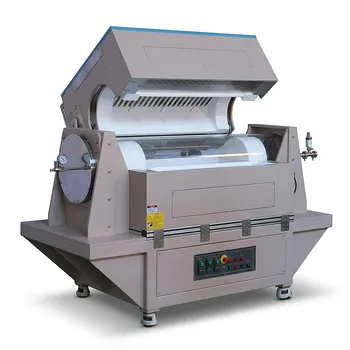
Three Zone Tube Furnace with 11 Inch or 15 Inch Quartz Tube and Hinged Flanges for Vacuum Atmosphere Heat Treatment

1800C High Temperature Compact Vacuum Tube Furnace with 60mm OD Alumina Tube and Kanthal MoSi2 Heating Elements

High Temperature 1700C Vertical Tube Furnace for Powder Spherification and Material Sintering
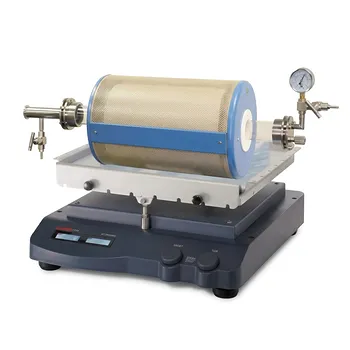
High Temperature Rocking Tube Furnace with Quartz Tube and Vacuum Flange for Materials Synthesis

High Temperature Automated 5 Inch Tube Furnace for Autonomous Material Research and Advanced Laboratory R&D
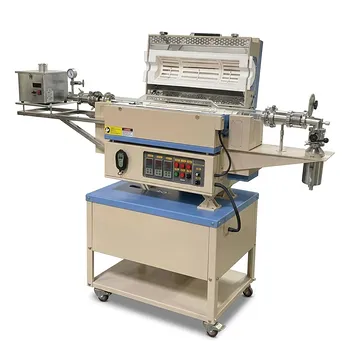
5 Inch Rotary Tube Furnace with Automatic Feeding and Receiving System 1200C Three Zone CVD Powder Processing