What are the advantages of FAST/SPS for W-Cr-Y alloys? Achieve Superior Nanostructure & High Oxidation Resistance
Updated 3 months ago
The technical superiority of Field Assisted Sintering Technology (FAST/SPS) in W-Cr-Y alloy fabrication lies in its ability to utilize pulsed current for direct heating. This mechanism enables heating rates as high as 200 K/min and significantly shorter holding times, which together suppress grain growth to approximately 180 nanometers. By maintaining this nanostructure, the system increases grain boundary density, facilitating the rapid diffusion of chromium to the surface to form a dense, protective oxide layer.
Core Takeaway: FAST/SPS outperforms traditional hot pressing by leveraging direct pulsed current to achieve rapid densification while arresting grain growth at the nanoscale. This precise microstructural control is the key to enhancing the oxidation resistance and mechanical integrity of tungsten-based alloys.
Direct Joule Heating and Kinetic Advantages
The Mechanism of Pulsed Current
Unlike traditional hot pressing, which relies on external heating elements and slow thermal conduction, FAST/SPS passes a high-energy pulsed current directly through the graphite mold and the sample. This generates internal Joule heating, allowing the material to reach sintering temperatures almost instantaneously.
Rapid Thermal Cycles
The system achieves extreme heating rates, frequently cited at 200 K/min, compared to the much slower ramps of conventional furnaces. This speed reduces the total thermal budget of the process, completing densification in minutes rather than hours.
Enhanced Sintering Kinetics
The combination of pulsed current and simultaneous axial pressure (often 40–60 MPa) accelerates mass transport. This allows W-Cr-Y alloys to reach high relative densities while minimizing the time the material spends at temperatures prone to grain coarsening.
Microstructural Control and Nanoscale Stabilization
Suppression of Grain Growth
The most critical advantage of the FAST/SPS process is the inhibition of grain growth. In W-Cr-Y alloys, the short holding times prevent the tungsten matrix from recrystallizing into large, brittle grains, keeping the grain size at approximately 180 nm.
Increasing Grain Boundary Density
By maintaining a fine-grained structure, the system significantly increases the total area of grain boundaries within the alloy. These boundaries serve as high-speed pathways for atomic diffusion, which is vital for the material’s functional performance.
Stabilization of Refractory Phases
For alloys containing refractory metals with extremely high melting points, such as tungsten or tantalum, FAST/SPS overcomes traditional processing hurdles. It achieves a uniform microstructure without the need for the prolonged, high-temperature exposure that typically leads to "abnormal grain growth."
Functional Impact on Oxidation Resistance
Facilitating Chromium Diffusion
The primary goal of the W-Cr-Y alloy is to form a self-healing chromium oxide (Cr2O3) layer during high-temperature exposure. The high grain boundary density provided by SPS allows chromium atoms to migrate to the surface much faster than in coarse-grained materials.
Formation of Dense Protective Layers
This rapid migration ensures the formation of a dense, continuous protective layer rather than a porous or localized one. This layer is essential for protecting the underlying tungsten from catastrophic oxidation in extreme environments.
Minimizing Interfacial Reactions
The rapid nature of FAST/SPS also minimizes harmful interfacial reactions between the metallic matrix and alloying elements or reinforcements. This ensures that the chemical composition intended by the engineers remains stable and effective in the final bulk part.
Understanding the Trade-offs and Limitations
Geometric Constraints
FAST/SPS is generally limited to simple geometries, such as cylinders or discs, due to the requirement for uniform current flow and axial pressure. Producing complex, near-net-shape components is significantly more challenging than with traditional hot isostatic pressing.
Tooling Costs and Scalability
The process relies heavily on graphite tooling, which is a consumable that degrades under high pressure and temperature. While highly efficient for small-to-medium batches, scaling the process to produce very large industrial components can be cost-prohibitive.
Thermal Gradients
In very large samples, maintaining thermal uniformity can be difficult because the current density may vary across the cross-section. This can lead to slight variations in density or grain size between the core and the periphery of the part if not carefully managed.
How to Apply This to Your Project
Recommendations for Material Selection
- If your primary focus is extreme oxidation resistance: Utilize FAST/SPS to maximize grain boundary density, as this is the most effective way to ensure a rapid, protective chromium oxide response.
- If your primary focus is mechanical toughness and strength: Leverage the rapid cooling and short holding times of SPS to maintain a nanostructured grain size, which prevents the brittleness associated with coarse tungsten grains.
- If your primary focus is high-volume production of complex shapes: Traditional hot pressing or hot isostatic pressing may be more viable, provided you can compensate for the resulting grain growth through secondary thermomechanical processing.
By prioritizing the kinetic advantages of pulsed current heating, FAST/SPS transforms W-Cr-Y alloys from simple mixtures into high-performance, nanostructured materials capable of surviving the most demanding thermal environments.
Summary Table:
| Feature | FAST/SPS (Spark Plasma Sintering) | Traditional Hot Pressing |
|---|---|---|
| Heating Method | Direct Pulsed Current (Internal Joule) | External Heating (Conduction) |
| Heating Rate | Extreme (Up to 200 K/min) | Slow / Conventional |
| Processing Time | Minutes | Hours |
| Grain Size | Nanoscale (~180 nm) | Microscale (Coarse) |
| Oxidation Defense | Rapid Cr-Oxide Layer Formation | Slower Diffusion Pathways |
| Main Strength | Precise Microstructural Control | Scalability for Large Samples |
Elevate Your Advanced Material Research with THERMUNITS
Unlock the full potential of your refractory alloys and high-performance materials. THERMUNITS is a leading manufacturer of high-temperature laboratory equipment for material science and industrial R&D. We provide the precision and reliability needed for cutting-edge thermal processing.
Our comprehensive range of solutions includes:
- Sintering & Melting: Vacuum Induction Melting (VIM) furnaces, Hot Press furnaces, and Spark Plasma Sintering-compatible systems.
- Versatile Heat Treatment: Muffle, Vacuum, Atmosphere, Tube, and Rotary furnaces.
- Specialized Systems: CVD/PECVD systems, Dental Furnaces, and Electric Rotary Kilns.
- Components: High-quality Thermal Elements and lab-scale accessories.
Whether you are stabilizing nanostructures or developing oxidation-resistant coatings, we offer the technical expertise to optimize your workflow. Contact our technical team today to find the perfect thermal processing solution for your laboratory!
References
- Anicha Reuban, Jesús González‐Julián. The Effect of Y Addition on Oxidation Resistance of Bulk W-Cr Alloys. DOI: 10.3390/ma17235749
Mentioned Products
- Compact Spark Plasma Sintering SPS Furnace 1200 C Max 100 MPa Pressure High Speed Sintering System for Material Research
- High Temperature Ultrafast Heating Pressing Furnace 2900C Max 100kgf Rapid Thermal Processing System
- 2500C High Vacuum Ultrafast Heating Pellet Press with Automated 8 Sample Loading System
- High Temperature Horizontal Electrical Assisted Sintering Furnace with 3KW Programmable Power Source for Advanced Ceramic Materials
- High Vacuum Pressure Chamber Furnace 800C 3.5 Bar Sintering System for Superconducting Materials
People Also Ask
- SPS vs Hot Pressing for La2O2S: Faster Densification & Superior Grain Growth Control
- What are the equipment advantages of Spark Plasma Sintering (SPS)? Faster Densification & Superior Phase Control
- How does a modified Spark Plasma Sintering (SPS) system differ from traditional vacuum furnaces? Faster RAS Heat Cycles.
- What are the advantages of Spark Plasma Sintering (SPS) systems compared to traditional tube furnaces? | Nano-Cermets
- What are the unique advantages of a Spark Plasma Sintering (SPS) system? Achieve Rapid Densification & Fine Grain Control

Tech Team · ThermUnits
Last updated on Jun 02, 2026
Related Products
Compact Spark Plasma Sintering SPS Furnace 1200 C Max 100 MPa Pressure High Speed Sintering System for Material Research
High Temperature Ultrafast Heating Pressing Furnace 2900C Max 100kgf Rapid Thermal Processing System
2500C High Vacuum Ultrafast Heating Pellet Press with Automated 8 Sample Loading System
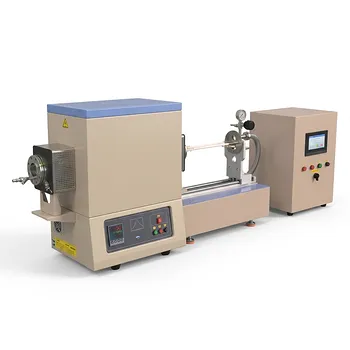
High Temperature Horizontal Electrical Assisted Sintering Furnace with 3KW Programmable Power Source for Advanced Ceramic Materials
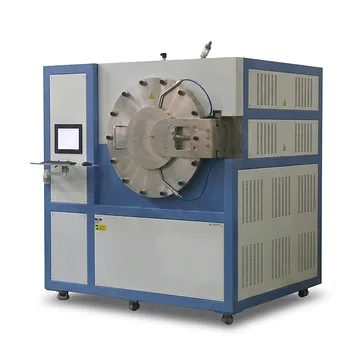
High Vacuum Pressure Chamber Furnace 800C 3.5 Bar Sintering System for Superconducting Materials
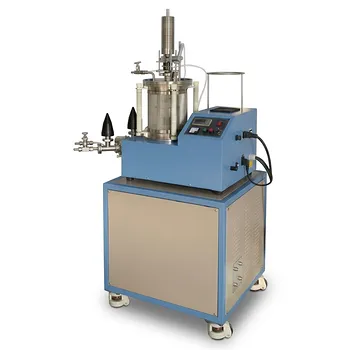
Ultrafast Thermal Pressing Furnace 2900C Max Temperature 200K per Second Heating Rate Vacuum Atmosphere Rapid Processing System
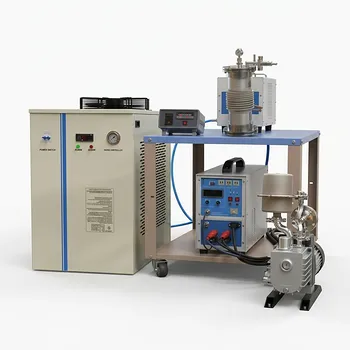
Induction Heating System with Temperature Control for High Temperature Vacuum Sintering and Melting
High Throughput Four Channel Box Furnace 1500C Max Independent Temperature Control Material Research Sintering System
Industrial High Temperature Vacuum Hot Press Furnace and Heated Vacuum Press Machine for Material Science Sintering
High Temperature Vertical Three Zone Powder Spheroidizing Furnace for Advanced Material Synthesis and Industrial Thermal Processing
Roller Table Atmosphere Furnace 1500C High Temperature Battery Material Sintering System 112L Capacity
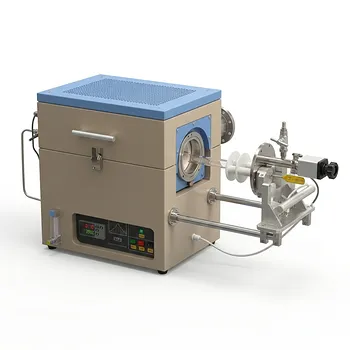
Compact Atmosphere Controlled Rapid Thermal Processing RTP Furnace with 4 Inch ID Quartz Tube 1100C
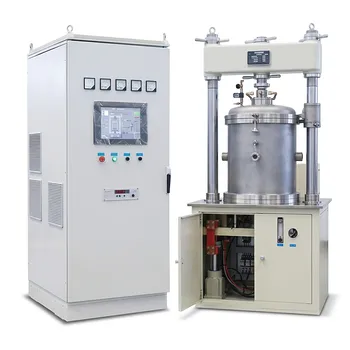
Industrial Vacuum Hot Press Furnace Machine and High Temperature Heated Vacuum Press for Advanced Material Sintering
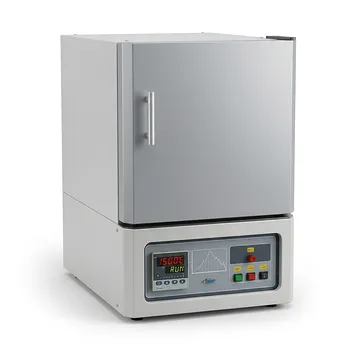
High Temperature 1500C Benchtop Muffle Furnace 3.6L Alumina Fiber Chamber Programmable Controller Sintering Annealing Carbonization Thermal Processing System

Compact Vertical Split Quartz Tube Furnace with Stainless Steel Vacuum Flanges for Rapid Thermal Quenching and Controlled Atmosphere Material Processing
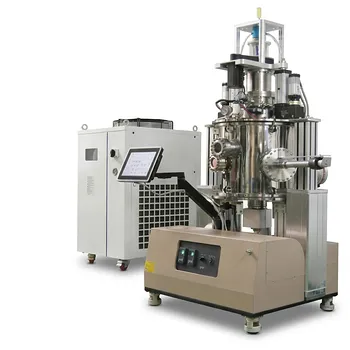
950C Rapid Thermal Processing Furnace for 12 Inch Wafer CSS Coating with Rotating Substrate Holder

High Temperature 1700C Vertical Tube Furnace for Powder Spherification and Material Sintering
High Pressure 600T Vacuum Induction Hot Press Furnace for Advanced Material Heat Treatment and Sintering
Chemical Vapor Deposition CVD System Slide PECVD Tube Furnace with Liquid Gasifier PECVD Machine