What are the advantages of a tube furnace for catalyst calcination? Optimize phase purity and particle dispersion.
Updated 3 months ago
High-temperature tube furnaces with inert atmospheres provide a precisely controlled environment for the thermal transformation of catalysts. These systems allow for exact heating rates (e.g., 5 °C/min) and high terminal temperatures (up to 1000 °C) while excluding oxygen to prevent unintended oxidation or combustion. This level of control is essential for the clean decomposition of precursors, the removal of volatiles, and the engineering of stable, porous catalyst structures with high phase purity.
A high-temperature tube furnace is the definitive tool for catalyst calcination because it decouples thermal energy from chemical reactivity. By providing a uniform temperature field and an isolated atmosphere, it allows researchers to dictate the exact physical and chemical state of the catalyst without the interference of ambient oxygen or temperature fluctuations.
Superior Control Over Chemical Environments
Prevention of Unwanted Oxidation
The primary advantage of an inert atmosphere, such as nitrogen (N2), is the prevention of oxidative degradation. In catalysts using activated carbon supports, an inert environment is mandatory to decompose metal precursors without triggering the oxidative combustion of the carbon itself.
Facilitating Precise Precursor Decomposition
Tube furnaces allow metal nitrate precursors to convert into active oxides at high temperatures (e.g., 500 °C - 600 °C) in a stable environment. This ensures that volatile components are removed cleanly, leaving behind highly dispersed nanoparticles within the support's pores.
Enabling Reducing Environments
Beyond simple inertness, tube furnaces can facilitate reducing atmospheres (such as 5% H2 in Ar or N2). This is critical for reducing oxidized precursors to metallic states (e.g., Platinum or Copper) while maintaining specific valence distributions (Cu0/Cu+) necessary for catalytic activity.
Engineering Structural and Phase Integrity
Enhancing Crystallinity and Phase Purity
Extended calcination at high temperatures (770 °C – 790 °C) promotes atomic rearrangement within the catalyst material. This process eliminates structural defects and results in pure-phase powders with significantly enhanced crystallinity, which is vital for stable photocatalytic performance.
Inducing Specific Porosity and Surface Area
The stable high-heat environment allows for the controlled reaction of activation agents like potassium bicarbonate with carbon precursors. This process facilitates intense pore formation, dramatically increasing the specific surface area and optimizing the material for energy storage or catalytic applications.
Strengthening Structural Bonding
Precise thermal treatment (e.g., at 350 °C) can stabilize Metal-Organic Framework (MOF) structures like ZIF. In electrode preparation, this calcination step strengthens the bonding force between the active layer and the substrate, ensuring long-term electrochemical stability.
Thermal Uniformity and Particle Dispersion
Ensuring Temperature Field Uniformity
The geometry of a tube furnace provides a superior temperature field uniformity compared to standard box furnaces. This uniformity ensures that the entire batch of material undergoes an identical thermal history, resulting in consistent chemical states across the sample.
Preventing Over-Sintering and Agglomeration
High-precision temperature-programmed control is essential to prevent over-sintering of active metal particles. By maintaining a constant, precise temperature, the furnace prevents nanoparticles from merging, thereby preserving the high dispersion of active sites and maximizing catalytic efficiency.
Understanding the Trade-offs
Atmospheric Dynamics and Mass Transfer
While a flowing atmosphere is excellent for maintaining purity, the gas flow rate can influence mass transfer and heat distribution. If the flow is too high, it may create temperature gradients; if too low, it may fail to effectively sweep away decomposed volatiles.
Equipment Complexity and Scalability
Operating an atmosphere-controlled tube furnace requires specialized gas handling and sealing protocols to ensure the environment remains oxygen-free. This added complexity makes these systems more expensive and harder to scale than simple ambient-air calcination methods.
Making the Right Choice for Your Goal
To maximize the effectiveness of your calcination process, tailor your furnace parameters to your specific material requirements:
- If your primary focus is carbon-supported catalysts: Use a strict nitrogen or argon flow to prevent the combustion of the support while decomposing precursors.
- If your primary focus is phase purity and crystallinity: Prioritize long-duration thermal soaking at high temperatures to ensure complete atomic rearrangement.
- If your primary focus is active site dispersion: Utilize a low heating rate (e.g., 2-5 °C/min) and precise terminal temperatures to prevent the agglomeration of metallic nanoparticles.
- If your primary focus is specific oxidation states: Employ a reducing gas mixture (H2/Ar) to achieve the desired valence distribution without over-reducing the material.
The precision offered by a high-temperature tube furnace transforms catalyst preparation from an empirical trial to a controlled, repeatable science.
Summary Table:
| Feature | Technical Advantage | Research Impact |
|---|---|---|
| Inert Atmosphere | Prevents oxidative degradation | Protects carbon supports & enables clean decomposition |
| Thermal Uniformity | Identical thermal history across batch | Consistent chemical states and phase purity |
| Reducing Capability | Supports H2/Ar gas mixtures | Precise control of metal valence states (e.g., Cu0/Cu+) |
| Precision Heating | Controlled ramp rates (2-5 °C/min) | Prevents nanoparticle sintering and agglomeration |
| Structural Stability | Engineered high-heat soaking | Increases crystallinity and optimizes surface area |
Elevate Your Catalyst Research with THERMUNITS
Precision is non-negotiable in catalyst calcination. THERMUNITS is a leading manufacturer of high-temperature laboratory equipment, providing the material science and industrial R&D sectors with the tools needed for breakthrough discoveries.
Our comprehensive range of thermal solutions—including Tube, Atmosphere, Vacuum, Muffle, and Rotary Furnaces, as well as CVD/PECVD systems and Vacuum Induction Melting (VIM) units—are engineered to provide the stable environments and precise atmospheric control your research demands.
Whether you are developing carbon-supported catalysts or advanced MOFs, our equipment ensures maximum phase purity and optimized particle dispersion. Contact our technical team today to discuss your specific heat treatment requirements and see how our expertise can accelerate your R&D outcomes.
References
- Anișoara Oubraham, Adriana Marinoiu. Preparation of Copper-Based Catalysts for Obtaining Methanol by the Chemical Impregnation Method. DOI: 10.3390/ma17040847
Mentioned Products
- 800C High Magnetic Field Compatible Tube Furnace 100mm ID 190mm OD Inert Atmosphere Research System
- 1200C Hybrid Muffle and Tube Furnace for Material Research with Dual Atmosphere Control Quartz Tubes
- Bottom Loaded Inert Gas Atmosphere Box Furnace 1400C Maximum Temperature 125L High Capacity Laboratory Heat Treatment System
- 1400C Bottom Loaded Inert Gas Atmosphere Box Furnace with 125L Capacity and Precision Hydraulic Lift
- Bottom Loaded Inert Gas Atmosphere Box Furnace 1700C 1300C 216L Large Capacity Industrial Thermal Processing System
People Also Ask
- What is the operational mechanism of copper foil acting as an oxygen trap? Enhancing Material Synthesis Purity
- Why is a high-temperature tube furnace with inert atmosphere needed for single-atom nanozymes? Essential Synthesis Guide
- What is the role of a high-precision tube furnace in magnetite catalyst preparation? Master phase-controlled reduction.
- Why is a nitrogen-equipped tube furnace essential for Nitrogen-doped Carbon? Maximize yield and doping precision.
- Why use a tube atmosphere furnace with nitrogen for MDBC carbonization? Ensure High Yield & Material Integrity

Tech Team · ThermUnits
Last updated on Jun 02, 2026
Related Products
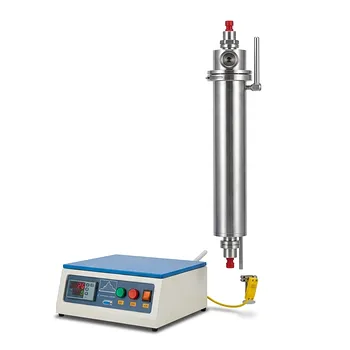
800C High Magnetic Field Compatible Tube Furnace 100mm ID 190mm OD Inert Atmosphere Research System
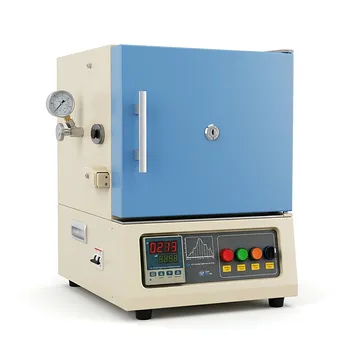
1200C Hybrid Muffle and Tube Furnace for Material Research with Dual Atmosphere Control Quartz Tubes
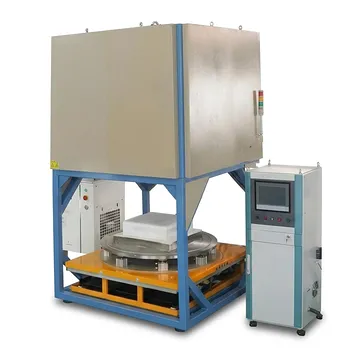
Bottom Loaded Inert Gas Atmosphere Box Furnace 1400C Maximum Temperature 125L High Capacity Laboratory Heat Treatment System
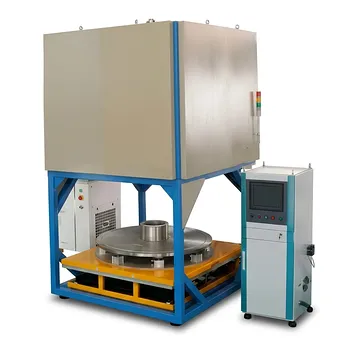
1400C Bottom Loaded Inert Gas Atmosphere Box Furnace with 125L Capacity and Precision Hydraulic Lift
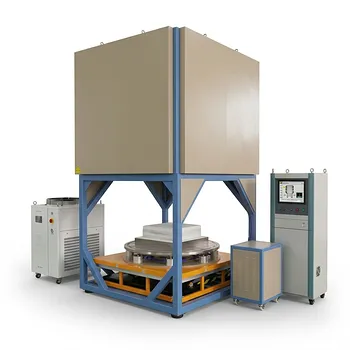
Bottom Loaded Inert Gas Atmosphere Box Furnace 1700C 1300C 216L Large Capacity Industrial Thermal Processing System
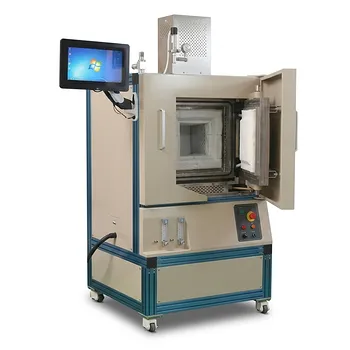
High Temperature Oxygen and Inert Atmosphere Controlled Furnace 8 Liter 1700C Sintering System for Advanced Materials RD
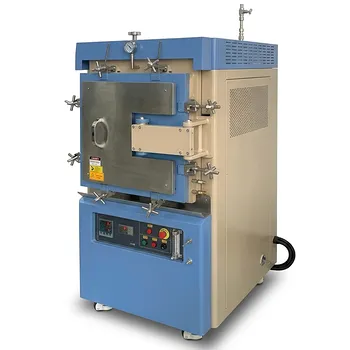
Atmosphere Controlled Muffle Furnace 1700C Maximum Temperature 80L High Capacity Vacuum Inert Gas Box Furnace

Compact Vertical Split Quartz Tube Furnace with Stainless Steel Vacuum Flanges for Rapid Thermal Quenching and Controlled Atmosphere Material Processing
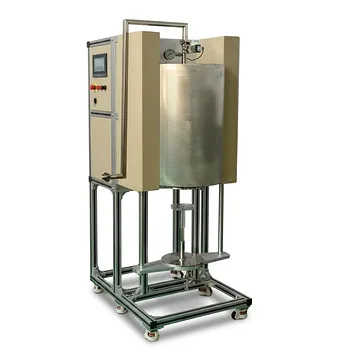
1200°C Atmosphere Controlled Automatic Bottom Loading Furnace with 6 Inch Quartz Tube

Vertical 1700C Vacuum and Atmosphere Tube Furnace with 80mm Alumina Tube

1750°C High Temperature Benchtop Vacuum Atmosphere Tube Furnace with Kanthal Super 1800 Heating Elements and 60mm Alumina Processing Tube
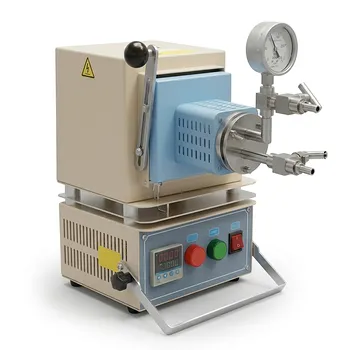
Compact Hybrid Muffle and Tube Furnace for 1000C Controlled Atmosphere Laboratory Material Sintering
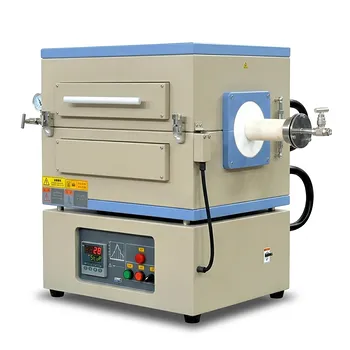
1500°C Split Tube Furnace with Alumina Tube and Vacuum Sealing Flanges for Material Research
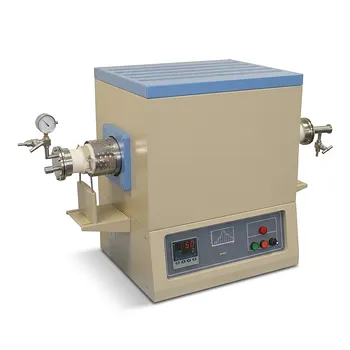
1700C High Temperature Alumina Tube Furnace with 18 Inch Heated Zone and Vacuum Sealing Flanges
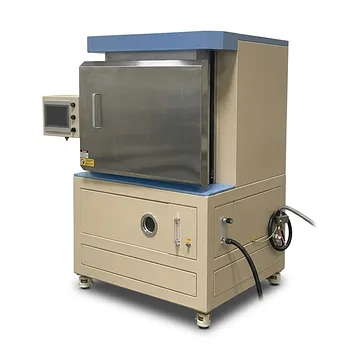
1650C High Temperature Atmosphere Controlled Box Furnace with 65L Chamber for Advanced Material Sintering and Industrial Heat Treatment

1100°C High Temperature Quartz Chamber Furnace 8 Inch OD with 7.6 Liter Capacity and Vacuum Atmosphere Capability
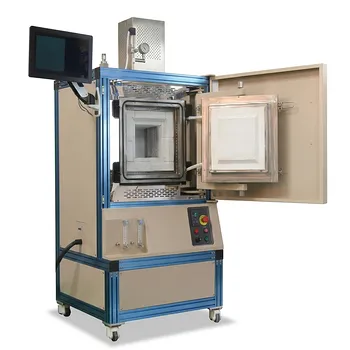
High Temperature Hydrogen Atmosphere Box Furnace 1650C Max Reducing Environment Material Synthesis System 8x8x8 Chamber

High Temperature 1700C Vertical Tube Furnace for Powder Spherification and Material Sintering

Compact High Temperature 1600C Tube Furnace with 50mm Alumina Tube and Vacuum Flanges for Material Sintering
