What is the operational mechanism of copper foil acting as an oxygen trap? Enhancing Material Synthesis Purity
Updated 3 months ago
Copper foil functions as a chemical sacrificial layer that scrubs residual oxygen from the furnace environment through a process of preferential oxidation. By reacting with trace oxygen to form cuprous oxide ($Cu_2O$), it effectively lowers the oxygen partial pressure to levels that protect sensitive precursors from unwanted oxidation during high-temperature calcination.
Copper foil serves as a dual physical and chemical barrier, neutralizing oxygen contaminants within an inert stream to ensure the thermodynamic stability of sensitive low-valence ions.
The Chemical Mechanism of Oxygen Trapping
The Formation of Cuprous Oxide
At high temperatures, copper possesses a high affinity for oxygen compared to many inert carrier gases. When trace oxygen molecules encounter the foil, they react to form a stable layer of cuprous oxide ($Cu_2O$) on the metal's surface.
Preferential Oxidation Dynamics
The copper foil acts as a "sacrificial" component because it is more reactive toward oxygen than the target material's desired stable state. This ensures that any oxygen entering the system via minor leaks or gas impurities is consumed by the copper before it can interact with the sample.
Achieving Thermodynamic Stability in Material Synthesis
Lowering Oxygen Partial Pressure
The primary goal of using copper foil is to reduce the oxygen partial pressure within the reaction zone to extremely low levels. This is critical for maintaining an environment where the chemical potential favors the preservation of specific reduced states rather than further oxidation.
Protecting Sensitive Ion Valence States
Many advanced materials, such as superconductors or functional nanomaterials, rely on ions like vanadium ($V^{3+}$) or manganese ($Mn^{3+}$). Without the oxygen-trapping effect of the copper foil, these ions would easily oxidize to higher, undesirable valence states, ruining the material's intended properties.
The Role of the Tube Furnace Environment
Controlled Inert Atmospheres
An atmosphere tube furnace provides the essential framework for this process by maintaining a steady flow of inert gas. This flow ensures that the copper foil is constantly exposed to any incoming contaminants, allowing it to "scrub" the gas stream before it reaches the sample crucible.
Temperature Field Uniformity
The highly uniform temperature fields within these furnaces are vital for the copper foil to work effectively. Consistent heating ensures the chemical trapping reaction occurs predictably across the entire surface of the foil, preventing localized oxygen breakthrough.
Understanding the Trade-offs and Limitations
Saturation and Surface Area
The effectiveness of copper foil is strictly limited by its available surface area. Once the surface is completely saturated with an oxide layer, its ability to trap additional oxygen significantly diminishes, potentially leaving the sample vulnerable.
Potential for Vapor Contamination
At exceptionally high temperatures, there is a risk of copper sublimation or vaporization. If the process temperature exceeds the stability limits of the foil, copper atoms may migrate through the gas phase and contaminate the high-purity materials being synthesized.
How to Apply This to Your Project
Making the Right Choice for Your Goal
To maximize the utility of copper foil in your synthesis process, consider your specific material requirements and furnace parameters.
- If your primary focus is preserving low-valence ions ($V^{3+}, Mn^{3+}$): Place high-surface-area copper foil upstream of the sample to ensure maximum oxygen contact before the gas reaches the reaction site.
- If your primary focus is high-purity nanomaterial synthesis: Monitor the furnace temperature closely to ensure it stays below the point where copper vapor pressure becomes a contamination risk.
- If your primary focus is long-duration calcination: Use multiple layers or thicker gauges of foil to account for the gradual saturation of the sacrificial oxide layer over time.
By strategically employing copper foil as a chemical trap, you can achieve the precise atmospheric control necessary for the repeatable preparation of complex inorganic materials.
Summary Table:
| Feature | Mechanism/Detail | Impact on Synthesis |
|---|---|---|
| Primary Role | Sacrificial chemical oxygen scrubber | Prevents oxidation of sensitive precursors |
| Chemical Reaction | $4Cu + O_2 \rightarrow 2Cu_2O$ | Lowers oxygen partial pressure in the furnace |
| Target Protection | Preserves low-valence ions (e.g., $V^{3+}, Mn^{3+}$) | Ensures thermodynamic stability of samples |
| Optimal Setup | High surface area foil placed upstream | Maximizes oxygen contact before reaching sample |
| Critical Factor | Precise temperature control | Prevents copper vapor contamination at high temps |
Achieve Uncompromising Atmosphere Control for Your Research
Precise material synthesis requires more than just high temperatures—it demands a perfectly controlled environment. THERMUNITS is a leading manufacturer of high-performance thermal processing solutions designed for the most demanding material science and industrial R&D applications.
Whether you are working with sensitive low-valence ions or high-purity nanomaterials, our equipment ensures the stability and repeatability your project deserves. Our comprehensive range includes:
- Advanced Furnaces: Tube, Atmosphere, Vacuum, Muffle, Rotary, and Hot Press Furnaces.
- Specialized Systems: CVD/PECVD systems, Vacuum Induction Melting (VIM), and Dental Furnaces.
- Support & Components: High-quality Thermal Elements and custom heat treatment accessories.
Ready to elevate your heat treatment precision?
Contact THERMUNITS today to discuss your specific furnace requirements with our technical experts and find the ideal solution for your laboratory.
References
- Itsuki Konuma, Naoaki Yabuuchi. A methodology to synthesize easily oxidized materials containing Li ions in an inert atmosphere. DOI: 10.1039/d4ya00089g
Mentioned Products
- 800C High Magnetic Field Compatible Tube Furnace 100mm ID 190mm OD Inert Atmosphere Research System
- 1200C Hybrid Muffle and Tube Furnace for Material Research with Dual Atmosphere Control Quartz Tubes
- 1400C Bottom Loaded Inert Gas Atmosphere Box Furnace with 125L Capacity and Precision Hydraulic Lift
- High Temperature Oxygen and Inert Atmosphere Controlled Furnace 8 Liter 1700C Sintering System for Advanced Materials RD
- Atmosphere Controlled Muffle Furnace 1700C Maximum Temperature 80L High Capacity Vacuum Inert Gas Box Furnace
People Also Ask
- What are the advantages of a tube furnace for catalyst calcination? Optimize phase purity and particle dispersion.
- Why is a high-temperature tube furnace with inert atmosphere needed for single-atom nanozymes? Essential Synthesis Guide
- What is the role of a high-precision tube furnace in magnetite catalyst preparation? Master phase-controlled reduction.
- Why is a nitrogen-equipped tube furnace essential for Nitrogen-doped Carbon? Maximize yield and doping precision.
- Why use a tube atmosphere furnace with nitrogen for MDBC carbonization? Ensure High Yield & Material Integrity

Tech Team · ThermUnits
Last updated on Jun 02, 2026
Related Products
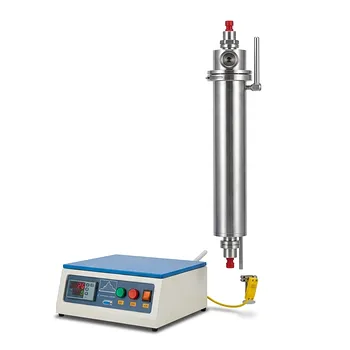
800C High Magnetic Field Compatible Tube Furnace 100mm ID 190mm OD Inert Atmosphere Research System
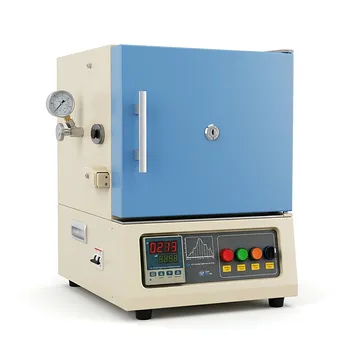
1200C Hybrid Muffle and Tube Furnace for Material Research with Dual Atmosphere Control Quartz Tubes
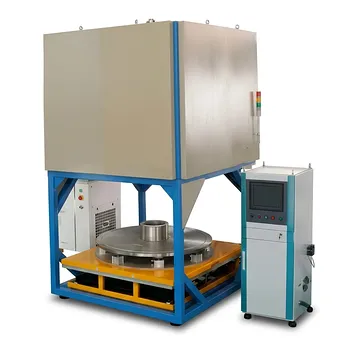
1400C Bottom Loaded Inert Gas Atmosphere Box Furnace with 125L Capacity and Precision Hydraulic Lift
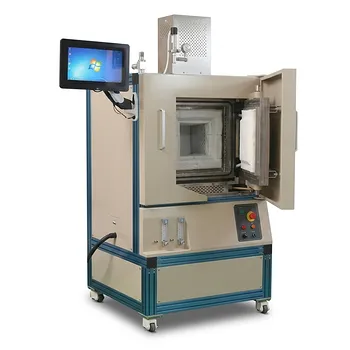
High Temperature Oxygen and Inert Atmosphere Controlled Furnace 8 Liter 1700C Sintering System for Advanced Materials RD
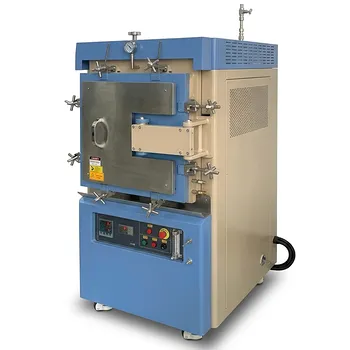
Atmosphere Controlled Muffle Furnace 1700C Maximum Temperature 80L High Capacity Vacuum Inert Gas Box Furnace

Vertical 1700C Vacuum and Atmosphere Tube Furnace with 80mm Alumina Tube
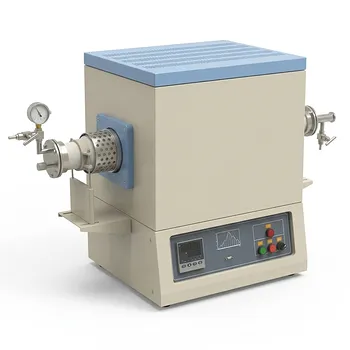
1750°C High Temperature Benchtop Vacuum Atmosphere Tube Furnace with Kanthal Super 1800 Heating Elements and 60mm Alumina Processing Tube
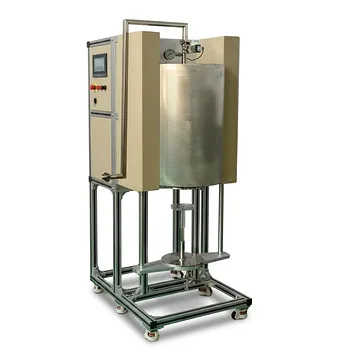
1200°C Atmosphere Controlled Automatic Bottom Loading Furnace with 6 Inch Quartz Tube
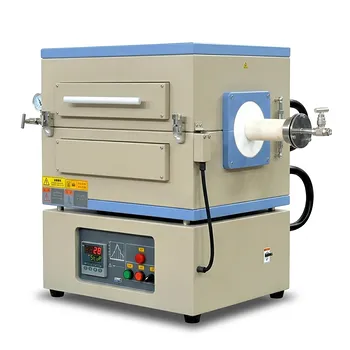
1500°C Split Tube Furnace with Alumina Tube and Vacuum Sealing Flanges for Material Research
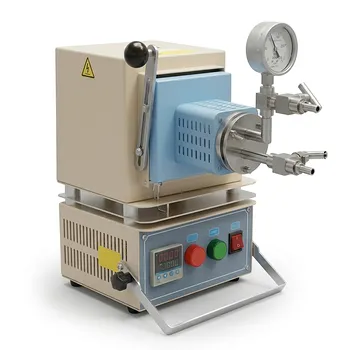
Compact Hybrid Muffle and Tube Furnace for 1000C Controlled Atmosphere Laboratory Material Sintering
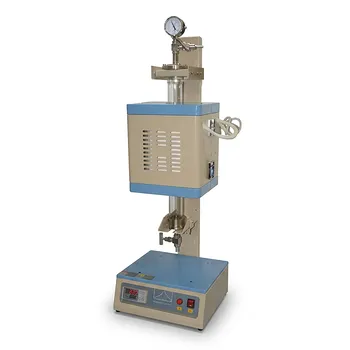
Compact Vertical Split Quartz Tube Furnace with Stainless Steel Vacuum Flanges for Rapid Thermal Quenching and Controlled Atmosphere Material Processing
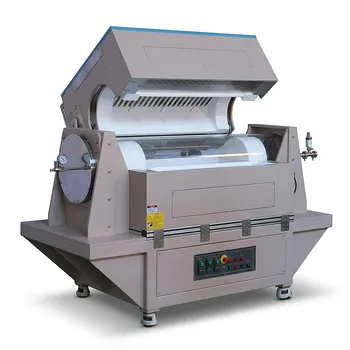
Three Zone Tube Furnace with 11 Inch or 15 Inch Quartz Tube and Hinged Flanges for Vacuum Atmosphere Heat Treatment
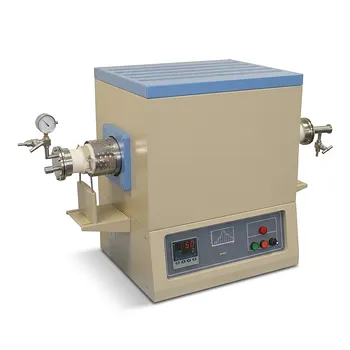
1700C High Temperature Alumina Tube Furnace with 18 Inch Heated Zone and Vacuum Sealing Flanges
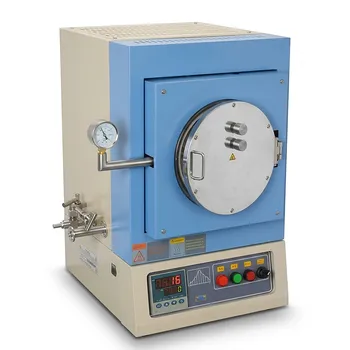
1100°C High Temperature Quartz Chamber Furnace 8 Inch OD with 7.6 Liter Capacity and Vacuum Atmosphere Capability
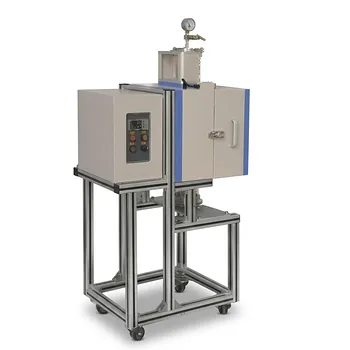
1200°C 5 Inch Vertical Quartz Tube Furnace with Stainless Steel Vacuum Flanges
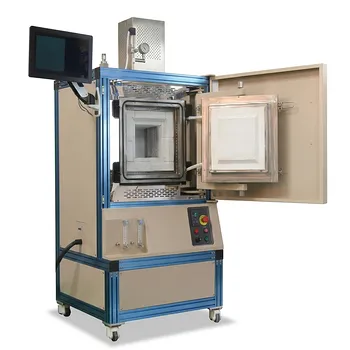
High Temperature Hydrogen Atmosphere Box Furnace 1650C Max Reducing Environment Material Synthesis System 8x8x8 Chamber
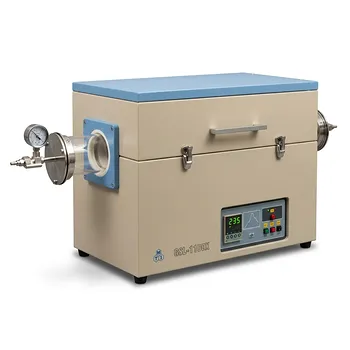
Single Zone Tube Furnace 5 Inch Quartz Tube 36 Inch Heating Zone Vacuum Flanges

Compact High Temperature 1600C Tube Furnace with 50mm Alumina Tube and Vacuum Flanges for Material Sintering

High Temperature Automated 5 Inch Tube Furnace for Autonomous Material Research and Advanced Laboratory R&D
