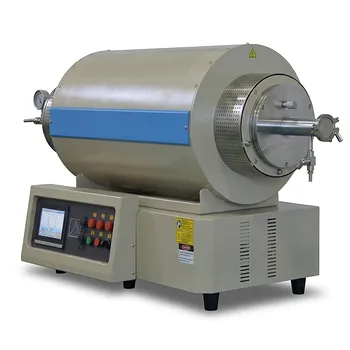
What is the role of a high-precision tube furnace in magnetite catalyst preparation? Master phase-controlled reduction.
Updated 3 months ago
A high-precision tube furnace serves as the critical reaction environment for the phase-controlled reduction of magnetite catalysts. It specifically facilitates the transformation of precursors into the highly active $Fe_3O_4$ (magnetite) phase by maintaining a constant 300°C temperature under a hydrogen-argon ($H_2/Ar$) atmosphere. This precise control is essential to prevent the catalyst from over-reducing into metallic iron, thereby ensuring the phase purity and catalytic efficiency of the final material.
Core Takeaway: The high-precision tube furnace functions as a specialized reduction reactor that balances temperature stability and atmospheric control to ensure precursors reach the exact $Fe_3O_4$ oxidation state without over-reduction or sintering.
The Mechanism of Controlled Thermal Reduction
Precisely Calibrated Atmospheric Control
The tube furnace acts as a sealed environment for the introduction of specific reducing gases, typically a $H_2/Ar$ mixture. This controlled atmosphere is necessary to trigger the chemical transformation of catalyst precursors into the desired magnetite phase.
By managing the gas concentration and flow rate, the furnace ensures that the reduction process occurs uniformly across the entire sample. This prevents localized variations in the catalyst’s chemical composition.
Critical Temperature Thresholds
Magnetite synthesis requires a specific thermal window, often identified at 300°C, to achieve the desired catalytic activity. The high-precision nature of the furnace allows for a "constant temperature zone" that eliminates thermal gradients.
Precise heating curves also facilitate the removal of residual volatiles and adsorbed water. This process ensures that the active sites of the catalyst are fully exposed and ready for chemical reactions.
Achieving Phase Purity and Structural Integrity
Preventing Over-Reduction to Metallic Iron
A primary risk in catalyst preparation is the over-reduction of $Fe_3O_4$ into metallic iron ($Fe$). The furnace's stability prevents temperature spikes that would drive the reduction process too far.
Maintaining the phase purity of the magnetite is essential for its performance. Without the granular control of a high-precision furnace, the resulting material would be a mixture of iron phases, significantly reducing its catalytic effectiveness.
Regulation of Crystallinity and Particle Size
The furnace environment directly influences the crystallinity and morphology of the nanomaterials. By controlling the "soaking" time and cooling rates, researchers can dictate the distribution of active sites on the catalyst surface.
Stable thermal fields also prevent sintering, a process where catalyst particles fuse together at high temperatures. Preventing sintering is vital to maintaining a high surface area, which is a prerequisite for high-performance catalysis.
Understanding the Trade-offs and Challenges
The Sensitivity of the Reduction Window
The transition from iron oxide precursors to $Fe_3O_4$ is highly sensitive to even minor fluctuations in temperature or hydrogen concentration. A slight deviation can result in incomplete reduction (leaving inactive oxides) or excessive reduction.
Scaling and Thermal Uniformity
While tube furnaces provide exceptional precision for laboratory-scale synthesis, maintaining the same level of thermal uniformity in larger volumes can be challenging. Larger batches may experience "core-to-surface" temperature differences during the activation phase.
Equipment Maintenance and Contamination
High-precision furnaces require rigorous maintenance of seals to prevent oxygen ingress. Even trace amounts of oxygen can disrupt the reducing atmosphere, leading to the formation of undesirable iron oxide phases instead of pure magnetite.
Applying Furnace Precision to Catalyst Goals
How to Optimize Your Preparation Process
The specific settings of your tube furnace should align with the intended application of your magnetite catalyst.
- If your primary focus is Phase Purity: Maintain a strict 300°C setpoint with a stabilized $H_2/Ar$ flow to prevent the emergence of metallic iron phases.
- If your primary focus is High Surface Area: Utilize shorter soaking times and lower temperature ramps to prevent the sintering of nanoparticles.
- If your primary focus is Active Site Exposure: Incorporate a high-purity inert gas flush (such as Argon or Nitrogen) before and after reduction to remove volatiles and protect the surface from post-synthesis oxidation.
Ultimately, the high-precision tube furnace is the defining tool that transforms a chemical precursor into a high-performance, phase-pure magnetite catalyst through rigorous thermal and atmospheric discipline.
Summary Table:
| Feature | Function in Magnetite Preparation | Impact on Catalyst Quality |
|---|---|---|
| Temperature Precision | Maintains stable 300°C setpoint | Prevents over-reduction to metallic iron ($Fe$) |
| Atmosphere Control | Manages $H_2/Ar$ gas flow & concentration | Triggers uniform chemical phase transformation |
| Thermal Uniformity | Eliminates thermal gradients in the tube | Ensures consistent phase purity across the sample |
| Soaking/Cooling | Regulates "dwell" time and cooling rates | Controls crystallinity and prevents particle sintering |
Elevate Your Catalyst Research with THERMUNITS
Precision is the difference between a failed experiment and a breakthrough in material science. THERMUNITS is a leading manufacturer of high-temperature laboratory equipment dedicated to providing researchers and industrial R&D teams with the thermal discipline required for advanced material synthesis.
From High-Precision Tube Furnaces for phase-controlled reduction to a comprehensive range of Muffle, Vacuum, Atmosphere, Rotary, and Hot Press furnaces, our equipment is engineered for accuracy and durability. We also specialize in CVD/PECVD systems, Dental Furnaces, Vacuum Induction Melting (VIM) furnaces, and high-quality thermal elements tailored to your specific heat treatment needs.
Ready to achieve superior phase purity and structural integrity in your materials?
Contact our technical experts today to find your solution
References
- Feysal M. Ali, Hussameldin Ibrahim. Photothermal Reduction of Carbon Dioxide Using Magnetite Photocatalyst. DOI: 10.3390/engproc2024076091
Mentioned Products
- 800C High Magnetic Field Compatible Tube Furnace 100mm ID 190mm OD Inert Atmosphere Research System
- High Magnetic Field Compatible Tube Furnace for 1100C Material Research with Controlled Atmosphere and Water Cooled Non Magnetic Case
- 1200C Tube Furnace with Internal Magnetic Sample Sliding for Direct Vaporizing Deposition and Rapid Thermal Processing
- High Temperature 1700C Vertical Tube Furnace for Powder Spherification and Material Sintering
- High Temperature Rotary Tube Furnace with Integrated Ball Milling and Gas Flow Function for Powder Nitriding
People Also Ask
- What is the operational mechanism of copper foil acting as an oxygen trap? Enhancing Material Synthesis Purity
- What are the advantages of a tube furnace for catalyst calcination? Optimize phase purity and particle dispersion.
- Why is a high-temperature tube furnace with inert atmosphere needed for single-atom nanozymes? Essential Synthesis Guide
- Why is a nitrogen-equipped tube furnace essential for Nitrogen-doped Carbon? Maximize yield and doping precision.
- Why use a tube atmosphere furnace with nitrogen for MDBC carbonization? Ensure High Yield & Material Integrity

Tech Team · ThermUnits
Last updated on Jun 03, 2026
Related Products
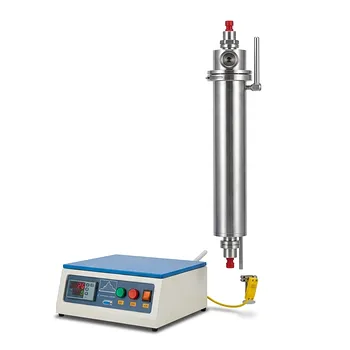
800C High Magnetic Field Compatible Tube Furnace 100mm ID 190mm OD Inert Atmosphere Research System
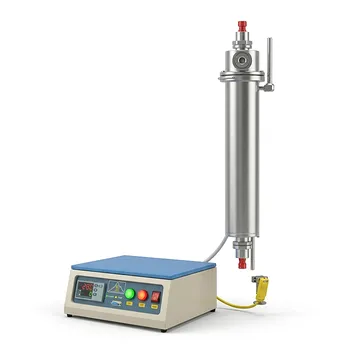
High Magnetic Field Compatible Tube Furnace for 1100C Material Research with Controlled Atmosphere and Water Cooled Non Magnetic Case
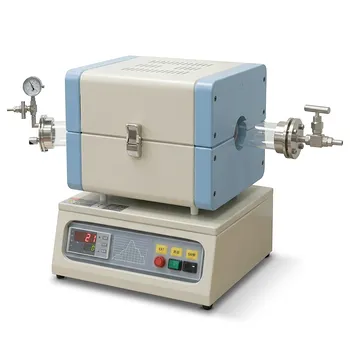
1200C Tube Furnace with Internal Magnetic Sample Sliding for Direct Vaporizing Deposition and Rapid Thermal Processing

High Temperature 1700C Vertical Tube Furnace for Powder Spherification and Material Sintering
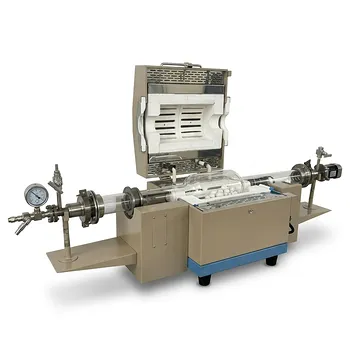
High Temperature Rotary Tube Furnace with Integrated Ball Milling and Gas Flow Function for Powder Nitriding

1200C High Throughput Multi Channel Tube Furnace with 50mm Quartz Tubes for Annealing and Material Phase Diagram Research

High Temperature Automated 5 Inch Tube Furnace for Autonomous Material Research and Advanced Laboratory R&D
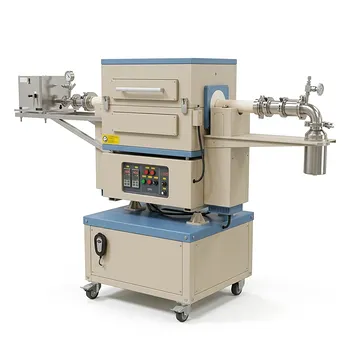
1500C Max Dual Zone Rotary Tube Furnace with 60 mm OD Alumina Tube for High Temperature Material Synthesis

High Temperature Tube Furnace 1500C with Sliding Flanges and 50mm OD for Rapid Thermal Processing Fast Heating and Cooling

Compact High Temperature 1600C Tube Furnace with 50mm Alumina Tube and Vacuum Flanges for Material Sintering
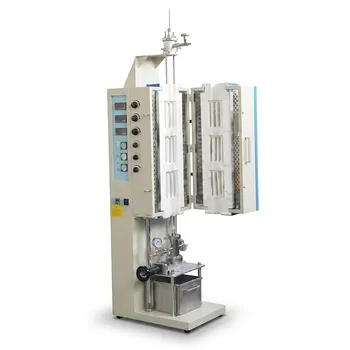
High Temperature Dual Zone Tube Furnace for Material Science Research and Professional Thermal Processing
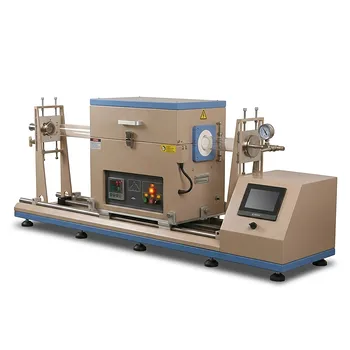
1200C Sliding Tube Furnace for Rapid Thermal Processing and CVD Graphene Growth with 100mm OD Capacity
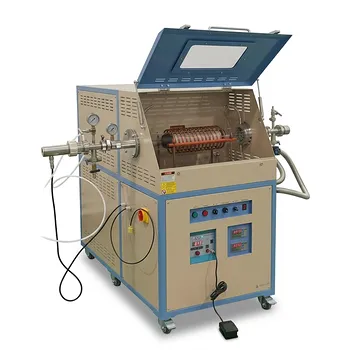
Ultra High Temperature 2300C Induction Heated Graphite Tube Furnace with Infrared Control
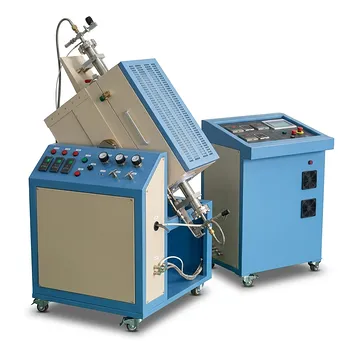
1100C High Pressure Rocking Tube Furnace with 2 Inch Super Alloy Processing Tube for Material Synthesis
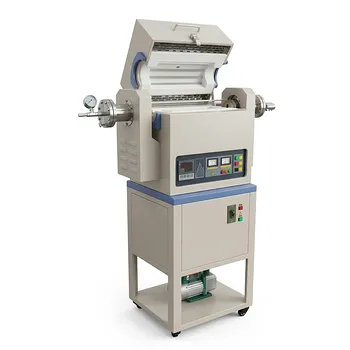
High Temperature Rotary Tilt Tubular Furnaces for Advanced Powder Sintering and Material Processing
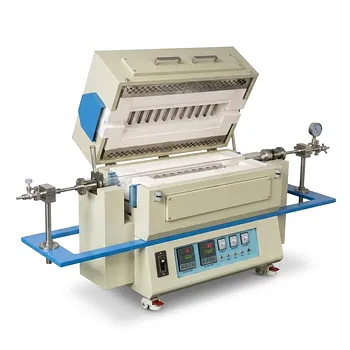
High Temperature Dual Zone Rotating Tube Furnace 1500C Silicon Carbide Heating for Advanced Material Synthesis
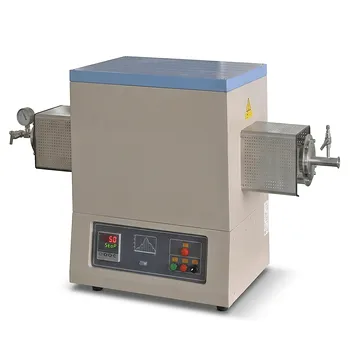
High Temperature 1700C Tube Furnace with 4 Inch OD Alumina Tube and Vacuum Sealing Flanges
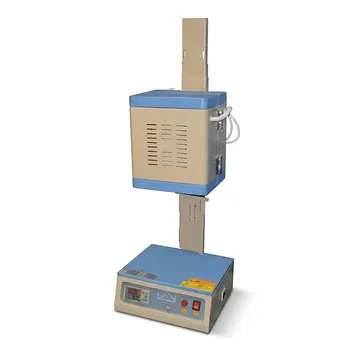
High Temperature Vertical Split Tube Furnace with PID Temperature Controller for 1 and 2 Inch Processing Tubes
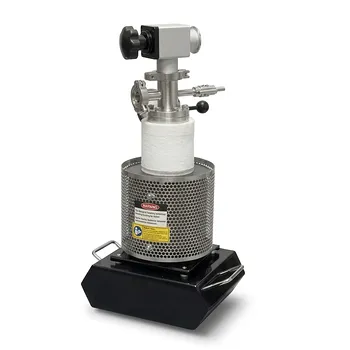
High Temperature 1100C Compact Top Loading Vertical Vacuum Tube Furnace for High Vacuum Noble Metal Melting and Material Research