What are the technical advantages of using a tube furnace for MAX phase preparation? Boost Purity at Lower Temperatures
Updated 3 months ago
The combination of a tube furnace and the sol-gel method enables the synthesis of high-quality Chromium Aluminum Carbon (MAX) phases at significantly lower temperatures and pressures than traditional methods. By achieving phase formation at just 900°C and atmospheric pressure, this approach eliminates the need for expensive Hot Isostatic Pressing (HIP) and temperatures exceeding 1000°C. The result is a more cost-effective process that yields superior material homogeneity and phase purity.
This methodology shifts MAX phase production from high-energy solid-state reactions to a precision-controlled chemical process. By lowering the thermal energy barrier through molecular mixing, it provides a scalable and efficient pathway for creating complex layered ceramics.
Overcoming Thermodynamic Barriers with Molecular Mixing
Lowering the Reaction Energy Barrier
The sol-gel method facilitates molecular-level mixing of precursors, which is the primary driver for lowering the synthesis temperature to 900°C. In traditional solid-state sintering, reactants are large particles that require immense thermal energy to trigger diffusion across grain boundaries. The gel state ensures that chromium, aluminum, and carbon atoms are in intimate contact, drastically reducing the distance atoms must travel to form the MAX phase structure.
Maintaining Stoichiometric Precision
A significant advantage of the sol-gel approach is the ability to maintain precise stoichiometry throughout the process. Traditional high-temperature methods often suffer from the volatilization of specific elements, leading to the formation of unwanted impurity phases. The lower processing temperature inhibits this volatilization, ensuring the final product matches the intended chemical formula.
Inhibiting Unwanted Grain Growth
By operating at lower temperatures, the process effectively inhibits excessive grain growth. This results in the formation of fine-grained nanoparticles, typically ranging from 30-80 nm, which can enhance the mechanical properties of the final MAX phase material.
The Role of the Tube Furnace in Phase Transformation
Precise Atmospheric Control
The tube furnace provides a sealed environment essential for maintaining a stable flow of inert gases like nitrogen or argon. This atmosphere is critical for driving atomic diffusion and rearrangement while preventing the oxidation of the chromium or aluminum components. It also allows for the controlled removal of gaseous byproducts and volatiles during the calcination phase.
Uniform Thermal Distribution
The horizontal configuration of a tube furnace ensures a uniform temperature field across the precursor material. This uniformity is vital for the steady decomposition of organic components within the gel. Without even heat, localized hot spots could cause secondary phases to form, compromising the integrity of the layered MAX structure.
Programmable Heating Rates
Modern tube furnaces allow for precise heating rate control, such as a slow ramp of 2°C per minute. This gradual increase is necessary to ensure the amorphous precursors transform into crystalline MAX phases without structural defects. A steady five-hour heat treatment at the target temperature allows sufficient time for the atomic "layering" characteristic of the $Cr_2AlC$ structure to occur.
Understanding the Trade-offs and Limitations
Processing Time vs. Temperature
While the sol-gel method reduces the required temperature, it introduces a longer preparation cycle compared to simple powder mixing. The gelation, aging, and drying stages are time-consuming and require careful monitoring to ensure the precursor does not segregate.
Scale and Throughput Constraints
Tube furnaces are ideal for precision and atmospheric purity but generally offer lower throughput than industrial-scale kilns. Furthermore, the reliance on chemical precursors like alkoxides or salts can increase the initial material cost compared to raw elemental powders used in traditional sintering.
Sensitivity to Precursor Chemistry
The success of this method is highly dependent on the purity of the starting chemicals and the pH of the sol. Small deviations in the chemical preparation can lead to incomplete reactions or the presence of residual carbon, which may require additional purification steps.
Applying This Method to Your Production Goals
Recommendations for Implementation
- If your primary focus is reducing capital expenditure: Use the tube furnace and sol-gel method to bypass the need for expensive high-pressure equipment like Hot Isostatic Presses (HIP).
- If your primary focus is material purity: Prioritize the sol-gel route, as the molecular-level mixing significantly reduces the risk of forming common impurities like $Cr_7C_3$ or $Al_2O_3$.
- If your primary focus is nanostructure control: Utilize the lower 900°C threshold and slow heating rates of the tube furnace to prevent grain coarsening and maintain a fine-grained microstructure.
By integrating the chemical precision of sol-gel processing with the environmental control of a tube furnace, researchers can achieve high-performance MAX phases with unprecedented efficiency and structural integrity.
Summary Table:
| Feature | Sol-Gel + Tube Furnace | Traditional Solid-State Sintering |
|---|---|---|
| Synthesis Temp | ~900°C (Low) | >1000°C (High) |
| Pressure Req. | Atmospheric Pressure | High Pressure (HIP needed) |
| Mixing Precision | Molecular-level | Particle-level |
| Grain Size | 30-80 nm (Nanoscale) | Larger Microscale |
| Equipment Cost | Cost-effective (No HIP) | High (Requires HIP) |
Elevate Your Material Research with THERMUNITS
Precise control over temperature and atmosphere is the foundation of successful $Cr_2AlC$ MAX phase synthesis. THERMUNITS is a leading manufacturer of high-temperature laboratory equipment for material science and industrial R&D.
We offer a comprehensive range of thermal processing solutions, including Tube Furnaces, Vacuum and Atmosphere Furnaces, CVD/PECVD systems, and Vacuum Induction Melting (VIM) units. Our equipment is engineered to provide the uniform thermal distribution and programmable heating rates essential for advanced heat treatments.
Ready to optimize your lab's efficiency and material purity? Contact us today to find the perfect thermal solution for your project!
References
- Muhammad Shahbaz, Muhammad Zahid. Synthesis and characterization of chromium aluminum carbide MAX phases (CrxAlCx-1) for potential biomedical applications. DOI: 10.3389/fchem.2024.1413253
Mentioned Products
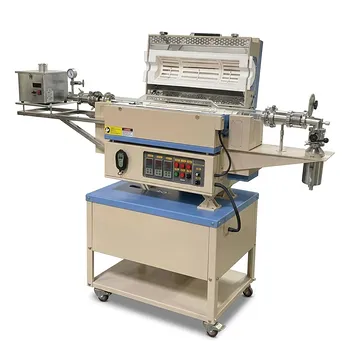
- 1200C Max Three Zone Tube Furnace 6 Inch OD Max with Tube and Flange
- 1200C High Throughput Multi Channel Tube Furnace with 50mm Quartz Tubes for Annealing and Material Phase Diagram Research
- 1200C Max Four Zone Split Tube Furnace with Optional Large Diameter Quartz Tubes
- 12 Zone Ultra Long Split Tube Furnace with 20 Foot Quartz Tube and 1100C Max Temperature
- 1200C Sliding Tube Furnace for Rapid Thermal Processing and CVD Graphene Growth with 100mm OD Capacity
People Also Ask
- Why Use a Three-Zone vs. Single-Zone Furnace for Fe-Ni-Cu Diffusion? Key Benefits for Lab Accuracy
- What advantages does a three-zone tube furnace offer for nanoparticle synthesis? Unlock Superior Thermal Precision.
- What is the primary function of a three-zone tube furnace in the synthesis process of corn-derived carbon nanotubes?
- What role does an industrial-grade three-zone tube furnace play in VOx@VACNT synthesis? Precision Phase-State Control
- What role does a 3-zone tube furnace play in CCO ceramic conductivity testing? Ensure Isothermal Precision.

Tech Team · ThermUnits
Last updated on Jun 02, 2026
Related Products
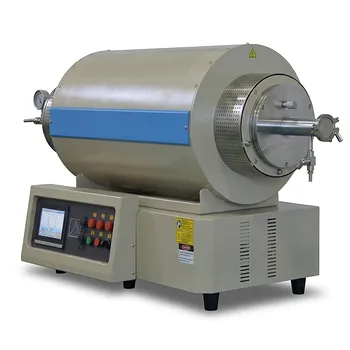
1200C Max Three Zone Tube Furnace 6 Inch OD Max with Tube and Flange

1200C High Throughput Multi Channel Tube Furnace with 50mm Quartz Tubes for Annealing and Material Phase Diagram Research
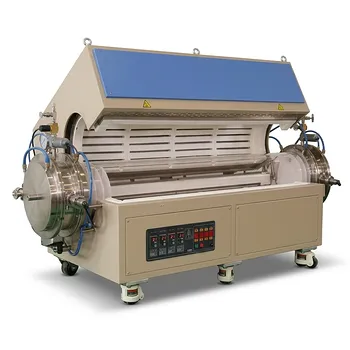
1200C Max Four Zone Split Tube Furnace with Optional Large Diameter Quartz Tubes
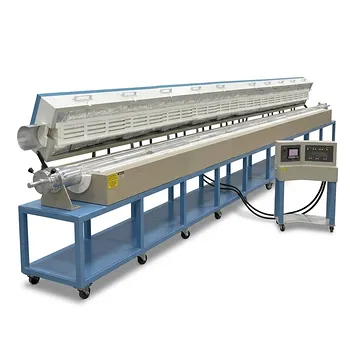
12 Zone Ultra Long Split Tube Furnace with 20 Foot Quartz Tube and 1100C Max Temperature
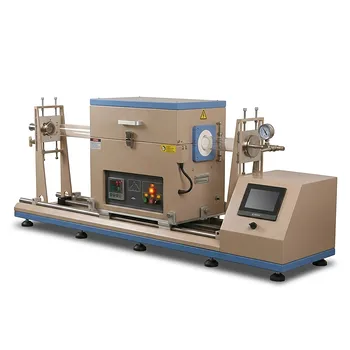
1200C Sliding Tube Furnace for Rapid Thermal Processing and CVD Graphene Growth with 100mm OD Capacity
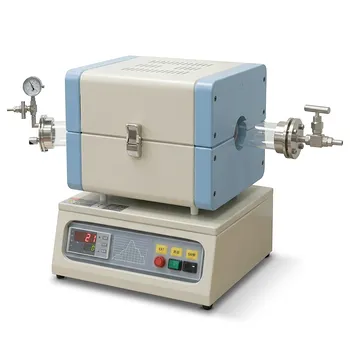
1200C Tube Furnace with Internal Magnetic Sample Sliding for Direct Vaporizing Deposition and Rapid Thermal Processing

High Temperature 1700C Vertical Tube Furnace for Powder Spherification and Material Sintering
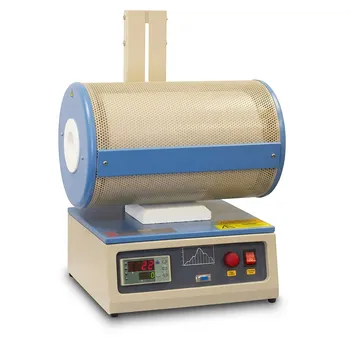
Multi Position Tube Furnace 1100C for Laboratory Material Research and Advanced Industrial Thermal Processing
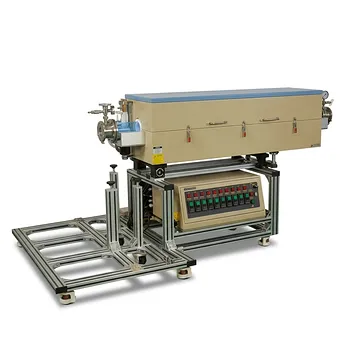
Ten Zone Multi Orientation Laboratory Tube Furnace for 1200C High Temperature Gradient Thermal Processing
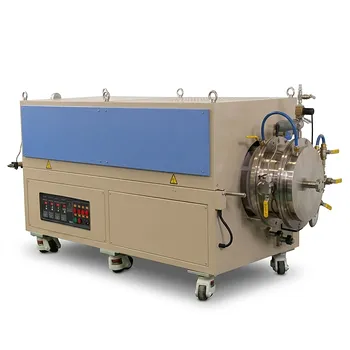
High Temperature Seven Zone Split Tube Furnace with 1200C Maximum Operation and Large Diameter Quartz Tube
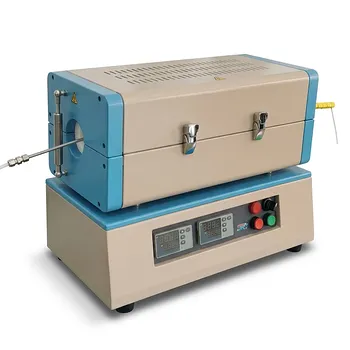
Gas Pre-Heating Tube Furnace for High Temperature Pyrolysis Reactors and Material Science Research

5 Inch Three Zone Rotary Tube Furnace with Integrated Gas Delivery System and 1200C Capability for Advanced Material CVD Processing

High Temperature Tube Furnace 1500C with Sliding Flanges and 50mm OD for Rapid Thermal Processing Fast Heating and Cooling

Compact Vertical Split Quartz Tube Furnace with Stainless Steel Vacuum Flanges for Rapid Thermal Quenching and Controlled Atmosphere Material Processing
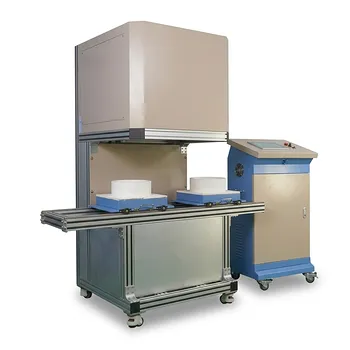
High Temperature Bottom Loading Vertical Furnace 1700C Dual Stage Sample Processing System 18L Large Capacity Thermal Treatment Equipment
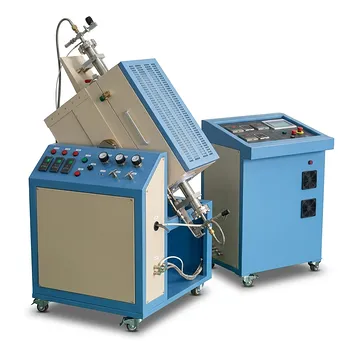
1100C High Pressure Rocking Tube Furnace with 2 Inch Super Alloy Processing Tube for Material Synthesis

High Temperature Automated 5 Inch Tube Furnace for Autonomous Material Research and Advanced Laboratory R&D
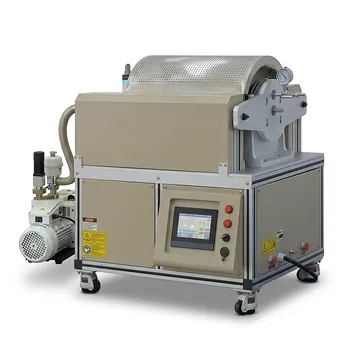
Automated 1200 C Tube Furnace for AI Material Research with 6 Inch OD and Sliding Flange

Three Zone Tube Furnace with 11 Inch or 15 Inch Quartz Tube and Hinged Flanges for Vacuum Atmosphere Heat Treatment