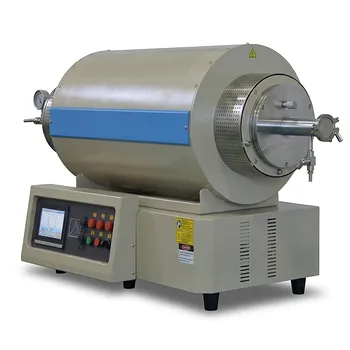
What role does a tube furnace play in CVD synthesis of Si/C composite anode materials? Key Optimization Insights
Updated 3 months ago
The high-precision tube furnace acts as the primary reaction vessel in the Chemical Vapor Deposition (CVD) synthesis of Silicon/Carbon (Si/C) composite anodes. It provides the critical thermal energy required to trigger the decomposition of silicon precursors and creates a controlled environment where silicon can be precisely deposited within carbon frameworks.
Core Takeaway: A high-precision tube furnace is not merely a heater; it is a sophisticated reactor that regulates the chemical kinetics of silane decomposition and the physical distribution of silicon through precise control of temperature fields, pressure, and gas flow dynamics.
Providing the Thermal Energy for Chemical Transformation
Driving the Thermal Decomposition of Silane
The synthesis of Si/C composites typically relies on the thermal decomposition of silane (SiH4). A high-precision tube furnace maintains a stable high-temperature environment, typically between 450°C and 550°C, which is the specific energy threshold needed to break $SiH_4$ molecular bonds.
Maintaining Temperature Zone Stability
The furnace ensures that the temperature remains constant throughout the deposition process. This stability is the physical foundation for controlling the thin-film growth rate and the crystalline quality of the deposited silicon, preventing inconsistent material performance.
Enabling Structural Transformation
In advanced composite variations, such as Silicon/Hard Carbon (Si/HC-X), the furnace may operate at higher ranges (900°C to 1300°C). These temperatures facilitate carbon graphitization and the in-situ doping of silicon atoms, which directly influences the interlayer spacing of the anode material.
Regulating Deposition Kinetics and Uniformity
Controlling Spatial Uniformity on Carbon Frameworks
The design of the deposition zone within the tube furnace establishes a specific airflow path. By manipulating the length of this zone and the temperature distribution, engineers can ensure that silicon is deposited uniformly onto nanoporous carbon frameworks.
Managing Internal Pressure and Atmosphere
A high-precision furnace provides a sealed flow atmosphere channel. This allows for the use of high-purity argon (Ar) or other inert gases to maintain an environment free of oxygen, which is essential to prevent the formation of unwanted silicon oxides during synthesis.
Precision Control of Mass Transport
The furnace facilitates the stable transport of gaseous precursors to the substrate surface. This control over gas-phase reactant transport is critical for ensuring that silicon penetrates deep into the pores of the carbon framework rather than just coating the exterior.
Understanding the Trade-offs and Challenges
Temperature Gradients vs. Material Consistency
Maintaining a perfectly uniform temperature across a long tube is technically challenging. Small temperature gradients can lead to variations in silicon loading between the front and back of the furnace, resulting in inconsistent battery capacity across a single production batch.
Precursor Utilization vs. Deposition Rate
Increasing the flow rate of silane can speed up production, but it may lead to reduced utilization efficiency or non-uniform coatings. The furnace must be finely tuned to balance the speed of deposition with the quality of the silicon-carbon interface.
Equipment Sealing and Safety
Handling silane requires exceptional airtightness and vacuum integrity. Any leak not only compromises the purity of the Si/C composite but also poses significant safety risks due to the pyrophoric nature of silane gas.
How to Optimize Synthesis for Your Specific Goals
Making the Right Choice for Your Goal
- If your primary focus is high capacity and pore penetration: Prioritize a furnace with a longer constant temperature zone to allow for slower, more uniform gas diffusion into nanoporous carbon.
- If your primary focus is structural stability and cycle life: Utilize higher temperature settings (up to 1300°C) to facilitate better graphitization of the carbon host and stronger Si-C bonding.
- If your primary focus is high throughput and scalability: Invest in a furnace with multi-zone temperature control to maximize the usable deposition area while maintaining strict uniformity.
The precision of the tube furnace is the ultimate arbiter of the quality, uniformity, and electrochemical performance of Si/C composite anode materials.
Summary Table:
| Feature | Temperature Range | Functional Role in Si/C Synthesis |
|---|---|---|
| Silane Decomposition | 450°C - 550°C | Triggers $SiH_4$ bond breaking for silicon deposition. |
| Structural Graphitization | 900°C - 1300°C | Enhances carbon framework stability and Si-C bonding. |
| Atmosphere Control | Ambient to Vacuum | Prevents silicon oxidation using high-purity Argon/inert gas. |
| Zone Uniformity | Multi-zone control | Ensures consistent mass transport and uniform film growth. |
Elevate Your Battery Material Research with THERMUNITS
Achieving the perfect Silicon/Carbon composite requires uncompromising thermal precision. THERMUNITS is a leading manufacturer of high-temperature laboratory equipment, providing the advanced tools necessary for cutting-edge material science and industrial R&D.
Our comprehensive range of solutions includes:
- High-Precision Tube & CVD/PECVD Systems: Designed specifically for uniform deposition kinetics.
- Vacuum, Atmosphere, & Muffle Furnaces: For ultra-pure heat treatment.
- Specialized Equipment: Including Rotary kilns, Hot Press furnaces, and Vacuum Induction Melting (VIM) systems.
Ready to optimize your synthesis process? Contact our engineering team today to find the ideal thermal solution for your laboratory needs.
References
- Zhinan Han, Yuan Yang. Modeling Silane Deposition in Nanoporous Carbon for High-Capacity Si/C Composite Anodes. DOI: 10.34133/energymatadv.0111
Mentioned Products
- Compact High Temperature 1600C Tube Furnace with 50mm Alumina Tube and Vacuum Flanges for Material Sintering
- 1200C High Throughput Multi Channel Tube Furnace with 50mm Quartz Tubes for Annealing and Material Phase Diagram Research
- High Temperature 1700C Benchtop Tube Furnace with 5 Inch Heating Zone High Purity Alumina Tube and Vacuum Sealing Flanges
- High Temperature 1700C Vertical Tube Furnace for Powder Spherification and Material Sintering
- High Temperature Automated 5 Inch Tube Furnace for Autonomous Material Research and Advanced Laboratory R&D
People Also Ask
- What is the role of a high-temperature tube furnace in the calcination process of ZnO/In2O3 nanocomposites?
- Why is a high-temperature tube furnace required for CuAlO2 heat treatment? Master Phase Transformation Today
- Function of tube furnaces in cellulose aerogel carbonization? Achieve High-Performance Materials
- What role does a high-temperature tube furnace play in the carbonization? Mastering Precision Carbon Synthesis
- What role does a high-temperature tube furnace play in executing nitrogen absorption kinetic experiments? Expert Insights

Tech Team · ThermUnits
Last updated on Jun 03, 2026
Related Products

Compact High Temperature 1600C Tube Furnace with 50mm Alumina Tube and Vacuum Flanges for Material Sintering
1200C High Throughput Multi Channel Tube Furnace with 50mm Quartz Tubes for Annealing and Material Phase Diagram Research

High Temperature 1700C Benchtop Tube Furnace with 5 Inch Heating Zone High Purity Alumina Tube and Vacuum Sealing Flanges

High Temperature 1700C Vertical Tube Furnace for Powder Spherification and Material Sintering

High Temperature Automated 5 Inch Tube Furnace for Autonomous Material Research and Advanced Laboratory R&D
High Temperature 1700C Tube Furnace with 4 Inch OD Alumina Tube and Vacuum Sealing Flanges

High Temperature 1700C Tube Furnace with High Vacuum Turbomolecular Pump System and Multi Channel Mass Flow Controller Gas Mixer

1800C High Temperature Compact Vacuum Tube Furnace with 60mm OD Alumina Tube and Kanthal MoSi2 Heating Elements

High Temperature 1700C Six Zone Split Tube Furnace with Alumina Tube and Water Cooled Flanges

1750°C High Temperature Benchtop Vacuum Atmosphere Tube Furnace with Kanthal Super 1800 Heating Elements and 60mm Alumina Processing Tube
High Temperature Dual Zone Tube Furnace for Material Science Research and Professional Thermal Processing
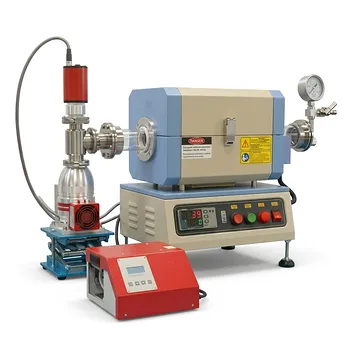
High Vacuum Compact Tube Furnace 1200C with Integrated Turbo Pump System and 8 Inch Heating Zone
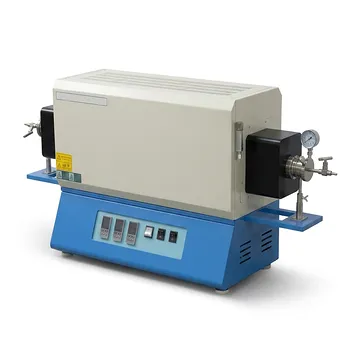
High Temperature Three Temperature Zone Tube Furnace for Advanced Material Science Sintering and Chemical Vapor Deposition Applications
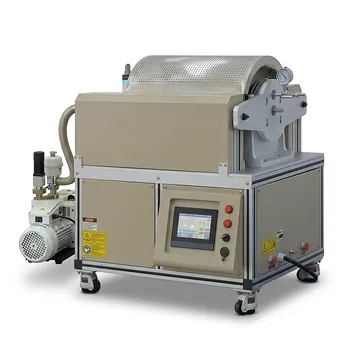
Automated 1200 C Tube Furnace for AI Material Research with 6 Inch OD and Sliding Flange
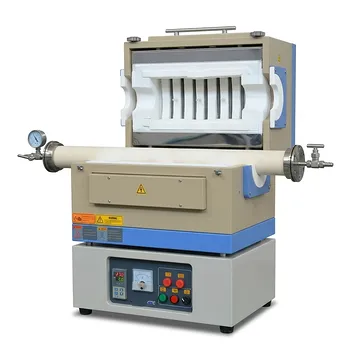
High Temperature 1600C Split Tube Furnace Vacuum Flanges Valves Optional 60mm 80mm Alumina Tube
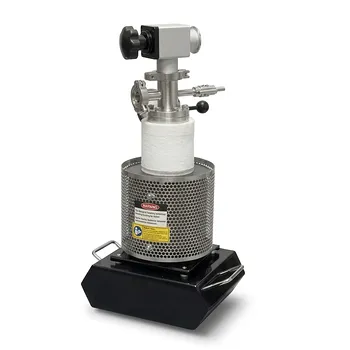
High Temperature 1100C Compact Top Loading Vertical Vacuum Tube Furnace for High Vacuum Noble Metal Melting and Material Research
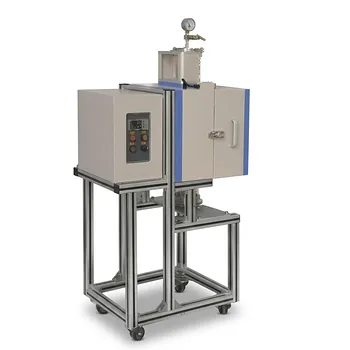
1200°C 5 Inch Vertical Quartz Tube Furnace with Stainless Steel Vacuum Flanges

Vertical 1700C Vacuum and Atmosphere Tube Furnace with 80mm Alumina Tube
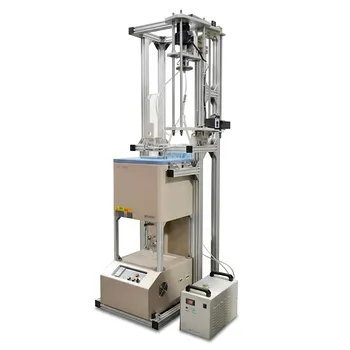
500C Vacuum Vertical Tube Furnace 84mm OD Sample Rotation Lifting System