What are the technical requirements for spatial arrangement in a tube furnace during gas-phase selenization? Expert Tips
Updated 3 months ago
Effective gas-phase selenization relies on a specific upstream-downstream orientation. In a tube furnace, the selenium (Se) powder must be placed in the upstream section relative to the gas flow, while the cobalt oxide ($Co_3O_4$) precursor is positioned downstream. This specific arrangement leverages the furnace's internal temperature gradient and carrier gas flow to transport selenium vapor to the precursor, ensuring a uniform chemical reaction.
Core Takeaway: Successful synthesis of $CoSe_2$ nanocrystals requires a dual-zone approach within the tube furnace. By utilizing the temperature gradient to vaporize selenium upstream and transport it via carrier gas to a downstream precursor, you facilitate a controlled chemical vapor deposition (CVD) process that ensures structural stability.
Leveraging the Internal Temperature Gradient
Upstream Placement of the Selenium Source
The selenium powder is placed in the upstream section where the temperature is high enough to initiate vaporization. This positioning ensures that as the selenium transitions into a gaseous state, it is immediately picked up by the incoming carrier gas.
Downstream Placement of the Cobalt Oxide Precursor
The $Co_3O_4$ precursor is situated further down the tube, strategically placed to intercept the selenium-rich gas stream. This location is critical because it allows the selenium vapor to interact with the cobalt oxide at a specific point in the temperature gradient optimized for chemical conversion.
The Role of Thermal Zoning
The spatial gap between the two materials is not arbitrary; it utilizes the furnace's natural temperature drop-off or ramp. This gradient ensures that the selenium remains in a vapor state until it reaches the precursor, preventing premature condensation on the tube walls.
The Mechanics of Carrier Gas Transport
Vaporization and Entrainment
As the furnace heats, the upstream selenium reaches its boiling point and generates vapor. The carrier gas acts as a transport medium, pushing this vapor toward the reaction zone in a consistent, unidirectional flow.
Uniform Chemical Vapor Deposition (CVD)
The process functions as a simplified form of CVD, where the selenium vapor reacts with the solid $Co_3O_4$ surface. This gas-to-solid interaction is what allows for the in situ growth of $CoSe_2$, leading to a more uniform and structurally sound crystal formation than bulk mixing.
Achieving Structural Stability
By controlling the flow and the spatial relationship, the reaction occurs at a steady rate. This controlled environment is essential for producing structurally stable nanocrystals rather than irregular or incomplete selenium-cobalt phases.
Understanding the Trade-offs and Risks
Sensitivity to Flow Rates
If the carrier gas flow rate is too high, the selenium vapor may pass over the precursor too quickly to react completely. Conversely, a flow rate that is too low can lead to uneven selenium distribution, resulting in localized "hot spots" of reaction or incomplete conversion of the $Co_3O_4$.
Precision in Temperature Mapping
The success of this arrangement depends entirely on knowing the furnace's actual thermal profile. If the upstream zone is too cool, selenium vaporization will be insufficient; if the downstream zone is too hot, it may cause the precursor or the resulting $CoSe_2$ to degrade.
Contamination and Tube Maintenance
Because selenium vapor is highly reactive and prone to deposition, the downstream walls of the tube furnace will inevitably become coated. This requires rigorous cleaning protocols to prevent cross-contamination in subsequent experiments or batches.
How to Apply This to Your Synthesis
To achieve high-quality $CoSe_2$ nanocrystals, the spatial arrangement must be calibrated to your specific furnace dimensions and gas flow capabilities.
- If your primary focus is phase purity: Ensure the downstream precursor is placed exactly where the furnace temperature matches the optimal reaction window for $CoSe_2$ formation.
- If your primary focus is uniform nanocrystal growth: Optimize the carrier gas flow rate to ensure a steady, non-turbulent supply of selenium vapor over the precursor bed.
- If your primary focus is repeatability: Record the precise distance (in centimeters) between the selenium boat and the precursor boat to maintain a consistent temperature gradient across runs.
Precise spatial control transforms a simple heating process into a sophisticated chemical vapor transport system capable of producing high-performance materials.
Summary Table:
| Component | Optimal Position | Primary Function | Critical Success Factor |
|---|---|---|---|
| Selenium (Se) Source | Upstream Zone | Vaporization & entrainment | Precise heating to boiling point |
| Precursor (Co3O4) | Downstream Zone | Reaction & CVD growth | Placement within specific thermal window |
| Carrier Gas | Inlet to Outlet | Vapor transport | Flow rate calibration for uniformity |
| Thermal Gradient | Between Zones | Prevents Se condensation | Accurate temperature mapping |
Elevate Your Material Synthesis with THERMUNITS
Precise spatial arrangement is only half the battle; the other half is reliable hardware. THERMUNITS is a leading manufacturer of high-temperature laboratory equipment for material science and industrial R&D. We provide the high-precision thermal processing solutions required for complex procedures like gas-phase selenization.
Whether you need advanced Tube Furnaces, CVD/PECVD systems, or Atmosphere Furnaces, our equipment is engineered to provide the stable temperature gradients and gas flow controls your research demands.
Ready to optimize your lab’s efficiency and achieve superior structural stability in your nanocrystals?
Contact our technical experts today to find the perfect furnace for your specific research needs.
References
- Cheng Wang, Yanwen Ma. Porous Carbon Cloth@CoSe<sub>2</sub> as Kinetics‐Enhanced and High‐Loading Integrated Sulfur Host for Lithium–Sulfur Batteries. DOI: 10.1002/adfm.202316221
Mentioned Products
- 1200C High Throughput Multi Channel Tube Furnace with 50mm Quartz Tubes for Annealing and Material Phase Diagram Research
- 5 Inch Three Zone Rotary Tube Furnace with Integrated Gas Delivery System and 1200C Capability for Advanced Material CVD Processing
- 1100C Dual Zone Hydrogen Gas Tube Furnace with Quartz Tube and Integrated H2 Leak Detection System
- 1700C Hydrogen Gas Tube Furnace with 60mm Alumina Process Tube and Integrated Hydrogen Safety Detector
- Compact High Temperature 1600C Tube Furnace with 50mm Alumina Tube and Vacuum Flanges for Material Sintering
People Also Ask
- Why is high-purity alumina selected for sample trays? Key to High-Throughput Sintering Success
- How does a high-throughput tube furnace achieve precise sulfurization? Expert Control for CoS2–Co(OH)F Nanostructures
- How does the precise temperature control of a tube furnace influence the formation of V2AlC MAX phase? Expert Insights.
- What is the function of argon gas flow within a tube furnace during the selenization of MOFs? Essential Process Guide
- Why is precision temperature programming in a tube furnace critical for the synthesis of molybdenum-based metal nitrides?

Tech Team · ThermUnits
Last updated on Jun 03, 2026
Related Products
1200C High Throughput Multi Channel Tube Furnace with 50mm Quartz Tubes for Annealing and Material Phase Diagram Research
5 Inch Three Zone Rotary Tube Furnace with Integrated Gas Delivery System and 1200C Capability for Advanced Material CVD Processing
1100C Dual Zone Hydrogen Gas Tube Furnace with Quartz Tube and Integrated H2 Leak Detection System
1700C Hydrogen Gas Tube Furnace with 60mm Alumina Process Tube and Integrated Hydrogen Safety Detector

Compact High Temperature 1600C Tube Furnace with 50mm Alumina Tube and Vacuum Flanges for Material Sintering

High Temperature 1700C Vertical Tube Furnace for Powder Spherification and Material Sintering
1500C Compact Hydrogen Gas Tube Furnace with 2 Inch Alumina Tube and Hydrogen Detector
Three Zone Quartz Tube Furnace with 3 Channel Gas Mixer Vacuum Pump and Anti Corrosive Vacuum Gauge
Compact Vertical Split Quartz Tube Furnace with Stainless Steel Vacuum Flanges for Rapid Thermal Quenching and Controlled Atmosphere Material Processing
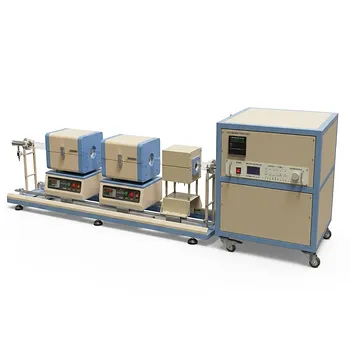
1200C Dual Sliding Tube Furnace with Dual Tubes and Flanges for PECVD Processes

High Temperature 1700C Tube Furnace with High Vacuum Turbomolecular Pump System and Multi Channel Mass Flow Controller Gas Mixer

Vertical 1700C Vacuum and Atmosphere Tube Furnace with 80mm Alumina Tube
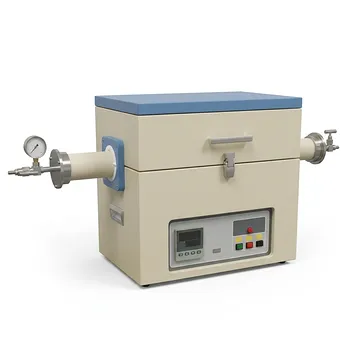
1250C Split Tube Furnace with 3 Inch Mullite Tube and Vacuum Sealing Flanges for Precision Thermal Processing
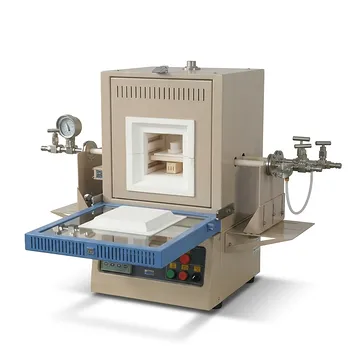
1700C Compact Hybrid Furnace with Dual Layer Box Sintering and Controlled Atmosphere Alumina Tubes
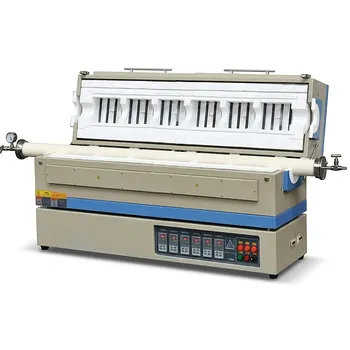
High Temperature 1700C Six Zone Split Tube Furnace with Alumina Tube and Water Cooled Flanges
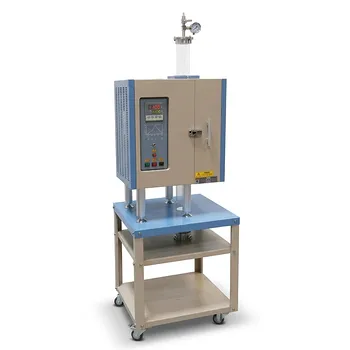
1100°C Split Vertical Tube Furnace with 80mm Quartz Tube and Stainless Steel Vacuum Flanges
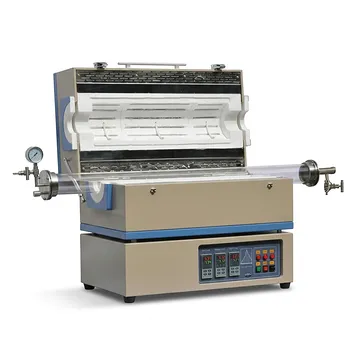
24 Inch Three Zone Split Tube Furnace with Optional Quartz Tube and Vacuum Flange System for High Temperature Material Synthesis
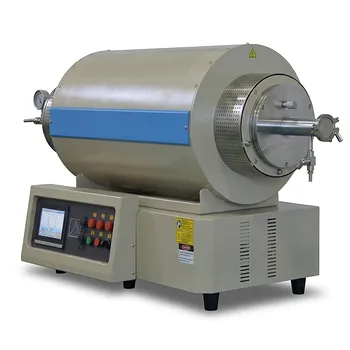
1200C Max Three Zone Tube Furnace 6 Inch OD Max with Tube and Flange
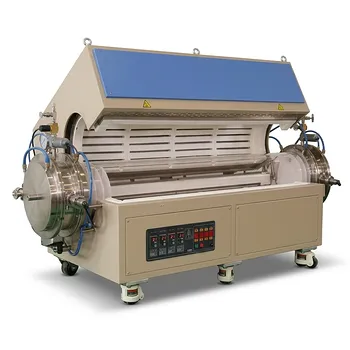
1200C Max Four Zone Split Tube Furnace with Optional Large Diameter Quartz Tubes