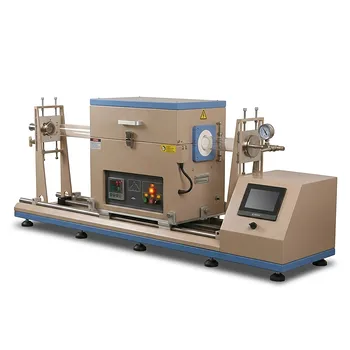
What benefits do tube furnaces offer for ceramic processing and metallurgy? Achieve High-Precision Material Outcomes.
Updated 5 months ago
Tube furnaces are essential for high-precision material science because they provide a combination of uniform 360-degree heating and airtight atmospheric control. These features allow for the high-density sintering of ceramics with minimal warping and the heat treatment of reactive metals, such as titanium, without the risk of oxidation.
Core Takeaway: Tube furnaces excel by isolating materials from the ambient environment, allowing for precise control over temperature gradients and chemical atmospheres to ensure structural integrity and high chemical purity.
Precision Sintering and Debinding in Ceramics
Achieving Geometric Integrity
Tube furnaces facilitate high-density sintering of ceramic powders by providing uniform thermal distribution around the entire specimen. This 360-degree heating profile is critical for preventing the uneven thermal stresses that cause warping or dimensional inaccuracy in finished components.
Mastering the Debinding Phase
High-temperature tube furnaces are vital for the thermal debinding of ceramic green bodies. By using a staged heating program, these furnaces allow organic binders and resins to decompose and exit the material slowly, preventing internal pressure build-up.
Preventing Structural Defects
Controlled gas environments and precise temperature curves are used to manage the exit of gaseous by-products. This level of control is necessary to prevent common manufacturing defects such as cracks, bloating, or residual porosity that compromise the ceramic's strength.
Advanced Metallurgical Processing and Chemical Control
Protecting Reactive Metals
In metallurgical applications, tube furnaces are used to heat-treat reactive metals like titanium and zirconium. By operating under protective inert or reducing atmospheres, the furnace prevents oxygen contamination that would otherwise embrittle the metal.
Influencing Chemical Equilibrium
The design of a tube furnace supports the continuous removal of reaction by-products through a steady, controlled gas flow. This mechanism helps shift chemical equilibria toward the desired products, making it an effective tool for complex chemical extractions and refinements.
Powder Synthesis and Carbothermal Reduction
Rotary tube furnaces are specifically designed to process powders and granules for the synthesis of advanced materials like silicon carbide. The dynamic movement of the furnace ensures that the material layer is constantly turned, resulting in consistent reaction kinetics throughout the batch.
Rotary Dynamics for Specialized Material Handling
Elimination of Hotspots
The continuous rotation of a rotary tube furnace ensures excellent heat uniformity across the entire material bed. This movement prevents the formation of localized hotspots, ensuring that every particle undergoes the same thermal history and reaches the same level of purity.
Managing Complex Feedstocks
Specialized tube furnaces can be equipped with internal lifters to manage fine or sticky powders that might otherwise clump. This mechanical agitation allows for the production of specialty chemicals and advanced materials that require high-purity outputs and homogeneous textures.
Multi-Zone Temperature Control
Modern tube furnaces often feature multiple independent heating zones. This allows researchers to create a specific temperature gradient along the length of the tube, which is essential for processes like chemical vapor transport or specialized annealing cycles.
Understanding the Trade-offs
Volume and Geometry Constraints
The most significant limitation of a tube furnace is its cylindrical geometry, which restricts the size and shape of the parts that can be processed. Large or awkwardly shaped components often require box furnaces, which offer more internal volume but less atmospheric precision.
Loading Complexity
Loading a tube furnace can be more labor-intensive than other furnace types, especially when maintaining vacuum-tight seals. Frequent opening and closing of the tube can stress the seals and increase the risk of atmospheric leaks if not handled with expert care.
Thermal Ramp Limitations
While tube furnaces offer high precision, the quartz or ceramic work tubes themselves are sensitive to thermal shock. Rapid heating or cooling cycles can cause the tube to crack, necessitating a more measured and slower approach to temperature changes than some industrial processes might prefer.
How to Apply This to Your Project
When selecting a furnace for your specific application, consider the primary goal of your thermal process to determine if a tube furnace is the right investment.
- If your primary focus is high-purity powder synthesis: Utilize a rotary tube furnace to ensure consistent reaction kinetics and to prevent the clumping of fine materials.
- If your primary focus is the structural integrity of reactive metals: Choose a tube furnace with robust vacuum and inert gas capabilities to prevent oxidation during high-temperature cycles.
- If your primary focus is precision ceramic debinding: Opt for a multi-zone furnace with programmable heating curves to slowly remove organic binders without causing cracks or bloating.
By matching the specific atmospheric and thermal capabilities of a tube furnace to your material requirements, you ensure a repeatable, high-quality manufacturing outcome.
Summary Table:
| Benefit Category | Key Advantage | Primary Application |
|---|---|---|
| Thermal Uniformity | 360° radial heating prevents warping | High-density ceramic sintering |
| Atmospheric Control | Airtight isolation & vacuum capability | Reactive metals (Titanium, Zirconium) |
| Rotary Dynamics | Constant material turnover | Powder synthesis & chemical extraction |
| Process Precision | Multi-zone programmable temperature curves | Debinding & chemical vapor transport |
Elevate Your Research with THERMUNITS Thermal Solutions
As a leading manufacturer of high-temperature laboratory equipment for material science and industrial R&D, THERMUNITS understands that precision is the foundation of innovation. Whether you are performing complex metallurgical extractions or advanced ceramic sintering, our equipment is designed to deliver repeatable, high-purity results.
Why partner with THERMUNITS?
- Comprehensive Range: We offer everything from Tube, Rotary, and Muffle furnaces to advanced CVD/PECVD systems and Vacuum Induction Melting (VIM) furnaces.
- Tailored Technology: Our solutions include Atmosphere, Vacuum, and Hot Press furnaces, as well as specialized Dental Furnaces and Electric Rotary Kilns.
- Reliable Components: We provide high-quality Thermal Elements and heat treatment equipment built for durability and performance.
Ready to enhance your lab's efficiency and material quality? Contact THERMUNITS Today to consult with our experts on the perfect thermal processing solution for your specific requirements.
Mentioned Products
- Vertical 1700C Vacuum and Atmosphere Tube Furnace with 80mm Alumina Tube
- Compact High Temperature 1600C Tube Furnace with 50mm Alumina Tube and Vacuum Flanges for Material Sintering
- 900°C Max Rotary Tube Furnace with 8 Inch 310S Alloy Tube and Optional Multi Zone Heating for Industrial Material Calcination
- Split Vertical Tube Furnace with 1200C Quartz Tube and Stainless Steel Vacuum Flanges for Rapid Thermal Processing
- High Temperature 1700C Tube Furnace with High Vacuum Turbomolecular Pump System and Multi Channel Mass Flow Controller Gas Mixer
People Also Ask
- How is an industrial-grade vertical tube furnace utilized in smelting leaching residues? Enhance Metal Recovery Efficiency
- What is the function of a laboratory-grade vertical tube furnace in fast pyrolysis? Optimize Composite Research.
- How does a vertical tube furnace facilitate thermoelectric alloy melting? Precision synthesis for material homogeneity.
- Why is a thermocouple sensor indispensable for monitoring the vertical tube furnace during gallium oxide nanowire production? Optimize VLS Growth
- What are the advantages of using a vertical tube furnace for crucible experiments simulating steel-slag interactions?

Tech Team · ThermUnits
Last updated on Apr 14, 2026
Related Products

Vertical 1700C Vacuum and Atmosphere Tube Furnace with 80mm Alumina Tube

Compact High Temperature 1600C Tube Furnace with 50mm Alumina Tube and Vacuum Flanges for Material Sintering
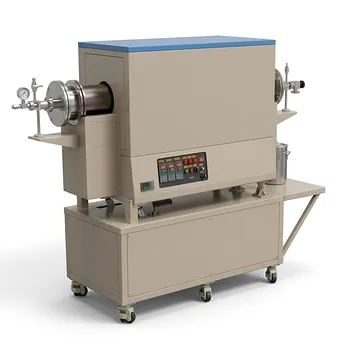
900°C Max Rotary Tube Furnace with 8 Inch 310S Alloy Tube and Optional Multi Zone Heating for Industrial Material Calcination
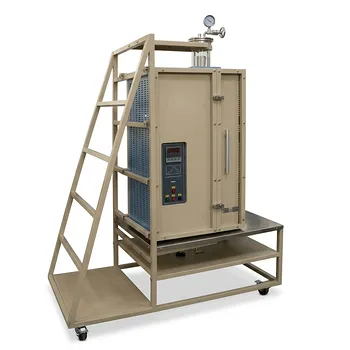
Split Vertical Tube Furnace with 1200C Quartz Tube and Stainless Steel Vacuum Flanges for Rapid Thermal Processing

High Temperature 1700C Tube Furnace with High Vacuum Turbomolecular Pump System and Multi Channel Mass Flow Controller Gas Mixer

1100C Tube Furnace with Vacuum Flange and Programmable Temperature Controller for Material Science and Industrial Heat Treatment
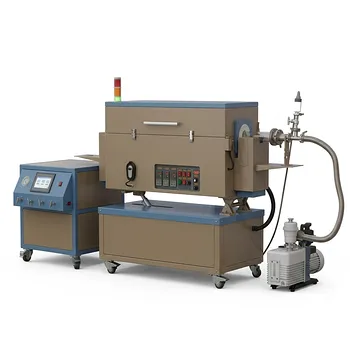
5 Inch Three Zone Rotary Tube Furnace with Integrated Gas Delivery System and 1200C Capability for Advanced Material CVD Processing

1200°C 5 Inch Vertical Quartz Tube Furnace with Stainless Steel Vacuum Flanges
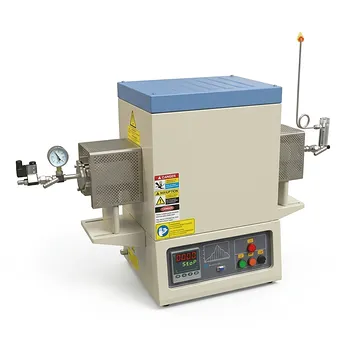
1700C Hydrogen Gas Tube Furnace with 60mm Alumina Process Tube and Integrated Hydrogen Safety Detector

High Temperature 1700C Six Zone Split Tube Furnace with Alumina Tube and Water Cooled Flanges

Compact Vertical Split Quartz Tube Furnace with Stainless Steel Vacuum Flanges for Rapid Thermal Quenching and Controlled Atmosphere Material Processing

High Temperature 1700C Benchtop Tube Furnace with 5 Inch Heating Zone High Purity Alumina Tube and Vacuum Sealing Flanges
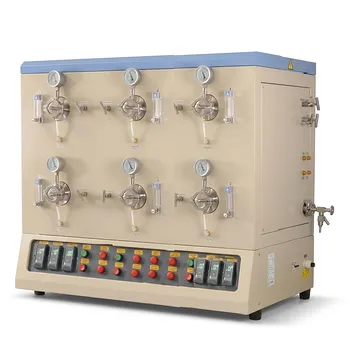
1200C High Throughput Multi Channel Tube Furnace with 50mm Quartz Tubes for Annealing and Material Phase Diagram Research
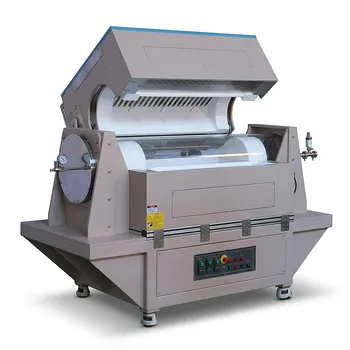
Three Zone Tube Furnace with 11 Inch or 15 Inch Quartz Tube and Hinged Flanges for Vacuum Atmosphere Heat Treatment

1800C High Temperature Compact Vacuum Tube Furnace with 60mm OD Alumina Tube and Kanthal MoSi2 Heating Elements

High Temperature 1700C Vertical Tube Furnace for Powder Spherification and Material Sintering
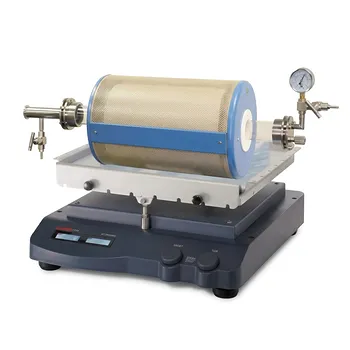
High Temperature Rocking Tube Furnace with Quartz Tube and Vacuum Flange for Materials Synthesis

High Temperature Automated 5 Inch Tube Furnace for Autonomous Material Research and Advanced Laboratory R&D
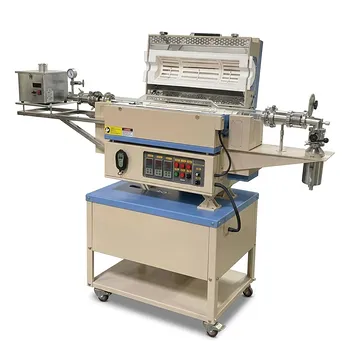
5 Inch Rotary Tube Furnace with Automatic Feeding and Receiving System 1200C Three Zone CVD Powder Processing