Why must Tellurium (Te) thin films undergo annealing in a tube furnace? Optimize 2D Material Quality & Performance
Updated 3 months ago
Annealing Tellurium (Te) thin films in a high-precision tube furnace is required to provide the thermal energy and stable environment necessary for atomic rearrangement. This process eliminates internal defects, reduces structural stress, and improves crystalline quality. Ultimately, these physical changes optimize the carrier mobility and optical response speed of the 2D Tellurium nanofilms.
The core purpose of high-precision annealing is to transform a "as-deposited" film—which often contains defects and stress—into a high-quality crystalline structure. By balancing precise temperature control with a protective atmosphere, the furnace ensures the material reaches its theoretical performance limits for optoelectronic applications.
Enhancing Crystalline Quality and Atomic Structure
Facilitating Atomic Rearrangement
During the deposition process, Tellurium atoms are often placed in a disordered or metastable state. The tube furnace provides a controlled thermal field that gives these atoms the kinetic energy required for thermal diffusion and lattice rearrangement.
Eliminating Internal Defects
As-deposited films frequently contain point defects or dislocations that hinder electrical performance. High-temperature environments allow the material to undergo recrystallization, which heals these defects and creates a more uniform, continuous crystal lattice.
Stress Relief and Mechanical Stability
Thin films often accumulate significant internal stress during the sputtering or deposition process. Annealing promotes stress relief, preventing the film from warping, cracking, or delaminating, thereby ensuring long-term structural integrity.
The Critical Need for Precision and Atmosphere
Preventing Oxidation and Impurities
Tellurium is sensitive to its environment at high temperatures. The tube furnace maintains a stable Argon protective atmosphere, which isolates the film from oxygen and moisture to prevent unwanted chemical reactions or oxidation that would degrade electrical properties.
The Necessity of High-Temperature Precision
Materials in the Tellurium family are extremely sensitive to temperature fluctuations. Precise control is vital because insufficient heat will fail to initiate the necessary atomic diffusion, while excessive heat (often exceeding 350°C in similar chalcogenides) can cause grain coarsening and morphological destruction.
Optimizing Optoelectronic Performance
The final goal of this thermal treatment is the optimization of carrier mobility. By refining the crystal structure and reducing scattering centers (defects), the furnace allows charge carriers to move more efficiently, which directly increases the optical response speed of the 2D nanofilm.
Understanding the Trade-offs
Annealing is not a "more is better" process; it requires a delicate balance of variables. While higher temperatures generally improve crystallinity, exceeding a specific thermal threshold can lead to excessive grain growth, which may destroy the unique properties of 2D materials.
Furthermore, the duration of the anneal is critical. An insufficient dwell time results in incomplete stress relief, while an overly long process can lead to solute segregation or unwanted interface evolution between the film and the substrate. Using a high-precision furnace is the only way to navigate these narrow windows of success.
How to Apply This to Your Project
When preparing to anneal Tellurium thin films, your approach should vary based on your specific device requirements.
- If your primary focus is high-speed photodetectors: Prioritize precise temperature ramp-up rates to ensure maximum carrier mobility without inducing surface roughness.
- If your primary focus is long-term sensor stability: Extend the annealing dwell time at a slightly lower, stable temperature to ensure complete internal stress relief and lattice stabilization.
- If your primary focus is preserving 2D morphology: Utilize a strictly controlled Argon flow to prevent any trace oxidation that could thin or compromise the nanofilm layers.
By mastering the thermal environment of the tube furnace, you transform a raw deposited layer into a high-performance electronic component.
Summary Table:
| Annealing Objective | Material Impact | Tube Furnace Requirement |
|---|---|---|
| Atomic Rearrangement | Improves crystalline quality | High-precision thermal field |
| Defect Elimination | Heals point defects and dislocations | Uniform heat distribution |
| Stress Relief | Prevents warping and delamination | Controlled cooling/ramp rates |
| Oxidation Prevention | Maintains high electrical purity | Stable Argon/Inert atmosphere |
| Performance Boost | Increases carrier mobility/speed | Accurate $\pm$1°C temperature control |
Elevate Your Material Research with THERMUNITS Precision Solutions
High-performance 2D materials like Tellurium require the utmost precision in thermal processing. As a leading manufacturer of high-temperature laboratory equipment, THERMUNITS provides the advanced technology needed to reach your material's theoretical performance limits.
Whether you are focusing on high-speed photodetectors or stable sensors, our comprehensive range of equipment—including High-Precision Tube Furnaces, Vacuum/Atmosphere Furnaces, CVD/PECVD Systems, and Rotary Kilns—is designed for the rigorous demands of material science and industrial R&D. We offer superior temperature uniformity and atmosphere stability to ensure your thin films achieve peak crystallinity without oxidation.
Ready to optimize your heat treatment process? Contact our technical experts today to find the perfect furnace solution for your laboratory needs!
References
- Pujing Zhang, Guozhen Yang. High-performance terahertz modulators induced by substrate field in Te-based all-2D heterojunctions. DOI: 10.1038/s41377-024-01393-6
Mentioned Products
- High Temperature Tube Furnace 1500C with Sliding Flanges and 50mm OD for Rapid Thermal Processing Fast Heating and Cooling
- Vertical 1700C Vacuum and Atmosphere Tube Furnace with 80mm Alumina Tube
- 1100C Tube Furnace with Vacuum Flange and Programmable Temperature Controller for Material Science and Industrial Heat Treatment
- Compact High Temperature 1600C Tube Furnace with 50mm Alumina Tube and Vacuum Flanges for Material Sintering
- 900°C Max Rotary Tube Furnace with 8 Inch 310S Alloy Tube and Optional Multi Zone Heating for Industrial Material Calcination
People Also Ask
- How are high-temperature tube furnaces utilized to repair etching damage? Precision Lattice Restoration Solutions
- What core conditions does a high-temperature tube furnace provide for rGO aerogels? Mastering Precision Synthesis.
- What role does a high-temperature tube furnace play in CVD synthesis of silicon nanowires? Master VLS Growth Precision.
- How does precision tube furnace control influence CoFe nanoparticle formation? Master Your Bimetallic Synthesis.
- What role does a high-temperature tube furnace play in the sulfidation heat treatment of CoS@C/MXene nanocomposites? Guide

Tech Team · ThermUnits
Last updated on Jun 02, 2026
Related Products

High Temperature Tube Furnace 1500C with Sliding Flanges and 50mm OD for Rapid Thermal Processing Fast Heating and Cooling

Vertical 1700C Vacuum and Atmosphere Tube Furnace with 80mm Alumina Tube

1100C Tube Furnace with Vacuum Flange and Programmable Temperature Controller for Material Science and Industrial Heat Treatment

Compact High Temperature 1600C Tube Furnace with 50mm Alumina Tube and Vacuum Flanges for Material Sintering
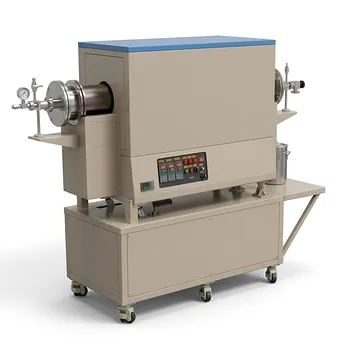
900°C Max Rotary Tube Furnace with 8 Inch 310S Alloy Tube and Optional Multi Zone Heating for Industrial Material Calcination

1700C Hydrogen Gas Tube Furnace with 60mm Alumina Process Tube and Integrated Hydrogen Safety Detector

High Temperature 1700C Tube Furnace with High Vacuum Turbomolecular Pump System and Multi Channel Mass Flow Controller Gas Mixer
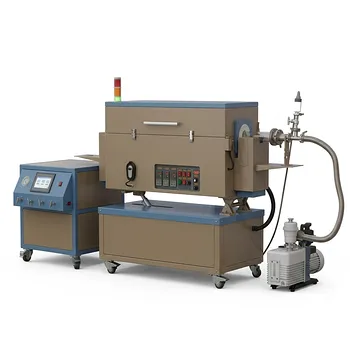
5 Inch Three Zone Rotary Tube Furnace with Integrated Gas Delivery System and 1200C Capability for Advanced Material CVD Processing
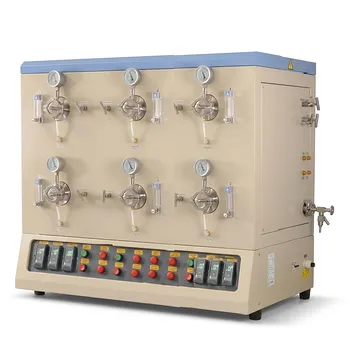
1200C High Throughput Multi Channel Tube Furnace with 50mm Quartz Tubes for Annealing and Material Phase Diagram Research
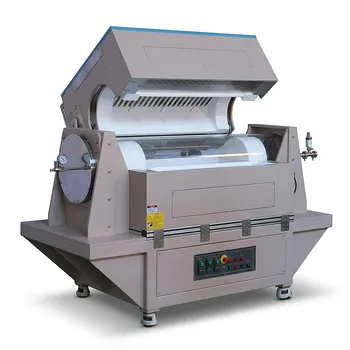
Three Zone Tube Furnace with 11 Inch or 15 Inch Quartz Tube and Hinged Flanges for Vacuum Atmosphere Heat Treatment

1200°C 5 Inch Vertical Quartz Tube Furnace with Stainless Steel Vacuum Flanges

High Temperature 1700C Six Zone Split Tube Furnace with Alumina Tube and Water Cooled Flanges

High Temperature 1700C Tube Furnace with 4 Inch OD Alumina Tube and Vacuum Sealing Flanges

High Temperature 1700C Benchtop Tube Furnace with 5 Inch Heating Zone High Purity Alumina Tube and Vacuum Sealing Flanges

Compact Vertical Split Quartz Tube Furnace with Stainless Steel Vacuum Flanges for Rapid Thermal Quenching and Controlled Atmosphere Material Processing

1800C High Temperature Compact Vacuum Tube Furnace with 60mm OD Alumina Tube and Kanthal MoSi2 Heating Elements
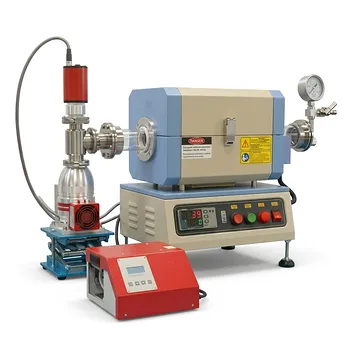
High Vacuum Compact Tube Furnace 1200C with Integrated Turbo Pump System and 8 Inch Heating Zone
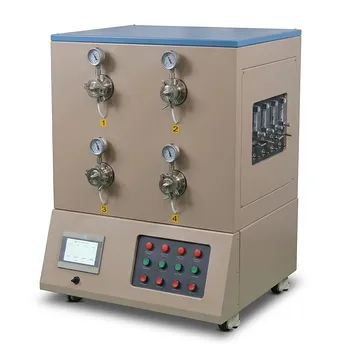
High Throughput 1200C Four Channel Tube Furnace with 3 Inch Quartz Tubes for Multi Zone Annealing and Material Research

High Temperature Automated 5 Inch Tube Furnace for Autonomous Material Research and Advanced Laboratory R&D
