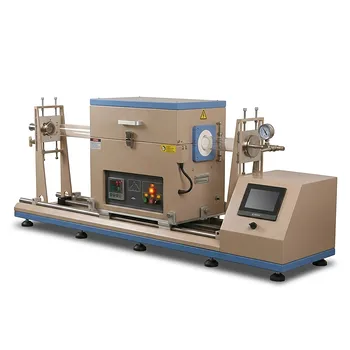
What function does a laboratory tube furnace serve in Ni3N-CeO2/NF catalysts? Master the Critical Nitridation Process.
Updated 3 months ago
In the synthesis of Ni3N-CeO2/NF catalysts, the laboratory tube furnace serves as the primary reactor for the critical nitridation process. This equipment provides the high-temperature environment and controlled reducing atmosphere necessary to transform precursor materials into a functional heterostructure. Specifically, it facilitates the chemical conversion of precursors into nickel nitride (Ni3N) and cerium dioxide (CeO2) while simultaneously inducing the oxygen vacancies required for high electrocatalytic activity.
The tube furnace is the essential tool for phase transformation and atomic-level engineering of Ni3N-CeO2/NF catalysts. By precisely balancing thermal energy and gas-phase chemistry, it creates the specific heterojunctions and structural defects that define the catalyst's final performance.
Facilitating Complex Chemical Transformations
Phase Transformation into Ni3N-CeO2
The furnace provides a stable thermal environment, typically around 350 °C, which is the threshold required for the chemical transformation of the precursor. This process results in the formation of a heterostructure consisting of nickel nitride and cerium dioxide.
Precise Nitridation via Ammonia Atmosphere
Unlike standard ovens, a tube furnace allows for a reducing ammonia (NH3) atmosphere. This atmosphere is crucial for the nitridation process, where nitrogen atoms are integrated into the nickel lattice to form the Ni3N phase.
Anchoring Active Components to the Support
The thermal treatment ensures that the active catalytic components are firmly anchored to the Nickel Foam (NF) substrate. This creates a stable mechanical and electrical connection between the catalyst and the current collector, which is vital for long-term durability.
Engineering High-Performance Catalytic Sites
Creation of Oxygen Vacancies
The interaction between the reducing atmosphere and the cerium dioxide within the furnace induces oxygen vacancies. these vacancies are critical because they alter the electronic structure of the catalyst, significantly enhancing its electrocatalytic activity.
Control of Grain Size and Dispersion
By applying precise temperature-programmed environments, the furnace prevents the active nanoparticles from excessive agglomeration. This ensures that the active components remain highly dispersed, maximizing the available surface area for chemical reactions.
Formation of Stable Heterojunctions
The furnace facilitates an in-situ conversion that builds stable interfaces between the Ni3N and CeO2 phases. These heterojunctions are essential for synergistic effects, where the two materials work together to lower reaction barriers.
Understanding the Trade-offs
Temperature Sensitivity
If the furnace temperature is too low, the nitridation of the nickel precursor will be incomplete, leading to poor conductivity. Conversely, excessively high temperatures can cause sintering, where nanoparticles fuse together and drastically reduce the active surface area.
Atmospheric Purity and Flow Rates
The furnace must maintain a strictly controlled flow rate of NH3; any leakage of oxygen or moisture can result in the formation of unwanted oxides instead of nitrides. This requires high-quality seals and precise mass flow controllers to ensure the resulting crystal phase is pure.
Heating and Cooling Gradients
Rapid temperature changes can induce mechanical stress between the catalyst layer and the Nickel Foam. This may lead to delamination, where the active catalyst flakes off the support, rendering the electrode ineffective.
How to Apply This to Your Project
When utilizing a laboratory tube furnace for catalyst production, your operational parameters must align with your specific material objectives.
- If your primary focus is maximizing catalytic activity: Prioritize the precise control of the NH3 flow rate and dwelling time to maximize the density of oxygen vacancies.
- If your primary focus is long-term durability: Focus on a slow temperature ramp-up (heating curve) to ensure strong adhesion between the Ni3N-CeO2 layers and the NF support.
- If your primary focus is phase purity: Utilize a high-purity ammonia source and ensure the furnace tube is thoroughly purged of oxygen before the heating cycle begins.
The laboratory tube furnace is the decisive factor in transitioning a precursor into a high-performance electrocatalyst through its unique ability to manage both thermal energy and chemical environment.
Summary Table:
| Key Function | Technical Impact | Critical Parameters |
|---|---|---|
| Phase Transformation | Converts precursors into Ni3N-CeO2 heterostructures | 350°C dwelling temperature |
| Atmosphere Control | Enables nitrogen integration via NH3 reducing gas | Gas flow rate & purity |
| Structural Defects | Induces oxygen vacancies for higher catalytic activity | Precise thermal gradients |
| Active Dispersion | Prevents nanoparticle agglomeration | Temperature-programmed heating |
| Adhesion Support | Anchors active components to Nickel Foam (NF) | Slow ramp-up/cooling rates |
Elevate Your Material R&D with THERMUNITS Precision Heating
As a leading manufacturer of high-temperature laboratory equipment, THERMUNITS specializes in providing the thermal processing solutions essential for advanced material science. Whether you are performing critical nitridation in a Tube Furnace, developing new catalysts via CVD/PECVD systems, or conducting large-scale R&D with our Rotary Kilns and Vacuum Induction Melting (VIM) furnaces, we deliver the precision your research demands.
Our Comprehensive Solutions Include:
- Precision Furnaces: Muffle, Vacuum, Atmosphere, Tube, and Hot Press models.
- Specialized Systems: Dental Furnaces, Rotary Kilns, and high-performance Thermal Elements.
- Reliable Performance: Engineered for uniform heating, stable atmospheres, and long-term durability.
Contact THERMUNITS Today to Optimize Your Heat Treatment Workflow
References
- Xianghao Meng, Qunjie Xu. Oxygen Vacancy-Enhanced Ni3N-CeO2/NF Nanoparticle Catalysts for Efficient and Stable Electrolytic Water Splitting. DOI: 10.3390/nano14110935
Mentioned Products
- Vertical 1700C Vacuum and Atmosphere Tube Furnace with 80mm Alumina Tube
- Compact High Temperature 1600C Tube Furnace with 50mm Alumina Tube and Vacuum Flanges for Material Sintering
- 900°C Max Rotary Tube Furnace with 8 Inch 310S Alloy Tube and Optional Multi Zone Heating for Industrial Material Calcination
- Split Vertical Tube Furnace with 1200C Quartz Tube and Stainless Steel Vacuum Flanges for Rapid Thermal Processing
- High Temperature 1700C Tube Furnace with High Vacuum Turbomolecular Pump System and Multi Channel Mass Flow Controller Gas Mixer
People Also Ask
- How is an industrial-grade vertical tube furnace utilized in smelting leaching residues? Enhance Metal Recovery Efficiency
- What is the function of a laboratory-grade vertical tube furnace in fast pyrolysis? Optimize Composite Research.
- How does a vertical tube furnace facilitate thermoelectric alloy melting? Precision synthesis for material homogeneity.
- Why is a thermocouple sensor indispensable for monitoring the vertical tube furnace during gallium oxide nanowire production? Optimize VLS Growth
- What are the advantages of using a vertical tube furnace for crucible experiments simulating steel-slag interactions?

Tech Team · ThermUnits
Last updated on Jun 02, 2026
Related Products

Vertical 1700C Vacuum and Atmosphere Tube Furnace with 80mm Alumina Tube

Compact High Temperature 1600C Tube Furnace with 50mm Alumina Tube and Vacuum Flanges for Material Sintering
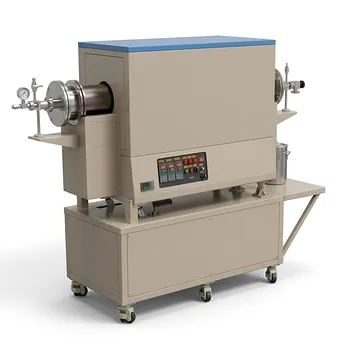
900°C Max Rotary Tube Furnace with 8 Inch 310S Alloy Tube and Optional Multi Zone Heating for Industrial Material Calcination
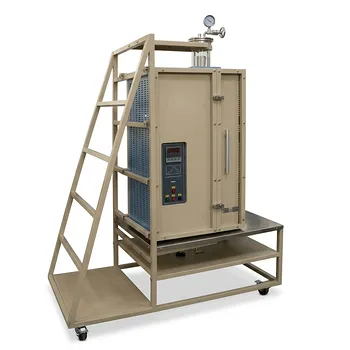
Split Vertical Tube Furnace with 1200C Quartz Tube and Stainless Steel Vacuum Flanges for Rapid Thermal Processing

High Temperature 1700C Tube Furnace with High Vacuum Turbomolecular Pump System and Multi Channel Mass Flow Controller Gas Mixer

1100C Tube Furnace with Vacuum Flange and Programmable Temperature Controller for Material Science and Industrial Heat Treatment

5 Inch Three Zone Rotary Tube Furnace with Integrated Gas Delivery System and 1200C Capability for Advanced Material CVD Processing

1700C Hydrogen Gas Tube Furnace with 60mm Alumina Process Tube and Integrated Hydrogen Safety Detector

1200°C 5 Inch Vertical Quartz Tube Furnace with Stainless Steel Vacuum Flanges

High Temperature 1700C Six Zone Split Tube Furnace with Alumina Tube and Water Cooled Flanges

Compact Vertical Split Quartz Tube Furnace with Stainless Steel Vacuum Flanges for Rapid Thermal Quenching and Controlled Atmosphere Material Processing

High Temperature 1700C Benchtop Tube Furnace with 5 Inch Heating Zone High Purity Alumina Tube and Vacuum Sealing Flanges

1800C High Temperature Compact Vacuum Tube Furnace with 60mm OD Alumina Tube and Kanthal MoSi2 Heating Elements

1200C High Throughput Multi Channel Tube Furnace with 50mm Quartz Tubes for Annealing and Material Phase Diagram Research

Three Zone Tube Furnace with 11 Inch or 15 Inch Quartz Tube and Hinged Flanges for Vacuum Atmosphere Heat Treatment

High Temperature 1700C Vertical Tube Furnace for Powder Spherification and Material Sintering
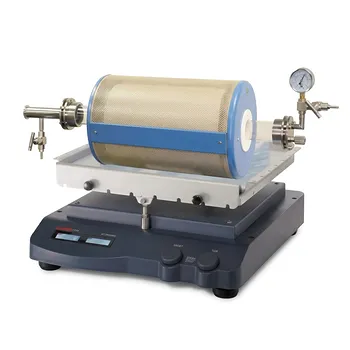
High Temperature Rocking Tube Furnace with Quartz Tube and Vacuum Flange for Materials Synthesis

High Temperature Automated 5 Inch Tube Furnace for Autonomous Material Research and Advanced Laboratory R&D
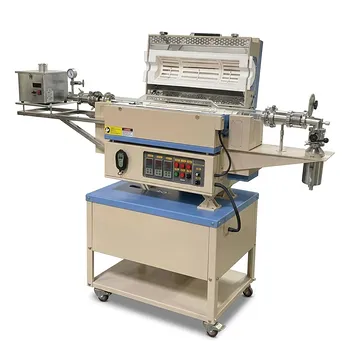
5 Inch Rotary Tube Furnace with Automatic Feeding and Receiving System 1200C Three Zone CVD Powder Processing